1975
THE YEAR IN WHICH ANYTHING WAS POSSIBLE
January

A guitarist that has been known to me since the 1970s due to his long association with ECM Records, it has only been recently that I've really come to know and appreciate his skill and genius as a technical wizard of both acoustic and electric guitar formats, as well as his high intelligence and creativity in conditions requiring structure, support, and improvisation. I am now unafraid to include John in the highest circle of jazz-rock fusion guitarists (with the likes of John McLaughlin, Jan Akkerman, Volker Kriegel, and Al Di Meola). Recorded June 21-22 of 1974 and then released in January of 1975.
1. "Lungs" (12:08) organ and electric guitar trading incandescent flares for solos over some equally-stunning drum play. In the fourth minute, just as the two melody-makers start to really duel, the music slows down, spreads out, leaving a lot of space for some spacey organ and volume-controlled and echoed electric guitar note play while Jack gives a virtual clinic in cymbal and bass drum play which turns into a tom-tom and snare clinic as well. This is easily as powerful and virtuosic as anything the Mahavishnu Orchestra ever produced. At the beginning of the eighth minute the band resets and restarts with some kind of low-bass note play (from Jan Hammer, of course) providing a kind of funky rhythmic propulsion for Jan, John, and Jack to slowly, very deliberately, start contributing notes, riffs, and other idiosyncratic flourishes and musical catchphrases from here to the song's end. What this has to do with lungs, I'm not sure. (22.5/25)
2. "Love Song" (4:34) Jan Hammer's piano and John Abercrombie's acoustic guitar are here recorded performing a beautiful duet. These guys really hear each other--which is why this lovely conversation sounds so respectful and co- ordinated--like a dance--and not unlike something Chick Corea and Al Di Meola might have done together. (9.75/10)
3. "Ralph's Piano Waltz" (5:21) a more typical jazz swing with a great melody "hook" This is a John Abercrombie composition that became one of his signature songs--one that he re-recorded on several other studio albums and, of course, performed live with many of his bands--and I wouldn't understand anyone who wouldn't be able to "see" why. Great performance by John with awesome support from Jan's organ play and Jack's stunning drum play. Though I have great trouble thinking of Jack DeJohnette as a "fusion" drummer, he is definitely on the short list of the best jazz drummers I've ever heard (probably #1): his creativity is a marvel to behold. (9.375/10)
4. "Red In Orange" (5:21) a furious syncopated opening sounds like it could come from both EMERSON, LAKE AND PALMER or the MAHAVISHNU ORCHESTRA though the jazz guitar play ends up sounding more like JOHN TROPEA or ERIC GALE during the early section, the Larry Coryell in the fiery second section, and then like John McLaughlin in the photon-speed final minute. Jan Hammer's dynamic organ play sounds like LARRY YOUNG (Khalid Yasin)--especially when in support mode--but then he fires up some amazing Keith Emerson-like stuff in his duels with John--and Jack is right there with them the whole way! (9.625/10)
5. "Remembering" (4:32) back to piano and acoustic guitar dueting, this one meandering a little more like something from the Americana or Chick Corea school of austere acoustic or atmospheric duet music. Despite the flourishes of virtuosity, the key and tempo changes are met with ease with both musicians delivering gorgeous melodies and variations on those melodies throughout. Both musicians are showing their masterful ability to bring the listener back to the security of "home" by positing the occasional, perfectly-timed, dominant "comfort" chord. (Thank you!) There is, however, something very warm and humane about this song--this style of duet music--that feels more inviting and engaging--more personable--than the "competitive" duets that Al Di Meola became known for. (9.25/10)
6. "Timeless" (11:57) ominous low-end synth chord provides the steady foundation for John to noodle around improvisationally using a very gentle, soft tone on his electric guitar. I love this kind of electric guitar performance where volume and dynamic take a backseat to heart-felt feeling and sensitivity. In the fifth minute there is a transition into a section in which Jan sets forth a patterned bass line over which John plays off of with equally-interesting, beautiful fluidity and melodic sense. Jack joins the puff parade with his brushes, rarely beating anything dynamic, instead keeping to the same delicate sensibilities as his band mates. Jan is allowed to jump in a couple of times with his MiniMoog and the song never really changes or shifts or deepens again, just plays out with this same bass-line-led motif to the end. A nice exhibition of a certain kind of solo improvisational music but not a really engaging or deeply interesting song from a listener's standpoint. (22/25)
Total Time: 43:53
Jan Hammer has always come across as a much weaker keyboard player in my mind due to the fact that I've seen and heard mostly his performances where he is playing on either his stage "keytars" or dueling with guitarists and/or violins by using the right-hand upper registers of his computers, thus, I never thought the guy had a left hand. On several albums from the 1970s that I've stumbled across over the past couple of years I've been impressed to hear Jan Hammer as a more "complete" keyboard player: playing piano, organs, Fender Rhodes, Moogs, and, as here, lots of bass as a substitute for the more typical upright or electric bass player.
91.667 on the Fishscales = A-/five stars; a minor masterpiece of fringy Jazz-Rock Fusion from three of Jazz-Rock Fusion's all-stars (two of which are lesser known). An album that I highly recommend to any prog lover who love it when virtuosic musicians can meld together really well.
 RETURN TO FOREVER No Mystery (released in February)
Chick's second album with guitar phenom Al DiMeola completing the quartet lineup, no Mystery was recorded at The Record Plant in New York, during January of 1975 and then released on Columbia Records in February.
Line-up / Musicians:
- Stanley Clarke /Bass [Acoustic, Electric], Organ [Yamaha], Synthesizer, Vocals
- Lenny White /Drums, Percussion, Congas, Marimba
- Al Di Meola /Guitar [Electric], Acoustic Guitar
- Chick Corea /Piano [Acoustic], Electric Piano, Clavinet, Organ [Yamaha], Synthesizer, Drums [Snare], Marimba, Vocals

Line-up / Musicians:
- Randy Brecker / trumpet, electric trumpet, flugelhorn, vocals (8), composer, arranger & producer
- Michael Brecker / tenor sax
With:
- Bob Mann / guitar
- Don Grolnick / keyboards
- David Sanborn / alto sax
- Will Lee / bass, vocals (5)
- Harvey Mason / drums
- Christopher Parker /drums (5)
- Ralph MacDonald / percussion

- Leopoldo / Bongos, Percussion
- Michael Carvin / Clavinet
- Lawrence Killian / Congas, Percussion
- Art Gore / Drums
- Michael Carvin / Percussion
A2. "Desert Nights" (6:45) Lonnie switches to piano while the rhythm crew establish a slow-groovin' motif to quell us into nighttime submission while flute, sax, piano, and drums take turns spewing forth their subdued solos, flourishes, and fills. Lonnie's piano pounding feels a little unsuited to the desert vibe being bouyed by the others but then, who knew he'd have had a history with Don Pullen? (8.875/10)
A3. "Summer Days" (5:53) a happy-go-lucky two key samba sounding like something from a Herb Alpert or Sergio Mendes song. Here we find Lonnie once again reverting to the acoustic piano as his main voice. (8.75/10)
February

Line-up / Musicians:
- Michal Urbaniak / Electric violin, violin synthesizer
- Urszula Dudziak / Voice, percussion, electronic percussion
- Wlodek Gulgowski (Pop Workshop) / Electric piano, Moog, and electric organ
- Anthony Jackson / Bass guitar
- Steve Gadd / Drums
- John Abercrombie / Guitars
- Larry Coryell / Guitar (B1)
A3. "Roksana" (5:42) here employing guests "Gerald" Gerry Brown for drums, Joe Caro for the guitars, and featuring scat vocalizations of percussionist Urszula Dudziak, the band cruises along with admirable skill, speed, and solo performances from Michal, percussionist Urszula Dudziak creating some rather unusual yet-highly-skilled wordless scat vocalization, and excellent electric piano work from Wlodek Gulgowski. Quite simiilar to The Mad Hatter-era Chick Corea. I just love the mood of joy and ease projected by this song. (9.25/10)
B2. "Cameo" (4:41) gorgeous melodies over a J-L Ponty-like slow-funk support--I mean, it sounds almost exactly like something off of Aurora or Imaginary Voyage.which is weird since both of these albums were released after this album. Maybe it was Michal's work that pushed Jean-Luc into his string of albums on which he really began exploring his increasingly-highly-processed electric violin sounds!? Whatever. Michal is definitely in the same category of haunting melody-making as Ponty and Vigliar. (9/10)

Recorded at Generation Sound Studio NYC, November 11 and 12, 1974; released by ECM Records on February 1, 1975.
- Steve Swallow / electric bass
- Jack DeJohnette / drums
- Sue Evans / percussion
A2 "A Change Of Face" (4:56) Steve moves over to the electric piano. A pretty little intro is suddenly shattered at 0:25 by Steve Swallow and Jack DeJohnette's launch into a fun and very upbeat motif. This is so fun and multi-dimensional: covering several moods, both slow and contemplative and fast and playful, even busy and athletic. (9.375/10)
A4 "The Sandhouse" (3:45) gentle, swaying piano-based music with Steve Swallow's deep electric bass and Jack's cymbal play reacting to and embellishing the decays of Steve's left hand chords and movements. There is melody to this one, often quite pretty in a Debussy/Fauré kind of way. Again, a song that is far more Jazzy than Fusionen. I really like the furioso buildup and crescendo. (8.875/10)
B1 "Something Everywhere" (7:47) a great high-speed Third Wave Latin Jazz-Rock Fusion tune that uses a nice samba groove. This song keeps Jack DeJohnette, Steve Swallow, and Sue Evans very busy! Delightful electric piano work, as well. I think Mr. Kuhn is my favorite--and the one I have the most sympathy for. Chick, Al and the RTF gang would be proud. A top three song, to be sure. (14/15)
B2 "Silver" (2:54) delicate, trilly piano improvisations (right hand) turn more dynamic as the left hand begins to band around at the lowest ends of the keyboard. Interesting and uncommon. (8.875/10)
B3 "The Young Blade" (6:15) active Jazz-Rock Fusion electric bass, piano, and drums, all three of the musicians are definitely coming from Jazz substructures as most everything here feels jazzy, even the solos, only they're electrified/amplified. Nice playing throughout; the dudes can definitely hold a fast pace! (9/10)
B4 "Life's Backward Glance" (3:08) pretty neoclassical piano with bass and tuned percussion within which Steve recites a meta-like joke about a story within a story that actually creates a Möbius Loop. High marks for the story joke; nice job with the music. (8.875/10)
Total Time: 34:52

Line-up / Musicians:
- John Gustavsson / Fender electric bass
- Barry De Souza/ drum, trumpet
- Ola Brunkert / drums, percussion
- Pete Robinson / keyboards [Fender Rhodes, clavinet, organ, ARP 2600]
- Malando Gassama / percussion
2. "Woodchurch Sorceress" (1:50) creepy cinematic flute and percussion in-the-woods kind of stuff. (4.25/5)
3. "Kokt Tvätt" (5:51) flourish-filled launch into a repeating bar of odd rock-riffs arranged into a groove over which flute and electric piano solo and stuff. Not your typical Jazz-Rock Fusion; more like drawing from the older stuff of the earlier experimental work of Tony Williams, Freddie Hubbard, Herbie, and even Miles Davis. Nice drumming and percussion work. Pete Robinson and bassist John Gustavsson are a little too free and crazed for me. (8.75/10)
4. "The Nard Finished Third" (7:08) more funky like something from PARLIAMENT, WAR, or THE AVERAGE WHITE BAND than jazzy. Over the first few minutes it's all about the funk with little attention given to solos or jazziness. The third minute finally sees some soloing but this is all rock guitar (again like Parliament). I guess this reminds me also of Larry Coryell's eccentric Jazz Fusion. Again I must commend the percussion work of Malando Gassama and Ola Brunkert as well as dummer Barry De Souza (or is it Ola Brunkert on this one?). The flute play in the next section is quite flamboyant--more akin to that of Ian Anderson or Thijs van Lier than Joe Farrell or Hubert Laws. (13.25/15)
Total Time 43:39

MAHAVISHNU ORCHESTRA Visions of the Emerald Beyond
An album in which all of John McLaughlin's recent influences can be felt: Jimi Hendrix, Carlos Santana, Shakti/Indian music, the Classical Impressionists, even the raw Larry Coryell sound. Released by Columbia Records in February of 1975, it was recorded in December of '74 at Electric Lady Studios under the guidance of co-production team of engineer Ken Scott and band leader John McLaughlin.
Line-up / Musicians:
- John McLaughlin / 6- & 12-string guitars, vocals
- Gayle Moran / keyboards, vocals
- Jean-Luc Ponty / violins (electric & baritone electric) (10 solo)
- Ralphe Armstrong / bass, double bass, vocals
- Michael Walden / drums, percussion, clavinet, vocals
With:
- Bob Knapp / flute, trumpet, flugelhorn, vocals
- Russell Tubbs / alto & soprano saxes
- Steven Kindler / 1st violin (5 solo)
- Carol Shive / 2nd violin, vocals
- Phillip Hirschi / cello
1. "Eternity's Breath Part 1" (3:10) taking a bit to get started, the band eventually establishes a Hendrix-like power motif over which some Indian scales are recited and repeated by the new soloists (Ponty and McLaughlin) and choral vocals perform. It's okay. Sounds a bit juvenile. (8.66667/10)
2. "Eternity's Breath Part 2" (4:48) more group chant vocals à la MAGMA over some complex but tightly performed group rock-jazz. McLaughlin takes the first solo--sounding very different from his "normal" self--more like Carlos Santana. He backs down into electric guitar power chords while Jean-Luc takes the next solo. Grand piano and strings and McLaughlin take the next motif before returning to the "love supreme" Hendrix group chant. Impressive play from everyone--nice composition. No wonder Jean-Luc took Ralphe Armstrong with him for his next three solo albums (Enigmatic Ocean, Cosmic Messenger, and A Taste for Passion). (9/10)
3. "Lila's Dance" (5:34) solo piano opens this one (and finishes it), leading into a nice little classical construct. At the end of the third minute the music takes a radical left into blues-rock in order for McLaughlin to take a wild Hendrix-like solo. Nice musicianship; I just don't really like the music. (8.875/10)
4. "Can't Stand Your Funk" (2:09) rhythm guitar, funk bass and drums, horns. Not much here, really; it's like an étude of a OHIO PLAYERS or early KOOL AND THE GANG song. (4.25/5)
5. "Pastoral" (3:41) birds introduce a piece that sounds Indian musicians taking on a Western classical composer (like Elgar or Delius)'s rendering of a traditional folk tune. Weird and, frankly, a little unexpected and out of place on a Mahavishnu Orchestra album. Yet well played! (9/10)
6. "Faith" (2:00) an unusual splicing of three different pieces, one that sounds like Larry CORYELL's abrasive guitar. (4.25/5)
7. "Cosmic Strut" (3:28) this one feels like a Jean-Luc Ponty composition: so funky and straightforward in the linear setup for a successive series of jazz solos. Confirmed by the presence of Jean-Luc himself in the "key" soloist's spot. I like the horn accents! And the clavinet and funk bass. Rudimentary for Jean-Luc, but it does all work. (9/10)
8. "If I Could See" (1:18) Gayle Moran's operatic voice over theatric strings, bass and horns. Like a big WHO rock opera kind of thing. Interesting. (4.5/5)
9. "Be Happy" (3:31) Bled into from the previous song (!!) we are off to the Jean-Luc Ponty races à la his great piece, "Egocentric Molecules," from Cosmic Messenger. The presence of John McLaughlin's pyroclastic guitar bolts makes it a bit different, though. Again, Jean-Luc takes the prime soloist's spot but he's challenged to a duel there by the Mahavishnu himself. It's pretty epic and awesome seeing these two go toe to toe. (I'm sure they both LOVED it!) Jean-Luc's song is simply the perfect vehicle for this. (9.5/10)
10. "Earth Ship" (3:42) a contrastingly gentle recovery song: very smooth and ambient with Fender Rhodes, gently walking bass, and soaring distant violin and flutes within which what sounds like Narada's voice singing as well as some bluesy McLaughlin guitar snippets. Nice! (9.25/10)
11. "Pegasus" (1:48) like instruments in a void: first fiery electric guitar strums followed by wafting violin swaths, ending with more of the percussive-like heavily-effected guitar strums. I find this one very interesting--worth further exploration. (4.75/5)
12. "Opus 1" (0:15) a quickly passing falcon is barely seen as it soars past.
13. "On the Way Home to Earth" (4:34) Narada Michael Walden puts together his best, most Lenny White-like drumming while John explores the sounds of his heavily-distorted guitar. A short break in the middle and then Michael is up and drumming again, this time with John's less-adulterated exploration of the upper-most frets of his electric guitar. It's very Hergest Ridge-like when the organ chords sneak up from underneath. I actually really like this one too despite it feeling, again, like an underdeveloped étude. (9.25/10)
Total Time 39:58
I couldn't agree with Ivan Melgar more: I always felt more engaged and satisfied by the second incarnation of the Mahavishnu Orchestra. The flash of the first incarnation never drew me back for reasons of pleasure, more for reasons of amazement and awe. And now, forty years later, I find Inner Mounting Flame and Birds of Fire hardly listenable, while Visions and Apocalypse have a warmth and friendliness that invite me in and keep me wanting to come back. Understand: Goodman, Cobham, Laird and Hammer are amazing and impressive instrumentalists but it was like they were all just waiting for their turn to flash--to solo--not really making music or songs; the second incarnation the MO seem more cohesive, playing memorable music, cohesive, repeatable songs. The first incarnation are jaw dropping amazing; the second incarnation produced music I want to listen to.
90.29 on the Fishscales = A-/4.5 stars; a very minor masterpiece of experimental Jazz-Rock Fusion.

Chick's second album with guitar phenom Al DiMeola completing the quartet lineup, no Mystery was recorded at The Record Plant in New York, during January of 1975 and then released on Columbia Records in February.
Line-up / Musicians:
- Stanley Clarke /Bass [Acoustic, Electric], Organ [Yamaha], Synthesizer, Vocals
- Lenny White /Drums, Percussion, Congas, Marimba
- Al Di Meola /Guitar [Electric], Acoustic Guitar
- Chick Corea /Piano [Acoustic], Electric Piano, Clavinet, Organ [Yamaha], Synthesizer, Drums [Snare], Marimba, Vocals
A1. "Dayride" (3:15) bouncy, joy-filled Latin Chick opening is quickly assisted by the full band (plus some nice percussion over dubs). It's really Chick's show for the first half of the song with everyone else performing tightly proscribed tasks (quite competently, I might add--even spectacularly in the case of Stanley). The vocals in the middle of the third minute are a bit of a surprise--but they work--and then the multiple downshifts for the finish are really cool. (8.8/10)
A2. "Jungle Waterfall" (3:15) a little more Hendrix-like with some funk in the bass and guitar strumming, the chorus is different: definitely more rock/R&B than is typical for RTF. In the end, with little soloing (Al gets a little spotlight in the final 30-seconds), this feels more like an étude--a whole band exercise in cohesion. (8.8/10)
A3. "Flight Of The Newborn" (7:20) more funk-oriented music with Al doing more of that surprisingly dirty wah-strumming that he'd been doing in the first two songs. The shifts and little individual flourishes start to become more the style than not with some great runs by Al and some stellar interplay between the other three: it's really an awesome display of top notch Jazz-Rock Fusion. Al is not at his fiery best--mostly due to his persistent allegiance to the distortion of the wah-pedal. Definitely the best display of Lenny's supreme talents on the album so far. The fifth minute is filled with some of Stanley's signature electric bass runs which are always astounding as well as lyrical, and then Chick gets to play on his MiniMoog while Al joins Stanley and Lenny to provide the steady yet-spacious support that allows Chick to be prominent. (13.5/15)
A4. "Sofistifunk" (3:20) some extremely funky keyboard play is accompanied by far simpler and surprisingly less-funkier drums, bass, and guitar. The band is cohesive but the style they're going for seems to escape me. If it's sophistication they're going for, they may have achieved it, but it just doesn't feel natural to the band as a whole--maybe to Chick and Lenny, but not so much Al and Stanley. (8.75/10)
A5. "Excerpt From The First Movement Of Heavy Metal" (2:45) classical grand piano opening that turns into sophisticated jazz at 0:28 and then Hendrix blues-rock at 0:50. Stanley's bass play is out-of-this-world awesome from the get go, seeming to play multiple styles all at the same time: R&B, slap, metal chords, and more. Ends with more of Chick's grandeliquent piano bombast. (9/10)
B1. "No Mystery" (6:06) one of the more fully-developed songs on the album and one that more fully conveys the individuality of each of the band members (especially Chick and Stanley in the first third). Acoustic instruments. Al and Stanley's bowed double bass occupy the third minute until Chick's piano chords bring the full band back together. (Lenny's playing percussion only.) Al Di Meola--the Al we've all come to know and love--takes the fourth minute, eventually sharing the spotlight with Stanley and Chick. It's always such a delight to see & hear J-R Fuse artists show off on their acoustic instruments. I love Lenny's marimba play mixed in with the others as they all stop-and-go with their virtuosic flourishes over the final minute. (9/10)
B2. "Interplay" (2:15) piano and bowed double bass open this one sounding almost avant garde. At 0:53 Chick and Stanley inject a more Latin direction, each performing at incredible speeds and ideations: a precursor to the amazing work they do on Romantic Warrior's "Medieval Overture." (4.75/5)
B3. "Celebration Suite (Part 1)" (8:25) opens like a prog rock opera or tongue-in-cheek version of an overture to a classical opera by Bizet or Ravel. The very-Spanish style is maintained in the second and third minutes as the full band shifts into full gear. Lenny's display of drumming is absolutely spell-binding--almost to the distraction of hearing the other amazing performances. Chick gets the first solo on his MiniMoog, but it's the battle between Stanley and Lenny that gets all of my attention. Al gets to jump in with Chick in the fifth minute: they're such an amazing duo, so well-synched. Great bridge at the end of the fifth minute leads into a very complex, showy tangent in which Lenny really gets to shine. At 5:52 there is a break that Chick jumps into with his electric piano, starting up a completely different motif--one that is laced and interlaced with incredible melodies. Wow! The rest of the band, I think, must be standing back, watching in awe--though somehow they are able to continue to be sporadically supportive. The final minute sees Chick taking the solo spotlight into a very dreamy passage before the band moves on to Part 2. (19/20)
B4. "Celebration Suite (Part 2") (5:30) Full band with everybody "hitting" big chords with all of their electronic effects (and Lenny absolutely killing it on le batterie!) so that Al can go off on one of those soaring solos that he would become so famous for. (Mid-blowing Lenny!) At the two-minute mark there is an oddly melodic bridge into a pause before everybody picks up the chase again--this time with everybody on full show-off mode: Stanley hitting some incredible bass chords, Chick manning multiple keyboards as if they were extensions of his 20 fingers and toes, and Lenny going absolutely crazy--all before a dramatic extended finale. (9.25/10)
Total Time: 42:53
91.60 on the Fishscales = A-/five stars; a minor masterpiece representative of the highest echelon of Jazz-Rock Fusion and yet the band is still gelling, the compositional excellence still eluding them at times.

Recorded in December of 1974 in Oslo's Arne Bendiksen Studio with Jan Erik Kongshaug sitting behind the engineering console, it was released during the following year by ECM--perhaps as late as September. Many consider this album as a defining moment--even one the crowning achievements--of Manfred Eicher's ECM label.
- Eberhard Weber / cello, bass instrument
- Jan Garbarek / flute, soprano saxophone, tenor saxophone
- Jon Christensen / drums, percussion
A2. "Visitation" (2:32) an exercise in Nature and primordial recreation. (4.333/5)
A3. "Drifting Petals" (6:56) Ralph on solo piano playing a playful, gentle, introspective pastoral tune is joined in the second minute by Jan's flute. In the third minute, drums, reverberated fretless electrified bass, and Ralph's 12-string guitar step forward to creepy-crawl an exercise in hypervigilance--one that each of these ECM masters are completely up to task. The whole-band dynamic interplay in the fifth minute--both loud and soft--provides a real emotional peak. And the return to gentle piano arpeggi and guitar flute for the final minute is a display of sheer perfection in symmetry. (13.75/15)
B2. "Winter Solstice" (3:58) Ralph playing near-Spanish style classical guitar with Jan meeting and matching him all along the way with his soprano sax. Man! These two are so in sync--so attuned! And both are definitely putting their full virtuosity on full display. Though I'm not such a fan of the melodies chosen/played by the two, I am so incredibly impressed by their astonishing timing in conveying them that I can't help but be won over. Standing ovations for this one! (9.75/10)
Total Time: 40:57
92.79 on the Fishscales = A/five stars; a masterpiece of some of the finest, most creative guitar-centered acoustic jazz you are likely to ever hear. Definitely one of my favorite Jazz-Rock Fusion albums from the 1970s.

- Ray Mantilla / percussion, congas (A1 to A4, B2, B4)
A2. "Gale" (2:35) now this one definitely sounds like BOB JAMES; smooth and polished. (4.375/5)
A3. "Ouanga" (7:58) a cool start with some great drums, bass, funky keys and rhythm guitar set up Jeremy for an inspired display of flutesmanship. Anthony Jackson's bass paired with Richie Beirach's heavily treated electric piano and the hard-driving percussion team of Alphonse Mouzon and Ray Mantilla make for an incredibly funky yet still jazzy team--one that serves Jeremy, Johnny Winter's guitar, and Richie Beirach's Fender Rhodes very well for their solos. A top notch J-R F tune--though more for that amazing rhythm track than for its solos. Johnny's guitar work reminds me at times of John Tropea's on Deodato's "Also Sprach Zarathustra." (14.25/15)
A4. "Mountain Dew Dues" (3:53) opening with some of Johnny Winter's deep Southern Swamp blues acoustic dobro guitar. He is soon joined by Jeremy and the rest of the song is a pure duet between the two. Interesting with outstanding musicianship, just not my cup of tea. (8.75/10)
B1. "Goose Bumps" (3:56) another great drumming and bass display as Richie and Jeremy try to keep up with Alphonse and Anthony. I'd say Jeremy and Alphonse win this one though both Anthony and Richie both raise the roof as the song goes along. (9/10)
B2. "Belly Up" (3:16) even more drumming virtuosity on display as Richie, Anthony, and Ray try to keep up and fit in. Band leader Steig does well (it's his composition)--especially in the second minute, though this really feels like Alphonse's show. Richie also steps up admirably in the third minute with that weirdly-effected Fender Rhodes (fast-twitch wah-wah?) (9.125/10)
B3. "Temple Of Birth" (2:14) a moving and cinematic tune that really puts Richie Beirach's keyboard skills on display despite Jeremy occupying the lead/spotlight from start to finish. Impressive. (4.875/5)
B4. "Shifte-Telle Mama" (9:39) a funk motif is quickly established using Anthony Jackson's bass line coupled with Richie Beirach's phase-shifted-wah-wah Rhodes bass chords. Alphonse and Jeremy join in, the latter using not one but two tracks for two different flutes, the former going crazy with his dynamics while the latter kind of exaggerates and plays off of the main melody with his two tracks. At 2:20 everybody shuts down, opening the stage up for a Ray Mantilla conga solo. In the fourth minute Jeremy joins Ray, mirroring his pace with his breathy flute notes until the rest of the band rejoins at the very end of the fourth minute, gradually picking up the pace until we feel as if we're on a freight train headed for the canyon crash. In the sixth minute Jeremy doubles his visibility by occupying two tracks, one staying rather low while the other goes a little higher. (The former could be his bass flute). I wish I knew what that effect that Richie Beirach was using on his Fender Rhodes was: it definitely adds a lot to the funk that Anthony and Alphonse are going for. Nice little drum solo near the end. (18/20)
B5. "Rupunzel" (2:51) opening with Richie tinkling around on the piano like he's Chick Corea. He's joined by Jeremy playing his bass flute around 0:30 and still it sounds like some exotic Chick Corea song even though it was composed by the two performers here. Impressive play from Jeremy on what sounds like it might be a challenging instrument to play. (9/10)
Total Time: 44:11

Line-up / Musicians:
- Eddy Marron / acoustic, 6- & 12-string guitars, sitar, baglama, tambura, Mellotron, vocals
- Reinhard Karwatky / 4- & 8- string basses, 4- & 5- string double basses, Super String synth, Mellotron
- Peter Giger / drums, percussion
1. "Back to Where We Come" (8:57) a slow gathering of momentum by percussion instruments, bass, and guitars. Satisfying and interesting, especially for the study of talented/skilled musicians taking on foreign forms and instruments, but hardly memorable. (17.25/20)
2. "A Day in My Life" (4:03) all I hear beneath the double bass and sitar is Eddie Grant's "Down to Electric Avenue"! (8.75/10)
3. "The Road Not Taken" (4:54) more mindless (or, perhaps, more accurately, expanded minded) free form primordial soup. Again, you can tell that the musicians are skilled--and it is notable that they seem to be flowing-flying in the same direction, in a fairly unified direction, but not the kind of song you teach your kids to hum along to. More like a drug-trip jam captured on tape. (8.6667/10)
Total Time 36:57
March

Alphonse's breakthrough funk album that is often cited as his best work. What a coup to get not one, not two, but three amazing guitarists both reaching the prime of their careers in Tommy Bolin and Lee Ritenour and Jay Graydon! The album was recorded April 4-10, 1974, at Wally Heider Studios in Los Angeles with Skip Drinkwater in the production seat, it was then released in March 1975 on Blue Note.
- Alphonse Mouzon / drums, ARP 2600 synth, Fender Rhodes (6), Farfisa organ, vocals, arranger & co-producer
With:
- Jay Graydon / guitar, ARP 2600 programming
- Tommy Bolin / guitar (solos 3,7,8)
- Lee Ritenour / guitar (solos 4-6)
- Jerry Peters / Fender Rhodes, Hammond B3 organ
- Henry Davis / bass
1. "Mind Transplant" (4:05) hard drivin' rock with a lot of funk reveals a side of Alphonse that I do not know! Impressive but issuing no memorable riffs, melodies, or solos to make it memorable. (8.75/10)
2. "Snow Bound" (3:05) another impressive rock-oriented album that kind of goes nowhere. (8.75/10)
3. "Carbon Dioxide" (4:38) great drumming beneath those rock guitar riffs from the very opening. When the musicians settle into a flowing groove at 0:45 Tommy Bolin gets to lead into the melody, but then there is a dramatic tempo shift around 1:30 that leads into a very-JEAN-LUC PONTY-sounding high-speed chase passage in which Tommy flies around the fretboard with the more-than-adequate support of second guitarist Jay Graydon. Jerry Peters's Hammond B3 gets the second solo but it's oddly mixed behind everyone else. (8.875/10)
4. "Ascorbic Acid" (3:26) impressive drum opening that leads into a song structure in which Alphonse's snare hits feel off-center, making for a kind of odd distraction throughout. On this song Lee Ritenour gets front billing while Jerry Peters plays some pretty awesome Fender Rhodes beneath. I really admire the incredible tightness of all of the musicians' performances. (8.875/10)
5. "Happiness Is Loving You" (4:09) a bit slower and more melody-oriented, it's another excellent twin-guitar exhibition--though Lee gets the credit as the guy with all the solos. Not a great song but it does have catchy melodies and some pretty great nuanced double-guitar work between Jay and Lee. (9/10)
6. "Some of the Things People Do" (3:40) vocal screams at the beginning let one know that we're in for a Afro-funk song that sounds very much like the recent music coming from EARTH WIND & FIRE (without the horns) or KOOL AND THE GANG and/or THE OHIO PLAYERS. Alphonse's singing voice is okay--he's got plenty of confidence and swag--it's just not a great pop song. (8.75/10)
7. "Golden Rainbows" (6:56) a spacey, cinematic song in the vein of the stuff JEFF BECK, THE ISLEY BROTHERS or NARADA MICHAEL WALDEN will be doing. Nice. (13.5/15)
8. "Nitroglycerin" (3:03) as the title indicates, this one is pretty explosive: more from Alphonse and bassist Henry Davis as much as from the twin guitarists and Jerry Peters. Sounds a lot like Jeff Beck's "Freeway Jam." (9.25/10)
Total Time: 33:06
An album that is most impressive for the dominance of its hard-rockin' lines and sounds to me more like the music that would be coming out of bands like RUFUS, The OHIO PLAYERS, and The BROTHERS JOHNSON.
89.12 on the Fishscales = B+/4.5 stars; a near-masterpiece of hard-drivin' Jazz-Rock Fusion.

After two years off, Mike Ratledge, the only remaining member of the original Softs, pulls his previous lineup of former-NUCLEUS members together for one more time but this time recruiting one more recent NUCLEUS member into the fold: guitar phenom ALLAN HOLDSWORTH. What an injection of life and power he is! What results is one fine collection of jazz-rock fusion songs--one that is unfortunately often overlooked due to the band's previous history and, to many, disappointing evolution. (I think a lot of people had long given up on buying their new releases--myself included--which is sad as this is an absolutely stellar album.) The album was recorded in July of 1974 at Whitfield Street Studios in London and then released by Harvest Records on March 22, 1975.
Line-up / Musicians:
- Allan Holdsworth / acoustic, electric & 12-string guitars
- Mike Ratledge / Fender Rhodes, Lowrey organ, AKS synthesizer
- Karl Jenkins / oboe, soprano sax, acoustic & electric pianos
- Roy Babbington / bass
- John Marshall / drums, percussion
With:
- Ray Warleigh / alto & bass flutes (12)
- "Hazard Profile" (5 part suite) (41.5/45):
1. Part 1 (9:18) introducing: ALLAN HOLDSWORTH, NUCLEUS, and Mike Ratledge! a song that not only cruises but grooves--and is relentless in both aspects! And the band is so tight! Holdsworth, of course, is impressive (though in a surprising Jan-Akkerman-kind of way), but Babbington and Marshall are almost equally so. Ratledge's "glue" that is is Lowrey organ really helps to hold it all together while at the same time directing the soloists with his oft-unexpected chords. Very interesting! And Holdsworth's similarity to the FOCUS guitarist's sound and style are really rather striking. In the seventh minute we get to hear a little Eef Albers-like style but it really isn't until the eighth minute that we get to start hearing any of the "destablized" notes that he becomes so well known for in the UK era and beyond. (19.5/20)
2. Part 2 (2:21) soft, delicate interlude of Karl Jenkins' piano and, later, Allan on acoustic guitar. Nothing really very interesting here much less innovative. (4/5)
3. Part 3 (1:05) a Jan Akkerman-like dramatic interlude over Ratledge's Lowrey, carrying forward the exact same chord progression and melody line of "Part 2" (4.5/5)
4. Part 4 (0:46) another transitory interlude in which the band takes have heavy, low-end-dominant approach to expressing the previous chords. (4.375/5)
5. Part 5 (5:29) with its repetitive base it sounds like something from a previous era of jazz-rock fusion--something from the earlier Tony Williams Lifetime, Miles Davis, Herbie Hancock, or even Mahavishnu Orchestra transition period from jazz to rock using standard two-chord blue-rock foundations to jam over. Karl Jenkins' heavily treated horns, Mike's AKS synthesizer, and Allan's soar and fly over the solid rhythm section of Marshall and Babbington (and Holdsworth). (8.875/10)
-
6. "Gone Sailing" (0:59) opens with what sounds like an acoustic steel-string guitar (or Celtic harp), but then it turns into a more-advanced Steve Hackett-like guitar. Breathtaking! (5/5)
(27/30)
7. "Bundles" (3:14) sounding very Return To Forever-ish, this one launches with some very complex and intricate whole-band play, but then shifts into jam-formation using a two-bar riff from Babbington's bass repeated ad infinitum to support the soloing of Holdsworth and Jenkins. (9/10)
8. "Land Of The Bag Snake" (3:35) carrying seamlessly forward from the previous song as if it was just another stylistic shift into another motif that slowed down the previous one, Holdsworth continues soaring and racing around though with a muted effect on his horn-like guitar sound. Ratledge's Fender Rhodes work beneath is awesome. Marshall's ride cymbal is a little loud and Babbington's bass mixed a little fun, but this is a pretty good groove. (9.25/10)
9. "The Man Who Waved At Trains" (1:50) again, no separation from the previous song--as if the band just slides into this totally new, completely softer Weather Report/Chick Corea-like motif. Jenkins gets a turn to solo with his soprano sax, at times being shadow/mirrored by Holdsworth. (4.5/5)
11. "Four Gongs Two Drums" (4:09) a Carl Palmer-like drum and percussion exhibition. (8.75/10)
12. "The Floating World" (7:12) gentle Fender Rhodes doubled with Lowry organ provide a gently floating foundation for the first 55-seconds before Karl's oboe and guest Ray Warleigh's flute present an equally etheric melody line in harmonized tandem. Another Fender Rhodes comes forward at the three-minute mark as the keyboard weave seems to take on a thicker, more intentionally-disorienting polyrhythmic pattern while Babbington's steady bass stays just below the surface--as if anchoring the floating world above. Oboe and flute pick up the melody-giving again at the 4:15 mark. Very Alice in Wonderland-like--and very aptly titled. Great piece. (14.5/15)
Total Time: 41:55
Many people refer to this album as the Allan Holdsworth breakout album as he would go on to work with many of the jazz fusion superstars in the next couple of years. I believe that this "breaktrhough" is made possible by the amazing cohesion of the Nucleus support crew--Babbington, Marshall, and Jenkins. As a matter of fact, this album, in my opinion, should have a different band name cuz they're not really the Soft Machine (history says that with Bundles Ratledge had given the reins over to Karl Jenkins). They're more Nucleus but not Nucleus: they're really the Allan Holdsworth Debut Project.
92.38 on the Fishscales = A/four stars; an excellent masterpiece of evolving and eclectic jazz-rock fusion: on the level of Newcleus, Herbie Hancock, Chick Corea/Return To Forever, Tony Williams Lifetime, Jean-Luc Ponty, and Brand X, but NOT a Canterbury style album. Definitely in my Top 20 Favorite Jazz-Rock Fusion Albums of prog's "Classic Era."

Line-up / Musicians:
With:
- Max Middleton / keyboards
- Stevie Wonder / clavinet (7) - uncredited
- Phil Chen / bass
- Richard Bailey / drums, percussion
- George Martin / orchestral arrangements (5,9), producer
Four star songs: the James Brown like 1. "You Know What I Mean?" (4:05) (8.75/10); the melodic funked up 2. "She's a Woman" (4:31)with its use of the Heil talk box that Peter Frampton would soon make mega-famous with his extensive use of it in his Frampton Comes Alive! January 1976 release (8.66667/10), and; 7. "Thelonius" (3:16) on which Steve Wonder's clavinet and Jeff's low-end "horn" guitar and Heil talk box take us on a ride that feels like a cross between Edgar Winter's "Frankenstein" and Jimmy Castor Bunch's "Troglodyte" songs. (8.875/10)
Total Time: 44:44

The album was recorded in November 1974 at Tonstudio Dierks and released on the Atlantic Records label in March.
- Curt Cress / drums, electronic percussion
- Klaus Doldinger / soprano & tenor saxes, Moog, electric piano, Mellotron
- Wolfgang Schmid / bass, guitar
- Kristian Schulze / electric piano, organ
1. "Homunculus" (6:09) despite the solid bass play holding this one all together, there is a loose, free-jazz feel to the rest of the performances--and some weird effects being imposed upon the overall sound. Still, the skill levels of all of the individuals are fully on display and still impressive. (8.875/10)
2. "Cross-collateral" (13:38) now three songs in--and this one a long one (of epic length) I can only deduce that band leader Klaus Doldinger (and/or his collaborators) was either spread too thin (very busy) or out of fresh ideas because the music on this album so far has been quite lackluster: lacking both the creativity and complexity that the previous album had overflowing to the brim. The lack of inspired or fully-formed compositional ideas are effecting the energy and interest levels of the rest of the band, resulting in lackadaisical performances--which is sad cuz we know these guys can play! There is absolutely nothing in this song, anywhere, that would ever lead me to want to return to it for repeated listens! It's just a first-take free-for-all from the band's first practice session. Plus, where is Klaus? Where are the saxes? (25/30)
3. "Jadoo" (3:03) something with a more structure but no really interesting quirky ideas or great melodies. (At least the saxes are back--though some are a little-too-heavily-processed.) The drumming is the best element of this one. (8.75/10)
4. "Will-O'the-Wisp" (6:15) even trying to go back to some funk doesn't work: it's just too rudimentary; there's nothing new/fresh or creative here, just by-the-numbers playing. The sound palette is right, just totally uninspired performances. (8.75/10)
5. "Albatros song" (5:18) a one-minute all-keyboard intro leads into some light textural music full of synth strings and, eventually, Klaus's singular saxophone putting forth something that sounds very much like the smooth jazz coming out of the BOB JAMES production labs. (8.6667/10)
6. "Damals" (4:38) acoustic guitar and sparse (keyboard) bass and drum play supporting a plaintive (single) sax solo by Klaus. Nice but clearly representing the new Smooth Jazz form of expression. (8.75/10)
Total Time: 39:01
85.68 on the Fishscales = C+/three stars; a fair representation of the direction Jazz-Rock Fusion was moving by the end of 1975.

Recorded, once again, at Hollywood's Sound Factory under the production team of Larry and Fonce Mizell (Sky High) in November and December of 1974. Stepping into Tomorrow was released to the public in March of 1975.
Line-up/Musicians:- Donald Byrd / trumpet [solo], flugelhorn, vocals [solo]
- Gary Bartz / alto saxophone, clarinet
Backing Vocals – Fonce Mizell, Fred Perrin , Kay Haith (tracks: A3, A4), Larry Mizell, Lorraine Kenner (tracks: A1, A2, B1), Margie Evans (tracks: B3), Stephanie Spruill (tracks: A1, B1)
- Chuck Rainey / bass [Fender]
- Fonce Mizell / clavinet, trumpet
- Mayuto Correa / congas
- Harvey Mason / drums, bata [Batah drum], Jew's harp [mouth harp] (B1)
- David T. Walker / guitar
- Jerry Peters / piano [acoustic piano], organ
- Larry Mizell / synthesizer [Arp synthesizers], electric piano [Fender Rhodes], conductor, arranger
- James Carter / whistle [whistler]
A1. "Stepping Into Tomorrow" (5:11) such simplicity! Please, say it ain't so! Luckily, it's a great, very catchy groove, otherwise there's more similarity to the music of later HERB ALPERT (1981's Rise) and the Blackbyrds (due to the choral vocals)--which is fine if you're heading toward radio-friendly pop-oriented "Smooth Jazz." I like the keyboard experimentations being done by Larry Mizell and Jerry Peters--and the vocals are actually quite a bit better (recorded/engineered) than those on the Blackbyrds' albums. Whoever is doing those ultra-soprano vocalese above the rest has got some pipes! (Lorraine Kenner? Stephanie Spruill?) (8.875/10)
A2. "We're Together" (4:19) opening with an excellent and enticing "conversation" between Donald and Gary with piano, background female vocals, and background horns offering nice accents. I also like the scraping noise of the pick hitting the strings on the rhythm guitar. Unfortunately, the choir vocals end up occupying too much space: taking away from the instrumentalists. (8.875/10)
B1. "Think Twice" (6:10) more vocal smoothation, this time with Team Male alternating with Team Female over some very simple jazz-funk (though with another great bass line and some nice vocal melodies). Jerry Peter's bouncy piano and Gary Bartz's smooth sax are nice complements to both the vocals and Donald's trumpet. (8.75/10)
C2. "I Love The Girl" (3:53) piano and gentle percussion instruments open this before the band engages in some cinematic Burt Bacharach-like music behind James Carter's whistling. When Donald kicks in with his flugelhorn in the second minute it is over some loose funk in which laid back yet playful bass and steady drums amuse beneath Jerry's wildly-adventurous piano play. It's kind of shame that his piano is mixed so far back into the mix cuz it's really entertaining and interesting. (8.75/10)
C3. "You Are The World" (4:29) bongos, timbales, and two fast-strummed rhythm guitar chords repeated over and over precede the "you are the world" male choir pronouncements. Then the music travels into a funkier BARRY WHITE world with piano and wildly flailing wah-wah chord fast-strumming rhythm guitar. This is definitely early Disco. I don't dislike it; it feels so ready for radio! (Especially in Detroit town!) (9/10)
D2. "Design A Nation" (4:21) very pleasant Smooth Jazz with very relaxing vocal choir work, whispered female voice, smooth sax from Gary Bartz, and a great bass-led groove at its foundation. (9/10)
D3. "Makin' It" (3:49) a song with a little more zip and jazz in it despite the funk/R&B presentation. Jew's harp, piano, clavinet, and percussion are key components beneath Donald and Gary's horns. (It has elements that sound quite a bit like Ronnie Laws' monster hit--also from 1975, "Always There.") I like the lively spirit of those contribution to the foundation. (9/10)
The master of borrowing riffs and sounds from past masters has been caught: it's no longer working its magic as it once had. Is just my ears or has Chuck Rainey's bass playing (and volume) been curbed or downscaled from the levels and freedoms expressed on the previous album? I think this an unfortunate mistake on the part of both the composer, bandleader, and producers.
April

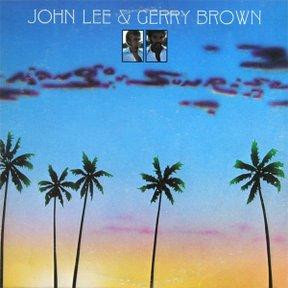
The side project of German guitarist Hans Otto Blanke when not working with Jasper Van't Hof or with Pierre Courbois' ASSOCIATION P.C. This album finds the European virtuosi playing with Philadelphia expats John Lee (bass) and Gerry Brown (drums). The album was recorded and mastered at Conny's Studio in 1974 in Siegburg, Germany, on July 21-23, with the acoustic guitar parts recorded at "Studio Bero" in Münster on August 27 & 28. Vertigo Records released the album in April of 1975.
Line-up / Musicians:
- Toto Blanke / electric & acoustic guitars, composer & producer
With:
- Joachim Kühn / Fender electric piano
- Carmine Ugo "Charlie" Mariano / soprano saxophone, flute
- John Lee / bass guitar
- Gerry Brown / drums
2. "Intermission" (6:58) another song styled very closely after some of RETURN TO FOREVER's more quirky and dynamic constructs, this time with keyboard player Joachim Kühn's stylings sounding more akin to those of Chick Corea. (13.75/15)
3. "Rocbaron" (2:45) a Django Rhinehardt-styled acoustic guitar song solo by Toto definitely takes on a non-Django sound and style (and more Al Di Meola- and acoustic John McLaughlin sound) as it goes on. Excellent virtuoso guitar play! (9.75/10)
4. "Toto" (6:22) opens with two concurrently played tracks of Toto's electric guitar(s) playing wah-wah-ed arpeggi, soon along with John Lee's bass and Gerry's syncopated drums. Very cool! (Very "Discipline" like!) At 1:08 the hypnotic weave is broken by a crash into a slower procession of chunky-funky effected-bass, syncopated almost-military drums, and electric guitar arpeggi with Fender Rhodes electric piano support. (I hear no saxes or flutes.) The guitar soloing in the fourth minute reminds me very much of Larry CORYELL while Gerry Brown's drumming is like a mirror copy of the style and sounds of Lenny WHITE! In the fifth and sixth minutes the guitars return to two tracks weaving opposite one another, eventually speeding up to signal the band's transition into decay and finish. I really love this song--from multiple perspectives--maybe the drumming the most! (9.5/10)
Total Time 43:04
Line-up / Musicians:
- Randy Brecker / trumpet, electric trumpet, flugelhorn, vocals (8), composer, arranger & producer
- Michael Brecker / tenor sax
With:
- Bob Mann / guitar
- Don Grolnick / keyboards
- David Sanborn / alto sax
- Will Lee / bass, vocals (5)
- Harvey Mason / drums
- Christopher Parker /drums (5)
- Ralph MacDonald / percussion
2. "Sponge" (4:05) organ chords, cymbal taps and snare snaps with heavily wah-wah-ed electric bass open this one before the tightly synchronized horn section and keys join in. Funk is oozing from this song as Randy's trumpet amicably duels with Don Grolnick's Odyssey Strings synth. The tight horn bank motif continues to pop up between the soloist's "verses"--one of which is given to Will Lee's very funky bass. (8.875/10)
Total Time 43:24


Line-up / Musicians:
- Esteve Fortuny / electric & Spanish guitars
- Jordi Soley / piano, Fender Rhodes, Moog
- Joan Fortuny / soprano saxophone
- Carles Vidal / bass
- Josep Fortuny / drums, percussion
1. "Fesomies Urbanes" (5:26) awesomely rich Jazz-Rock Fusion of the funk-infused sort; a cross between Headhunters-era Herbie Hancock and Return To Forever. I love the support of the too-heavily-reverbed soprano saxophone by the electric wah-wah rhythm guitar and Fender Rhodes keyboard (they almost bury the sax!). Jordi Soley's Moog sound choice and play is very fresh/refreshing as well. Bass player Carles Vidal is solid though a bit too muted while drummer Josep Foruny is great in his pacing and support. (9/10)
2. "Lila" (4:17) water sounds beneath a soloing Spanish guitar open this one for about 40-seconds before bass, Fender Rhodes, and soprano sax join in with some very nice harmonic support. But it's the guitar that's the center and star of this show: displaying some pretty amazing skills in a kind of unique style along the way. The sax and Fender get some solo time in the third and fourth minutes, but, again, it's really Esteve Foruny's show on his Spanish guitar. (9/10)
3. "Capità Trueno" (10:16) back to RTF style and sound palette, though this time the guitar has a bit more Johnny Mac style to it--and the soprano sax certainly flavors the music differently than anything contemporary MO or RTF are doing. On this song the bass, electric guitar, and Fender Rhodes are mixed as if in the same universe while the sax and drums feel as if they're on different continents: the former a small church and the latter a distant tunnel of an underground cave system. Though all the musicians are competent at their instruments--and perform proving such--they really do not seem to always be "in the same song," that is, there's just a little too much separation and distance between the melodies and rhythms to make me feel a cohesive unity for this composition. Is it more mathematical--or more independent "free jazz" they're trying to merge within the RTF style? At 6:55 there is an interesting--and pleasant--shift in tempo and key which allows the sax a better bed over which to lay down his next solo. This is the first time in this song that I've felt as if the band had "come together" with a common vision for the song. The sax player is good--expressive and talented--but that weird, overly-reverbed sound is quite annoying. (17.5/20)
4. "Lalila" (1:16) more acoustic guitar play: either two or just one with a long-delayed echo effect employed. At the 0:45 mark Joan Fortuny enters with her soprano sax and then the song fades out! (4.25/5)
5. "Eufòria" (4:24) again the band seems to be trying to emulate the Return To Forever formula with guitar, drums, and bass propelling the song along while keyboards and sax add their own spices. At the same time, it's guitarist Esteve Fortuny who takes the first (and, it turns out, only) solo--one that is quite like Larry Coryell (in sound) and/or Corrado Restuci (in style) more than J. McLaughlin or Al Di. (8.75/10)
6. "L'harmoniosa Simfonia D'un Cos. Part 1" (4:17) opening with percussion bells and saxophone with spacious Fender Rhodes, bass, and guitar chords providing some accompaniment and mood-manipulation beneath. This one really sounds like the music that will represent the band NOVA either during the same year or just after this release. Unfortunately, despite the nice sound base, it never really develops much or takes off until "part 2." (8.875/10)
7. "L'harmoniosa Simfonia D'un Cos. Part 2" (3:39) the rhythm is added so that the song can move forward. It's a nice, city driving pace but it is highlighted by the top being down so the listeners can enjoy the sun, wind, and exo-urban scenery. Here all of the instruments seem to be in perfect synchrony while still supporting the soloing of Joan Fortuny's soprano sax. (9.125/10)
8. "El "bailaor" Còsmic" (4:22) a slow, spacey opening like something from a Larry Coryell album turns into a nice movin' bass-and-drum generated J-R F flight over which keyboard artist Jordi Soley gets a chance to show his stuff on his Fender Rhodes, that is, before guitarist Esteve Fortuny jumps in and takes over with his rather aggressive electric jazz guitar play. I like the more Latin (Catalàn?) rhythmic touches in the foundation. I also like the band's tightness on this one. (9/10)
9. "Tema Dels Carrers Radioactius" (1:50) another shaker and mover that shows the band firing on all cylinders--with fairly good precision timing, too. Too bad it's so brief. (4.5/5)
Total time 39:47

- José Alexandre Malheiros / bass [Rickenbacker, Vox & Eco], guitars [acoustic & electric], shaker, vocals
- José Roberto Bertrami / bells, clavinet, electric piano [Fender Rhodes], organ [Hammond M.102], piano, synthesizer [Arp 2600, Moog Satellite, Arp Strings], vocals
- Ivan C. Miguel Conti (Mamão) / drums [Rogers & Ludwig], shaker, timbales, timpani
- Ariovaldo Contesini / bongos, congas, cuica, shaker, surdo, tamborim, vocals
A1. "Linha Do Horizonte" (4:25) Written-By – Paraná*, Paulo Sérgio Valle this feels like a smoother, watered down version of PREMIATA FORNERIA MARCONI's "Il Banchetto" from their 1972 masterpiece, Per un amico. Points deducted for being such a blatant steal. (8.667/10)
A3. "Brazil" (4:03) a group composition that must been somewhat meaningful to the band since they chose to name it after their home country (though the question of their perspective and/or meaning comes into discussion when one notices that they used the English/European spelling of the country name instead of their own native Portuguese spelling). Nice laid back sitting on the beach music. (8.875/10)
A4. "Faça De Conta" (4:32) Written by José Roberto Bertrami, this excellent Smooth Jazz-Funk could quite easily have been found on one of Bob James' earliest four albums in the mid-Seventies. Great bass, clavinet, Fender Rhodes, percussion, and use of vocals. And it makes you wanna dance! Definitely a top three song for me. (9.25/10)
B1. "Estrada Dos Deuses" (3:40) is this an effort to emulate Kool & The Gang's "Summer Madness" or perhaps at least to take advantage of the now-famous synth portamento sound. (8.875/10)
B2. "Esperando Minha Vez" (3:03) a composition offered by José Alexandre Malheiros and his wife Thereza that sounds like something by Michael Franks in the vocal sections, something by Carlos Antônio Jobim in the acoustic guitar-dominated sections, and then like Ramsey in the jazzy-electric keyboard parts. Cute. (8.875/10)
Total time: 42:05
May

- Lucky Guri / piano, electric piano, synthezisers
- Jordi Clua / bass
- Francis Rabassa / drums
with:
- Pedrito Diaz / percussions
- Manel Joseph / percussions
1. "Has Vist Passar Els Ocells" (5:00) very solid and enjoyable melodic and smooth j-r Fusion. Great bass and percussion work beneath the melody-generating Fender Rhodes. (9/10)
2. "Modulacions" (6:03) 90 seconds of okay blues-jazz piano before anyone else joins in. okay. (8.5/10)
Total Time 34:33

Line-up / Musicians:
- Jean-Luc Ponty / acoustic & electric violins, Violectra, strings synthesizer (3), arranger & producer
With:
- Patrice Rushen / piano, electric piano, organ, clavinet, synthesizer
- Dan Sawyer / guitar (excl. 8)
- Ray Parker, Jr. / guitar (4 & 5-solos, 8)
- Ralphe Armstrong / bass
- Leon "Ndugu" Chancler / drums, percussion, Roto toms
1. "Upon The Wings Of Music" (5:26) now here's the patented J-L Ponty sound! Thanks to bassist extraordinaire Ralphe Armstrong, the amazingly versatile (and grossly under-appreciated) keyboard player, Patrice Rushen, Jean-Luc's sound is richer, funkier, and way more modern than the electrified attempts he made on previous albums. But, hey! It's all about evolution--the willingness to try new things, adapt, and change, right? Great slap-funk bass from Ralphe with solid drumming from Ndugu. (9/10)
2. "Question With No Answer" (3:29) piano with multiple tracks of violin (a trick Jean-Luc would persist in trying and perfecting by the time Cosmic Messenger and Individual Choice roll around). Some of the violins are more effected than the others, some sounding almost acoustic. Patrice Rushen's bluesy piano provides the absolute perfect support for Jean-Luc's display of multiple personalities, but the addition of the electric bass and drums (mixed far too forward and loudly) is a mistake as their melody-making and rhythmic add-ons only distracts--especially in their total redundancy. (8.75/10)
3. "Now I Know" (4:27) slow and bluesy with a near-C&W ballad-like feel to it, the treated electric violin is very much in line with the sound that will dominate Jean-Luc's albums and music for the next decade. Nice laid back work from the rhythm section, even when Patrice steps up for an electric piano solo in the third minute. But the highlight is Jean-Luc's Violectra and synthesizer use--a first (as far as I know). Cool stuff! (8.875/10)
Total Time 36:38
89.375 on the Fishscales = B+/4.5 stars; an excellent near-masterpiece of prime Jean-Luc Ponty music--the first to achieve that signatory sound that he would master for the next 20 years. There are, however, still kinks to work out--which makes sense since Jean-Luc has an entirely new entourage of collaborators and a brand new record company. But, the gate is open for his incredible run of 15 years of masterful albums.

Line-up / Musicians:
– Eric Gale / bass; guitar (A1, A2, B1)
– Tony Studd / trombone [solo] (A1)
French Horn – Al Richmond, Jimmy Buffington , Peter Gordon
Trombone – Eddie Bert, Tom Mitchell , Wayne Andre
Trumpet, Flugelhorn – John Frosk, Lew Soloff, Marvin Stamm, Randy Brecker, Victor Paz
Violin – Charles Libove, David Nadien, Emanuel Green, Gene Orloff, Harold Kohon, Harry Cykman, Harry Glickman, Harry Lookofsky, Joe Malin, Matthew Raimondi, Max Ellen, Paul Gershman
Cello – Alan Shulman, Alla Goldberg, Tony Sophos , George Ricci, Jesse Levy, Seymour Barab, Warren Lash
A2. "I Feel A Song (In My Heart)" (5:26) a Mary Sawyer and Tony Camillo composition that is here sung by Patti Austin. It was originally recorded by Sandra Richardson in 1971 and made a minor hit by Gladys Knight and the Pips in 1974. Here its jazzier rendering was intended to make waves on the jazz and pop charts. A nice rendition. (8.875/10)
B2. "You're As Right As Rain" (5:29) a rendition of a Linda Creed and Thom Bell tune that was first recorded by The Stylistics in 1972. The strummed acoustic guitar sound used here would also become one of Bob's signature elements of his songs as would the background strings teases and smooth/laid back Fender Rhodes. How he pulls off those delicate, "muted wind"-like wind/horn sounds I've never been able to figure out but, again, it is a sound that I only know from Bob James-involved albums. Very pleasant and definitely smooth: all that will become the core and essence of the Smooth Jazz movement of which Bob is a founder, mainstay, and prime example. (9/10)
Total Time: 38:26

- Joe Zawinul / piano, Rhodes, Tonto & ARP 2600 synths, melodica (1,4), organ (2,6), steel drums (3), out (4), mzuthra (4), vocals (4), West African xylophone (4), cymbals (5), orchestration, co-producer
- Wayne Shorter / soprano & tenor saxophones, co-producer & mixing
- Alphonso Johnson / bass
- Leon Ndugu Chancler / drums, timpani, marching cymbals
- Alyrio Lima / percussion
1. "Man in the Green Shirt" (6:28) I really love the interplay of drumming, percussion, bass, and electric piano in this song. The horns are nice, and the weird synthesized Nature sounds entertaining, but it's the great coordination of high speed play from the rhythmatists that impresses and engages me the most. (9.375/10)
2. "Lusitanos" (7:24) opening with quirky comi-funk before synth, keys, and horns present a WR-type of melodic/chordal statement. Between regular repetitions of this chorded theme Wayne and Joe take turns adding their respective solos but the sonic field is so layered that it's almost full: practically burying any soloist's attempts. But then the band thins it out, keeping only the bare bones, so that Wayne and Joe can trade solos on soprano sax and piano, respectively--Joe even going so far as to solo twice: as if duelling with himself! Then Wayne takes a turn on his tenor sax: first within the full band weave, then with the open field laid out for him. No matter who's soloing, Joe is always adding quirky little sound injections from his circus collection of synth and hand tools. Alphonso Johnson's bass is creatively effected but it seems to handcuff him into playing some rather simple lines and a lot of single tone repetitions. (13.125/15)
Total Time: 43:10
88.63 on the Fishscales = B/four stars; an album of sophisticated, busy, multi-layered music that is often overly-gilded in what amounts to circus entertainment tricks. Too bad! I love the bones and basic constructs of a lot of this music.

- Keith Killgo / drums
- Orville Saunders / guitars
- Kevin Toney / keyboards
- Stephen Johnson / saxophones & flutes
A2. "Thankful 'bout Yourself" (5:11) like a funked and amped up version of EW&F's "Shining Star" (8.75/10)
B2. "Love So Fine" (5:00) another slow, two-chord strings-backed piece whose gentle Soul music supports the gentle male choir vocal while piano and strings really show some movement from beneath and behind, respectively. (8.75/10)
Total Time: 37:05
June

Husband Michał Urbaniak recruits his usual high-profile band of musicians (the same lineup that would appear on his own first Arista album--which was to be released in the Spring of 1976 as Body English) to perform his compositions for his wife's unique wordless scat-plus vocals to soar. What an advantage: to have this kind of quality music beneath you to show off your individual skill! Urszula was recorded in New York for Arista by Michał in the summer of 1975 and then released toward the end of the year.
Line-up/ Musicians:

- Reggie Workman / bass
- Jimmy Hopps / drums, cymbal
A2. "Visions" (5:40) gorgeous vocal jazz that sounds a lot like a mix of Stevie Wonder (the song's composer) and Lonnie Liston Smith. Nice vocal from Allen Murphy. (8.875/10)
B1. "Moment of Truth" (4:35) a nice little melodic bossa nova lite with gentle sax but concisely-edged bass, drums, and lead keyboard work. Very impressive musicianship if slightly oriented toward the easy listening market. (9.125/10)
B2. "Bismillahi 'Rrahmani 'Rrahim" (6:00) a Harold Budd composition long familiar to me due to its central presence on Harold's Pavillion of Dreams (which will be recorded--as an 18:23 version--with Brian Eno in 1976 though not released until 1978) which I've owned and loved since the early 1980s and has remained among my favorite 100 albums of all-time ever since. Those rolling major seventh chord arpeggios are what set my heart and soul in motion, express the core of my being. Marion does, by the way, perform the saxophone track on Harold's own album version. A great "first" run-through. (9.5/10)
B3. "Djinji" (9:45) on this gentle Latinized post-bop tune Marion lets us hear some of his more avant-garde-styled sax playing. Celestes and/or composer Bill Braynon's RMI electric piano get some spotlight between Fender Rhodes electric and non-electric pianos. I really like the electrified bop being maintained by the spirited rhythm section of Reggie Workman, Jimmy Hopps, Jose Goico, and Ed Blackwell. For Marion's second go round in the spotlight he stays quite firmly within both the chordal key as well as the main melody lines as opposed to the fiery wildness of his first excursion. A very interesting, engaging, and satisfying song. (18.75/20)
Total Time: 41:22
92.1875 on the Fishscales = A/five stars; a masterpiece of eminently enjoyable Jazz-Rock Fusion.


- Peter Warren / bass
A2. "One For Devadip And The Professor" (3:35) are we referring here to Carlos and Mahavishnu John? I think so. I love Jack's experimental Larry Fast minimalist keyboard play, Peter's murky bass, and John's searing guitar. This might be a fitting tribute chord-wise but sonically it's more fitting the spacey sounds that Khalid Yasin (Larry Young) or some of Santana and The MO's keyboard players were getting in the years previous. Very cool song! (9.6667/10)
A4. "Stratocruiser" (7:28) bass and drums turns into drums only by the second minute. The two-plus minute solo is impressive, of course, and Jack shows himself to be nearly as gifted as Billy Cobham at creating "music" and "melody" from his drum soloing, but it's when the rest of the band joins in that the music really becomes something more than a solo: at times it is as wild and dynamic as anything The Mahavishnu Orchestra ever did (especially with the combination of Jack's drums and John's McLaughlin-esque fire), and, at others it feels like structure-less chaotic free jazz. (13.75/15)

Line-up / Musicians:
- Frank Zappa / guitars, lead (4, 6, 9) & backing vocals, producer
- George Duke / keyboards, synthesizers, lead (1, 8, 9) & backing vocals
- Napoleon Murphy Brock / flute, tenor saxophone, lead (5, 8) & backing vocals
- Tom Fowler / bass
- Chester Thompson / drums, FX & voices
- Ruth Underwood / vibes, marimba, percussion
With:
- Captain Beefheart / harmonica (7)
- James Youman / bass (2)
- Johnny "Guitar" Watson / backing vocals (7, 8)
1. "Inca Roads" (live *) (8:45) an amazing song: its suite-like construct, incredible musicianship, and even out-of-this-world concept. Ruth Underwood, Chester Thompson, George Duke, Tom Fowler, and Frank Zappa are really that good! (20/20)
2. "Can't Afford No Shoes" (2:38) what starts out sounding like TODD RUNDGREN takes some turns Excellent musicianship from everyone involved: bassist James Youman, pianist George Duke, Chester Thompson, and raunchy Southern slide guitar from Frank. The homage to (parody of?) ZZ Top is quite prominent as well. (8.875/10)
* Recorded at KCET TV Los Angeles (except guitar solo on 1 was recorded live in Helsinki 1974)
Total Time 42:54
July


- Ian Underwood / synthesizer
A2. "Put It In The Pocket" (4:20) great mid-70s R&B with some awesome rhythm guitar interplay between Wah Wah Watson and Ray Parker. My only complaint with this one mirrors the previous song: the synthesizer strings are a weak and, in my opinion, completely unnecessary addition. Even the group chant vocals of the title line are completely fitting, just not those strings. (9/10)
A3. "Lost Dreams" (12:30) I love the crisp drumming of Carl Burnett and the enriching percussion play of Myuto Correa and Buck Clark. Carl Randall's sax play is just fair, doesn't match up to Freddie's horn play, and the clavinet and rhythm guitar play are tucked sadly underneath where they could be. (I didn't even know George Cables played anything other than piano and/or electric piano!) The bass line gets a little old despite the drummer's excellent job of trying to keep it interesting. There are some familiar tricks and melody lines here from Freddie's future composition, "The Love Connection" (my favorite Freddie song of all-time). Those first two minutes are so good, though, so tight: it's almost Third Wave Power Fusion these guys are producing. George's clavinet solo in the third minute is excellent, buoyed by the amazing groove of the rhythm section beneath him and then contrasted briefly by Ian Underwood's imitative synth play in the next minute. Enter Carl Randall, Jr. with his tenor sax--which is nothing very special but does nothing to spoil the great groove going on beneath him (though, as mentioned, the bass line starts feeling a little over-used). Thank god for those percussionists! At 7:04 there is a key change to signal a shift in motif and tempo: faster with a bouncier clavinet and more active metal percussion with diminished presence of the rhythm guitars for a bit while Freddie solos with some kind of treatment distorting his screaling trumpet. Here is where the monotonous bass line becomes problematic--but enter new/different percussion and keyboard/clavinet approaches and we take a little pressure off of the bass player (and, again, thank goodness for this amazing drummer!) The biggest mystery for me is what happened to the guitarists? Were they doing something so hideous that they were faded out of the mix? Despite all my complaints this is actually quite an interesting and satisfying listening experience. (22.5/25)
B1. "Liquid Love" (5:47) What?!? This isn't the Isley Brother's song?! It's a Freddie Hubbard original?! I do love it despite the two-chord vamp of the main body of the verses and the familiar "Love Connection"-like structure and performance. (I understand how and why artists are continually reworking or borrowing from their own material. To Freddie's benefit: his more mature versions of songs he wrote when he was younger--like "Sky Dive," "Sunflower," or "Brigitte," one can capture the essence and expand upon it with more bang for your buck as one matures and learns that which is important and what is not.) My favorite song on the album. (9.333/10)
Total Time: 45:15
91.09 on the Fishscales = A-/five stars; an excellent collection of well-crafted if slightly-flawed songs that culminate in a minor masterpiece of Third Wave Jazz-Rock Fusion.

August

AREA Crac!
1. "L'elefante bianco" (4:33) Demetrio's powerful voice opens the album right in your face as he and piano declare their intentions. By the end of the first minute we've apparently heard enough from Demetrio for the song catapults into a kind of jazzy version of fast-paced folk theme. At 2:30 we return to piano and voice, but this time the band gradually joins in and builds up into a modern rock variation of that amphetamine-laced Middle Eastern-tinged folk (or is it classical?) theme. Excellent musicianship and a great opener. (9/10)
2. "La mela di Odessa" (6:27) opens with a kind of SUN RA-spacey free-form jazz sound and style, that moves quickly into a drum and percussion display before harpsichord, Arp synth and electric bass join in and move the song into structure and drive. Nice TONY WILLIAMS/MAHAVISHNU feel to this one until, after 3:10, things shift to funk land. The clavinet, synths and horns are prominent along with Demetrio's commanding Zappa-like vocal performance--all in spoken form. So tight! Drummer Giulio Capiozzo is extraordinary (as is Demetrio). (9.25/10)
3. "Megalopoli" (7:53) opens with some play on the Arp synthesizer before Demetrio joins in with multiple tracks of his voice free-styling. Electric piano and bass clarinet join in the atmospheric play before a drum roll takes us out and into a new funky jazz excursion with a great melodic base. Demetrio's wordless vocal scatting over the top is, at first, like a substitute for a lead guitar or sax, but then gives way to an extraordinary jam between drums, bass, electric piano, organ, and synth. The Mahavishnu Orchestra was never this tight or well recorded! Incredible drumming! Why is this guy never included in the talk of the greatest of the greats? (15/15)
4. "Nervi Scoperti" (6:35) Every time I hear this song I think I am listening to one of the all-time greatest prog fusion songs ever created and that, thus, it has to be a product of Corea/RTF, Miles, Mahavishnu, Cobham, Williams, Weather Report, or even a straight jazz genius. But it's not. It's AREA! Astounding, stupendous, incredible, jaw-dropping performances from everybody in the band. What a band! This one deserves extra-credit for being exactly what I said: one of the very best jazz fusion songs of all-time. (11/10)
5. "Gioia e rivoluzione" (4:40) opens like a JOHN COLTRANE, TEMPTATIONS or MAGMA song before switching radically to an acoustic guitar-based, countrified jam. The lyric of Demetrio's vocal throughout is obviously meant to be the center of attention. Otherwise, it is an okay pop song for delivery to the common folk. (8.5/10)
6. "Implosion" (5:00) a little more Zawinal/Weather Report-ish than the previous jazz fusion masterpiece. More melodic and showcasing of individuals (especially the extraordinary bass player, Ares Tavolazzi). (10/10)
7. "Area 5" (2:09) an ejaculatory expression of free-form improvisational jazz. (4/5)
An album of astounding musicianship--virtuoso performances that rival anything else the jazz or jazz fusion worlds has ever created. The amazing thing is that this album stands up perfectly even today--it sounds as if it could have been made today.
95.36 on the Fishscales = A/five stars; a true masterpiece of progressive rock music--mostly cutting edge jazz fusion. Amazing! Definitely one of my Top 10 Jazz-Rock Fusion Albums of prog's "Classic Era."

Line-up / Musicians:
- Larry Carlton / guitar
- Joe Sample / keyboards, electric piano [Fender Rhodes], clavinet, synthesizer
- Wilton Felder / saxophone, bass
- Wayne Henderson / trombone, brass
A2. "Chain Reaction" (5:35) a solid song with a great chorus., there's a little pre-Disco tension here, great drumming, and the presence of both Wayne's wonderful trombone and Larry's decisive guitar. (9/10)
A3. "I Felt The Love" (2:28) an excellent, STEELY DAN-like instrumental sound palette for this sweet little tune. (9.125/10)
A4. "Mellow Out" (2:44) nice, catchy R&B riffs in this Smooth Jazz tune with a cool step-up transition at the half way point. (4.375/5)
Total Time: 43:23

- Herbie Hancock / piano, Fender Rhodes, Hohner D6 Clavinet, synths (Oberheim Polyphonic, ARP Odyssey, Pro-Soloist, 2600 & String Ensemble)
With:
- David T. Walker / electric guitar
- Dewayne McKnight / electric guitar
- Melvin "Wah Wah" Watson / guitar, synthesizer, talkbox
- Bennie Maupin / bass clarinet, alto & bass flutes, saxello, tenor & soprano saxophones, percussion
- Stevie Wonder / harmonica
- Wayne Shorter / soprano saxophone
- Jim Horn / flute, saxophone
- Ernie Watts / flute, saxophone
- Richard Hyde / tuba, bass trombone
- Garnett Brown / trombone
- Bud Brisbois / trumpet
- Jay DaVersa / trumpet
- Louis Johnson / electric bass
- Paul Jackson / electric bass
- Henry Davis / electric bass
- James Gadson / drums
- Mike Clark / drums
- Harvey Mason / drums
- Bill Summers / percussion
1. "Hang Up Your Hang Ups" (7:27) a song some proclaim the greatest funk jam of all-time, Herbie's clavinet, Louis Johnson's bass, the solid drums and amazing horn arrangements really are amazing but it's the incredible rhythm guitar of Melvin "Wah Wah" Watson and the other guitarists that always get me. Great housecleaning music. Excellent, if slightly incongruous. piano solo in the final 90 seconds. I am hard pressed to imagine how won could make this a better song. (15/15)
2. "Sun Touch" (5:09) a sound palette that could serve as a late-nite "Pillow Talk" radio theme song is actually quite complex with some very intricate performances. The rhythm section seem to almost want to pause or delay the song but Herbie's Fender Rhodes keeps pushing it along. Brilliant! Then you get the addition of Wah Wah's guitar riffs and the horns the further you travel into it. (9.5/10)
Total Time 44:47
92.89 on the Fishscales = A/five stars; a masterpiece of funked-up Jazz-Rock Fusion; a true example of nearly perfect blending of Jazz-Rock and Jazz-Funk trends as they occurred in the mid-1970s. Though many people consider Herbie as a leader and innovator, I choose to think of him and his musical outpourings as an excellent barometer of the latest trends in J-R Fusion: he was always in the first wave of expressionists to come after the stones of innovation had been thrown by other artists and engineers--maybe he was (consistently) that first wave.
September


A2. "Love Beams" (4:07) beautiful lazy-day-I'm-in-Heaven float music over which Donald return his beautiful flute playing. A song that could be repeated ad infinitum for the creation of a state permanent bliss. (10/10)
A4. "Devika (Goddess)" (5:14) beautiful love funk as "told" through Dave Hubbard's sweet saxophone. Greg Maker's laid-back bass play is so uber-cool! (9.25/10)
B1. "Sunset" (4:10) gentle late-night love-lounging music, perfect for sitting with one's cocktail on the tropical vacation home's veranda watching the sunset. Evokes one's natural stress reduction. Could use a little more dynamics, variation, or development. (8.875/10)
Total Time 34:55

- Paul Jackson / electric bass, vocals (A1)
- Harvey Mason / percussion
- Zak Diouf / djembe
- Bennie Maupin / saxello, bass clarinet, tenor saxophone, piano [accoustic], vocals
- Joyce Jackson / flute
A1. "God Make Me Funky" (9:35) bassist Paul Jackson sings over the funky groove established by his electric bass, Mike Clark's drums, Blackbyrd McKnight's exquisite rhythm guitar work as well as the percussionists and Pointer Sisters' choral background vocals. It sounds like a Bill Withers vocal performed over a Grover Washington, Jr. tune. In the fifth minute a long instrumental section begins with Bennie Maupin's tenor sax leading the way before switching to his wild and crazy side through his electrified saxello. The choir returns to their chant in the second half of the seventh minute as Bennie continues wailing away and the funk just stays stinky--even to the finish in which Paul returns to shout out his Bill Withers passion. Great funk and spirit that could've used just a little more of something else. (17.75/20)
A2. "Mugic" (3:31) this one starts out a little ambiguously before merging all of its entering elements into what amounts to an Americanized version of an African tribal village jam (à la future Mickey Hart Planet Drum). Fun! (8.875/10)
A3. "Here And Now" (7:07) gentle atmospheric opening of sustained flute, bass and guitar notes reverberating within and over each other, but then, at 1:22 Blackbyrd's guitar notes become stilted chord strums with Paul's bass slowly joining in to establish a funky pattern that is slowly joined by the percussionists, drums, and Bennie's saxello. By the time we've reached the fourth minute the band has a pretty cool jam for Bennie to solo over but then, in the second half of the fifth minute Mike and the rest of the rhythm section have really amped up both their volumes and intensities, making for a great SANTANA-like jam. (13.5/15)
B2. "Rima" (8:14) Paul and Blackbyrd open this together by both reciting the same melody line, one on funky wah-wah-ed electric bass the other on volume-controlled wah-wah-ed electric guitar. Then they break for some conga playing before things thin out for some spacey bass, conga, and weird echo-treated guitar, synth, and percussion noises. This kind of music reminds me a lot of the stuff Miles Davis was having his ensemble do for the 1969-1972 patch of studio music making as well as the style of music that Herbie Hancock's Mwandishi lineup was exploring from 1971 through 1973. Interesting to have his Head Hunters era Headhunters doing this type of experimental psychedelic music making. It stays spacey the entire eight minutes. (13.125/15)
Total Time: 41:13
90.78 on the Fishscales = A-/five stars; a minor masterpiece of Funk Jazz from some of the 1970s pre-eminent Jazz-Rock Fusion musicians.

Line-up / Musicians:
- Ian Carr / trumpet, flugelhorn, piano, Moog, percussion
- Bob Bertles / soprano, alto & baritone saxophones, flute, voice, percussion
- Ken Shaw / electric & 12-string guitars, percussion
- Geoff Castle / keyboards, Moog, percussion
- Roger Sutton / bass, percussion
- Roger Sellers / drums, percussion
3. "Rachel's Tune" (7:05) a song with DEODATO-like charm and earworm grooves and riffs that sink in and won't let go, the funk, the jazz, the fusion, the radio-friendly AWB sound--they're all here. Bob Bertles gets the first solo on his soprano sax, (13.5/15)
Total Time: 44:49
October


Napolitano bands Osanna and Cervello unite (reuniting brothers Danilo and Corrado Rustici) for some groovin' jazz-rock fusion. Released by Arista Records in 1975 after being produced by Rupert Hine at Eel Pie Studios in London, England during August and September, Blink! probably reached the public in October or November.

Line-up / Musicians:
- Terje Rypdal / guitar, String Ensemble synth, soprano sax
With:
- Brynjulf Blix / organ
- Tornbjørn Sunde / trombone
- Sveinung Hovensjø / 4- & 6-string Fender basses
- Svein Christiansen / drums
2. "Midnite" (16:39) some great trombone, STEVE HILLAGE-like guitar soloing over a rather dull and monotonous repeating bass line and drum filling with Mellotron and synth-like strings and stuff coming from the organ and String Ensemble synth. Terje's searing guitar sounds a lot, to my ears, like the tone and style used perennially by THE EMERALD DAWN's Ally Carter. Yes, it's the Seventies and, yes, it's spacey sound experimentation, but couldn't Terje have had Sveinung Hovensjø mix up (or out of) that Reggae bass riff a bit? (26/30)
Total Time: 87:40
90.59 on the Fishscales = A-/five stars; if not a completely consistent masterpiece of Jazz-Rock Fusion, Odyssey is a solid and exemplary album of 1970s guitar experimentation. It often qualifies more for Space/Psychedelic Music and Kosmisches Musik except for the GREAT power fusion song ("Over Birkerrot") and the Miles Davis copy, "Rolling Stone."

Total length: 40:03

Line-up / Musicians:
- Steve Barber / keyboards
- Bill Maddox / drums
- Eric Johnson / guitar
- Kyle Brock / bass
2. "Motion" (4:45) a much more smooth palette and more contemplative ECM/Narada Walden-like song construct with lots of lovely space and no hurry to finish or move anywhere quickly--and yet this is by no means a slow sleeper: there are dynamic flourishes and sudden and surprising contributions flitting in and out of the ethereal weave throughout the nearly five minutes of this--and axe-master Eric Johnson is nowhere near the dominatrix that he was in that opening song; no, this is a song of shared feeling and inspired spontaneity--and very interesting! (9/10)
Total Time: 46:26

- Billy Cobham / percussion, synthesizer, arranger & co-producer
With:
- John Scofield / guitar
- Milcho Leviev / keyboards, arrangements (2, 8)
- Michael Brecker / saxophone (excluding song #3)
- Randy Brecker / trumpet (excl. 3), arrangements (5)
- Glenn Ferris / trombone (excl. 3)
- Larry Schneider / saxophone (1, 3)
- Walt Fowler / trumpet (1, 3)
- Tom Malone / trombone & piccolo (1, 3)
- Alex Blake / bass, arrangements (4)
- Rebop Kwaku Baah / congas (1, 3)
1. "Panhandler" (3:50) a funk song that demands a lot of its players--especially the horn section, but these professionals are at the absolute highest echelon in music's talent pool. The song is okay but more fascinating to listen to the horn section. (9/10)
2. "Sorcery" (2:26) another great groove, this one a little less funky, on which Billy once again places rigorous demands on his horn players. I think I'm catching on to Billy's focus on this album: to show off his skills as an arranger. (9.125/10)
4. "Thinking Of You" (4:12) exploring the smoother, Disco-er side of Jazz-Rock Fusion with a rotating crew of individuals stepping up to lead, including, synth player Milcho Leviev, trombonist Glenn Ferris, sax player Michael Brecker, trumpeter Randy Brecker, and guitarist John Scofield all getting a little time up front. (8.75/10)
7. "A Funky Kind Of Thing" (9:24) solo drum play over the entire ten minutes! It always amazes me how Billy Cobham can create mood and funk with only himself and a drum set (and an engineering console). I can not think of many drummers who have this talent. (17.5/20)
Total time 44:32
90.0 on the Fishscales = A-/4.5 stars; even though this isn't a favorite album--does not contain enough whistle-and-dancd along songs for my tastes--it is an album I have to rate up for the astounding skill level of the musical collaborators.

November

LENNY WHITE Venusian Summer
An album offering quite a diverse palette of what Jazz-Rock Fusion was offering at the time of its making, the truly surprising element of these songs is how well they were composed and how amazingly well each song's multitude of tracks were recorded and mixed (not to mention performed). Recorded in June in New York at Electric Lady Studios and then added to at Patrick Gleeson's Different Fur studio in San Francisco in August, Nemperor Records published the album in November.
Line-up / Musicians:
Lenny White / Drums, Composer, Arranger, Producer
Doug Rauch / Bass
With:
"The Venusian Summer Suite:
- A3. Part 1. "Sirenes" (4:28) lots of ethereal/heavenly synth and fluegelhorn play from keyboard triumvirate of Patrick Gleeson (Mwandishi synth master), Pete(r) Robinson (the same dude from QUARTERMASS, Swedish band ABLUTION, and BRAND X), and trumpeter Tom Harrell (the song's orchestrator). It's long and kind of dull but very space-cinematic and probably experimental song for 1975--kind of similar to the work Klaus Schulze was doing at the same time. A Lenny White composition! (8.75/10)
- A4. Part 2. "Venusian Summer" (6:38) the suite kicks into full form with a very engaging/infectious DEODATO-kind of cinematic funkness. The synth players (Gleeson and Robinson), clavinet (Robinson) and rhythm guitarists (uncredited), and, later, Hubert Laws' flute, David Sancious' MiniMoog, and Onaje Allan Gumbs' piano soloists are so locked in it's crazy! But it's free-flowing Doug Rauch that really drives this bus! (9.5/10)
B1. "Prelude To Rainbow Delta" (1:10) Patrick Gleeson doing some synthesizer magic as an intro-prelude to the next song (which it bleeds into). (4.5/5)
B2. "Mating Drive" (7:40) between the "support" work of organist Larry Young, clavinet player Onaje Allan Gumbs, and hyper-speed bass player Doug Rauch this Lenny White composition would suffice as an incredible song but then put over the top one of the greatest electric guitar performances of all-time from a relative newcomer in one Raymond Gomez (with a very strong Doug Rodrigues in close support/assistance) and this one qualifies as one of those Golden Tickets into Prog's Hall of Valhalla. And that's not even mentioning the dreamy final 90-seconds beneath which Lenny gets to really show off his chops (for once). Amazing amazing song! One of my favorite songs of all-time! Such creative vision! (16/15)
B3. "Prince Of The Sea" (11:37) a great song (and Lenny White composition) over which two of jazz-rock fusion's greatest/most influential guitarists go head to head. Opened slowly, almost like a pastoral float down a lazy, gentle stream, is the distant plaintive calls of a bird over some piano and flugelhorn work. The acoustic piano beneath it all is quite lovely. In the second half of the fourth minute one of the electric guitar gods (Larry Coryell) shows up to give his demo of his powers. Onaje Allan Gumbs' shows up with piano, electric piano and organ ofr a bit as some really fine rhythm guitar (DiMeola) seethes in the background. At the seven-minute mark he is finally let loose--and man does he let you know who the new kid on the block is! All other pretenders are now demoted to demi-god status! Organ notes the transition to the axe-to-axe cmbat at 9:00, with Larry in the Right channell and Al in the Left. Lenny and Doug Rauch are, all this time, observing from their sentinel posts, but even their own performances can't help but ramp up from the carry-over effect from the raging warriors. A minute later the two guitar gods agree to team up and, for a brief 40 seconds they are united, but then their independent energies can't help but take them into soaring heights before crashing down into the sea Definitely one of the fiercest one-on-one guitar battles you'll ever hear--and a great, great moment in the history of prog rock and jazz-rock fusion. (20/20)
I cannot fathom how anyone hearing this album could not be blown away by the musicianship here. Doug Rauch on bass, Lenny White on drums, along with a veritable who's who of jazz fusion all-stars guesting throughout, all playing as if their life depended on it. The song "Mating Drive" alone has got to be one of the greatest achievements in music performance with peak Lenny, Doug, Onaje Allan Gumbs, Doug Rodrigues, organist extraordinaire Larry Young, and the most under-recognized super guitarist of all-time, Ray Gomez, shredding the vinyl grooves with nothing but fire and brimstone! This album has it all: cinematic themes, four-keyboard electronica, funky fun, frenetic screams, players taxing their fingers and brains at break-neck speeds (check out Larry Coryell trying to keep up with Al Di Meola on "Prince of the Sea"). Another of my "closet favorites" from the 70s, this one has stood the test of time and remains one of my go-to albums for joy and exuberance. If you've never heard it, don't miss out! Venusian Summer has got some of the most amazing moments of virtuosity, passion, and beauty ever put to vinyl!
As a post script I have to add, again, for the sake of attracting attention, the number of INCREDIBLE individual performances here are so high caliber, so stunning, that this alone should make this a must listen--an album for study. As I said in my opening statement, I cannot fathom how anyone hearing this album--really listening with their fully-present self--could not be blown away by the musicianship here. There are very few albums that I've heard in my lifetime that achieve this level and number of "WOW! What the f¥¢∑ did I just hear?" responses. Plus, this may be the recorded peak of supernova bass player Doug Rauch's career! That alone, makes this a "can't be missed" listen.
95.55 on the Fishscales = A/five stars; a high-flyin' masterpiece of jazz-rock infused progressive rock music (this despite the funk of the first two songs). Definitely one of my Top 10 Favorite Jazz-Rock Fusion Albums of prog's "Classic Era."

- Jukka Hauru / guitars
- Jukka Linkola / piano, synthesizers
- Esa Kotilainen / string synth
- Heikki Virtanen / bass
- Tomi Parkkonen / drums
- Teemu Salminen / flute, saxophones, clarinet
With:
- Pekka Pöyry / soprano & alto saxophones (1, 2)
- Pekka Pohjola / bass (1, 2)
1. "Enema Syringe" (5:45) what opens as a full minute of displaying MAHVISHNU ORCHESTRA fire turns RETURN TO FOREVER at 1:20 with the introduction of the MiniMoog. At 1:45 then it sleakly slides over into pure JAN AKKERMAN territory before morphing magically into LARRY CORYELL and then GEORGE DUKE to JOE ZAWINUL-led WEATHER REPORT for the finish. The accompanying bass, drums, and keyboard playing is nothing short of miraculous! Amazing! Even if it is a bit imitative and even plagiaristic, this is pure Jazz-Rock Fusion perfection! (10/10)
2. "When I Met My Wondergirl" (8:52) beautiful and spacious LONNIE LISTON SMITH-like Cosmic Music with some awesome JAN AKKERMAN-like tone and feeling up top, mixed with the piano, sax, and bass (this latter grâce à the addition of Pekka Pohjola). The exposition takes a long time of stop-and-go before finally settling down into a fairly straightforward flowing "ballad" in the fourth minute. Just following the work of the two bass players is pure bliss--such a humbling joy! (19/20)
Total Time 38:50
93.19 on the Fishscales = A/five stars; a masterpiece of fully-formed, superlatively-engineered Third Wave Jazz-Rock Fusion. I feel so lucky to have been allowed to know this music!

Line-up / Musicians:
- Dave Holland / double bass
- Jack DeJohnette / drums
2. "Waiting" (2:13) interesting little loose piece with Dave's bass providing the focal material. Innocuous and forgettable. (Even as I just heard it two minutes ago.) (4.25/5)
Total Time: 44:46
93.09 on the Fishscales = A/five stars; a total masterpiece of Jazz-Rock Fusion. If everyone heard that last song, "Sorcery I", alone, there would be a reshuffling of the greatest power trio songs of all-time. Step down Jimi, Eric, Larry, Stevie Ray, and Johnny Mac! There was a trio that was way better than you! And please, let's start adjusting our pantheon of guitar greats to include Mr. John Abercrombie at or near the very top!


1. "Silly Putty" (4:52) an interesting song that borders on the funky R&B that was all the rage in 1975 but really has its roots in the Blues-Rock that pre-dates the 1970s. Between Stanley, George Duke, and David Sancious the band has every weird funky chicken sound possible covered in this playful novelty tune. Not my favorite style, it still manages to entertain and, of course, display incredible musicianship. (Just wondering: Which came first: Lenny White's "Chicken- Fried Steak" or this?) (9.125/10)
2. "Journey to Love" (4:52) spacious southern rock that starts out with some high-pitched vocals (apparently as provided by Stanley and George) and then develops into something that sounds like a slowed down Mahavishnu Orchestra song. Horn section adds punctuating accents at the end of the singers' second verse signaling the start of the instrumental jam session that would unfold for the final two minutes of the song. I think the reason George Duke and David Sancious rarely get mentioned with the great sound-pioneers of the 1970s (like Jan Hammer, Chick Corea, or Herbie Hancock) is their tendency to explore/choose really odd sounds for their keys and guitars. (8.75/10)
3. "Hello Jeff" (5:16) this one definitely has both the JEFF BECK and RETURN TO FOREVER sound with Stanley in particular using those heavy, thick bass chords he became known for with Chick's band. The guitar shreding here (from Mr. Beck and recent discovery David Sancious [from Bruce Springsteen]) is other-wordly! I'm not a fan, however, of the sound rendering of Lenny White's drums--nor of the Al DI MEOLA-like main melody. The best parts of the tune are Jeff's solos and Stanley's finish. (8.875/10)
4. "Song to John, Part 1" (4:22) Chick Corea on piano, Stanley on his bowed double bass, and Mahavishnu John McLaughlin working his magic on an acoustic guitar. (Stanley must have received an "only if it's all acoustic" answer from the Mahavishnu when he asked for John's participation on this album's recording sessions--which would be in character for the Shakti-inspired guitarist at this time.) The song plays out like any/every John McLaughlin or Chick Corea song on acoustic instruments: virtuosic performances, great melodic sensibilities, and each artist inspiring the others to their highest levels of creativity. I just love all three of these artists when they're in acoustic mode! Chick's sense of melody is really so sublime--but so are those of Stanley and John--especially when supporting Chick in that fourth and fifth minute! (9.25/10)
5. "Song to John, Part 2" (6:09) the "lively" half of the suite--feels like a precursor to RTF's "The Romantic Warrior" (one of my ALL-TIME favorite songs!) from their upcoming album of the same name--though the second minute to the fourth has quite a little Django Reinhardt-Stéphane Grappelli energy and feel to it as well. How much fun must these guys have been having! Great jam! You will not find songs like these very often in the real world! (10/10)
6. "Concerto for Jazz/Rock Orchestra, Parts 1-4" (14:25) Messrs. Clarke, Duke, Sancious, and Gadd back for a gorgeous fifteen-minute suite--with the support of the full horn section in the (minutes). The opening three minutes is just synth, piano, and bass weaving a beautiful, contemplative atmosphere together to get the listener ready for . . . the "launch." At the three minute mark the full band jumps into electric world with bass, synth strings washes, Fender Rhodes, and drums creating a dynamic power motif within which David Sancious adds some searing lead guitar riffs in mini- crescendo moments. Things smooth out a bit in the sixth minute before George and Steve fall into support of a multi- sectional bass solo. (By multi-sectional I mean low end bass notes offset by high-end piccolo bass riffing.) This turns into more sustained searing electric guitar from David for about a minute in the ninth minute, culminating in a horn- section thickened section to fill the tenth minute--which leads to an odd break at 10:15 after which an AL DI MEOLA- like guitar-led Chick Corea patch ensues within which Stanley's machine gun bass play keeps up note for note with the same from David Sancious. The melody first exploded into the sonic field by the raging guitar-and-electric-bass duo is quite familiar but I can't place from where. The drumming in this "break out" passage are quite straight time rock 'n' roll as opposed to the rather funky, syncopated forms Steve was playing before the ten minute mark. The horns help amplify and multiply the fiery melody being ejaculated by David and Stanley until a crescendo and crashing trumpet scream at 12:15 re-opens the door for a very peaceful George Duke synth and electric piano after-the-storm section takes over to lead Stanley and the "strings" to a fadeout exit. A wild ride! Not so much a concerto as a RTF-like power suite! (27/30)
Total Time 39:21
Multi-instrumentalist David Sancious is quite a find! His guitar skills are virtuosic (as are his keyboard skills--as will be proved in near-future solo and collaborative albums) yet I've always felt that his sounds and melody choices are either too imitative of other greats of the era (like, here, Al Di Meola) or that they're too sweet, dense, or obtuse for me to ever be drawn into. However, here with Stanley he has found a partner who at least drives him to heights of the greats. George Duke feels too much the support mule on his three songs: rarely given the flashy solo time that David or Stanley himself take--which seems a waste. And Steve Gadd is great though sometimes feeling a bit the odd man out in terms of gelling perfectly within the weaves and styles set up by Stanley. For me, the Chick Corea-John McLaughlin-Stanley suite "Song for John" is the album's highlight with the opening song, as virtuosic and erudite as it is, proving to illustrate for me the fact that funk (my beloved funk) can be taken to outlandish extremes--barnyard, bawdy, or adolescent extremes.
91.25 on the Fishscales = A-/five stars; a display of creative song-making commensurate with the virtuosity of its participants. Perhaps not on quite as high or memorable of a level as some of the iconic themes and songs from the other Jazz-Rock Fusion classics of the time, but definitely fitting and deserving of the attention of any lover of virtuoso musicianship.

DONALD BYRD Places and Spaces
- Ray Brown / trumpet
- George Bohannon / trombone
- Tyree Glenn / saxophone
- Chuck Rainey / bass
- John Rowin / guitar
- Harvey Mason / drums
- Craig McMullen / guitar
- King Errisson / conga
- James Carter / whistle
- Kay Haith / vocals
- Mayuto Correa - conga, percussion
- Skip Scarborough / electric piano
- Larry Mizell / piano, vocals, producer
A2. "Wind Parade" (4:32) earworm music with a pretty lame lyric. But damn! It just won't leave the brain! I hate that this is the most memorable and my favorite song from this album! (9.25/10)
A3. "Dominoes" (4:32) bass chords and more J-R Fusion than smooth jazz or funk. Interesting! A top three song for me. (9/10)
B1. "Places And Spaces" (6:16) a little too repetitive but some awesome creative nuance-creation from several of the instrumentalists (percussion, Chuck Rainey's bass, Donald's flugelhorn, Skip Scarborough's electric piano) (9/10)
B2. "You And Music" (5:18) Smooth Jazz melody making, groovin' bass 'n' drum, over-the-top strings (that are actually pretty cool) thanks to arranger/conductor Wade Marcus, and a nice secondary motif of male-female joint and back-and-forth vocals. (9/10)
B3. "Night Whistler" (3:40) slay me with that rhythm guitar work! Some of those whistles sound like a distant woman screaming in distress! Otherwise, a pretty cool, chill song, with lots of layers of active musicians despite such a chill base. Hard to believe that all those "whistle" sounds are coming from one person (James Carter). (8.875/10)
B4. "Just My Imagination (Running Away with Me)" (4:36) a cover of the famous Temptations song of a decade earlier using choir vocals, the same weird whistles, piano, and Donald's flugelhorn over the classic Motown rhythm section. Even a little Disco drumming and "Shaft"/"Love Theme" rhythm guitar injected into the third minute. Nicely done! Interesting enough to qualify as one of my top three. (9/10)
Total Time: 35:51

Line-up / Musicians:
- Peter Friis Nielsen / bass, double bass [electric double bass]
- Ole Streenberg / drums
- Claus Bøhling / electric guitar
- Kenneth Knudsen / electric piano, piano
4. "Don't Know" (5:10) high-speed Jazz-Rock of the Mahavishnu/RTF nature with sound quality that reminds me more of CERVELLO's Melos: the effects used to process the lead guitar are already dated while the rhythmatists beneath the soloing electric guitar (including a track dedicated to wah-wahed rhythm guitar) have a bare Mwandishi-like sonic field. Nice discipline and skills on display. The foundational groove gets a little monotonous after … a minute or two--more like numbing. (8.875/10)
5. "Visitor" (3:23) more skills exhibitionism from the bass and drum players while Kenneth Knudsen wanders around his treated (wah-wah) Fender Rhodes and guitarist Claus Bøhling occupies the spotlight up top. Again Claus is using that odd combination of effects on his axe making him sound similar to some of Larry Coryell's sound incarnations. (8.75/10)
6. "Tied Waves" (5:24) gentle waves of sustained electric piano chords and fills spaciously (and melodically) open this one sounding like a pensive Herbie Hancock while Ole and Claus feel their way around from beneath (the latter sounding a bit like Eberhard Weber). There's actually something profoundly engaging about this--especially in the combination and interplay of the aqueous sounds coming from Peter's bass and Kenneth's keyboard. For some reason I have to give this unusual song a top three song commendation. (9/10)
Total time 39:10

- Sonny Sharrock / guitars
- Buddy Williams / drums
- Kenny Armstrong / keyboards
- Sonny Bonillia / percussion

HERMANN SZOBEL Szobel (released in January of 1976)
December

Line-up / Musicians:
- Göran Frost / bass
- Michael Lindqvist / drums
- Jonas Lindgren / electric piano, violin
- Mats Anton Karis / flute
- Olof Söderberg / guitar
- Per Lejring / piano
- Thomas Brandt / saxophone
- Tommy Adolfsson (ARCHIMEDES BADKAR) / trumpet
- Bengt Ekevärn / trumpet
2. "Elhamokk" (9:45) the drumming is excellent, the coordinated delivery of lines and chords by the rest of the band quite extraordinary--like the synchronic timing of a big band. For some reason I hear a very strong hint of both Spanish and Balkan melodic traditions in this music. I also feel a bit of the high school band class in the performances--which makes the song get a little old and dull over it's ten minute length. (17.333333/20)
Total Time 49:10
88.17 on the Fishscales = B/four stars; an excellent if rather raw exposition of fresh if under-developed Jazz-Rock Fusion.

After producing one of the best proggy instrumental Jazz-Rock Fusion albums of all-time in Tilt, they decide to add vocals and try more melodic, and more funky tune constructions along with their usual Mahavishnu-like Power Fusion. Recorded in 1975 at Milano Sound Recording di Milano, Italia. It was then published by Cramps Records in December.
- Gianfranco Gaza / vocals
- Luigi "Gigi" Venegoni / guitar, ARP synth
- Beppe Crovella / acoustic & electric pianos, synths, spinet, celesta, clavinet, Hammond organ
- Giovanni Vigliar / violin, vocals, percussion
- Arturo Vitale / soprano & baritone saxes, clarinet & bass clarinet, vibes, clavinet, melodica, vocals
- Marco Gallesi / bass
- Furio Chirico / drums, percussion
1. "Valzer Per Domani" (2:12) swinging a bit like some hap-sappy melody-laden Broadway overture (sounding a bit like a variation on "My Favorite Things"). It's pretty and very catchy but something feels a bit off: as if the band is a bit off, a bit out of sync (especially the drummer) and as if they're having to dig into other people's ideas and melodies for material. (4.375/5)
2. "Mirafiori" (5:55) the drummer is way too busy: as if he's either coked up or really feeling Ego-full of himself. Nice to hear that Gigi Venegoni and Giovanni Vigliar are still very much in sync with one another (on guitar and violin, respectively). Giovanni impresses in the second and third minutes while Furio Chirico's frantic KEITH MOON-like busy-ness almost fits in! Gigi Venegoni's following John McLAUGHLIN-like solo is also impressive. The ensuing section with its rather crazy effected-soprano sax solo makes the band sound like the upcoming NOVA albums with Corrado Rustici and Elio D'Anna. Obviously Mahavishnu Orchestra is the inspiration for both bands, so no use arguing about which came first. (8.875/10)
3. "Saper Sentire" (4:40) another really odd mélange of seemingly disparate styles (and sounds)--with vocals! Singer Gianfranco Gaza sounds like a 1970s version of LA COSCIENZO DI ZENO/NOT A GOOD SIGN lead singer Alessio Calendriello. (8.6667/10)
4. "Nove Lune Prima" (0:55) with this and the next three songs the band seem to be trying to reach back to a couple of years into the history of power Jazz-Rock Fusion. (4.5/5)
5. "Mescal" (5:16) as if right from The Inner Mounting Flame, we get to see/hear this band return to the realm of serious Jazz-Rock Fusion--with drummer Furio Chirico finally feeling as if he is in his comfort zone: channeling his inner Billy Cobham. (9.333/10)
6. "Mescalero" (0:35) a pretty, poignant bridge between "Mescal" and "Nove Lune Dopo". (4.75/5)
7. "Nove Lune Dopo" (2:39) great J-R Fusion using Jean-Luc Ponty-like melodies over Mahavishnu-like fire. Great drumming and bass play. (9.25/10)
8. "Dimensione Terra" (1:30) What sounds like the completion to the Mahavishnu-like suite of "Nove Lune Prima" through "Nove Lune Dopo". (4.5/5)
9. "Aria Pesante" (3:53) a vocal-centric song that has components that remind me of Wayne Shorter-led Weather Report as well as Broadway stage hippie music (the bouncing piano chord progressions). The instrumentalists on top are still performing as if they're a jazz rock ensemble--though here more in the Jean-Luc Ponty vein than the earlier Mahavishnu styles. (8.875/10)
10. "Consapevolezza Parte 1a" (3:22) more melodic JEAN-LUC PONTY-like Jazz-Rock Fusion; very high quality but also very melodic. Furio Chirico is a madman! (9.3333/10)
11. "Sagra" (3:06) this one sounds like a jazzified variation on the orchestral part of "MacArthur Park" or Caravan's "L'auberge du Sanglier/A hunting we shall go/Pengola/Backwards/A hunting we shall go (reprise)". Towards the end of the song, Luigi "Gigi" Venegoni goes JAN AKKERMAN/TODD RUNDGREN bat shit-crazy: spitting watermelon seeds from his machine gun axe over the high-speed race of the band beneath him. Impressive if a little odd and disjointed in its mix and stylistic commitments. (9.125/10)
13. "Rinuncia" (2:48) another pop-oriented tune that sounds quite Americanophilic, even crossing over into Southern Rock (and pop RPI)-like territory with the second half. Odd assortment of vocal performances scattered throughout. Nice bouncy bass and clavinet work supporting the Southern-Rock guitar soloing. (9.25/10)
Total time 38:16
91.27 on the Fishscales = A-/five stars; a minor masterpiece of more broad-spectrum pop-considerate Jazz-Rock Fusion. Not as good as Tilt but nothing to be ashamed of.

- Caroll Bérard / acoustic & electric guitars, percussion, vocals
- Réjean Yacola / piano, Fender Rhodes, Wurlitzer, clavinet, celesta, Minimoog, percussion, vocals
- Martin Murray / Hammond B3, Minimoog, Wurlitzer, Solina, saxophone, percussion, vocals
- Pierre Hébert / bass, percussion, vocals
- Gilles Chiasson / drums, percussion, vocals
2. "Le kareme d'Eros" (10:50) begins like a piano bar player warming up his fingers with a bombastic pseudo-classic piece before getting into a CHICK COREA-like rhythm and style at the 1:10 mark. The melody established by the (Still) solo piano at 1:45 sounds a bit cinematic--as if to confirm that we are in the piano bar (with Billy Joel). At 3:15 the pianist starts to show off his classical licks à la KEITH EMERSON. At 3:45 a MAGMA-like choir makes quite an impressive (and welcomed) entrance--all over a repeating Chick Corea "Falling Aice" descending chord progression. Let the wild rumpus begin! The ensuing duelling electric guitar and keyboard sound very much like LARRY CORYELL'S performance on LENNY WHITE's forgotten classic Venusian Summer. Cool little bit. by 8:55 we've left that and gone into a more RETURN TO FOREVER-like passage. Interesting song that I'm not sure really works--even if it is supposed to portray little Cupid's random exploits. (17.75/20)
3. "J'un oeil" (4:43) relies on the repetition of a very familiar poppy riff until the wonderful clavinet-backed choral-vocal section begins. At 2:10 we go back to the introductory repetitive riff for a bit, until it slows down with a spacey organ and high-register electric guitar melody take over. Switch back to the choral-vocal section for the last minute. At times this is very Yes Fraglie quirky and funky--and even humorous. (8.875/10)
5. "Potage aux herbes douteuses" (7:07) begins again very much like the AVERAGE WHITE BAND, shifts to a little GINO VANELLI coda, then back to the A part, coda B before shifting into second gear with a fun off-tempo section. This seems to be very much an exercise in band odd tempos, though the insidious climb up the scale is enjoyable and interesting. At 3:30 the choral enters for a different coda before the THIJS VAN LEER-like organ play takes us to an extremely FOCUS/CAMEL-like section--which then combines with the choral beautifully. Wonderful! Interesting ANT PHILLIPS-like end! (13.5/15).
Total Time 38:25
Other 1975 Releases

- Carlo Pennisi / guitar, mandolin
- Antonio Marangolo / keyboards, clarinet
- Elio Volpini / bass, double bass
- Agostino Marangolo / drums, percussion
1. "Beneath The Geyser" (3:56) though opening with some solo electric piano play, the other musicians spring forth as if from a powerful geyser or volcano, creating a track with of melodic power J-R Fusion that sounds like a cross between the jazzier side of FOCUS and JEAN-LUC PONTY (sans violin, of course) and RETURN TO FOREVER. While most reviewers spend energy extolling the talents and virtues of drummer Agostino Marangolo, I'd like to commend his keyboardist brother, Antonio, for his impressive skill and rather mature ability to beautifully "fill" space with his chord play. In fact, all of the band members seem very skilled. An impressive opener. (9/10)
2. "South East Wind" (6:10) after a rather spacey and chaotic one minute intro this song turns into a very pleasant and interesting and mathematical exercise in King Crimsonian discipline as the band trace out a series of very demanding syncopations, the main one (which is also very GOBLIN-like) being very deliberate and proscribed, whereas the second one exhibits more of the high-speed fervor of RTF. (9.125/10)
3. "Across The Indian Ocean" (5:36) opening with jungle sounds and instruments as bass player Elio Volpini plays with harmonics before finally creating the melodic riff that paves the way for the others to join in. The two-part rhythm they settle on could have come from BILLY COBHAM's 1973 debut solo album, Spectrum, while the guitar play and sound palette sound more like something ALLAN HOLDSWORTH might have constructed/orchestrated. This is a very demanding piece technically for the musicians but they all pull it off marvelously and without weakness or hiccup--and while somehow managing to maintain a constantly-engaging element of tension and melody. (9.33333/10)
Total Time: 41:03

- Larry Coryell / guitar
- Mike Lawrence / trumpet, flugelhorn
- Mike Mandel / keyboards
- John Lee / bass
- Alphonse Mouzon / percussion
With:
- Steve Khan / 12-string guitar (1)
2. "The Other Side" (4:35) what play from the rhythm section of Alphonse Mouzon and John Lee! Wow! John is really on fire with that bass! I think the playing of this rhythm section that pushes trumpeter Mike Lawrence to such heights. The use of effects like reverb and wah-wah on Mike's trumpet is very cool. Larry is great "sneaking in" among Mike and the rhythmatists until his solo in the fourth minute. Man! Is he hot! One of my favorite Larry Coryell solos ever, to be sure! There is NO flaw with this amazing song! (Thank you, Michael Lawrence!) (10/10)
3. "Diedra" (3:56) toning it down with a saccharine tune that still manages to convey some jazz and funk despite some smooth melodies and easy-going spaciousness. This song is just so well put together: everybody performing like absolute masters of their instruments, the song (composed by Mike Mandel) founded on a simple BOB JAMES-like formula but embellished subtly as only true professionals could do. (9/10)
4. "Some Greasy Stuff" (3:30) an Alphonse Mouzon compostion that sounds like a submission for a either television show theme song or a Disco cover for a Soul Train dance tune. It's good: the performances are all top notch and seem genuinely inspired; it's just that the song is a little . . . basic. (8.75/10)
6. "Suite" (5:32) (9.25/10):
- a) "Entrance" - the first of Side Two's five Larry Coryell compositions is running on high octane, multiple engines. I am super impressed with the piano-centricity of the song and the massively dense wall of sound of this Latin-sounding tune.
- b) "Repose" - the slow down is unexpected, sparsely populated (despite the oceanic fretless bass), taking a bit to set up for the trumpet melody setting with all of the subtle contributions of the other band members.
- c) "Exit" - the finale starts out like a Mexican fiesta party before settling into a Latin-jazz-rock motif to finish. I'm not quite sure what Larry was setting out to do with this "suite" but it is definitely of the highest caliber in terms of composition and performance.
Total Time 34:55

Line-up / Musicians:
Lou Blackburn / Trombone, Leader [Shawn]
Donald Coleman / Conga, Bamboo Flute
Charles Jefferson / Trumpet, Flugelhorn, Kalimba
Gerald Luciano / Bass (Electric), Percussion, African drums [Domba]
Cephus McGirt / Drums
3. "Holz" (4:23) Donald Coleman's bamboo flute plays over a slow, spacious weave of African percussion instruments. Nice for an African processional, not much else. (8.25/10)
4. "Kenia" (6:49) electric line sets up the African melody that the group chants with an African choir vocal until about 45-seconds in the band kicks into what sounds like it could be full Juju music but then it takes a few turns and feels more Caribbean or Santana-like as active bass, cowbell, congas, and Charles Jefferson's flugelhorn take us into the Carnival. Muted trumpet and trombone join together for a few coordinated bank bursts before a round of African chanting signals a turn toward full Santana-like Jazz-Rock Fusion for Lou to solo over. All throughout Gerald Luciano remains quite nimble in dancing over the fretboard of his electric bass and drummer Cephus McGirt as well on his rock-expanded kit throughout the song. The song finishes with a minute of all percussion (and some chanting) with Gerald's dancing electric bass. (13.25/15)

- Jotwin / vocals, cello
- Berndt Steiner / guitar, drums
- Georg Eckl / electric piano
- Eva Lutz / violin, cello
- Bewin / tenor saxophone
- Bernd Funk / percussion
1. "Nur Ein Klein Wenig" (3:12) a very classical exposition of jazz music from some musicians that sound very seasoned. The band includes both violin and cello with saxophone over a very solid drum and bass and percussion trio. Georg Eckl's electric piano becomes more prominent about half way through, just before a dramatic stops and restart in order to shift into a kind of beer-hall band tune with comic vocals reminding me of bands like Samla Mammas Manna. (8.875/10)
2. "Kurzes Hundeleben" (8:43) a well-formulated and well-executed two-part jazz exodus in which all of the proficient musicians themselves quite well. One can easily listen to each and every one of the individual musicians the entire way through this long song and be equally entertained and impressed. Plus, there is a DEODATO-like "Also Sprach Zarathustra" feel and palette to this song with electric piano, drums, and percussion creating quite an impressive foundation in and of themselves. Keyboardist Georg Eckl is quite impressive as are drummer Berndt Steiner and percussionist Bernd Funk. (19/20)
Total Time 37:34

Line-up / Musicians:
- Frantisek Griglák / guitar
- Tomás Berka / electric piano, organ, synth
- Anton Jaro / bass, percussion
- Peter Szapu / drums, percussion
2. "Perpetuum II" (10:27) a long and oddly television-like intro of effects and low-key instrumental play that feels quite portentous but not quite threatening. Drummer Peter Szapu's increasingly-aggressive cymbal play at the end of the second minute signals an emergence from the primordial soup into something more structured and formed as Tomás Berka's odd marimba-sounding keyboard steps into the lead while Frantisek Griglák's guitar chords start getting louder and more sinister. A prolonged drum bridge in the fifth minute leads into a DOORS-like motif in which Tomás' keyboard choice switches to something more Canterbury-like (though no Canterbury keyboard player ever played this sound with such demonic feeling). Then the motif comes to a head with some very aggressive guitar shredding before turning down a much quieter one-way street for some pleasant storefront window shopping. Tomás' keyboard choice turns to organ with some high, piccolo-like note playing while Anton Jaro's underwater bass gets a turn to shine. Then mid-eighth minute the band turns onto a different street: driving against the flow of traffic! Yes, Frantisek's searing guitar play tells us how hard the upstream swimming is while the rest of the band drudges along in a heavy SABBATH-like motif. The 30-second finale finds everybody joining together to play a complex melody in a THIN LIZZY-like Celtic weave. Wow! Goblin on steroids! (18.25/20)
3. "Postavím si vodu na čaj (I'll Put The Kettle On)" (4:20) opening with a rock weave before settling back into a bucolic or dream-like tuned-percussion-like motif, they eventually settle back into a nice CAMEL-like rhythm track while Frantisek impresses in a very Andy LATIMER way. At 3:15 the band turns down a more ELOY, STARCASTLE, or even ALLMAN BROTHERS path for the final minute. Interesting mix--impressive play but not the most fluid construct or melody making. (8.875/10)
4. "Valčík pre krstnú mamu (Waltz For Godmother)" (7:03) blending an R&B/funk vibe with an Allman Brothers type instrument palette is quite creative and fresh. There are many moments that could also be construed as Focus-like Prog as well as Mahavishnu-like power fusion (and even some "Gates of Delirium"-like Steve Howe chaos at the end). And it all works! Brilliant! (14/15)
5. "Perpetuum III" (11:47) poorly recorded beach and wave sounds with Frantisek Griglák's Mahavishnu Orchestra "Birds of Fire" imitation building within as the drums, bass, and keys slowly build beneath. By the third minute the band is continuing on its Birds of Fire tribute with a "Resolution"-like resolution berfore peaking and switching into a Allman Brothers'-like jazz and bluesed up "Sweet Georgia Brown"-like passage. At 5:48 Frantisek's searing guitar bursts forth seeming to lead the band into something new, but instead sticking with the blues-jazz mock up for another half minute before turning down a bit of a BILLY COBHAM-like trail of funk through the mountain woodlands. Again Frantisek is in the lead with some impressive rock and almost-Mahavishnu-level guitar shredding. The rhythm tracksters remain iunwaveringly faithful in their support of their guitar leader, but their portion of the music starts to get a little stale as Frantisek remains unstoppable in his lead capacity. Despite my kudos to the band for attempting such a challenging mountain, I do not think they give the Mahavishnu Orchestra any competition. (I do not think that guitarist Frantisek Griglák is [yet] in the same league as the Mahavishnu.) (21.875/25)
Total Time 39:29


Line-up / Musicians:
- Larry Coryell / guitar, all instruments (4)
With:
- Mike Lawrence / trumpet (1, 3)
- Mike Mandel / electric piano & synth (1, 3)
- Danny Trifan / bass (1, 3)
- Alphonse Mouzon / percussion (1, 3)
- John McLaughlin / guitar solo (2, 5)
- Chick Corea / electric piano (2)
- Miroslav Vitous / double bass (2, 5)
- Billy Cobham / drums (2, 5)
2. "Tyrone" (11:38) impressive performances from a lineup of Jazz-Rock Fusion's All-Time Greats (John McLaughlin, Chick Corea, Billy Cobham, Miroslav Vitous, and of course, the Godfather of Fusion himself) on a song that never really invites the listener in. Eleven-and-a-half minutes is a long time to be sitting on the outside looking in, listening and waiting, hoping to get the magic ticket into the inneren Sanktum. But, for me, at least, it never comes. (17.5/20)
5. "Planet End" (8:45) back to the same combo of all-stars from the album's second song, "Tyrone," including Billy Cobham, Miroslav Vitous, and John McLaughlin. Since Larry and Miroslav get the initial leads we get to hear the wonderfully-creative chord-play of the Mahavishnu in the role of accompanist. As always, I find myself far more intrigued by John's "rhythm" guitar work than anyone else trying to solo or drive the song from the rhythm section. As a matter fact, there is a frame in the fourth minute where it feels as if drummer Billy Cobham actually loses his connection with the rest of the players! (Maybe he dropped a stick, cuz right after he gets back up to speed and really shows some amazing chops!) (17.5/20)
Total Time 34:10

- Gaetano "James" Senese / saxophone, flute, vocals
- Mark Harris / keyboards
- Franco Del Prete / drums & percussion
- Anthony "Toni" Walmsley / bass
1. "Campagna" (7:56) most excellent Jazz-Rock Fusion, very current/up-to-date with the music coming out of America at the same time, spiced up quite nicely by James Senese's vocals and the MANDRILL, OSIBISA, and CYMANDE-like African-like group/choir vocal chants. James' sax and vocals even have a little of DEMITRIO STRATOS and JAMES BROWN's swaggy confidence. The rhythm section of Franco Del Prete and Toni Walmsley are so tight, so in sync, that it gives Fender Rhodes/synth player Mark Harris a lot of confidence to do his own shining thing. A most excellent, even anthemic opener. (14.25/15)
2. "'A gente 'e bucciano" (8:42) despite the smooth, gentle opening, this one breaks into some great, dynamic music in the third minute--after James' brief introductory vocal spurt--that is well rendered but is slightly diminished by James Senese's fair but not great vocal. (Why are the vocals on this song recorded so differently and more inconsistently than the other songs on the album? It's almost as if they were only added as an afterthought in the final production but never polished or processed with any care.) Toni's bass play is awesome--and I love how it's mixed so far forward in the sonicsphere. And Franco's drumming is right up there with Toni's as is Mark Harris's Fender Rhodes play. (17.625/20)
3. "Pensione floridiana" (3:32) horn section blow followed by repeated Fender Rhodes chord arpeggi open this before drums and bass join in and settle into a bluesy jazz-rock motif that sounds as if it should be the soundtrack theme for an American radio sitcom. Pleasant but almost innocuous. (8.875/10)
4. "Viecchie, mugliere, muorte e criature" (10:02) James Senese's raspy/gritty voice once again takes the forefront over this very solid Herbie Hancock music only, this time, it's quite fitting and winning--kind of in the same way that LE ORME's Aldo Tagliopietra and AREA's Dimitri could command the stage. I love his ballsy duel between his voice and his own saxophone in the fifth and sixth minutes. The band certainly does a great job of using multiple tracks to fill their sonic field. The ad nauseum repetition of the music tends to stagnate a little over time despite Mark Harris' excellent Fender Rhodes play and James' sax solos, spirited vocals, and multiple sax "horn section" track--most of which becomes more interesting in the song's wonderful final third. (17.75/20)
5. "Vico primo parisee n°8" (7:37) quite the dynamic bass lines on this Headhunters-like funk track! Everybody is playing at the top of their game: putting together a spirited Jazz-Rock Fusion tune that could mix right in there on any of Herbie's Headhunters albums. Mark and James also impress with their equally dynamic keyboard, sax, and whistle performances. In the second half they even manage to harken back to the earliest J-R Fusion masterpieces--like Bitches Brew! It's just such a great galloping groove--one that definitely puts on full display the talents/skills of all four of the musicians. (14.125/15)
6. "'O lupo s'ha mangiato 'a pecurella" (6:49) synth and sax play the melody-leading solos in the first minute of this more laid-back, spacious tune that reminds me of something from the earliest Weather Report albums. The melodies and weaves here are much simpler, sparse, and less familiar/pleasing to the radio/pop-trained Western ear. Even James' sax play is more similar to that of Wayne Shorter while the sparse note play from the independent musicians is constructed more harmonically, instead of melodically, like Weather Report. Then we run into the final two minutes with its percussion-supported street party "drunken" celebration before the band pulls back inside, into the studio, for a more tightly-performed closing. Interesting but, like the music of Weather Report, not my favorite expression of the panoply of idioms that make up Jazz-Rock Fusion. (13.25/15)
Total Time 44:38
90.39 on the Fishscales = A-/five stars; a minor masterpiece of mature, more-than-competent Jazz-Rock Fusion. Recommended to all lovers of Peak Era (Third Wave) Jazz-Rock Fusion.

Line-up / Musicians:
- Curt Cress / drums, percussion
- Dave King / bass
- Ack Van Rooyen / flugelhorn
- Volker Kriegel / guitar
- Kristian Schultze / keyboards
2. "From the Back" (4:30) the first of several very mathematically-organized funk songs comes across as a great exercise in individual discipline and whole-band cohesion. (8.875/10)
3. "Fields" (3:46) another tough song for musicians to perform smoothly despite its smooth and melodic guise: this is a tough song for individual musicians to toe the line to (as I hear mistakes from both Dave King and Volker Kriegel happening beneath Ack Van Rooyen's flugelhorn solo). Curt does manage to offer something with some beauty and serenity despite demanding so much of his musicians. (Maybe they all are having a blast playing these "études"?) (9.375/10)
4. "Shuffle On Out" (5:53) built around a blues bass line that Curt jazzifies with some key changes and subtle tempo shifts, giving Volker Kriegel two tracks to provide the lead over the top can be dangerous since he can fly, dance, and take it away, all without you suspecting that you've been hijacked. Interesting keyboard "takeover" in the fourth minute after Kristian's clavinet solo: he re-introduces the bass line before Dave King! Not my favorite song (or style/sound palette) but great work from Curt and the band to just be able to hold it together! (8.75/10)
5. "Delphine" (3:27) mathematical jazz-funk fusion. This is what one might expect from a drummer. And yet there are concerted efforts to present WEATHER REPORT-like melodies. One of the things I notice on this song was the nice combination of drums and percussion given by Curt. (8.875/10)
6. "'451271'" (3:35) another very mathematical arrangement that sounds as if the OHIO PLAYERS were getting into exploring complex time signatures and composed this song as a practice/learning tool. It's actually a pretty cool puzzle Curt has given his players. (8.875/10)
7. "No Answer" (3:46) slowed way down, exploring space in a Soul/R&B kind of way--like something KOOL & THE GANG or BOB JAMES might have done. Once again, when looked at from the perspective of getting good at solving mathematical problems, this one really works! Plus the added discipline needed to perform this flawlessly would be intense! (8.875/10)
8. "Movin' Right Along" (2:45) a funk jam the band must have been grooving to is here salvaged with a long fade in. Interesting construct with its rotating themes being injected by the various instruments while Dave King and Curt keep their heads down and focused. (8.875/10)
9. "Funk Off" (4:59) less funk and more WAR "Low Rider"-like rhythm and simple melody-making than I expected from that title! Interesting end to a very interesting album! (8.75/10)
Total Time 36:35
89.44 on the Fishscales = B+/4.5 stars; a strong display of whole band commitment to some challenging ideas and compositions--a near-masterpiece of funky Jazz-Rock Fusion. For the most part, I think they come through fairly shining. What might suffer a bit is the feeling of a lack of complete or "full" development on many of the song/études.

- Frank Noya / bass, synths
- Fred Leeflang / saxophones, flutes, clarinet
- Nanning Van Der Hoop / drums, percussion
- Peter Schon / piano, clavinet, synthesizers, strings
1. "Fretless Fret" (4:48) a loose, contemplative COLTRANE-like excursion through several slow, spacious motifs that, eventually, lead straight into the next more-developed and far more dynamic song. (8.875/10)
2. "Tiro Tiro" (4:50) there is the strong feeling/presence of Weather Report and, later, in cluding a rather loose passage in the middle that borders on "free jazz" Well composed and performed sophisticated J-RFuse. Perhaps could've used more hooks. (8.875/10)
3. "For You Too" (2:43) sounds like a fun, quirky, pop-radio-oriented attention-getting tune similar to those some of the funk bands (and Weather Report) and artists like David Sanborn, Average White Band, and Jay Beckenstein's Spyro Gyro produced around this time. Light and engaging. (8.75/10)
4. "Matthew Welname" (5:25) using synth bass, flute and synthesizers provided the main melody lines over the top of Frank Noya's synth bass and Nanning Van Der Hoop's proficient drums (which are recorded a little out of sync with the rest of the instruments). With the joinder of clavinet and jazz bass in the second half the band is trying really hard to get into the funk but kind of miss the mark a bit with performances that feel just a bit too-tight (especially the bass). There are some nice performances and ideas here but something just falls short. (8.75/10)
5. "Dune Tune" (3:35) five chord ascending progression around which is built another Weather Report funk tune. The bass synth just isn't working for me, but the drumming here is OUTSTANDING! Nanning has definitely been practicing (and, here: channeling) his Billy Cobham chops! Synthesizer tries to engage us with a solo as electric piano continues playing that five-chord sequence every so often. In the third or fourth minute we finally get some suitable leadership: some excellent saxophone play from Fred Leeflang. This has the potential to be one great Jazz-Funk tune were they to have chosen a lead instrument other than that weird saw-synth. (9/10)
Total Time 38:04
88.72 on the Fishscales = B/four stars; an excellent attempt at some solid Jazz-Rock Fusion that is, unfortunately, marred by inconsistencies and inadequacies. I so want to like this album--due in most part to my astonishment at the skills and performance of drummer Nanning Van Der Hoop--but it's just too flawed.


No comments:
Post a Comment