

Line-up / Musicians:
- Vlatko Stefanovski / guitar, vocals
- Nikola Dimusevski / keyboards
- Bodan Arsovski / bass
- Garabet Tavitijan / drums
2. "Pod vodom" (4:58) a fast-movin' romp with some high speed Mahavishnu Orchestra/RTF-like soloing being traded between Vlatko and Nikola's MiniMoog. The funky bass is steady and in tandem with Nikola's supportive Fender Rhodes chords while the drums seem buried in the mix--given no electric boost. Still, very impressive musicianship. (9.25/10)
4. "Kokoska" (5:00) opening with a show of drumming skill, Garabet gets much more notice when the other instruments are not present to drown him back into the background, but he's no Billy Cobham or Tony Williams. The rest of the band begins to make themselves known after about 90 seconds, establishing a poppy, almost-Disco jam before actually going Disco from the 2:30 mark on. The back-and-forth bounce between Garabet's two-step drum pattern and Nikola's clavinet support the fiery display of Vlatko's electric guitar, which leads the band through several sytlistic shifts before coming to a clean ending. Impressive play though not my favorite kind of song. (8.75/10)
Total Time: 36:16

- Bennie Maupin / tenor sax, bass clarinet (A1)
- Herbie Hancock / piano, clavinet, synthesizer [Arp Odyssey] (A1)
- Webster Lewis / Hammond organ (A1, A2), synthesizer [Arp String] (B2), synthesizer [Yamaha Cs-80] (B2)
A2. "Black Octopus Part 2 - Eight Ways Of Love" (4:22) organ-led blues rock funk. (8.75/10)
A3. "Funk Times Three" (6:25) a walking-paced funk tune with organ, horns, and, of course funky bass and drums. The blues-soaked vocals make this sound more bluesy. (9/10)
B1. "Burning In The Heat (Of Your Love)" (7:59) more like a soul/R&B tune from the late 1960s (despite its near-Disco drum and bass lines). It starts out feeling/sounding quite like Thelma Houston's "Don't Leave Me This Way" and Luther Ingram's hit "(If Loving You Is Wrong) I Don't Want to Be Right" but then moves into something that feels like quite amateurish Disco-funk palette--and a bit of a rip off of early CHIC, ODYSSEY, and McFADDEN & WHITEHEAD. (13/15)
B2. "Tiptoe Thru The Ghetto" (5:36) more funk that sounds under-processed and amateurish--as if Paul was just learning bass techniques and how to manage and manipulate them with studio amplifiers, effects, and engineering techniques. The music and song is surprisingly good despite the poor sound quality--and Paul's amazing bass skills come through quite well (as well as those of Alphonse Mouzon, Herbie Hancock, and Bennie Maupin). (9.125/10)

Line-up / Musicians:
A2. "Colours Of Excitement" (7:08) musically this is quite an excellent composition from Rimona: with great melodies, a great two-chord Latin Jazz-Rock Fusion tapestry on which the Latin rhythm tracks, keyboards and Leszek Ladlo's flute are even more compelling than Rimona's vocalese. It opens with synthesizer "nature sounds" and lovely jazz guitar supporting Rimona's airy little girl voice (singing her own lyrical, heart-felt homage to Mother Nature.) Then, two minutes in the full band kicks in, quickly establishing quite a rousing waltz-like motif within which Rimona now switches to her wordless vocalese as the lead instrument for the next couple of minutes. With a transition to Barry Finnerty's jazz guitar for the next solo (a great one!) I find myself musing that I'm really listening to the dulcet tones of the great Danny Thompson's famous French double bass (and muse), which he named "Victoria.") Really a lovely, top notch Jazz-Jazz-Fusion song. Easily the best song on the album; a GREAT Jazz-Rock Fusion song.(14.5/15)
A3. "Escape" (6:11) worded jazz vocals with minimal accompaniment from Frank Tusa's bass, Rimona's vocals are quite technical but marred by some pitchiness, and lyrics and melody lines that are, frankly, just a little too challenging for the untrained listener. Also, her voice fails to remain strong and crystalline--not unlike Northette singer Amanda Parson's singular flaw. The second half of the song (Rimona's own composition) features some of Rimona's dynamic piano play before settling back into her vocal with its oddly lined melodies. (Tellingly, this song found me conjuring up visions of Audrey Hepburn singing in er apartment window in the film Breakfast at Tiffany's.) (8.875/10)
B1. "Debka Druze" (3:22) an embellished and Stu Hacohen arranged version of the traditional Israeli folk song opens with some high-spirited almost classical-sounding vocal scatting--which is occasionally mirrored and doubled up melodically by the rest of the full band, but especially bassist Frank Tusa and guitarist Barry Finnerty. At the end of the first minute Rimona's voice drifts into a lower register of nasal tone-drones that sound as if she's trying to create Tuvan harmonic overtone throat singing, but then Barry jumps in there and the band takes off into a post bop-supported jazz electric guitar solo that feels as if it could be anyone from Wes Montgomery to Anthony Wilson, all the while Jasper van 't Hof is subverting all this traditional jazz sound with his synthesized low and high seething saw notes--which is fascinating. Nicely cobbled tune that makes me want to hear a more traditional rendering of this Middle Eastern dance song. (9/10)
B2. "Eulipia" (3:50) opens as a double bass solo that sounds like a bit of Eddie Gomez playing Chick Corea's "Spain." It's not until 2:50 that anyone joins composer Frank Tusa and, of course, it's Rimona singing in her unusual scatting style, as, apparently, she has been inspired to do by listening to Frank's soloing. A minute later and it's over. Nice work--though this is more traditional Ella Fitzgerald-like jazz than J-R Fusion. (8.875/10)
B3. "Five And Nine" (5:04) complex melodies voiced by Rimona through her dreamy voice and her piano keyboard open this one before the band jumps in at the one minute mark to offer a syncopated motif that seems to bridge several ethnic traditions: Caribbean, Brasilian, African, and, of course, Israeli. This happens to be the second of Stu Hacohen's true compositions and, like the album's opener, "Bulgarian Beans," it's a good one if rather syncopated and, thus, not as easy to engage in as Rimona's own compositions. Rimona backs away in the middle of the third minute, leaving space for Barry Finnerty to offer another fine guitar solo over the excellent and hypnotic rhythm work of Frank and Buddy. Leszek takes over in the next minute with a soprano sax for a bit before giving way to Rimona to finish it as she started. Finely crafted if not totally compelling. (8.875/10)
B4. "Gingi" (6:35) recorded live by Südwestfunk Baden-Baden at the 1977 Donaueschingen Music Festival, this is a duet of Rimona's child-like vocal musings and her equally-child-like explorations of the piano. Peppered throughout the performance are laughter and mouth noises as well as discordant and nonsensical piano note pairings. As this is given writing credit to Jasper van 't Hof, I'll assume that some of the keyboard sounds (perhaps all?) are being generated by Jasper himself--piano and synthesizers. Interesting and entertaining but not anything I care to revisit (unless to educate or surprise an unsuspecting listener friend of mine). (8.75/10)
90.50 on the Fishscales = A-/five stars; a bit of an odd duck, but still a minor masterpiece of jazzy Jazz-Rock Fusion.

- Alphonse Mouzon / drums, organ (1), electric piano (5, 9), co-producer
With:
- Philip Catherine / electric & 12-string acoustic (2, 5) guitars
- Joachim Kuhn / electric & acoustic pianos
- Stu Goldberg / piano (2), Mini Moog & organ (6), e-piano (6, 7)
- Bob Malik / tenor saxophone (2, 3, 5, 7, 9), funk box (9)
- Miroslav Vitous / electric & acoustic (3, 4) basses, Mini Moog & e-piano (4)
1. "Nightmare" (6:07) one of the Philip Catherine performances that reminds me that he probably should be considered among Jazz-Rock Fusion's greatest guitarists. Miroslav Vitous and bandleader Al really shine throughout this up-tempo Power Fusion tune as does pianist Joachim Kuhn. Al lays down an absolutely awesome drum solo in the third minute. (9.333/10)
2. "Electric Moon" (4:50) encroaching into the territories being explored by Third Wave J-R Fusion artists like Return To Forever, Nova, and Brand X, a slower, more television-soundtrack-oriented tempo is played while Stu Goldberg's keys, Miroslav's fretless "underwater" bass, and Al's drumming sound like NOVA's team of and Narada Michael Walden, respectively. Nice song with a very comforting sound palette. (9/10)
Total Time 40:04
90.93 on the Fishscales = A-/five stars; a minor masterpiece of excellent Third Wave Jazz-Rock Fusion. Highly recommended for the EXCELLENT drumming, bass play, and lead guitar work.

Line-up / Musicians:
- Dave Newhouse / piano, organ, piccolo flute, alto & baritone saxophones, bass clarinet, whistle, percussion
- Tom Scott / piccolo, E-flat, alto & C-flutes, soprano, alto & baritone saxophones, B-flat & alto clarinets, oboe, soprano recorder, percussion
- Billy Swan / bass, piano, guitar, percussion
- Paul Sears / drums, gong, xylophone, vibes, percussion, "pots & pans", pennywhistle
With:
- Steven Feigenbaum / guitar (3,4)
- John Schmidt / baritone horn, tuba
- Doug Elliot / trombone
- Larry Elliott / trumpet (1)
- Greg Yaskovich / bubble trumpet (4)
Favorite songs: 4. "The Adventures of Captain Boomerang" (22:48) (38/45); 1. "Monkey with Golden Eyes" (4:02) (9/10), and; 3. "Amelia Earhart" (15:45) (25.5/30).
Total Time: 48:36
85.79 on the Fishscales = four stars; an excellent addition to any prog lover's music collection. I am sure that this album would be an eminently more enjoyable listening experience for fans coming from (or for) a true jazz background, as there is a lot of that. The performances are all exquisite: high in technical skill as well tightly orchestrated.

CHICK COREA The Mad Hatter


- Bill Connors / guitar
- John Taylor / organ, piano
- Jan Garbarek / tenor, soprano & alto saxophones, composer
- Jack Dejohnette / drums
1. "Reflections" (15:05) a song that opens with sparse saxophone wailing over droning organ chords with nary a string or cymbal sound until the fifth minute when light ministrations of both (acoustic guitar strings and drum kit cymbals) join in. De Johnette and Connors both expand their footprints with snare and toms and guitar chords and legato runs in the sixth minute--Garbarek even clearing out while the two play off one another. Bill Connors on steel-stringed acoustic guitar sounds a lot like a cross between Al Di Meola and Larry Coryell: at times deceptively smooth, at others dynamically abrasive. Jan returns in the ninth minute as Bill returns to chord strumming and arpeggiation as Jack continues playing his funky syncopation. (Whatever happened to John Taylor? Oh! 11th minute: there he is!) The music is made far more interesting by Jack's drumming; I'm not sure I could bear it without. (Does Jan Garbarek ever play anything differently? I feel as if he's playing the same notes and style here that he did back in 1971 and will in 1986!) At 12:30 it sounds and feels as if the song were going into a long, slow fadeout but then the three melodists show themselves: at first very lightly but then with increasing presence. Meanwhile, Jack just keeps on keepin' on: grooving on that funky syncopated foundation. (26.25/30)
2. "Entering" (7:50) the sax and organ opening here sounds like we're being prepped for a heart-strings-pulling movie soundtrack. Connors takes the lead over from Garbarek at the 1:30 mark, but only for a few bars before Jan returns with the organ swelling slightly. Yes, it's a Burt Bacharach soundtrack to a schlocky rom-com like Arthur's Down in the Dumps. At 3:40 the intro finally ends and Jack joins in with some organ and guitar chords to set up a forward-moving pop-rock motif (slow). Jan takes the first verse, then Bill, then back to Jan. It's a duet! Kenny Loggins and Dionne Warwick! Smooth Jazz without any of the Jazz! (13/15)
Total time 48:25
88.42 on the Fishscales = B/four stars; an interesting collection of drawn out, often cinematic or tension-filled spacious music that, for me, is made most tolerable by the presence of the great Jack De Johnette. The album seems most noteworthy to me for showcasing a style of music that future artists like Pat Metheny and Lyle Mays would be championing in parts of their compositions over the next ten to 15 years.

Line-up / Musicians:
- Bill Connors / Acoustic Guitars
With:
- Jan Garbarek / Tenor & Soprano Saxophones
- Gary Peacock / Double Bass
- Jack DeJohnette / Drums
1. "Melting" (11:33) excellent jazz foundation from Bill's nylon string guitar's arpeggitions, Gary Peacock and Jack DeJohnette's exquisite more-traditional jazz work in the rhythm department, all set up to support and elevate the clear melody work of Jan Garbarek's tenor sax. Beautiful. In the sixth minute Bill finally steps into the spotlight as Gary and Jack continue their exquisite support. Such beautiful, fluid, and yet dynamic acoustic guitar playing! It's almost on a par with classical guitar virtuoso John Williams. Though Jack DeJohnette's drumming never sounds boisterous or ultramasculine, he does an amazing job of performing at an incredibly high level of skill: His play in the second half might even be called racy or piquant. If all jazz sounded as beautiful as this it might be my go-to choice of music. (18.75/20)
2. "Not Forgetting" (6:33) solo guitar on a John McLaughlin-playing-Bill Evans-level opens this before the rhythmatists join in with some sparse support. Jan's tenor is the first to solo--a little too strong or loud for fitting in with the others (in my opinion) but then Bill solos on a steel-string acoustic guitar as Gary very much plays off of him. All the while, Jack remains affixed to his cymbal work. Bill's unexpected and sometimes-obtuse chords used to support Jan's next solo are so reminiscent of the amazing support work that John McLaughlin creates on so many songs throughout his career. I can't say that I've heard many jazz guitar virtuosi perform on this kind of level. (9/10)
3. "Face In The Water" (6:25) spacious, more spacious, discordant, and avant-garde/free jazz than anything before lends to the thinking that this album and music (and ECM productions in general) may actually belong more in the straight jazz category than fusion. Impeccably and virtuosically performed, just not my favorite. (8.66667/10)
4. "Aubade" (9:38) another tune that starts out in a style that is more true jazz in its chordal and melodic patterning. In the second minute there is an almost-imperceptible shift into some gloriously gorgeous chords and melodies. But it doesn't last as Bill and Jan move back into pensive and discordant patterns while Jack's delicate cymbal play increases its pace and syncopated, expressive sophistication. No Gary Peacock bass (that I can hear) in the first five minutes though a second guitar track appears in that fifth minute. Again, Jack's drum contributions grow and increase in intensity despite still remaining in what one would call a "gentle" and "background" role. Jan returns around the six-minute mark for a turn on his soprano sax, really exploring some of the instrument's high notes for a stretch before leading everyone down into a quieter place so that Jack can have a solo. The man is so skilled, so creative, that it's hard to take in much less comprehend all that he offers to the listener. Amazing is the truest adjective one can apply. At the nine-minute mark we return to that catching little chord progression in order to usher out the song. Not a song that I will be drawn back to hear very often but one that definitely has my fullest respect and admiration. (18/20)
Total Time 47:20

- Eberhard Weber / double bass
- Charlie Mariano / soprano saxophone, flute
- Rainer Brüninghaus / piano, synthesizer
- John Marshall / drums
2. "Silent Feet" (12:10) the song starts out slowly, with contemplative Eberhard and Rainer each soloing off of one another. The conversation seems to become more delicate for a bit while John steps in to play his supportive cymbals after the first two minutes. Then, as Rainer seems to be carving out some momentum with his piano melodies, John begins to lay down some very jazzed up rock drumming. Rainer's piano phrasing and chord selection seem so much more dynamic and confident than he did two years before. And Charlie Mariano seems to effortlessly carve out such (to me) beautiful, upbeat and positve melodies, that I find myself brimming with emotion (and my eyes with tears) as I listen and re-listen to this song. And then there's the amazing repeat-glitch motif that starts at the eight-minute mark--which John Marshall eventually takes advantage to add his creative cymbal play. But, disappointingly, in the 11th minute it develops into something more plodding, militaristic, and simplistic--almost pop musical like. The final minute is occupied with further development of this Mr. Rogers Neighborhood/"pop" theme by Rainer and Eberhard before drawing delicately to a close. (22.5/25)
Total time 42:16


- John Abercrombie / electric & acoustic guitars, electric mandolin
- Dave Holland / double bass
- Jack DeJohnette / drums, piano
1. "Opening" (16:19) there is a lot of textural experimentation over the course of the first four minutes--mostly coming from Jack DeJohnette's drums, a little from Dave Holland's bass play, while John Abercrombie takes quite a long time to introduce and then his very heavily-treated electric guitar (chorus, reverb, delay, and echo--thankfully no distortion). Amazingly the song maintains a rather steadily-increasing trajectory of development throughout the song--even managing to make a lot of noise with their highly-sophisticated weave (a weave that reminds me of peak-era 1980s Pat Metheny Group). Then the solos start in the second half with Dave's cymbal-supported bass solo occupying the eleventh and twelfth minutes before John and Jack jump forward to boost the energy: really complementing and augmenting Dave's continued buoyant enthusiasm. In the second half of the fourteenth minute Dave and John's play begins to stagnate and then fade (in volume) in order to make way for a sophisticated (as opposed to a showy or extra-dynamic) drum solo from Jack. All hands go to delicate mode for the wind chime bells finish. Cool song! Not what I expected from that long disorganized intro. (27.75/30)
2. "Reminiscence" (4:36) the boys here exploring their personal and rather separate improvised ruminations on Rodrigo's Adagio from "Concierto for Aranjuez." (9/10)
3. "Sing Song" (6:57) structured like a "Tea for Two" waltz using a sound palette that would become quite prevalent for the more traditional guitar jazz songs on Pat Metheny albums for that artist's entire career. I mean the sounds and stylings of all the musicians here are remarkable for sounding so close to those of Pat, Steve Rodby, and Paul Wertico! Beautiful and masterful. These guys know what they're doing even if the results aren't as dynamic as those of the Power Fusion bands like The Mahavishnu Orchestra, Return to Forever, and Eleventh House. (13.5/15)
4. "Nexus" (7:58) an unusual song that is rendered almost Third Stream Jazz-Rock Fusion for its David Torn-like guitar sounds and phrases used by John Abercrombie. I find it interesting that the most controlled and unexciting musician here is also the song's composer (Dave Holland). (13.75/15)
5. "Blue" (8:14) for this song Jack gives up his drummer's stool for the piano bench, playing the lead work while Dave and John respond and react to his musings. The song starts out as if Jack is trying to challenge and trick the others but then they seem to fall into line with forward motion for a while. Then, at the five-minute mark, Jack's collaborators step aside to watch as Jack solos, but they're soon back offering quite minimal/subtle support (Dave with his bowed bass). The music is quite lovely and evocative of many emotions and memories: some pastoral, some psychological. I like this very much but it is not background music. (14/15)
Total Time: 44:01
91.76 on the Fishscales = A-/five stars; another masterpiece (though of the minor type) from this trio of maestros. When you get three of the finest craftsmen of their particular instruments together, it feels as if expectations are raised, so it's nice when the band can deliver--as they do here.

- Pat Metheny / 6- & 12-string electric and acoustic guitars
- Lyle Mays / piano, autoharp, Oberheim synthesizer
- Mark Egan / fretless bass
- Dan Gottlieb / drums
2. "Phase Dance" (8:25) a song I always liked for its catchy, smooth poppy melody lines. Plus, it's a motile, moving piece of music that continues to reveal and excite the listener with its twists and turns and great melodies. Late-Seventies Jazz-Rock Fusion does not get much better than this. (20/20)
3. "Jaco" (5:40) I'm not feeling the feel of the title's referent--and Mark Egan is doing absolutely nothing (outside of Bob James' Gary King sound/styling) Also I don't get the move into the near-Disco beat for most of the second half. This is just stereotypic Smooth Jazz to me. (8.75/10)
4. "Aprilwind" (2:09) solo electric guitar picking that sounds like something that might have come from Pat's 1979 solo album, New Chautauqua (but probably wouldn't have made the cut). (4.375/5)
Total Time 41:28

Line-up / Musicians:
- Steve Morse / Classical, electric & synth guitars
- Mark Parrish / keyboards
- Allen Sloan / strings
- Andy West / Alembic bass, Fender fretless bass
- Rod Morgenstein / drums, vocals (5)
1. "Take It Off The Top" (4:07) a perfect display of why I always thought this band more classic rock with prog and jazz elements than true progressive rock or Jazz-Rock Fusion: it sounds like a cross between ASIA and JAN HAMMER. And it's really not all that interesting, melodic, or impressive. (8.66667/10)
2. "Odyssey" (7:35) what starts out sounding like a modern Jan Hammer composition turns neo-classical in a KITARO or TOMITA even Eddie Jobson-UK way; not quite all the way to rock like Kansas (but could be if there were vocals/lyrics). The composition is quite modern and quirky in a jazz kind of way but full of an endless parade of little tangential solos, especially from violins. Interesting but a little too busy and pointless for my tastes. (13.125/15)
Total Time: 39:46

This 1978 release is a real late-comer to the First, Second, and Third Waves of the Jazz-Rock Fusion movement. Tales of Tomorrow contains more of the German guitar virtuoso's sound experimentations captured for publication. And to make things weirder: other than a guest string quartet, the entire album's music and sounds are created by Toto tout seul! At least some of the weirdness has been worked into fairly competent song structures. The album was recorded in February and then released by Bacillus Records in April of 1978.
Line-up / Musicians:
- Toto Blanke / electric & acoustic guitars, Roland synth guitar, bass, bouzouki, bandoneon, ring modulator, PPG synth & sequencer, drum machine, composer & co-producer
With:
- Jörg Kramer / violin (1, 3, 8)
- Makar Niedrig / violin (1, 3, 8)
- Marian Lale / viola (1, 3, 8)
- Thomas Schultze / cello (1, 3, 8)
- Herman Josephs / arranger & conductor
1. "Overture" (0:42) string quartet opener. Nothing Earth-shatteringly innovative or expressive. (But quite a contrast to that which is following!) (4.375/5)
2. "I'm A Stranger Here Myself" (4:22) sound 40 years ahead of its time with its computer-sounding early drum machine rhythms at the song's foundation. Then all the layers of affected guitar sounds woven above! If this is Jazz-Rock Fusion then Kraftwerk and Bill Nelson are members, too! (8.75/10)
3. "Aliso Samba" (4:06) opens with string quartet before Toto's bass and acoustic guitar join in and, eventually, take over. The solo acoustic guitar (with bass, rhythm guitar, and bandoneon support) is awesome. Strings rejoin and swell in the final minute as Toto wraps things up. A very pleasant, upbeat song! (9/10)
4. "Roland The Giant" (5:02) I love how adventurous Toto was: always exploring the furthest edges that new technologies could allow the music (and musician) to travel. Here he's preparing us for "Music for Vacuuming," Jon Hassell, and Adrian Belew as well as Annette Peacock's Sky-skating. (8.75/10)
Total Time 43:21
88.61 on the Fishscales = B/four stars; an album of mixed energy and results: some are absurdly experimental--absolute frozen examples of what people were trying at the time (only, Toto chose to publish all of his experiments instead of learning from them for more mature future compositions), others are stunningly beautiful samples of Toto's guitar genius and skill.

- Ralph Towner / Classical & 12-string guitars, piano, flugelhorn, percussion
- Paul McCandless / oboe, bass clarinet, Cor Anglais
- Glen Moore / double bass
- Collin Walcott / tabla, sitar, guitar, percussion
1. "Yellow Bell" (7:03) Ralph Towner playing some beautiful piano with Glen Moore's simple yet double bass accompaniment supports Paul McCandless on some beautiful oboe play while Colin Walcott supports on congas and cymbals. Gorgeous melodies make for quite a beautiful and introspective listening experience. There is quite a little Chick Corea feel to the melody lines created throughout this piece. (13.5/15)
3. "Reprise" (1:02) a little bluesy jazz piano solo from Ralph. (4.375/5)
4. "Cane Fields" (4:37) Colin Walcott's tabla with Paul's Cor Anglais are supported by Ralph's 12-string guitar chords and Glen's interesting bass note choices. (8.75/10)
5. "Dance To The Morning Star" (5:36) Colin on kalimba with Glen's rhythmic bass propelling the song forward so that Paul's oboe and Ralph's Django/banjo-like guitar can solo, the former more melodically while the latter is more in line with Glen's and now-Colin's galloping and gallumphing. Interesting. (8.75/10)
6. "Vision Of A Dancer" (4:03) sitar and cor anglais are acompanied by melodic Scott-LaFaro-like bass with Ralph's Chick Corea-like piano. A shining, crystalline example of the direction John McLaughlin has turned at the same time as these guys. (8.875/10)
7. "Story Telling" (1:03) Colin's Indian percussion solo.
8. "Waterwheel" (6:27) opening like a classical music guitar piece, tabla, sitar, and droning bowed bass join in before Pau McCandless' oboe enters to supply the exotic lead. Hypnotic and beautiful, the music takes a little detour at the end of the second minute before coming back to full Christmas weave for Paul and Ralph's now this is what one has to call East-West World Fusion! (9/10)
9. "Witchi-Tai-To" (8:21) sitar and guitar open this one as a gentle duet with Colin's sitar play being at times more exploratory and experimental. The descending chord-and-melody line Ralph and Glen use here in support of Colin's sitar is quite similar to that of The Beatles' "Blackbird/Dear Prudence" as well as Crosby, Stills, Nash & Young's "Helpless." The players switch instruments halfway in to drums/percussion for Colin, piano for Ralph, and cor anglais for Paul. Nice song. More of a jam than a mathematically-composed jazz tune. (17.5/20)
Total time 42:39
Though the recording and performances are all stellar, the music is not always as full or jazzy as I was expecting and/or hoping for. (I guess that would be attributable to the absence of drums, right?) Still, this is, without a doubt, very enjoyable and impressive song-crafting.
88.333 on the Fishscales = B/four stars; an excellent display of skilled acoustic jazz fusion giving the listener plenty of glimpses of the nascent World Music and World Fusion scenes.

U.K. U.K.

- Eduardo A. Niebla / lead guitar
- Miguel A. Blasco / rhythm guitar
- Benet Nogue / organ, Mellotron, piano, Moog, vocals, composer
- Juan Punyet / drums, percussion
With:
- Jean P. Gomez / bass
1. "Reviure" (9:56) starts off like a MAGMA song but then quickly moves into an ominously-chorded formative weave in which the musicians feel like they're figuring each other out, trying to find the common structure and space from which to launch into song. It's very Mahavishnu/RTF-like. At 2:15 they finally congeal--bursting forth into a fiery controlled chaos in which stops and starts are peppered with blistering soli from guitarist Eduardo Niebla as well as Benet Nogue's Moog. Drummer Juan Punyet is forceful and constant as is loud bassist Jean Gomez. A break at 4::50 leads into a keyboard riff that is repeated over and over as all the other instrumentalists join in with their own two-measure staccato melody lines, creating an complex and energetic weave which somehow turns smooth as Mellotron and organ join in. Another break and organ-supported "quiet" section at 6:40 leads to Benet Noque's first vocals. He sounds like Aldo Tagliapietra or one of the other RPI vocalist who like to used the distant reverb sound effect on their voice. In the ninth minute the band returns to full rock power, cruising along at a fast but safe speed until the second half of the tenth minute when everybody starts speeding up and speeding up, resulting in a "crash" into a spaceless void in which spacey sounds make you think the careening vehicle flew off into the cloudy heavens (which is, in fact, the start of the second song). (18.25/20)
2. "Somni" (9:34) the suspended animation-voyage through the cloudy heavens continues with lots of weird psychedelic phenomena to observe and feel. It's really like being in a dream--or better, a drug trip--in which you are the astonished observer of so many unbelievable and totally random and disconnected things floating (or sometimes speeding) by you. The overwhelming feeling, though, is definitely childish delight and fearless amazement. In the seventh minute the music heavies when a distant vocal announces some change like a circus ringmaster. Very NEKTAR-like. The dirty bluesy guitar lead that ensues is over the ramped up music is also quite ROYE ALBRIGHTON-like, but then the rhythm section slows way down--holding on to the same melody and chords but slowing them down with their effects makingit seem as if the whole world--the observer's perspective--had suddenly moved into slow motion. And there it ends. Cool song with, as mentioned, elements that fell Nektar-ish, but also a pleasant and melodic feel (due a lot to the soothing constant of the gentle acoustic guitar strumming)--not quite Gong-like; more BRAINTICKET. Not as instrumentally flashy or complex as the previous song but quite engaging. (18.5/20)
3. "Atila" (11:56) opens with some coughing noises--as if from a drunk smoker--before keyboard arpeggio riff and bass line open things up. Within 30-seconds the band has congealed in a two-chord driving flow that sounds very much like the music coming from our current Cornwall-based Scottish favorites, THE EMERALD DAWN. In the fourth minute they slow down for a serene patch (probably to water the hourses) before drummer, bass, and keyboards begin to announce the time to recommence the procession. With the army on the road again, there are many constants in the march with plenty of small, light conversations going on within the phalanx. Another bridge in the sixth minute leads us into some landscape in which there are more challenging mountain paths, giving the soldiers not only a tougher journey but also some spectacular views of the land below them. This section culminates in rollicking downhill jaunt with an "I'm Just a Singer in a Rock 'n' Roll Band" sound, speed, and structure to it. Nice lead guitar and synth dual soloing in the eight minute just before an impressive drum solo to fill a minute or so (which, by the way, I'm very pleased at how clear/cleanly it was recorded). At the 10:30 mark the rest of the band rejoins, picking up the rapid pace of before but employing a different chord structure. Then shows up the monstrous ogre who, apparently, devours the phalanx of soldiers, leaving behind a windswept plain empty of not only humans but life as a while. I guess that's what Atila did! (22.5/25)
4. "Al Mati" (7:14) apparently, a very melodic rock song is needed to complete the story: a vehicle for a narrator to expound upon the lessons and morals of the story we've just been privy to. I have to admit that I do like this kind of RPI-like narrated story scape. Then, for the second half of the song, there is an instrumental divertimento in which the band members get to show off their chops a bit. (13.75/15)
Total Time: 38:40

Line-up / Musicians:
- Iñaki Egaña / bass and vocals
- Kiko Guerrero / drums
- Marcos Mantero / keyboards
- Manuel Rodrigue / guitar
1. "Tarantos del Califato Independiente" (20:46) a very long and drawn out intro which eventually culminates in some very nice HAWKWIND-like two-chord jazzy prog over which the electric guitarist and synth player take turns soloing with competency and Spanish-infused creativity. Too bad it took them seven minutes to get there! (Must be the effects of the hash.) At 9:40 there is a cymbal crash, stoppage, and reformulation to create a new motif that has a bit of a Reggae feel to it--though more of a GONG-like version of Reggae. At 11:40 there is a stoppage of keys and guitars as drummer and bass player begin a motif with some staccato syncopation played off and with one another. The rest of the band soon rejoins, continuing the staccato motif but quickly bringing a Moorish flavor to it--especially melodically. This turns Miles Davis Spanish in the fourteenth minute with the takeover of a synth horn in the lead. Then things break down into spacey/eerie synth and guitar textural sounds before bass and guitar begin forming a spacious nest for some organ and then vocalese (on two tracks). Very pleasant and relaxing. The vocalist (Iñaki Egaña) is very good! Around the 18-minute mark we return to full rock, albeit slow and atmospheric, for some nice electric guitar soloing from Manuel Rodrigue--which takes us pretty much to the end. This is definitely way more proggy than jazzy or jazz-rock fusion, despite its instrumental nature. It's a very nice construct. (36/40)
3. "Cerro Alegre" (7:33) acoustic guitar solo opens before piano takes over. The rest of the band gradually joins in, figuring out their roles in the song, until finally shifting into a fully-planned motif with and harpsichord beneath some fiery electric guitar soloing. Another down-shift into a kind of mysterious spy-thriller soundtrack motif over which Marcos solos on his electric piano. When Manuel is given the lead again, the music is very thin, slow, and very synth washy, but his SANTANA-like solo is so clean and excellent it wouldn't matter what he was being accompanied by. Great stuff! More tempo and motif changes ensue for piano and Spanish themes to express. Wow! What a journey these guys just took me on! Worth many more listens. (14/15)
4. "Cancion de la Oruga" (5:32) the album's final song opens with some airy synth soloing over gently-picked acoustic guitars (multiple) before bassist Iñaki Egaña enters with his pleasant singing voice. There's a bit of a Renaissance "Trip to the Fair" feel to the chord and melody choices the band establishes after Iñaki's first verse (almost as if it has been lifted directly from the Sheherazade album!). Even when the band goes instrumental and heavy on the percussion its still feels like I'm listening to the creepy, eery parts of "Trip to the Fair," albeit a Spanish version. I have to admit, however, that the band has done a rather remarkable job of adapting this to their own instruments, language, and interpretation, thus, I'm going to give them credit and respect for the petit vol. (9/10)
Total Time: 42:21

Very nicely composed, performed, and rendered Fourth Wave "Smooth" Jazz-Funk Fusion that definitely checks all the "Easy Listening" criteria. Three years after their exciting debut album, these Czech musicians hailing from the former Czechoslovakia release their second and final studio album. It was recorded early in the 1978 at Studio Dejvice, Prague, Czechoslovakia, and then released by the Panton label in May.
- Jan Vytrhlík / bass
- Jiří Tomek / congas
- Jaromír Helesic / drums, percussion
- Lubos Andrst / guitars, composer
- Milan Svoboda / piano, electric piano, synthesizer [Arp], marimba
- Bohuslav Volf / trombone
- Michal Gera / trumpet
Then they extract themselves from the muck and move forward in a lovely whole-group melody to the song's finish. Interesting and definitely creative! (13.5/15)
Total time 37:31
89.50 on the Fishscales = B+/4.5 stars; a near-masterpiece of excellent Fourth Wave Jazz-Rock Fusion aka "Smooth Jazz." These are some great compositions performed with highly nuanced, highly skilled musicians collaborating in a near-perfect ensemble. Highly recommended!

- Steve Kahn / guitar
- Don Grolnick / keyboards
- Alfonso [sp] Johnson / bass
- John Williams / electric bass, acoustic bass
- Ernie Watts / woodwinds
- Julian Priester / trombone
- Jimmy Owens / trumpet, flugelhorn
- Randy Brecker / trumpet
- Ruth Underwood / xylophone, marimba
- Pete Escovedo / timbales, latin percussion
A2. "The Muffin Talks Back" (9:52) opening with quite an interesting (and somewhat distracting) combination of synths, rhythm guitar, and percussive creating a kind of funky Star Wars "Cantina" sound world, the music soon launches into a before smoothing out a bit in the second minute into a kind of Latin-Disco true Jazz-Rock Fusion song. The electric guitar solos (and rhythm play) seal the deal--bringing a two guitar "Prince of the Sea" feel to it like Lenny White's final song from Venusian Summer. (This marks the nth number of times my brain has noted similarities to Lenny's 1975-76 production in Billy's albums from the period soon after.) The performances from everyone involved are quite dynamic, especially the three percussionists and keyboard maestro Don Grolnick. The vocal interjections are a bit odd, as are Al[ph]onso Johnson's bass chords in the seventh and eighth minutes as well. The final two minutes feature an awesome electric guitar solo riding on top (or within the percussion weave) that I'm guessing is Steve Kahn's guitar. If you're a lover of wildly-full percussion work, this would be a great song for you to enjoy! (18.5/20)
very pleasant Cubano-feeling motif in which whistles, timbales, bells, and bass are woven into a cheery, upbeat sound reminiscent of stereotypic Latin carnival. The welcome sound of Julian Priester's trombone is given the song's first solo, followed by a somewhat quieter guitar (mixed within the weave of the horn section) from Steve Kahn. Julian gets some shine again as the song ends. I would very much have preferred if this song had been extended! Too bad! (9.25/10)
Total Time: 38:51

- Friedemann Josch / wind
- Locko Richter / bass, violin
- Burkard Schmidl / keyboards, electric guitar, percussion, vocals
- Jan Zelinka / drums
1. "Space Guerilla" (10:48) a three-part suite in which the second movement is full of experimental keyboard work, while only the final super-fast, super-fun section is really high quality Jazz-Rock Fusion. (18/20)
2. "Guitar For Sale" (7:57) a murky, funky vehicle for some superb Al Di Meola/Jan Hammer-like guitar synth and/or synth play from keyboardist Burkard Schmidl (who is also providing the rich electric piano chords in the rhythm section beneath). My big question is: Is that really a guitar doing the soloing over the first three minutes or a synth mimicking a guitar?
3. "Rahsaan Roland Kirk" (2:50) obviously a tribute to recently-deceased Indiana-born American sax and flute player of the same name. Multiple tracks of layers of flutes imbedded with multiple tracks of percussive voicings. Interesting. (4.5/5)
4. "Fuzzy, Don't Go To The Disco" (3:21) like an étude in funk. Can a Jean-Luc Ponty violin play funk? Can Burkard adapt to the clavinet. Can flute and sax accents supplant a brass section? etc. (8.75/10)
5. "Hoffmannstropfen" (6:04) another very mathematical and stringently-constrained construct that sounds like a study/practice session in funk mastery. Though I'll give them props for going further than Thijs Van Lier's FOCUS ever went. (8.75/10)
Total Time: 49:54

Line-up / Musicians:
- François Cahen / piano, electric piano, synthetizer
- Didier Lockwood / electric violin, mellotron, synthetizer
2. "Merci Guy" (1:00) dreamy electric piano notes/chords over which Didier plays a quiet little Jean-Luc Ponty like melody on his electric violin. (4.25/5)
Total Time 36:00

- James Levi / drums (A2, B1)
- Bill Summers / percussion (A2, B1, B2, B3)
- Baba Duru / tabla (A2)
A1. "I Thought It Was You" (8:54) using melodies familiar to us from various theme songs to popular television shows plus a full brass section, Herbie & Co. explore the novelty side of Disco Pop music--here using a vocoder-like effect to modulate his singing voice. I hear a little of that which will become The Crusaders' "Street Life" in multiple aspects of this song. It's good--with the high-skill performances from all on board as one has come to expect from a Herbie production--just not great. As I said: it feels a little more like a novelty song. (17.75/20)
A2. "Come Running To Me" (8:23) using a whole different effect tool kit to modulate his voice on this one, Herbie adds his rather-pleasant and surprisingly-skilled voice to what feels like more of a Jazz-Pop song. A very pleasant, even relaxing and enjoyable, listening experience, the song comes across as less Smooth Jazz > Jazz-Rock Fusion > Jazz. (17.75/20)
B1. "Sunlight" (7:09) actually a pretty cool, very enjoyable song--structured over something that one might call funk-lite, Herbie's smooth vocal conveys some poetic lyrics, accented by the horn section, before moving into some scatting as the funk thickens a little. Ray Parker, Jr., Paul Jackson, and Bill Summers are essential to the success of the groove. LONG-time collaborator Bennie Maupin makes his only, albeit, brief appearance on the album in the middle. Herbie's own synth work in the second half is unusual and highly complementary to both his vocals and the funk motif. (14/15)
B2. "No Means Yes" (6:18) Harvey Mason, Bill Summers, Raul Reckow, and Paul Jackson make quite a team in the rhythm section--such virtuosic nuance represented--while the woodwinds, Fender Rhodes and lack of guitar all make quite the impact. Very cool song (despite its similarity to the slightly gentler work of Bob James)! (9.25/10)
B3. "Good Question" (8:31) a cool Latin jam that includes Tony Williams and Jaco Pastorius to give it the more serious jazz foundation that pianist Herbie was surely going for. The percussionist (Bill and Raul) and guest synthesizer guru, Dr. Patrick Gleeson (back from the old Mwandishi days) round out a rousing piece of jazz on which Mr. Hancock sounds like he's exploring the territory more commonly tread by contemporaries Chick Corea and Don Pullen. High speed and dynamic piano playing, to be sure! (18.125/20)
Total Time: 39:26

FREDDIE HUBBARD Super Blue
- Joe Henderson / tenor saxophone (A1, A2, A3, B3)
- Hubert Laws / flutes (A1, A2, B1, B2, B3)
- Kenny Barron / acoustic piano, keyboards
- Ron Carter / bass
- Jack DeJohnette / drums
- George Benson / guitar (A2)
- Dale Oehler / additional keyboards (A1)
A1. "Super Blue" (7:50) a pseudo-funky tune with some pretty nice drumming (if a bit too flamboyant) and weird bass sounds over which trumpet, tenor sax and flutes share time as lead melody makers. It's hard for me to imagine the anti-electric bass Ron Carter playing this funked up, heavily-treated bass line--which leads me to surmise that it's being generated by Dale Oehler's "other keyboards" or something Kenny Barron is playing. (According to Google's AI I am exactly correct: it's producer Dale Oehler's "additional keyboards" mirroring Ron's double bass play, note for note, on an over dubbed track.) Isn't Jack great (despite sounding as if he's bored out of his mind.) (13.25/15)
A2. "To Her Ladyship" (6:01) flutes, cymbal play, and George Benson guitar open this one before Fender Rhodes and trumpet enter. The first of Freddie's four original compositions finds the trumpeter taking the first lead, though he is backed harmonically by Joe Henderson's tenor sax, and then Joe and then (a surprisingly bare-toned) George in the fourth and fifth minutes. Nice tune with more of Freddie's familiar melody lines being worked through over the course of the song. (8.75/10)
A3. "Take It To The Ozone" (7:01) The instrumental palette here sounds pretty standard hard bop Jazz with piano, double bass, drums, tenor sax, and trumpet (no flute, guitar, or additional keyboards). It's a nice 1970s Hard Bop tune with some very demanding whole-band riffing and fast-paced legato lines. The soloists start out with Kenny Barron's piano, moving to Freddie's flugelhorn, then Joe Henderson's tenor sax while Ron and Jack hold down the rhythm track with admirable composure--Jack even given a solo in the sixth and seventh minutes. A truly impressive display of precision Jazz and camaraderie. (14/15)
B1. "The Gospel Truth" (4:59) somehow Kenny Barron is playing both barrel-hall piano and church organ from the opening moments of this while Freddie plays flugelhorn, Ron and Jack hold down the beat, and Hubert Laws and possibly Dale Oehler or Jack De Johnette add the flute and tambourine, respectively. Not my favorite--either in terms of performance, design, or feel. (8.667/10)
B3. "Theme For Kareem" (6:07) another hard core 1970s-slanted Hard Bop tune to celebrate the geniius of NBA basketball star Kareem Abdul-Jabbar. Solos move from Joe Henderson's tenor sax to Freddie's crisp trumpet to Kenny's dynamic piano to Ron's funky double bass back to the whole-band recitation of the main theme. (9/10)
90.0 on the Fishscales = A-/4.5 stars; as a representative of the new-found Renaissance of Classic Acoustic Jazz this is as dynamic of a masterpiece as Herbie Hancock's V.S.O.P. stuff; as a representative of peak era Jazz-Rock Fusion it has some excellent elements and passages but overall it's not a great go-to album.

- Michał Urbaniak / Violin
- Urszula Dudziak / Vocals
- Kenny Kirkland / Keyboards
- Tony Bunn / Bass
- Lurenda Featherstone / Drums
1. "Heritage" (7:02) a slow introduction takes a minute to come together. When it does it is in the form of a traditional folk reel with a Celtic-sounding melody. But then things shift at the two-minute mark, with Michał using his plaintive violin to bridge us into a motif that uses two chords played with percussion on Tony Bunn's bass, which then sets up a long passage for some of Ulla's wordless vocalese: these some of the more slowed-down and wordlike riffs I've ever heard from her. The music slows in the fifth minute, giving Michał plenty of space to play his solo while slowly building his melodies and riffs. (13.375/15)
2. "Prayer" (3:20) feels like a Chopin étude with some vocal and percussive frivolity and tempo-shifting fun. The violin is Ponty-like, but the sound play is more Zappa like. I really like it--though it probably should have been a minute or half-minute shorter! (8.875/10)
4. "Stick it in" (7:58) a more up-tempo song, like the old days, with some funk and jazz and some of Michał's most dynamic violin playing in a long time. A sound palette and musical style very similar to that which Jean-Luc Ponty is developing at the same time (minus the presence of Ulla). A second high-speed motif with Ulla's fast-scatting matching Michał's violin is used three times or four times as a kind of chorus (or extended bridge). Kenny's Fender Rhodes solo in the seventh minute is a little more his own and less a Chick Corea imitation. (13.5/15)
5. "Cucu's Nest" (8:17) a very pleasant and melodic smooth jazz-funk tune in which Kenny Kirkland's Chick Corea-like Moog sounds a lot like Ulla's scat vocalizations. (17.75/20)

- Jörgen Kanwischer / guitar
- Doctor Bogarth / keyboards
- Edgar Hofmann / soprano saxophone, flute
- Rainer Frank / bass
- Butze Fischer / drums
- Geoffrey Ramos / percussion
1. "Para Jofrey" (8:05) flute, piano and wind chimes opens this with guitar lurking behind until Jörgen Kanwischer's electric is revealed at the end of the first chord progression. After another round of this introductory chord progression, the band settles into a spacious two chord groove with Latin rhythmic foundations and instruments providing the background for acoustic guitar and electric guitar and saxophone weirdness to solo over the top. At 2:54, as if by Divine providence, the band suddenly switches into more serious Fender Rhodes-supported jazz-rock motif over the Latin percussion over which Jörgen solos with his acoustic guitar (with chorus-only electric accompanying in the background). The electric seems to step delicately forward in the fifth minute only to be relegated to support for an organ and electric piano solo from "Doctor" Bogarth. At the six-minute mark the Fender steps to full frontal confidently soloing while Jörgen's electric provides some nice rhythm support behind. All the while, the Latin-bound rhythm section behind all this is rock solid, even fully entertaining in and of themselves. It's almost as if they're really Latins! A bit odd-especially in the sound engineering choices--but overall a pretty cool song. (13.75/15)
3. "Smile" (5:41) some very quiet keyboard work opens this song--playing for about a minute and a half in this very subdued, though-dynamic fashion. Then the sound of a sitar notifies the band that there is going to be a launch into some discordant chords are employed in equally discordant (yet not repelling) sequences so that electric guitar, flute, and keys can solo. The way the drums and bass jump in at a more dynamic level late is pretty awesome (and powerful), taking a little away from the flutist's limelight but making the song that much more interesting. Too bad there isn't a little more variety in the three-chord foundation of this (until the very end), cuz it's very powerful. I love the band members' laidback confidence throughout. (8.875/10)
Side B
4. "Mata Meme" (5:45) odd volume pedal-controlled electric guitar experimentation over loosely improvised hand percussion play. The guitar play seems to morph in and out of Robert Fripp-like sustained loops and Al Di Meola-like speed riffs with several very convincing flourishes. Interesting and impressive though not necessarily top notch jazz-rock fusion. (8.875/10)
6. "Always Later" (6:34) sounds like a cut in from some jamming the band might have been doing on some old blues-jazz motifs. Even the saxophone solo in the lead position is playing with this old-time jazz flair and flourish. The performances are pretty cool despite the old feeling to the music. Then surprise of all surprises! About three minutes into the song the band suddenly shifts into a kind of disco-jazz mode, picking up the pace considerably, with funky synth, sax, and electric guitar taking turns soloing over the top. The chordal construction is still pretty rudimentary rhythm & blues jazz but the instrumentalists sure make it zing! The synth sound used is so unusual it could be wah-wahed--like something Jan Hammer or Thijs van Lier would come up with--practically sounding like an electric violin. The song races along with the engineer hand-volume-fading the soloists in and out of the "front" of the mix while drums and bass speed along. (8.875/10)
7. "Spain Mandala" (5:01) coming straight out of the blocks sounding incredibly like something off of one of Al Di Meola's first two solo albums--the Latin-infused power electric pieces or suites. Great imitation--even down to the Mingo Lewis percussion play and Al Di (though sometimes more Larry Coryell)-like solo guitar runs and injection of Spanish acoustic guitar towards the middle. (9/10)
Total Time 41:13

Martin Kratochvíl and company are experimenting with new sounds and simpler, more melody-oriented styles. The material for Zvesti was recorded at studio Dejvice, Prague, November 21 – December 4, 1977, and then released by Czechoslovakian label Supraphon sometime in 1978.
- Martin Kratochvíl / piano, Rhodes, Minimoog D, ARP Omni, ARP 2 600
- Lubos Andrst / acoustic & electric guitars
- Premysl Faukner / bass
- Jirí Helesic / drums
- Jan Martinec / soprano saxophone (1,8)
1. "Klekánice" (6:20) some interesting multi-scenic cinematic music opens this with guitarist Lubos Andrst getting some extended solo time in the second and third minutes on his acoustic guitar. At 2:40, then, the band suddenly bursts forward into fourth gear, racing smoothly down a country highway, occasionally slowing down with an oft-repeated bridge in order to negotiate turns on the road. Then, at 4:20, the band stops with a really weird change in motif which turns out only to be a different bridge (maybe a covered bridge), but then it launches right back into the fourth gear motif for some proficient electric guitar work. An okay and interesting start to the album. At least this one's true Jazz-Rock Fusion.(8.875/10)
2. "Vzkřísení" (5:15) opens with a little BOB JAMES-like feel and sound before Lubos' bluesy electric guitar steers us into an unexpected direction. But it's Martin Kratochvíl's synth (MiniMoog D) that takes the real first lead: eschewing melody for the selected sound's ghostly effect while the rest of the band maintains the rock-solid three-chord foundation. At 3:38 Lubos bursts in again, trying to re-assert the fact that this is really supposed to be a blues-rock song. But then Martin takes the next solo on his Fender Rhodes. Some very interesting elements to this song but, in the end, it's just not anything very memorable. (8.75/10)
3. "Slépěj" (5:30) guitar leading straightaway over Fender Rhodes and the rest of the band, here they are obviously trying to deliver a "pop" like melody--one with memorable hooks in it--and they are pretty successful. I love Premysl Faukner's free and undisciplined bass play throughout. And Martin gois into some of the most jazzy keyboard play he uses on the whole album. Lubos' electric guitar play is wonderfully nuanced: He even goes through some fiery John McLaughlin and melodic Santana imitations before he stops. Definitely a top three song for me. (9.125/10)
4. "Jinotaj" (4:30) Martin's piano (electric but on its most "acoustic" setting) is joined by his MiniMoog, setting forth a slow-paced motif with long, sustained note play from the synth lead. Synth strings join in the second minute as the MiniMoog continues its explorations. Jazzy chord progression from the piano in the third minute leads to a temporary key change, and then back down to something lower for the fourth minute. Interesting. Almost a lullaby. Almost a nocturne or ballad. (8.75/10)
5. "Třísť" (4:30) two melody lines coming from guitar and Fender Rhodes create a dreamy weave that is then joined by the rest of the band with Martin adding the MiniMoog to the slow-and-steady rock and roll palette. Lubos takes the first extended solo. (8.75/10)
6. "Korouhvička" (4:30) high registers of two synthesizers playing fast arpeggios give the opening the sound of a flock of birds chirpping around. Guitar, bass, cymbals begin to add their slow melodic notes to the mix, then one of Martin's keyboards peels off to try to lead, but the big reveal of structured music comes at 2:27 with a surprising blues-based motif--which lasts less than a minute before the musicians back off, returning to the roosting birds motif of the first two minutes. Weird. (8.666667/10)
8. "Větroplach" (7:25) bass and MiniMoog open this one, as in "Tríst", making a two-melody weave. ARP strings join in support of Premusl and then chorused Fender Rhodes before the drums and full keyboard complement join in during the second minute. Again Martin and the leads are trying to create melodies that are pretty and memorable, but they err a bit too much on the side of pretty, sounding often like Spyro Gyra smooth jazz. A Steely Dan-like tangent is taken in the third minute as Jan Martinec's soprano sax returns for the second appearance on the album. Still, the chord progressions and support melodies are just too melodic: they've sacrificed rhythmic creativity (even Jirí Helsic's nuanced drum play) for "prettiness." (13/15)
Total Time 42:50
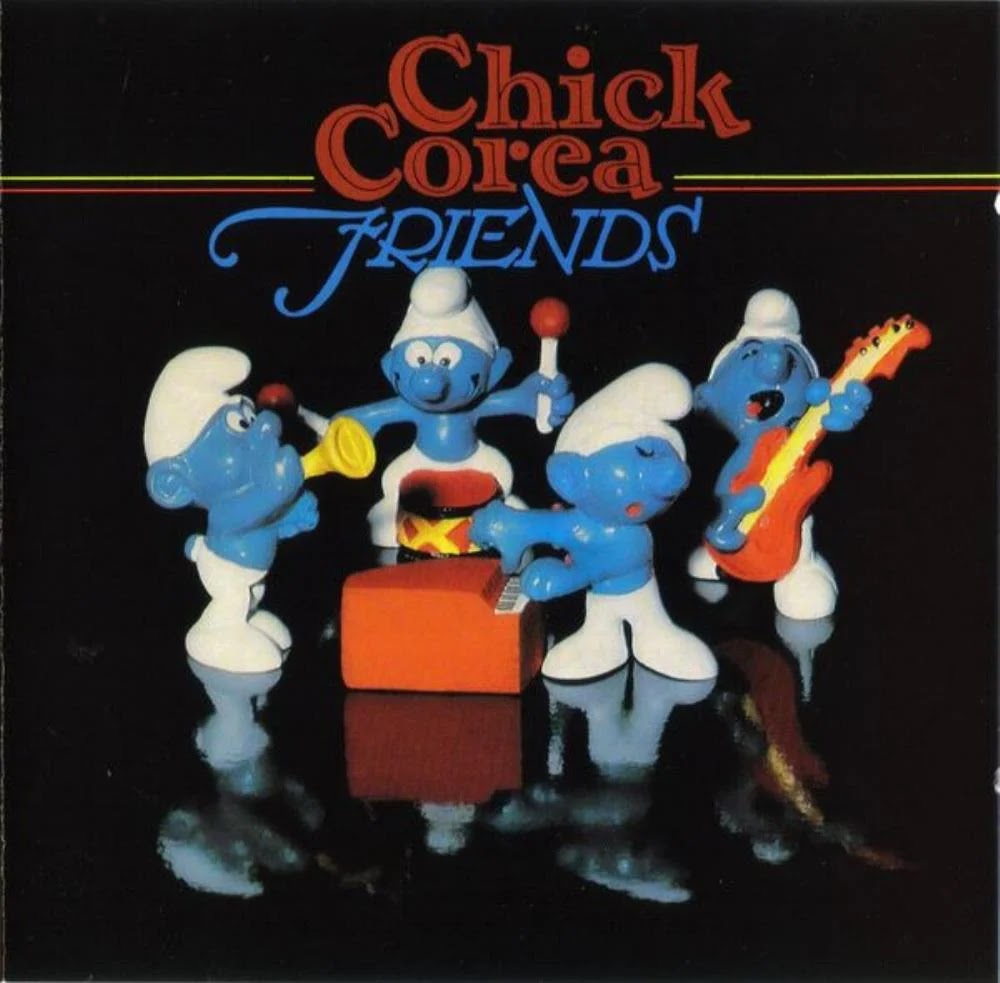
Line-up / Musicians:
- Chick Corea / Steinway acoustic grand piano, Fender Rhodes electric piano
With:
- Joe Farrell / soprano saxophone, tenor saxophone, flute
- Eddie Gómez / double bass
- Steve Gadd / drums
1. "The One Step" (6:05) a very sexy and spacious Smooth Jazz expression of some great melodies, ideas, using some superb jazz skills. If only all Smooth Jazz could have stayed as sophisticated, energetic, and jazzy as this tune! The performances of all four gentlemen are worthy of heaps of praise, but Steve Gadd's nuanced master work is especially smile-worthy. And I love Joe Farrell's smooth, never obnoxious soprano sax play. (10/10)
2. "Waltse for Dave" (7:32) piano, drums, fretless double bass (with some Fx?) establish a little swing action that reminds me of Burt Bacharach's "Wives and Lovers" (which earns the song points since Burt's song is already a favorite of mine). Joe joins in toward the end of the first minute with his mellifluous flute, teasing us with his flirtatious songbird-like melody making while Chick, Eddie, and Steve play quite playfully beneath. I have to say that it is so nice to hear jazz of this caliber being played with such joy and weightlessness! Chick and Eddie's solos are just as light and playful as Joe's making this another delightful song to hear--over and over. (14.25/15)
Total Time 50:22
93.93 on the Fishscales = A/five stars; a masterpiece of mostly-melodic Third Wave Jazz-Rock Fusion from one of the true masters of the genre accompanied by one of his favorite and strongest entourages of three.

- Greg Mathieson / keyboards
- Paulinho Da Costa / percussion
A1. "Room 335" (5:36) as if the producer said, "Let's take advantage of your playing on Steely Dan's "Peg": almost a carbon copy of both the rhythm track and lead guitar sound as well as the melody-supporting chord progression--especially for the first minute, then things kind of go off in their own direction for a bit before coming back to center on that keyboard chord progression. Larry is quite talented if a bit too smooth and his guitar a bit under-processed for my tastes. Nice of Larry to offer solo time to Greg Mathieson. (8.875/10)
A2. "Where Did You Come From" (3:29) Larry sings! Here on an original song coming from his background singer William Smith and Eric Mercury he makes a legitimate contribution to the Yacht Rock movement. A very likable song in an AMERICA/PABLO CRUISE/MICHAEL FRANKS kind of way while the music is a bit more like PLAYER. (9.125/10)
A3. "Nite Crawler" (5:20) a solid, likable, and suitably-nuanced this one opens as if it could be something from PLAYER, The Doobie Brothers, or even The Allman Brothers. Abraham Laboriel's funky bass is pretty great as is Jeff Porcaro's solid drumming. Greg Mathieson's keyboard work, though technically great, is a bit too much saccharine for me (more like Bob James' work). (8.75/10)
B1. "Rio Samba" (6:57) another song that uses a keyboard-arpeggiated two-chord progression and fast-paced Latin-Disco rhythm track to support the soloists (Larry and a much more contrasting and subdued Greg Matheison). Nice lead guitar work from Larry and nice percussion work from Paulinho Da Costa.(13.5/15)
B2. "I Apologize" (4:18) the second song composition contributed by Larry's friends William Smith and Eric Mercury, this one has a much more Southern Rock twang to it as if it were something from The Atlanta Rhythm Section, Ozark Mountain Daredevils, Dave Mason, or Marshall Tucker Band. It's nice--like a lot of the fare from those bands mentioned. (8.875/10)
B3. "Don't Give It Up" (6:03) opens with a driving bass and drum line quite similar to Boz Scagg's "Lido Shuffle" which Greg and Larry proceed to light up with their electric piano and electric guitar, respectively. The melodies are a little too Southern Rock-ish for my taste, but fans of The Eagles, ZZ Top, or The Allman Brothers would probably love this. Greg does provide some nice organ work during his solo in the middle of the song. (8.75/10)
B4. "(It Was) Only Yesterday" (4:33) delicate Bob James (or Whitney Houston)-like electric piano- and Arp Synth strings-enriched ballad music over which Larry gives a solo that feels too much as if he's trying to emulate Jeff Beck's work on his classic "Diamond Dust" song from his popular 1975 album release, Blow by Blow. It's a fine performance and a fine song but, I can't help but wince at the near-plagiarism. (9/10)
Total Time: 41:33
89.66 on the Fishscales = B+/4.5 stars; a near-masterpiece of high-quality Smooth Jazz.

Acoustic Guitar [Rhythm] – Richie Resnicoff (tracks: A3)
Alto Saxophone – Dave Sanborn (tracks: A2)
Alto Saxophone, Flute – Jerry Dodgion
Alto Saxophone, Flute, Oboe – Phil Bodner
Cello – Charles McCracken, Jonathan Abramowitz, Richard Locker, Seymour Barab
Contrabass Clarinet, Baritone Saxophone – Howard Johnson
Drums – Idris Muhammad (tracks: A1), Steve Gadd (tracks: A2 to B2)
Electric Bass – Gary King (tracks: A1, A2)
Electric Guitar – Eric Gale (tracks: A2, B2), Hiram Bullock (tracks: A2 to B2)
Electric Piano [Yamaha Grand], Keyboards [Fender Rhodes], Synthesizer [Oberheim Polyphonic], Piano [Acoustic] – Bob James
Flute – Hubert Laws (tracks: A3 to B2)
Flute, Clarinet, Tenor Saxophone – Harvey Estrin
Guitar – Hiram Bullock (tracks: A2 to B2)
Percussion – Mongo Santamaria (tracks: B2), Ralph MacDonald (tracks: A1 to B1)
Producer, Arranged By, Conductor, Composed By – Bob James
Soloist [Piccolo Bass] – Ron Carter (tracks: B2)
Soloist, Guitar – Eric Gale (tracks: A1)
Soloist, Guitar, Vocals – Hiram Bullock (tracks: B2)
Tenor Saxophone, English Horn, Flute, Oboe, Recorder – George Marge
Trombone – Alan Raph, Dave Bargeron, Wayne Andre
Trumpet – Jon Faddis, Mike Lawrence, Randy Brecker, Ron Tooley
Viola – Emanuel Vardi, Jean Dane , Sue Pray, Theodore Israel
Violin – Diana Halprin, Harold Kohon, Harry Cykman, Harry Lookofsky, Herbert Sorkin, John Pintavalle, Lewis Eley, Louis Gabowitz, Matthew Raimondi, Max Ellen, Richard Sortomme
About this releaseTappan Zee Records / Columbia – JC 35594 (US)
A1. "Angela (Theme From "Taxi")" (5:42) a sappy-saccharine song that even bugged me when it came out. (Having never owned a television, I've never seen a single episode of the iconic series.) I will grant a respectful acknowledgement of the skills exhibited by Bob and his studio crew to create such an universally-beloved song. (8.75/10)
A2. "Touchdown" (5:42) a pre-Disco or pseudo-disco song that I remember hearing in the discothèques but never really generated as much interest or participation from the dance crowds--most likely due to its lack of singing & lyrics as well to its more laid-back pace and feel. It did, I think, generate a growth in popularity for saxophonist Dave Sanborn. (8.75/10)
B1. "Sun Runner" (6:16) a great happy-go-lucky Jazz-Rock Fusion classic from a whole band with excellent performances from Hubert Laws, Ralph MacDonald, Earl Klugh, and, of course, Bob. Great song construct with sophisticated arrangements and awesome earworm chord progressions. (9.25/10)
B2. "Caribbean Nights" (9:22) highlights of this epic-length tune that I used to play to death in the early 1980s are 1)Hiram Bullock's vocal matching of his guitar solo in the opening section, 2) Bob's great Fender Rhodes play next, 3) the sublime dual performances of Earl Klugh's nylon string guitar with Hubert Laws masterful flute in the fifth and sixth minutes, 4) the whole-band recapitulation of the main theme in the seventh minute, and 5) the horn section with Hubert's swallow-like flute in the bridge before the finale (in which Ron Carter solos briefly with his piccolo bass). (19/20)
Total Time: 34:20
90.77 on the Fishscales = A-/five stars; a minor masterpiece of Smooth Jazz and one of the truly defining and exemplary samples of that new (and dominant) genre.

1. "Cosmic Messenger" (4:38) will always be my favorite Jean-Luc song because of the-above-noted amazing concert reproduction. The rhythm section is so tight here--too bad most Americans have never heard of these individual musicians cuz they're great. (10/10)
2. "Art of Happiness" (4:33) great bass and guitar play on this pretty-one dimensional song. (8.75/10)
3. "Don't Let the World Pass You By" (6:23) great synth start with guitars fading into the weave. Drums and bass elbow their way in before lead electric guitar and bass double up to bring in the melody line over a 90-second arc. The band then shifts gears and direction into a very tight hard-drivin' groove within which Alllan Zavod gets the first solo--about a minute's worth of synth magic before he (or Jean-Luc) switches to another synth for yet another minute of great stuff. Then, at 4:10, Jean-Luc is allowed to finally step in with his electric violin. He is so good: taking Zavod's stuff and putting it to shame! An Allan Holdsworth-sounding electric guitar gets a chance at 5:20 with Zavod competing with him just beneath. Great song. Everybody chugging along on full cylinders. (9.5/10)
4. "I Only Feel Good With You" (3:05) a stunningly beautiful song (as Jean-Luc was able to do more than any other J-R Fuse artist), synths and keys over gently-supporting rhythm play from Armstrong and Scheuerell and the rhythm guitarists. (9.75/10)
5. "Puppets' Dance" (3:40) never a favorite as Jean-Luc allows his band to take the Funk Road. Ralphe is good here, but the cowbell is too much. Guitars and violin weave together at first but then back off for Ralphe to show off a bit before returning for a recapitulation of their weave before backing down for Jean-Luc to soar away on his e-violin. (8.66667/10)
6. "Fake Paradise" (5:41) the opening 20-second weave sets up a great foundation for the guitarists and violin to have their time in the sun. Ralphe Armstrong is great. At 1:10 everybody remains steadfast over a suddenly shifting rhythm track. Interesting! Then the band returns to the first weave for a synthesizer to take the first solo. Same rhythmic shift at 2:37 (must be intended as the "chorus") but this is when one of the electric guitarists is given the nod. At 3:55 everybody goes back to motif #1 for Jean-Luc's turn. (8.875/10)
7. "Ethereal Mood" (4:03) another one of Jean-Luc's hauntingly majestic beauties. Keys, guitar, bass, congas, second acoustic guitar, strumming, and then soaring electric violin à la the title song. At 1:34 Jean-Luc recommences his melodic solo but then, at 1:55, there is a wonderful short-shift of guitar strumming before everybody returns to the normal for some loose atmospheric violin play. The dramatic "short-shift" occurs two more times, at 2:49 to 2:57 and 3:08 to 3:18, to great effect as Jean-Luc continues to let us think he's fading off into the cosmos. Great song. (9.75/10)

- Eddie Henderson / trumpet, flugelhorn
With:
- Ray Obiedo / guitar
- Herbie Hancock / Fender Rhodes, clavinet, synths (ARP 2600/Strings Ensemble, Oberheim 8 Voice Polyphonic, Prophet-5, Mini Moog, Yamaha CS-80 Polyphonic)
- John Bowen / Strings Ensemble synth (1,6), Prophet-5 programming
- James "Mtume" Foreman / piano, congas (3,5)
- Bennie Maupin / tenor saxophone, saxello
- Julian Priester / trombone
- Hubert Laws / flute
- Paul Jackson / bass
- Howard King / drums
- Bill Summers / congas, percussion
1. "Butterfly" [Herbie Hancock] (8:05) a remake of the Herbie Hancock "classic" (even though it's only four years old) with its creator taking part in the modernized version (as well as several Mwandishi alumni and Bennie Maupin who was one of the original Headhunters, too!) I love all of the innovative sounds Herbie, synth specialist John Bowen, and guitarist Ray Obiedo are employing to funk-up and "modernize" the song. So funny to have these songs re-covered A) so soon after their initial entry into pop consciousness and B) by members of the original lineup now four years "older"! LOL! It's even been discofied a bit! Though it is definitely different than the original, it's still a great song. (Perhaps its just one of those songs that you can never ruin no matter how you choose to approach it.) (14/15)
2. "Cyclops" [James Mtume] (5:18) Eddie and his record company felt good enough about this song to have released it as a 45-single! It's definitely catchy--like the instrumental ear candy that many jazz fusion artists were turning toward at this time--before Jazz-Rock Fusion was being spilled over into Smooth Jazz, Disco Funk, Adult Contemporary, Yacht Rock, 80s R&B and Hip-Hop, and even New Age. It feels as if the piano chords in this song were lifted directly off of the master tapes for the 1984 Soul/R&B hit song "Hey DJ" by The World Famous Supreme Team. It is a great, fun, highly enjoyable listen. (9.333/10)
Total Time: 37:08
90.44 on the Fishscales = A-/4.5 stars; a near-masterpiece of Third-entering-upon-Fourth Wave Jazz-Rock Fusion that illustrates that Eddie (and Herbie) are still committed to continuing to push the boundaries of that which is possible for the movement.

The Brasilian Jazz fusionists are back with another solid album, this one again recorded in the United States (at Capitol Records & Indigo Ranch). It was released by Capitol Records on August 21, 1978. This one was also produced by the same Larry Dunn-Eduardo Del Barrio-Jorge Strunz and Larkin Arnold team that the last album was produced by with the addition of horn specialist Steve Tavaglione also helping out.
- Jorge Strunz / Electric Guitar, Acoustic Guitar
- Eduardo Del Barrio / Electric Piano, Piano, Synthesizer [Moog, Poly Moog, Oberheim Polyphonic, Yamaha Polyphonic], Organ, Percussion
- Steve Tavaglione / Flute, Alto Saxophone, Soprano Saxophone
- Gregg Lee / Electric Bass, Pedalboard [Moog Bass Pedals]
- Hector Andrade / Congas, Percussion, Timbales
- Mike Azevedo / Congas, Percussion
- Alex Acuna / Drums
- George Del Barrio / Arranged By [Strings], Conductor [Strings]
1. "The Arousing" (2:50) an obvious "intro" song, it's just too Smooth and cinematic for my tastes: sounding more like soundtrack music for some American television show. (4.375/5)
2. "Reviviscence" (7:00) flowing directly from the previous "introductory" song without break, I do not like the weak sound and volume coming from Gregg Lee's bass nor the weak/distant sounds coming from Alex Acuna's drums. The rest of the band is fine--up to their usual quality of performance (though they do feel a little rote/uninspired: as if they've played this song a million times and are tired of it). (13.25/15)
3. "Mosaico" (7:00) here we get some Stanley Clarke feel from Gregg Lee, and some Chick Corea from Eduardo del Barrio, giving the music a bit of a RTF/Chick Corea sound and feel (which can never be a bad thing). Jorge Strunz even fills some of the song's numerous spaces with some very fine Al Di Meola-like acoustic guitar work (only with nylon stringed guitars as well as steel), which is very impressive, but where the song comes up a bit short is with any kind of cohesive themes or melody lines. Also, I just don't like the Smooth Jazz saxophone lines (and sounds) coming from Steve Tavaglione (which I know were the in-demand sounds of the era due to the popularity and success of artists like David Sanborn, Jay Beckenstein, Najee, and Kenny G). Still, I cannot find total dissatisfaction with anything this well imitative of Chick-Corea-like complexity. (13.25/15)
Total Time 43:20
89.50 on the Fishscales = B+/4.5 stars; other than the first two songs, we have here another near-masterpiece of incredibly-well-engineered music from these amazing musicians.

Gone are founding members Phil Collins (the drummer, lead singer, solo career launching, and budding producer was getting very busy in 1978!) and Robin Lumley (who, in a very curious note, performs the duties as the album's producer!). Here are newcomers Chuck Bürgi and itinerant veteran Peter Robinson to fill some pretty big shoes. The album was recorded in London in May and June of 1978 at (once again) Trident Studios with its release by Charisma coming on September 8.
Line-up / Musicians:
- John Goodsall / guitar
- Peter Robinson / keyboards
- Percy Jones / bass
- Chuck Bürgi / drums
- Morris Pert / percussion, Fender piano (3)
3. "Black Moon" (4:49) sensitive guitar play creates an aqueous-ethereal environment for the whole-team creation of a very pleasant and dreamy Yacht Rock tune. Brings back the nostalgic feelings for many evenings in the warm Atlantic breezes of Florida tiki bars and pool-side or beach parties. Excellent for its intentions as well as for its nuanced performances from John Goodsall's electrically-enhanced acoustic guitar, Percy's aqueous bass, and the lush blend of Peter and Morris' keyboard work. (9/10)
Total Time 49:07

Line-up / Musicians:
- Joe Zawinul / piano, Rhodes 88, synths (ARP 2600, Oberheim polyphonic & Prophet 5), Mu-Tron Fx, kalimbas, Thumbeki drums, sleigh bells, melodica, hi-hat, voice (1), arrangements & co-producer
- Wayne Shorter / soprano & tenor saxophones, voice (1)
- Jaco Pastorius / bass, drums (1, 2), voice (1, 2, 5), timpani (2), arrangements & co-producer
- Peter Erskine / drums (1, 3, 7), hi-hat (3), voice (1)
With:
- Jon Lucien / voice (1)
- Manolo Badrena / voice solo (1)
- Maurice White / vocals (8)
- Deniece Williams / voice (8)
- Steve Gadd / drums (3, 8)
- Tony Williams / drums (5, 6)
- Alan Howarth / synth programming
1. "The Pursuit of the Woman With the Feathered Hat" (5:00) the Zawinul sound parade begins. They could do so much better than this! (8.6667/10)
2. "River People" (4:49) live or not, this just sounds like another of the band's endlessly-protracted themes to allow Joe to show off his keyboards' sound possibilities. Throw in the handclaps and disco drums and you get one boring song. (Can't imagine why Jaco would put up with this!) (8.6667/10)
Total Time: 37:15

- Frank Zappa / guitar, vocals (1, 2) , percussion (3), arranger & producer
With:
- Davey Moire / vocals (2)
- George Duke / keyboards, vocals (1)
- Eddie Jobson / keyboards & yodeling (2)
- Ruth Underwood / synthesizer & percussion (4)
- Tom Fowler / bass (1, 3)
- Max Bennett / bass (2)
- James "Bird Legs" Youman / bass (4)
- Chester Thompson / drums (1, 3, 4)
- Paul Humphrey / drums (2)
- Don Brewer / bongos (2)
- Bruce Fowler / trombone (1,3)
- John Rotella / woodwind (3)
- Alan Estes / percussion (3)
- Emil Richards / percussion (3)
And:
- Michael Zearott / conductor (3)
- John Berkman / piano (3)
- Mike Altschul / flute (3)
- Ray Reed / flute (3)
- Earle Dumler / oboe (3)
- Victor Morosco / saxophone (3)
- JoAnn Caldwell McNab / bassoon (3)
- Graham Young / trumpet (3)
- Jay Daversa / trumpet (3)
- Malcolm McNab / trumpet (3)
- Don Waldrop / trombone (3)
- Jock Ellis / trombone (3)
- Dana Hughes / bass trombone (3)
- Murray Adler / violin (3)
- Sheldon Sanov / violin (3)
- Pamela Goldsmith / viola (3)
- Jerry Kessler / cello (3)
- Edward Meares / upright bass (3)
1. "(The Adventures of) Greggery Peccary" (20:34)
2. "Let Me Take You to the Beach" (2:44)
3. "Revised Music for Guitar and Low-Budget Orchestra" [instrumental] (7:37)
4. "REDUNZL" (8:16)
Total Time: 39:05
on the Fishscales = / stars;

- John McLaughlin / electric guitar
- Stu Goldberg / electric piano, organ and mini-moog synthesizer (1)
- Jerry Goodman / violin (1)
- Neil Jason / bass (2)
- Armando Peraza / congas (2)
- Patrice Rushen / piano (3)
- David Sanborn / alto saxophone (3)
- Tony Smith / drums (3)
- Chick Corea / piano and mini-moog (4)
- Jack DeJohnette / drums (4)
- Jack Bruce / bass (5)
- Tony Williams / drums (5)
1. "New York on My Mind" (5:45) with Billy Cobham and Jerry Goodman we have a bit of a mini-reunion of the First Incarnation of the Mahavishnu Orchestra. Stu Golberg is a perfect replacement for Jan Hammer while Fernando Saunders delivers a much more melodic and approach to the bass--which is actually quite nice. The song--and "Johnny"'s performance are way more blues-oriented than I've heard from the Mahavishnu for a long time. Though more subdued, it is nice to hear that heavy Mahavishnu Orchestra sound again. (9.125/10)
4. "Do You Hear the Voices that You Left Behind ?" (7:39) the plaintive guitar sounds being plucked by John on this sleeper sound like he's trying to be JEFF BECK. Stanley Clarke, Chick Corea, and Jack De Johnette are impressive and a perfect match for the changing tempos that the song takes us through over the course of its nearly-eight minutes though I wish A) the tone of Stanley's bass would pop a little more, B) Chick's electric piano tone had a little more bite and volume to it, and Jack were also hitting his targets with a little more force (and, therefore, volume). This could have been an awesome RTF-like Power Fusion song had everybody just been a little louder. Stanley's double bass solo is quite impressive, as is John's Al Di Meola-like electric guitar solo, and then when Chick switches to Mini-Moog you finally have the dynamic snap that the song (and band lineup) seems to be promising. Jack is great but he feels kind of stuck in the acoustic Jazz world despite his band mates transition into more electronic expressions. (13.5/15)
6. "Phenomenon: Compulsion" (3:21) just John and Billy Cobham (shades of 1971 when the two would jam with each other in the down times between takes on Miles Davis studio sessions and live concerts). The two really do have a neat relationship--an "interesting conversation," if you will. John, especially, really tears it up. I especially love the third minute when John starts doing chords like Pete Townsend and strings shredding like Adrian Belew. (8.875/10)
7. "My Foolish Heart" (3:22) a nice "old-fashioned" (despite the chorused use of heavy-reverb) solo guitar rendering of the great Victor Young and Ned Washington jazz standard from the classic 1949 film of the same name. Preview of John's amazing 1991 tribute to Bill Evans. Fine guitar playing--really using space well and never rushing anything; I just don't like the guitar tone John selected here. (8.875/10)
Total Time 37:18
89.71 on the Fishscales = B+/4.5 stars; a near-masterpiece of eclectic iterations of John McLaughlin bands and styles--which makes it feel kind of like a "Greatest Hits" album. Definitely a fun and interesting listen.

Lineup / Musicians:
- Ronnie Laws / saxophones, flute, vocals, piano (A3, B4)
- Larry Dunn / ARP, clavinet, Fender Rhodes, Moog
- Roland Bautista / guitar (A1, A2, B1, B3)
- Andrew Acosta / percussion (A1-A3, B1, B3)
- Eloise Laws / vocals (A1)
- Debra Laws / vocals (A1)
- Diane Reeves / vocals (A4)

Line-up / Musicians:
- Billy Cobham / drums, percussion, backing vocals (3, 5), co-producer
With:
- Kamal / lead vocals (1, 6)
- Ray Mouton / guitar (1-3, 5)
- Charles Singleton / guitar (1-3, 5), lead & backing vocals (3, 5)
- Steve Khan / 12-string guitar (2)
- Pete Mannu / guitar (4, 6)
- Mark Soskin / keyboards (1-3, 5)
- Joachim Kühn / Moog (4, 6)
- Alvin Batiste / clarinet (2), woodwind (3, 5)
- Eddie Daniels / tenor sax (1), woodwind (3, 5)
- Mike Mainieri / vibraphone (4)
- Jay Chattaway / arranger & conductor (1, 2, 6), co-producer
- Marvin Stamm / trumpet (1, 2, 6), flugelhorn (1)
- Mike Lawrence / trumpet (1, 2, 6), flugelhorn (1)
- Wayne Andre / trombone (1, 2, 6)
- Alan Ralph / trombone (1, 2, 6)
- George Quinn / trombone (1, 2, 6)
- Brooks Tillotson / French horn (1, 2, 6)
- Don Corrado / French horn (1, 2, 6)
- David Nadien / string section's concertmaster (1, 2, 6)
- Matthew Raimondi / strings (1, 2, 6)
- Richard Hendrickson / strings (1, 2, 6)
- Alfred V.Brown / strings (1, 2, 6)
- Peter Dimitriades / strings (1, 2, 6)
- Anahid Aiemian / strings (1, 2, 6)
- Louis Shulman / strings (1, 2, 6)
- Jonathan Abramowitz / strings (1, 2, 6)
2. "La Guernica" (8:05) a dramatic song with a Latin flare (especially coming from bass player Randy Jackson) that has become a concert and fan favorite of Billy's over the years, it has great performances from Billy (of course), guitarists Charles Singleton and Steve Kahn and keyboard player Mark Soskin. Though the inputs from the orchestra are rather minimal, I do like their presence. (15/15)
Total Time 37:54
Though this album is flawed and dated it contains some amazing musicianship, not the least of which comes from Mr. Cobham himself, and, as other reviewers have rationalized, you can tell that Billy is fully invested in the music he is making: never shirking or shorting on commitment to fully-developed and fully-polished music (which is one of the things I've enjoyed about listening to any album bearing his name: that commitment to excellence).
91.44 on the Fishscales = A-/five stars; another minor masterpiece of eclectic Jazz-Rock Fusion that expresses Billy's unwavering devotion to releasing only first-class music.

- Michał Urbaniak* / violin, strings [Oberheim Synthesizer], tenor saxophone, conductor
- Bernard Pretty Purdie* / drums
- James Crab Robinson / guitar
- Crusher Bennett* / percussion
Vocals [Lead]: Calvin Brown (A4, B1), Henry Jackson, James Crab Robinson*, Keith Keyboy Rose , Urszula Dudziak (A2, B2, B3, B4)
A2. "Free" (4:45) I have to admit to being quite shocked that Michał didn't enlist his superhuman wife to attempt to cover the vocals of this iconic Deniece Williams song--on her own. The credits say she's there but I have to admit that I cannot distinguish her voice from those of the men around her. Still, it's a pretty good rendition: very funky and soulful in the same vein as the above funk R&B artists. (8.875/10)
A3. "Ecstasy" (3:02) this one sounds very much like EARTH, WIND & FIRE or The BROTHERS JOHNSON. (It may be a cover of one of their songs. It's definitely not a cover of The Ohio Players song of the same name.) It may be an original. Great song--with some awesome musicianship across the board (especially from the bass)--and some very creative and spirited electric violin play from Michał. Should've been a radio hit! (9.125/10)
A4. "Just A Funky Feeling" (5:22) stanky funk-blues that sounds like The O'Jays, War, Rufus, Kool & The Gang and many other Funk R&B bands. Great contributions from the percussionists, vocal team, bass player, and saxes. Another absolutely outstanding funk R&B song. You'd be hard-pressed to admit that the band leader and composer was a European white guy! (9.333/10)
B1. "Want's Ta Make You Feel Good" (5:41) this song definitely brings one deep into the fold of the KOOL & THE GANG/BROTHERS JOHNSON/EARTH, WIND & FIRE pocket of smooth, sexy/sultry Funk R&B. Again, I'm pinching myself: Michał Urbaniak! Who knew?! There's even some RICK JAMES in this one. If you love the funk of the late 1970s, you're gonna LOVE this! Awesome! You could not ask for better band and musicianship! (9.5/10)

- Jack De Johnette / drums, piano
- John Abercrombie / guitars, mandolin
- Lester Bowie / trumpet
A2. "Where Or Wayne" (12:27) another highly-enjoyable and somehow fully-accessible song that seems more fitting of the musics released in the mid-Sixties by Miles Davis' Second Great Quintet. (24.25/25)
B2. "One Handed Woman" (10:50) with the experimental avant-garde/free jazz forays in the background of each and every one of these musicians, one could not help but expect at least one loosely-scripted free-for-all into four-way improvisation (five if you are allowed to count the two tracks laid down by Eddie Gomez: one for fast-walking double bass, the other for bowed bass play). John's chosen guitar tone is a little too quiet and, for my ears, staccato to fit this weave: it's like adding colored telephone cable wire to a weave of woolen fabrics. Lester's trumpet play, however, works for me. (The trumpet rarely sets me off--sometimes disappears in the mix but rarely ever disturbs me). Anyway, as I was saying: I knew that there had to be one of these. At least it's not one absent of melody or full of incomprehensible (to me) harmonic rules and sensibilities. (17.625/20)
B3. "Silver Hollow" (8:23) soft and spacious piano with muted trumpet notes straining to be heard from the background while Eddie and John gradually add their own inspiration from within the weave. Though John is playing both acoustic guitar (far in the background) his electric guitar tone during his brief solo appearances is definitely where the famous Pat Metheny tone comes from! Beautiful, John! Beautiful, Eddie! Beautiful, Jack! Beautiful, Lester! Another absolutely perfect song! (20/20)
Total Time: 46:31
96.45 on the Fishscales = A/five stars; an indisputable masterpiece of quintessential Jazz-Rock Fusion; one of the finest albums to ever come out of the J-R F movement.

- Bennie Maupin / saxophone [soprano, tenor], clarinet [bass], flute, marimba [bass], glockenspiel, synthesizer [Eu synthesizer, Computone Synthersizer Winddriver]
- Mike Sembello / acoustic guitar, guitar [electric]
- Abraham La Boriel / bass
- Mingo Lewis / congas, percussion [miscellaneous]
- Harvey Mason / drums
- Bobby Lyle / piano, electric piano, clavinet
- Patrick Gleeson / programming
- Beverly Bellows / harp (2)
- Onaje Allen Gumbs / arrangements (3-6), electric piano (5, 6)
- Derrick Youman / vocals (4)
1. "Nightwatch" (6:09) sophisticated jazz performed by very skilled musicians using all of the latest/most modern sound options which gives is the veneer of a smooth jazz song when, in fact, there is very little that is smooth or easy here. I mean everybody is skilled, everybody is using the latest sound technologies available to them, and nobody is slacking here. The beat coming from the rhythm section is very jagged and syncopated beneath Bennie's relatively smooth tenor sax play and no other solos are given, though everybody manages to shine (especially Harvey Mason, Bobby Lyle, Abraham La Boriel, and Mike Sambello on rhythm guitar). A song that gets better with each listen--and continues to reveal gems and surprises along the way. (9.25/10)
2. "Farewell To Rashan (Dedicated To Rashan Roland Kirk 1936 - 1977)" (3:34) A nice homage to a truly brave pioneer of jazz that sees Bennie playing the tenor sax while Bobby Lyle's electric piano fools around a little from underneath. (9/10)
4. "A Promise Kept" (5:46) this one opens with Bennie's soprano sax exploring some melodic lines in the way John Coltrane did when opening his A Love Supreme. But this is no "Acknowledgement," no, the band joins in during the first 30 seconds to reveal another funky, albeit jerky, quirky, and highly syncopated motif--one that has Harvey Mason really showing off his superior skills--while Bennie seems to fall into more of a support role (though he is still playing the lead). Unfortunately, we find everybody else kind of falling into a Bob James-kind of rut of holding fast to a fairly simple (and somewhat annoying) repeat pattern in support of Harvey (and Bennie). (8.875/10)
Total Time: 32:43
90.71 on the Fishscales = A-/five stars; a minor masterpiece of tried and true sophisticated Jazz-Rock Fusion from a headstrong band leader that is hell-bent on staying the course set forth by the visionaries who created the genre.

Line-up / Musicians:
- John Harmon / piano, composition, electric piano, orchestrated by, soloist, other
- Larry Darling / flugelhorn, synthesizer, soloist
- Kurt Dietrich / trombone, soloist, other
- Andy Waterman / engineer
- Mike Murphy / soloist, drums
- John Kirchberger / tenor saxophone, soprano saxophone, flute, soloist, other
- Mike Hale / soloist, trumpet
- Jeff Pietrangelo / soloist, trumpet
- Peter "Herb" Butler / technician
- Randy Tico / bass, soloist
- Matrix / producer
2. "Spring (Inspired By The Season For Ivan)" (8:25) pre-1980s Pat Metheny Group with some really strange dynamic arrangements! A very cool, mature composition of perfectly arranged group dynamics. A mighty nice representation of Spring--not unlike the music of Jay Beckenstein's SPYRO GYRA. (18/20)
3. "Mountolive (Inspired By The Literary Creation Of Lawrence Durell)" (5:14) opens like a dirge for a New Orleans funeral before turning cinematic and DON ELLIS ORCHESTRA fullness and light--and Randy Tico's funk. There's also some more je ne sais quoi-ness to this: like a BURT BACHARACH-itude or Brian ENOssification or BILL CONTI-ness. The massive drum solo paired with the New Orleans dirge doesn't really work for me but the rest is amazing (9.5/10)
4. "Come September (A Father's Farewell To His Five-year-old Son)" (2:54) lullaby electric piano is joined by solo bass trombone for this emotive, surprisingly dark opening. This one definitely develops cinematically though also very much like a collaboration between Weather Report and MAGMA, kind of like Blade Runner's "Blade Runner Blues" except done for trombone instead of flugelhorn. Weird to think this existed before and separate from Vangelis' composition of said soundtrack--which was composed with synthesizers but first published on vinyl by the New American Orchestra using Chuck Findlay's flugelhorn in the lead position. (9/10)
5. "Wizard (Musical Impressions Of J.R.R. Tolkein's Unforgettable Mage, Gandalf From "The Lord Of The Rings")" (10:55) moving straight from the intro of the previous song into this one with no delineation the music takes on many more standard jazz idiosyncracies--even Big Band era stuff--while also using the modern conventions championed by the likes of Chick Corea and Eumir Deodato. Lots of odd and unusual synth sounds--including on the percussion side of things--while the big band rhythm section and choral vocals join in. The drumming and interplay of the fretless bass and electric keyboards are, to my ear, essential anchors for the success of this piece. Everything is so well-conceived and precisely delivered! Plus, there is a "big cinema" classical music film score feel to many of the most dynamic parts--not unlike that which Chick Corea pulls off for his magnificent The Mad Hatter "opera." (19/20)
6. "Smile At The Foot Of The Ladder (A Musical Portrait Of Henry Miller's Clown/Saint August)" (5:02) gentle performed seamlessly over militaristic snare drumming for the first couple minutes before every thing goes Paul Desmond melodic/smooth jazz with Fender Rhodes, flutes, and choir vocal "Oooo"'s. Again, nice bass and subtle drumming play. I love when the horn section joins in over the Take Five"-like rhythm pattern and electric piano soloing. Return to the military snare drumming with muted horns to close out this wonderful song. (9.25/10)
7. "Brown Boy (A Bermudian Street Scene)" (7:21) a nice piece of sophisticated smooth jazz that Bob James and Joe Zawinul (and even Glenn Miller, Artie Shaw, and Benny Goodman) would have been quite impressed with. Great Jaco-like smooth fretless play in the seventh minute which is followed by quite a jovial, celebratory finish. (13.5/15)
Total Time 46:13

- Vlatko Stefanovski / guitar, vocals
- Nikola Dimusevski / keyboards
- Bodan Arsovski / bass
- Garabet Tavitijan / drums, vibes
1. "Akupunktura" (4:08) Now here's a song. Keyboard work and bass play are a bit lite but the drumming is pretty good (so much better than the work on the band's debut album--and better recorded). Vlatko is carrying the song--especially when he (finally) hits full-speed at the end of the third minute. The cheesy rock ending again makes me think that this song is just a simple warmup construct: something that lets the band get synchronized and stretched out. (8.75/10)
2. "Kako ti drago" (3:58) a song that comes with a little ethnic folk spice--either Slavic or Caribbean. This is a true fusion of jazz and rock music: it might even qualify more as something proggy (like a Camel song). (9.125/10)
Total Time: 34:02
89.333 on the Fishscales = B/four stars; an excellent display of skillful musicianship expressed through rather simplistic song constructs. Definitely an improvement over the band's debut.

A2. "Hayabusa" (4:10) some fiery, high energy guitar play from Gary for the first two minutes before he eventually allows Gary Moore a chance to take over the lead in the third minute. It takes GM a bit of time to get going but once he does it's hard to comprehend the speed with which he shreds those notes--and then GB joins in to kind of duel for the last 20 seconds. Impressive guitar playing but the song is not that memorable--would never bring me back. (8.875/10)
A3. "Electric Glide" (3:59) a gentle Smooth Jazz tune that would not be out of place on an Eagles, Player, Linda Ronstadt, or Crusaders album but at least has the benefit of allowing guitarist Robert Ahwri(y) plenty of opportunity to shine as he and Gary B. alternate solos about every 20 or 30 seconds throughout the four minutes. The two are both impressive. (9/10)
Total Time 36:20
89.60 on the Fishscales = B+/4.5 stars; an excellent collection of wide-spectrum guitar performances, both electric and acoustic, both with collaborating guitarists and solo displays of Gary Boyle's virtuosity as well as those of Gary Moore, Robert Ahwri, and Ken Shaw.

- Chick Corea / acoustic piano, Fender Rhodes electric piano, Hohner clavinet, Minimoog, Multimoog & Oberheim 8-voice synthesizers, backing vocals, percussion
With:
- Allen Vizzutti / trumpet, flugelhorn
- Bob Zottola / trumpet
- Ron Moss / trombone, bass trombone
- Jim Pugh / trombone, bass trombone
- Joe Farrell / flute, alto flute, bass flute, tenor saxophone, soprano saxophone
- Bunny Brunel / fretless bass
- Tom Brechtlein / drums
- Airto Moreira / percussion, hi-hat
- Charles Veal / violin, viola, backing vocals
- Carol Shive / violin, backing vocals
- Paula Hochhalter / cello, backing vocals
- Gayle Moran / lead vocals, backing vocals
- Al Jarreau / lead vocals
2. "Slinky" (5:42) here we get into the Smooth Jazz territory of Bob James, The (Jazz) Crusaders, and the Laws family (esp. Hubert and Ronnie) as well as Earl Klugh. An eminently enjoyable tune whose loud horn section takes one back to Chick's great The Mad Hatter album of a couple years before (my all-time favorite Third Wave Jazz-Rock Fusion album). The spacious structure and flute-with-Fender Rhodes melody presentation are so like the concurrent work of BOB JAMES, though. There's even a little MiniMoog homage at the end to the iconic RTF album, Romantic Warrior (also from 1976). (8.875/10)
Total Time 42:58

PASSPORT Ataraxia (Sky Blue)
Oh, no! Gone are drummer Curt Cress and bass player Wolfgang Schmid! Let's see how Klaus does with replacements Willy Ketzer and Dieter Petereit (and new full-member on keys, Hendrik Schaper). At least he was able to keep percussionist Elmer Louis and his extraordinary guitarist brother, Roy. The album was released by Atlantic Records in December of 1978.
Line-up / Musicians:
- Klaus Doldinger / saxophones, flute, keyboards, Mellotron
- Willy Ketzer / drums
- Elmer Louis / percussion
- Roy Louis / guitar
- Guillermo G. Marchena / vocals, percussion
- Dieter Petereit / electric bass
- Hendrik Schaper / keyboards
1. "Ataraxia, Pt. 1" (2:55) truly a pastoral introductory piece--one with little to no development. (4.375/5)
2. "Ataraxia, Pt. 2" (5:23) In these first two pieces Klaus' new predilection toward rich keyboard textures in his music is accented by the significant contributions of newcomer Hendrick Schaper. There is almost a TANGERINE DREAM feel to this music--certainly to the sound palette--at least until the arrival of Klaus' saxophone at 2:20--which brings out the not-so-TD-sounding funk from bassist Dieter Petereit and the keyboardists. I like this music, the new keyboard-rich sound palette; I just lament the loss of the music's Jazz-Rock Fusion footings. (9/10)
3. "Sky Blue" (4:38) keyboard synth wash chordal opening--a sound that reminds me more of early synths (like those used by Vangelis at this time) --leads to a rock-heavy theme that sports a pretty awesome "recorder/flute" synth solo. I do not like the thinner, poorer quality of sound coming from the engineering team for this album; this is a much more rock 'n' roll-sounding engineering sound--like something from The Crusaders at about this same time. The synth sounds are all quite dated (and unprocessed?) I like it all but, again, I just feel sad for the drift away from the sounds that made Jazz-Rock Fusion its own unique sub-genre. (8.875/10)
Total Time: 39:11


Lineup / Musicians:
A1. "Soul Free" (6:29) sounds like a cross between TOTO and KANSAS. Pushing a little too hard for the pseudo-prog rock side of AOR or "classic" rock. Fine musicianship, just a little over the top/pretentious. (8.75/10)
A2. "Heartburn" (4:14) the band's attempt at Led Zeppelin or AC/DC. Pretty good! (8.75/10)
A4. "Our Love Is Surely Gospel" (4:13) taking a swing at a Country-Western R&B combo like the ATLANTA RHYTHM SECTION, DAVE MASOM, or (Kenny) Loggins (& Messina). This song could have earned some radio play. (8.75/10)
B1. "Medusa" (4:33) this one sounds like a R&B singer (think "The Trammps") over a Southern Rock band: it has worked in the past but never (in my recollection) to produce a major radio hit: Three Dog Night, Jeff Beck Group, Thin Lizzy, The Isley Brothers, early Parliament, and even (8.75/10)

ÉDITION SPÉCIALE Horizon Digital
- Marius Lorenzini / guitar, synth, vocals
- Ann Ballester / keyboards, synth, vocals
- Francois Grillot / bass (1-6)
- Alain Gouillard / drums (1-6)
- Mireille Bauer / vibraphone, marimba, percussion
1. "Aurore" (5:42) cool two-part song with Mireille Bauer's vibraphone given one of the primary/prominent roles in the weave. I very much like the tone and style of play from guitarist Marius Larenzini and I find this weave with its multiple melodies competing and yet complementing with one another quite enjoyable. (9.125/10)
2. "Camara" (9:25) a similar style to the previous song despite the long intro and presence of French choral vocals. They create a great little weave here with very catchy melodies and swinging rhythm track. Do I hear a little similarity to Belgian band COS here? At the 3:20 mark the band shifts up a gear with a little Latin percussion added to the swing in order to guide and inspire the two synth soloists to strive upwards. At 4:28 we're back to the lighter, smoother COS- like vocal motif, perhaps slowed down a bit, now using some dramatic stop-and-start techniques to punctuate pauses and shifts. Very cool! And boy! can these musicians play! I am SO impressed! Though there is a definite Third Wave smoothness to the engineering and sound palette, the band is definitely carving out their path through the exciting funk of this still-fairly-new seb-genre of music (i.e. Jazz-Rock Fusion). Have I mentioned how impressive drummer Alain Gouillard and bassist François Grillot are on the bottom end? I love the harmonized duet between Mireille Bauer on the vibraphone and Ann Ballester on the electric piano during the closing minute. (19/20)
3. "Ma vie dégénère" (2:58) almost a standard rock song with more choral vocals in the fore. Not nearly as exciting as the previous songs (and not nearly as complex or jazzy). (8.4/10)
4. "Daisy" (7:04) again I'm hearing a much more modern kind of music--something more avant-garde than what the 1970s is usually like--though some of the jazzier Canterbury bands also come to mind during certain sections of this song. Opening with electric guitar and vibraphone arpeggiating a two chord sequence over and over, I am quite reminded of 2023's OIAPOK (almost exactly!) And this is 45 years before Pierre "Cheese" (Wawrzyniak) and company ever released an album! Lots of funky panning, both forward and back and then side to side, very quickly. I'm still quite blown away by the ballsy music and engineering. Could this have really been 1978? Also, the funk coming from both the bass play and the syncopation of the rhythm section as a whole in the middle section, is quite remarkable. Nice Steely Dan quality and familiarity to the keyboard and guitar parts. Wow! (14.25/15)
5. "Jungle's Jingle" (6:32) another odd, off-kilter song that has a very quirky Canterbury sound palette and a twist-and- turning bent to it not unlike Pierre Wawrzyniak's CAMEMBERT project of the 2010s. At 1:15 there is a little pause bridge for a reset before the band drops back into the hypnotically circular motif of the opening section. Odd synth and guitar sounds join the weave to present before 2:18 when a new motif is established, one that is still "circular" but now containing some MAGMA or SETNA-like menace in the feel of the weave. Again the lead instruments (guitar and synths) are put through some very strange futuristic sound-blender or something for several of the solos though vibraphone and piano or still within the realms of normalcy. I love the gutsy experimentalism these guys (and gals) are expressing! (9.25/10)
6. "Confluence" (4:46) a slow and very deliberate mathematical construction opens this one for the first 83 seconds before the band merges onto the autoroute while assuming a piano-led high cruising speed. The somewhat Latin- tinged weave is peppered with piano, synths, marimba and timbales performing the lead melody injections until a whole band chorus joins in spewing forth a wildly crazed African-sounding Babel-speak at 3:03--which starts out within the musical weave but gradually drives the instruments from the soundscape for a full 30 seconds of crazy a cappella time before everything comes to a full stop, leaving us with a sudden and surprising space with no sound! Crazy! Then, at 4:04, the hard-driving motif returns with a new Zeuhlish insistence (especially from the bass, drums, and guitar). This could quite easily have been something I might have heard on CAMEMBERT's two albums from the 2010s, Schnorgl Attahk and Negative Toe. but nothing I would ever have expected to have heard in 1978! I am stunned! (9.75/10)
Total Time 36:27
I am still stunned--even now after my fifth or sixth listen to this astonishing album! How?! . . . What?! . . . Where the heck did these cats come from? Where the heck did they get their ideas? I mean, there's only so much you can get from listening to Parliament, James Brown, Mandrill, Osibisa, Herbie Hancock, Weather Report, and/or Frank Zappa! How much of this ingenuity can be attributed to producer Laurent Thibault's genius?
93.03 on the Fishscales = A/five stars; a masterpiece of refreshingly original Canterbury- and Zeuhl-infused Jazz-Rock Fusion. I definitely consider this an essential addition to any so-called prog lover's music collection.

- Harold Budd / electric piano (1), piano & vocals (4), choir conductor (3), composer
With:
- Marion Brown / alto sax (1)
- Richard Bernas / celesta (1), electric piano (3)
- Gavin Bryars / glockenspiel (1,4), celesta (3), vocals (4)
- Maggie Thomas / harp (1-3)
- Howard Rees / marimba (1), vibes (4)
- Jo Julian / marimba (1), vibes & vocals (4)
- Michael Nyman / marimba (1,4), vocals (4)
- John White / marimba (1), percussion & vocals (4)
- Nigel Shipway / percussion (3)
- Lynda Richardson / mezzo soprano vocals (2), chorus vocals (3)
- Alison Macgregor / chorus vocals (3)
- Lesley Reid / chorus vocals (3)
- Margaret Cable / chorus vocals (3)
- Muriel Dickenson / chorus vocals (3)
- Ursula Connors / chorus vocals (3)
- Brian Eno / vocals (4), producer
1. "Bismillahi 'Rrahman 'Rrahim" (18:25) rich electric piano play that could be mistaken for some of the music Fred Rodgers made for his television show in Pittsburg is beautifully enhanced by marimba, harp, celesta, and saxophone, all of it receiving the Eno engineering touch (a lot of reverb). Is this where Vangelis got some inspiration for his soundtrack recordings for Ridley Scott's Blade Runner? Peaceful, dreamy, mesmerizing, and thoroughly relaxing, this could just be the music of Heaven. Though the song is consistent in its vibe, there are two motifs, the first dominated by Marion Brown's saxophone while the second gives the team of marimba players (four of them!) more attention--and it never really overstays its welcome (as many a satisfactorily rejuvenated massage client will attest). (37/40)
2. "Two Songs: Let Us Go Into The House Of The Lord / Butterfly Sunday" (6:26) Harold barely accompanies Maggie Thomas' concert harp while mezzo soprano Lynda Richardson supplies the soaring, angelic vocalese. Incredible chords played sporadically from the harp. (9.66667/10)
3. "Madrigals Of The Rose Angel: Rosetti Noise / The Crystal Garden And A Coda" (14:20) more gorgeous major seventh chords being played as arpeggi from the harp, marimba, and electric piano as the Budd-directed choir sings their amazing melodies. Celesta and other tuned and untuned metallic chimes and percussives add their important contributions over the middle section of the song. A little weak in its sparse and drawn-out finish, otherwise this is just an amazing masterpiece of heavenly music. (29/30)
4. "Juno" (8:26) minor chords from Harold's piano that preview some of his future work with Eno on their Ambient album series. The vocals on this one are different in that they come from a male ensemble of six. Marimbas, vibes, and chime percussion take over for the vocals in the middle section. (18/20)
Total time 47:37

Recorded February 1976 at Studio Barbarossa, München, Deutschland but not released until 1978 by the German label Musicians Record Company.
- Eberhard Weber / bass, fretless bass
- Lala Kovacev / drums, percussion
A2. "Fatima" (7:05) opens with Eberhard's bass exaggerating his fretless pitch-variance and some Middle Eastern percussion instruments (clay drums, big djembe-like drum) and saz (or oud) which evolves into more of a Middle Eastern jam (sans bass) in the middle. Eberhard returns toward the end, first as fretless bass player, then as neck-squeaker while the Arabic jam session intensifies and crescendos at the end. I love it! (13.75/15)
B2. "Thanks for Being Being" (5:05) more beauty and height-seeking emotion being led by Chris' flute and amply supported (and perhaps grounded a bit) by the others. The problem with this song is that it never really goes anywhere--never really achieves Nirvana. (8.875/10)
B3. "Do It Nice for Me" (5:35) a much more normal, if laid back Soul-Jazz piece that has some really comforting African-American textures, harmonic elements, and other tricks to make it sound like a seductive walk through late night Atlanta or something but then it goes into more rock 'n' roll jamming for the second half. I find myself thinking/feeling of the jazzy, late night smooth jazz side of Kool & The Gang, The Brothers Johnson as well as a jazzy jam by War. Inviting ambiance. Nice. (9/10)

Recorded & mixed at Tonstudio Bauer, Ludwigsburg September 1978 for Amayana Records, this is, unfortunately, the second and final offering from this band of talented, skilled musicians.
- Max Köhler / bass
- Harald Pompl / drums
- Hans Kraus-Hübner / piano, synthesizer
- Roland Bankel / guitar
- Mandi Riedelbauch / saxophone, flute, bassoon
2. "Burning John" (4:28) creative and inflective jazz-rock fusion that has just the right amount of funk, jazz, rock, melody, twists and turns to keep it both interesting and engaging. I find this drummer (Max Köhler) to be quite impressive with the way he achieves so much with his incredibly subtle stick play on the cymbals, hi-hat, and snare. Guitarist Roland Bankel gives one of the more impressive jazz-guitar performances I've ever heard. (I am not really much of a fan of the traditional Wes Montgomery and Charlie Christian "jazz guitar" sound or stylings.) (9/10)
Total Time 40:14
90.74 on the Fishscales = A-/five stars; I call this very much a masterpiece of late Third Wave Jazz-Rock Fusion. The skills exhibited by all of these performers feel to me similar to those of a master chef in a fine restaurant: engaging menu, great presentation, delicious, melt-in-your-mouth tastes with subtle yet very-satisfying undertones of flavor peppered with the perfect amount of never-over-done bursts of stimulation and character leaving a wonderfully-long-lasting glow of pleasure and contentedness. Highly recommended.

Line-up / Musicians:
- Jean Lars / bass
- Marc Millon / drums, percussion, vibraphone
- Jaen-Michel Philippe / electric & acoustic guitar
- Jacques Lars / electric guitar
- René-Marc Bini / keyboards
- Jean-Loup Marlaud / saxophone, clarinet, flute
- Alain Labarsouque / violin
2. "Saxophonie" (15:25) very engaging despite its complexity, speed, and uniquity. The beautiful chord progression the band settles into during the second and third minutes has an immediate heart-wrenching effect on me due to it being the exact same as the foundational chords of LENNY WHITE's "Prince of the Sea." Also, the use of all percussive instruments (piano, drums, bass, vibraphone) to present the music over the course of the first four minutes is quite engaging. Then the music kicks into a full funky fast paced jazz-rock motif in which electric bass, drums, Fender Rhodes, jazz guitar, and sax do a great job of playing some HERBIE HANCOCK-like music. But then everything switches at the six-minute mark--picking up some more mathematical and folk-infused styles in order to express its true allegiance to the historically more-complex jazz styles of the past (as the French love). Violin enters as an electric guitar goes all under-water bubbly with its fast-played descending bass string arpeggios all set within the rich chords of René-Marc Bini's Fender Rhodes. This second half stuff continues to develop closer to being avant garde jazz than jazz-rock fusion--especially in the wild 14th minute--though they do continue to use all of the rock instrumentation of the first, more-melodic half. Definitely a very impressive, very creative song. And, despite its title, I found myself rarely listening to Jean-Loup Marlaud's saxophone play: there was just too much else going on that was far more interesting! (28/30)
3. "Gavarnie" (10:28) this song opens with some discordant descending chord progressions performed with mathematical skill that sounds very similar to the music created by Quebecois band CONVENTUM until it goes off on an almost Minimalist direction with bass and saxophone presenting some lead/soloing over the top. At 2:30 the music takes a turn, smoothing out a bit though continuing to explore minor and perhaps even chromatic scales and chord combinations (especially with the bass). Two guitars weave their arpeggiated chords within each other with great effect due to the slightly off-center harmonic values of their chords. Bass chords, lite cymbal play, aggressive sax, and electric guitar take turns soloing over the top--even at times, over one another--until the band succumbs to a slow fade starting around the six-minute mark. Left with distant arpeggiated electric guitar chords we are then treated to a show of fairly random percussion play of some metal objects like chimes and cowbells until the eight-minute mark when the rest of the band (bass, jazz drums, Fender Rhodes, sax) rejoin the still arpeggiating electric guitar to create a gentle, almost tender weave that could guide an infant to sleep. Very pretty! Another very, very interesting song that is, unfortunately, weakened by its obtuse chord choices as well as by the overly-simplistic metal percussion play in the sixth and seventh minutes. (17.5/20)
4. "Mandarine" (9:42) opening with some complex high-speed interplay between Marc Bini's piano and Jaen-Michel Philippe's steel-string acoustic guitar, the song then switches completely into a gentle, willowy duet of René-Marc Bini's vibraphone and Jean-Loup Marlaud's classical-sounding flute until 1:45 when wordless vocalese, vibes, and electric bass mirror each other in a four-note arpeggio for about 30 seconds. Then the band develops another smooth almost-Genesis-like passage that is founded in arpeggiated chords from electric piano and acoustic guitar. This reminds me of CONVENTUM. The music then continues morphing, now into an electric guitar version of the previous motif with flute and violin taking turns soloing over the top. The fifth minute is quite pleasant with the rich, warm play of the Fender Rhodes dominating, but then the band fly off into about five different directions with each instrumentalist soloing with little connection to one another for about 20 seconds but then they come back into the fold of the rich, warm Fender Rhodes, drums and intuitive bass helping to hold down the funky groove while flute, violin, and the two guitarists (acoustic and electric) take turns sharing the spotlight up front. The song then returns to a gentle repetition of a five chord progression with some solo embellishment to its end fadeout. An odd song that is very entertaining and engaging despite its frequent shifting and morphing. Rated up for creativity and sophistication. (18/20)
Total Time 41:50

- Patrice Cinelu / electric & acoustic guitars, cabasa (6), vocals (8)
- Olivier Hutman / piano, Fender & Yamaha CP30 e-pianos, clavinet, spinet, Hammond, synths (Micro Moog, ARP Odyssey, Hohner String Ensemble), vibes, string arrangements (3)
- Denis Barbier / flute, piccolo flute, alto, tenor & soprano saxes, double bass & harp (5), string arrangements (5)
- Oliver DeLaTaille / trumpet, bugle
- Philippe Simon / trombone, bass trombone
- Gilles Douieb / bass
- Umberto Pagnini / drums
- Mino Cinelu / percussion
With:
- Éric Letourneux / tenor sax (5)
- Raymond Betzi / percussion (1,5)
1. "Ali Baba" (5:10) quite solid and sophisticated Jazz-Rock Fusion that occasionally slips over into Smooth Jazz and instrumental rock. I like the prominent use of trombones as well as the core trio of band members' willingness to switch between multiple instruments during the course of a single song. (8.875/10)
4. "Octopus" (2:48) back to the R&B-grounded Jazz-Rock Funk of the second song. Listen to the electric bass play of Gilles Douieb! as well as the contributions of the horn section! Wow! (9/10)
6. "E 330" (5:00) Oh. I get it! Alternating songs deeply rooted in the funk with other sophisticated yet-smoother song constructs. Me like! Here we have yet another amazingly superb funk song, this one founded well within the Latin traditions. The song's only weakness is that it gradually becomes smoother, more Latin melodic and less R&B funky as it progresses--especially as Olivier Hutman's piano takes the lead. It's not bad--the piano play is pretty--especially when woven with the acoustic guitar and flute--but it gets a little bland when he becomes the sole soloist (despite his similarity of style and sound to that of my well-loved favorite, Chick Corea). (9/10)
9. "Canaan Part 2" (4:14) the band uses a chill, smooth funk motif as if to recover (or let the listener recover) from Part 1. The horn section sets the band up for an extended electric guitar solo backed by some wonderful electric piano chord play and intermittent riff-blasts from the horn section. While electric guitarist Patrice Cinelu does not, in my estimation, stand up to the mind-blowing expressions of the bass, drums, percussionists, and horns, he is quite good. (8.875/10)
Total Time 39:56

Line-up / Musicians:
- Riccardo Cioni / clavinet, Fender piano, Omni Arp, Arp 2600
- Roberto Buoni / flute, saxophone, electric clarinet
- Luigi Fiorentino / guitar
- Mauro Sarti / drums
- Tonino Camiscioni / bass
2. "Promenade" (10:45) a slow, almost B-movie cinematic start with Fender Rhodes chords and saxophone gives way to ANT PHILLIPS-like arpeggiated electric guitar chords at the end of the first minute. This guitar-dominated motif continues for while the Fender Rhodes, gentle cymbal play, and saxophone make subtle contributions in the background. Then, at the 2:15 mark everybody kicks into a melodic two chord motif with chunky bass and full drums jumping into the fore. This is kind of NOVA Vimana-like. At the end of the fifth minute the music suddenly switches into a more Latin/Caribbean-flavored movement with lots of fast moving staccato parts. The music almost enters the area of rock/rockabilly before finally slowing down to create a new, more somber and rich keyboard and sax-filled theme in which bass and guitar have some solo exposure. The final two minutes, then, show the band backing off into just Fender Rhodes for a bit before restarting a variation on the arpeggiated guitar-with-saxophone motif from the beginning. Interesting and very pleasant song to experience. (17.875/20)
3. "Porotopostrippa Sul Pero" (8:50) fast opening with sax, bass, guitar and keys all jumping in full volume before settling back into a jerky groove in support of keyboardist Riccardo Cioni's keyboard play--and I do mean play! The dude jumps around from keyboard to keyboard for a it before settling on an unusual synth sound for a good minute. Then the full band jumps back into a whole-band pastiche with guitars and saxes (multiple tracks, each) competing for lead until finally a clarinet is left to occupy the spotlight. Very interesting solo over some nice funk. (The bass and drums are definitely in The Zone!) Guitar and bass take the next leads, in tandem for the bit in which the guitarist takes to establish himself. Then there is another lull while Luigi Fiorentino preps himself mentally for an extended electric guitar solo--here using a heavily-processed sound for his axemanship. It's a very nice rock solo in the vein of Hiram Bullock or David Sancious. (17.75/20)
4. "Cipresso Violento" (5:20) Fender Rhodes and sax interplay on this spacious, slow-to-develop-and-define-itself Smooth Jazz song. At times it has a very distinctive STEELY DAN Aja ("Aja") sound and feel. After over two minutes of feeling their way around, the band finally settles into a very RTF "Duel of the Jester and the Tyrant"-like motif with heavy bass chords and repetition of a two chord form. The heavy speeding down the highway only lasts a minute or so before the song regresses to its patchy, pastoral exploratory style of the opening two minutes and then eventually closes. All in all, it's a nice song, with lots of very rich, pleasant, and engaging sounds, I just wish it would/could have established a little more structure and rhythm for a longer portion of its five-and-a-half minutes. (8.75/10)
Total Time: 31:40

- Herbie Hancock / piano, electric piano (A1, A2, B2)
- Lee Ritenour / guitar (A1, A2, B2, B3, B4)
- John Guerin / drums (A1, A2, B2, B4)
- Garnett Brown / trombone (A1, B1, B2)
- Jay Graydon / guitar (A3, B1)
- Richard Greene & Beryl Marriott / violin, viola (A3, B4)
- Abraham Laboriel / bass (A3, B1)
A2. "Silver Lace" (8:15) slower paced with a style and Latinized sound palette that feels more like some of the excellent Smooth Jazz music of Eumir Deodato's, here Joe displays his flute talents. Nice work from Herbie Hancock on the electric piano and Lee Ritenour on the jazz guitar and nice melody leads and collectives from Joe and his doppleganger background vocalists, Andrea Robinson and Lynda Tucker Lawrence. (17.875/20)
Total Time: 43:39

LARRY CORYELL Difference
Six Larry Coryell originals and one cover of a Herbie Mann song ("Memphis Underground") were recorded and edited in New York City between Electric Lady Studios and Sound Ideas Studios and the 1975 Montreux Jazz Festival then released by the French label Egg sometime in 1978.
Line-up / Musicians:
- Larry Coryell / acoustic & electric guitars
With:
- Steve Khan / guitar (3)
- Arthur Rhames / guitar (1, 5, 7)
- Glen Moore / acoustic guitar (1, 5, 7)
- Michael Brecker / saxophone (1, 3, 5, 7)
- David Sanborn / alto saxophone (3)
- Don Grolnick / keyboards (3)
- Will Lee / bass
- Tony Williams / drums
- Steve Gadd / drums (3)
1. "Octaves" (3:49) Larry, Oregon's Glen Moore, and "the forgotten virtuoso" Arthur Rhames (who died at tragically at age 32 in 1989 as result of the first wave of the AIDS epidemic) on guitars at the same time while Will Lee and Tony Williams man the rhythm section. Saxophonist Michael Brecker commands the foreground when he enters, except when the lead electric guitar is playing, then that person (probably Larry) is stepping on everyone's toes. But it works! Even when all three guitarists are flying around their fretboards it still somehow works. Even as they slow down in the fourth minute, it still works! Interesting. And cool! (9.25/10)
2. "Acoustic Solo" (5:35) Yes, Larry is in love with his acoustic guitars--his new Ovations, no doubt. There are some excellent nods here to Bill Evans and John McLaughlin (intentional?) as well as many other great contemporary guitarists. As a whole this isn't anything so very exceptional, but as a conglomeration of many styles, riffs and themes it is a very fun listen. (9/10)
3. "Memphis Underground" (3:38) I know Herbie Mann's version of this song and the opening of this version is actually something quite refreshing: truly an interpretation not a note-for-note rendering. I barely notice the presence of David Sanborn's sax or Don Grolnick's keys! (9.125/10)
4. "Improvisation" (2:32) all solo acoustic guitar that would make Al Di Meola fans sit up and drop their jaw. (4.625/5)
5. "Picean Moon" (5:58) a repeat of the line-up for the album's first song, "Octaves" delivers more lushly-guitar-estrated music with gentle sax woven into the fabric as Tony Williams' (distant) cymbal play seems to enhance and enrich the weave of the three guitarists but I feel somewhat cheated by having to strain so hard in order to hear Tony's drums. Overall, this song feels and sounds as much like an OREGON or CoDoNa song as anything by (9.125/10)
6. "Serabond" (4:45) a recording of a live acoustic guitar performance (probably captured at the 1975 Montreux Jazz Festival) which seems to express various interpretations of Rodrigo's Adagio melodies in his "Concierto de Aranjuez." (9/10)
7. "Aquarian Mode" (5:07) I can almost hear Tony's drums and Will Lee's bass as Michael Brecker's sax and Arthur Rhames and Larry's guitars seem to dominate the foreground of the sonic field. I wish the mix were better--I find it hard to believe that it couldn't have been--despite the fine performances by the lead instruments. Larry and "the scariest musician of all-time" (sax, piano, and guitar master Arthur Rhames) burn it up. (8.75/10)
Total Time 31:24
It's hard to believe how far into the background Tony Williams' drums are mixed in each and every one of these songs.
90.58 on the Fishscales = A-/4.5 stars; an album of exciting and different Jazz-Rock Fusion songs that are marred (and demerited) by poor sound mixing and the album's overall brevity.

- Björn J:Son Lindh (Ablution, ABBA) / flute, keyboards
- Joe Porcaro (father of Jeff, Mike, and Steve) / percussion
- Malando Gassama / percussion
1. "Hot Days And Summer Nights" (7:35) twangy rock guitar played within a Frank Zappa-like palette with keys and tuned percussion often reciting complex and speedy legato lines with Janne's guitar over the course of the first high-energy four minutes. Then at 4:10 the bottom drops out and we're left with a spacious, slow, really "strings"-rich orchestra-like motif that Janne plays sparingly over with Jeff Beck-like sensitivity. Weirdly dichotomous--like night and day! (13.375/15)
2. "Happy Feet" (4:41) a Smooth Jazz piece that feels like an instrumental cover of a Nashville-born pop song. (Think Sammy Johns' "Chevy Van," "Rhinestone Cowboy," The Atlanta Rhythm Section, and Al Jarreau's "We're in this Love Together.") Nicely-crafted fairly-innocuous song. (8.875/10)
3. "To A Beautiful Painter" (4:40) the unusual, uniquely-crafted music here is, to my mind, equal to the ardor inherent in the promise of the song's title: Smooth Jazz that is totally captivating. (9.125/10)
5. "The Shrimp" (5:23) some proto-Yacht Rock that sounds like the fare being produced by artists like Deodato, Bob James, The Crusaders, Lee Ritenour, and even brothers Hubert and Ronnie Laws up to this point. Great melodies and smooth groove with totally in-the-pocket drums and rhythm corps. (9/10)
Total Time 40:32
90.15 on the Fishscales = A-/4.5 stars; a highly consistent collection of high quality instrumental songs that definitely fall into the domain of Smooth Jazz. This may not be a masterpiece of progressive rock or Jazz-Rock Fusion but it is a very fine example of Smooth Jazz--probably a masterpiece of such.

Recorded At Sound 80 in the late summer and fall of 1978 and then released by Sound 80 Records late in the year. Flim (bassist Jimmy Johnson), Bill Berg and Bill Barber were the test band for 3M's exploration of digital recording and material formats.
- Bill Berg / drums, percussion
- Dave Karr / flutes, panpipes
- Lonnie Knight / guitars
- Bill Barber / piano, electric piano, celesta, synthesizer [Oberheim], synthesizer [Arp Omni]
- Dick Oatts / saxophones, clarinet, organ [Hammond B-3]
A1. "View From Seventh Heaven" (4:45) built on a blues theme the music almost immediately exudes the kind of melodic cheerfulness that Jay Beckenstein's SPYRO GYRA band had begun putting out around this same time while pianist Bill Barber's style and sound remind me very much of early BILLY JOEL. The "puffy" digital drum head sounds are a bit off-putting (as well as rendered a little too close: in our laps). Flim's Alembic bass is definitely a marvel to behold. (8.75/10)
A2. "Maid Marian" (3:31) solo flute sets up this one with a pleasant bucolic folk melody line, repeated several times before [uncredited] acoustic guitar, bass, piano, and clarinet join in to perpetuate the pastoral theme with a weave. Pan flute presents its own inputs in the third minute before clarinet, piano, bass, and finger-picked acoustic guitar retake the lead as a weave (with the flute toward the end). Very pleasant and refreshing. Another top three song. (9/10)
A3. "March Of The Nine-Legged Spider" (4:30) this one sets up with an unusual electric keyboard performing what almost sounds like a modern Classical piece, complete with odd time signatures and quirky/unexpected key and chord changes. Actually a pretty cool song--one that has some really interesting performance adaptations by Flim's bass play and Bill Berg's drumming. Bill Barber's keyboard sound switches to celesta in the third quarter, which is kind of cool. A top three song for sure. (9.25/10)
A4. "X-1" (6:44) another blues-based tune that has the good fortune of shifting gears a few times but then is cursed with the sonorous alto sax and puffy drums. The bass, piano, and clarinet, however, are really good. (8.875/10)
B1. "Jacob's Boogie" (3:32) a more upbeat, modern R&B-based tune that hops and moves thanks to some great bass playing, nice electric piano support, and intricate drumming. (9/10)
B2. "Blue Noise" (6:06) a late night rock slow dance with uncredited rhythm guitar, Oberheim synth strings, sax, and an awesome Classical bridge that recurs out of the blue at unexpected times in the song two times. I don't love the bluesy section in the third minute but the blues-jazz guitar solo in the fourth is pretty cool--reminding me of John Abercrombie, John Tropea, Jay Berliner, or, more likely, Hiram Bullock. (9/10)
B3. "Flight Distance" (3:04) some television theme music--like for Little House on the Prairie--that turns funky upbeat and cheery for a bit before sliding back into daydream stream of consciousness for some quiet periods, brief forays into clarinet and electric piano soloing with Jaco Pastorius-like bass play meeting the other musicians wherever it is that they might choose to go. It's like watching small children playing with kittens! (8.875/10)
B4. "Mountain" (3:26) the only serious and solemn song on the album turns out to be very pretty in a MARK ISHAM kind of way as it fills the first 90 seconds. Then piano, simple bass, and clarinet take over, perking up for a bit but then falling back into the ruminant Mark Isham-like atmospherics to finish it off. Brilliant music! My other top three song. (9.25/10)
B5. "A Night With The Trojan Horse" (3:10) solo piano opens this one, playing some kind of cross between Ragtime and Thelonious Monk. Drums and bass enter at 1:15 while Bill Barber takes us on a kind of Keith Jarrett or Billy Joel journey through Sesame Street. (8.875/10)
Total time:
89.86 on the Fishscales = B+/4.5 stars; a near-masterpiece of clean, clear, peppy, and pop-jazzy Jazz-Rock Fusion.


