January

- Joe Zawinul / electric & acoustic pianos, ARP 2600 synth (1)
- Wayne Shorter / reeds
- Miroslav Vitous / electric & acoustic basses
- Eric Gravatt / drums
- Dom Um Romão / percussion (2)
With:
- Chapman Roberts / vocals (1)
- Joshie Armstrong / vocals (1)
- Yolande Bavan / vocals (1)
- Andrew White / English horn (1)
- Hubert Laws / flute (1)
- Wilmer Wise / D trumpet & piccolo (1)
- Ralph Towner / 12-string guitar (2)

- Larry Coryell / guitar
With:
- Mike Mandel / electric piano with fuzz-wah
- Steve Marcus / soprano saxophone
- Mervin Bronson / bass
- Harry Wilkinson / drums
February

LES McCANN Invitation to Openness (released in February)
- Les McCann / piano, electric piano, Moog synth
- Corky Hale / harp
- Yusef Lateef / flute [pneumatic], oboe, sax [tenor], percussion [plum blossom & temple bells]
- David Spinozza / guitars [acoustic & electric]
- Jimmy Rowser / double bass
A. "The Lovers" (26:11) awesome tension-filled beauty, music for contemplation and daydreaming, with harp, Moog synth, awesomely rich electric piano and rhythm guitar play with a lot of sounds and melodies that sound as if drawn from other cultures and traditions--like India or Egypt. I love this song! Much more than anything on In a Silent Way and Bitches Brew: it sounds so much more full, thorough, and fun! The music here reminds me a lot of Julian Priester's Love Love album: hypnotic simple groovin' that just takes you deep into your imagination--to one's happiest exotic places. (48.25/50)
B1. "Beaux J. Poo Boo" (13:12) sounds like a DEODATO-funked up DON ELLIS song, it contains some very cool sounds from Yusef Lateef and the percussionists. (22/25)
B2. "Poo Pye McGoochie (And His Friends)" (12:34) a suite of multiple themes and styles, some pastoral, some experiments with the sounds and treatment of Les' Fender Rhodes, some pre-Weather Report "Birdland"-like jazz-funk, some low-structured avant garde, mostly melodic (though sometimes chaotic and/or frenetic). Interesting--and by no means bad--but not my cup of tea. (21.875/25)
Total Time: 51:39
91.125 on the Fishscales = A-/five stars; a minor masterpiece of electric piano-based Jazz-Rock Fusion.
 HERBIE HANCOCK Crossings (released in May)
Of Herbie's three Mwandishi sextet/septet albums, this is my favorite. Recorded in San Mateo, California on February 15-17 at Pacific Recording Studios, Herbie was convinced by producer David Rubinson to take the session tapes over to Patrick Gleeson's Different Fur studio in San Francisco in order to experience some of Dr. Pat's synthesizer/sound magic. The rest is history as thereafter Gleeson became a band fixture both on and off the stage (much to the chagrin and discomfort of the rest of the all-Black band). Warner released the album in May.
Line-up / Musicians:
- Herbie Hancock / acoustic & electric pianos, Mellotron, percussion
With:
- Bennie Maupin / soprano sax, bass clarinet, alto & piccolo flutes, body percussion
- Eddie Henderson / trumpet, flugelhorn, percussion
- Julian Priester / bass & tenor & alto trombones, percussion
- Patrick Gleeson / Moog synthesizer
- Buster Williams / acoustic & electric basses, percussion
- Billy Hart / drums, percussion
- Victor Pontoja / congas
- Candy Love / chorus vocals
- Della Horne / chorus vocals
- Sandra Stevens / chorus vocals
- Scott Beach / chorus vocals
- Victoria Domagalski / chorus vocals

Line-up / Musicians:
- Clive Stevens / tenor sax, sopr sax, flute, perc
- Ralph Towner / electric piano, ring modulator
- Steve Khan / 6 & 12 str guitars
- John Abercrombie / electric guitar
- Harry Wilkinson / perc
- Rick Laird / bass
- Billy Cobham / drums

PERIGEO Azimut (released in 1972)
A ground-breaking Jazz-Rock Fusion band from Italy that is new to me, thanks to PA compendium of so many things Italian, James Baldwin. This is the band's debut album. It was recorded and released by RCA Italiana at their own Studios in Roma in 1972. Apparently, several members of Perigeo would go on to historic acclaim in solo and other projects, including keyboard virtuoso Franco D'Andrea and saxophonist Claudio Fasoli as well as the band's leader, bassist/composer Giovanni Tommaso from Lucca in Tuscany.
Line-up / Musicians:
- Bruno Biriaco / drums, percussion
- Franco D'Andrea / acoustic & electric pianos
- Claudio Fasoli / alto & soprano saxophone
- Tony Sidney / electric guitar
- Giovanni Tommaso / vocals, basses
1. "Posto di non so dove" (6:12) Listening to the first song of Azimet, I'm immediately blown away by the Demetrio Stratos-like vocals (a year before anybody'd heard of Demetrio Stratos), the brilliant Don Pullen-like piano, as well as the truly distinctive saxophone. The transition near the beginning of the fourth minute reminds me of early Premiata Forneria Marconi and Banco Del Mutuo Soccorso. I wonder if they (or Tommaso) had ever heard of the Giuseppi Logan Quartet. Beautiful! And so refreshingly new! (9.25/10)
2. "Grandangolo" (8:22) The second song seems to convey a feeling and stylistic approach that Eumir Deodato would make popular a year later in America with crème de la crème American jazz players--though there are also Tony Williams Lifetime feelings to it as well (despite the excellent funky bass). I'm am loving this rhythm section! Drummer Bruno Biriaco is quite impressive! The Fender Rhodes soloing is okay and the raunchy electric guitar is great but it's this rhythm section! They are so tight! Great smooth saxophone soloing in the sixth minute. (I love the engineering effects used on it.) And I love the quick descent into frenzied chaos for the final minute before pulling it together for the final coda! It's so Tony Williams like! (18/20)
3. "Aspettando il nuovo giorno" (3:55) The spacious third song opens with the nice Fender Rhodes and electric bass interplay. As sax joins in and then drummer's cymbal play, the keyboard moves to a repeating chord progression while electric guitar and sax solo over the gentle jazz. This part reminds me of both The Soft Machine and Miles Davis. Quite a pleasant listen. (9/10)
4. "Azimut" (7:18) Side Two's title songs seems to continue the spacious forms from the previous song, though this one a little more free jazz-like. Piano, bowed bass and tuned percussion sounds. This sounds so much like the opening of Return to Forever's "The Romantic Warrior"! (Did Chick steal it from Tommaso?) As the song develops further, it reminds me more of the works of Alice Coltrane and Pharoah Sanders in the late 1960s. Then, halfway through, the band pauses to come together for a structured full band presentation--one in which the presentation of the main melody is traded off among the instrumentalists in a kind of call-and-response rondo! Cool! Then Franco goes off on a wild piano solo while guitar and bass keep the vehicle on the road (with drummer providing some very entertaining accents and embellishments). Once again I am reminded of the jazzier post-Third work of The Soft Machine (as well as Ian Carr's post-Nucleus albums). (13.5/15)
5. "Un respiro" (1:30) The second song on Side Two opens with gentle Fender Rhodes chords supporting the twin melody-making of saxophone and Tommaso's reverbed vocalise. Very cool little interlude! (4.6667/5)
6. "36° parallelo" (9:51) The final songs breaks out sounding very much like a song from The Soft Machine. The dirty electric guitar takes the first lead over the steady drummer, Fender Rhodes chord play, and machine gun note-delivery of the bass. The rhythm section is really moving! And the melody lines are awesome! I especially like saxophonist Claudio Fasoli's sound and style. Impressive drum solo in the fourth minute. These guys can all play but the drummer, keyboardist, saxophonist, and bass player are all of the very highest caliber! A little too oriented toward the individual solos throughout the second half, which kind of turns me off, but excellent jazz. (17.875/20)
90.36 on the Fishscales = A-/five stars; an excellent jazz-rock fusion album--one of the best j-r fuse debut albums ever! A minor masterpiece of Jazz-Rock Fusion.
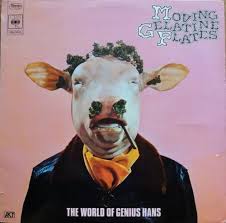
- Gérard Bertram / electric, 12-string & Leslie guitars, vocals (1-7)
- Didier Thibault / bass, guitar, synth & vocals (1-12)
- Gérard Pons / drums (1-7)
With:
- Claude Delcloo / backing vocals (1-7)
- Jean-Pierre Laroque / bassoon (1-7)
- Michel Camicas / trombone (1-7)
- Guy Boyer / vibraphone (1-7)
March

Line-up / Musicians:
- Volker Kriegel / electric guitar, acoustic guitar, octave guitar
- Cees See / percussion, voice, flutes, effects
- John Marshall / drums (Disk One)
- Alan Skidmore / soprano saxophone, tenor saxophone (A1&2, B1&2)
- Heinz Sauer / tenor saxophone (A1&2, B1&2)
April

DONALD BYRD Ethiopian Knights
- David T. Walker / electric guitar [rhythm]
- William Henderson / electric piano
- Harold Land / tenor saxophone
- Thurman Green / trombone
A2. "Jamie" (4:00) a little organ and acoustic guitar Latin thing that is closer to blues or Latin pop than fusion and or funk; it feels like a cover of a pop song (one that I do not know but which sounds very familiar). The prominence of the guitars makes me appreciate their talents more. (8.75/10)
B1. "The Little Rasti" (17:44) after a long 80-second drum intro, the funk is back, maybe even heavier and stinkier--definitely more hypnotic--than on the opener! Nice long solos given to a wah-wah guitarist, saxophonist Harold Land, and organist Joe Sample before Donald gets his turn (in the 11th minute). After. the fourteenth minute electric piano and trombone are given some shine, kind of together, before the other?) electric guitarist is given a turn and then Donald finishes things off with a now-heavily-echoed trumpet. If there's a flaw to the song it's that the main groove, as great as it is, goes on unbroken and with very little variation or enhancement for 15 minutes, a bit too long even with interesting solos going on over the top. (It is under conditions such as these that I think of the genius expressed by albums by Herbie Hancock, Eddie Henderson, and Julian Priester over the next couple of years where the musicians are each allowed to be inventive, even improvisational, all at virtually the same time instead of waiting for their assigned turn, which was the more standard jazz tradition.)
Total Time: 37:09

- Carlos Wilson / trombone, vocals
- Lou Wilson / trumpet, vocals
- Ric Wilson / saxophone, vocals
- Claude "Coffee" Cave / keyboards
- Omar Mesa / guitar
- Frederick "Fudgie Kae" Solomon / bass
- Charlie Padro / drums
1. "Ape Is High" (5:36) the immediate feel I get from the first few seconds of this song is that the band is trying to ride on the coattails of RARE EARTH's massively popular hit from the previous year entitled, "I Just Want to Celebrate"--and this feeling sustains itself with its whole-group choir chant-singing and JoeWalsh-like guitar strumming from rhythm guitarist Omar Mesa (who's solo/lead work later in the song is quite good). The horns suddenly appear in the second minute, providing accents to the vocal lines in the chorus. Kofi Cave's Hammond organ play becomes more prominent in the third minute, culminating in a nice solo in the fourth before Omar's guitar turns standard Rock. Nice finish. I can't help but rate this upward due to the tight arrangements and performances. (8.875/10)
2. "Cohelo" (1:45) a gentle Latin groove that is led by Ric Wilson's flute and backed by the "What's Going On"-like party sounds and emerging "Co-HE-lo" vocals going on in the background. I love it! (5/5)
3. "Git It All" (4:30) another song that feels as if it was contrived to come from a White man's Rock perspective (which feels somewhat false and pretentious to these musicians) as the bass line, guitar-and-organ chord and sound choices as well as the foundational drum pattern feel so watered down for the arousal of primordial martial aggression. The rest of the band--and especially the party choir--feel as if they're into it but there is little of the band members' Panamanian roots coming through in this music (not even from the horn section); it all feels affected, adaptational, and manufactured. (8.75/10)
4. "Children of the Sun" (4:57) flute and zither-like chord strokes open this awesome song, covering nearly the full first two minutes before bursting into a flurry of dynamic Jazz-Rock. But then everything calms down after the burst into a gentle melodic fare with soft vocals for about 90-seconds before the Afro-Cubano/Salsa horns shake everything up with some wake-up bursts of sound--which results in the incitement of the rest of the musicians to step it up a couple of notches. The result is some of the coolest Latin-Jazz-Rock you're likely to ever hear! But, alas! it doesn't last! The deep vocals return (within the Salsa party music) and then come to an end very shortly thereafter. A strange but ultimately impressive (and gutsy/ingenious) song. (9.5/10)
5. "I Refuse to Smile" (4:06) a pretty song that is styled like a combination of MARVIN GAYE's What's Going On fare and other Motown (The Temptations) sounds. The musicianship is so impressive! (The vocals a little less so.) (8.875/10)
Total Time 43:18
92.24 on the Fishscales = A/five stars; though not a Jazz-Rock Fusion album, this eclectic mix of styles is presented in such a well-composed and beautifully-performed fashion that I cannot deny it its masterpiece recognition. As a whole, however, I would happily and willingly admit Mandril Is into the micro-genre of Jazz-Rock music. I just want the band to feel more free and compelled to express themselves more naturally--from the Afro-Cubano music of their Panamanian roots.

DONALD BYRD Black Byrd (released in 1973)
Donald's first album giving the reigns of both production and composition to NASA aerospace engineer Larry Mizell. (Larry has writing credit on all seven of the album's songs. Donald has none.) Larry and his 11-month-younger brother, Fonce, were both D.C. born graduates of Howard University: Larry in engineering, Fonce in music. The brothers had only moved out to California early in 1972, with the aim of starting their own record production company (Sky High Productions). Black Byrd was recorded on April 3rd and 4th at The Sound Factory in Hollywood, California though one other date was required (Nov. 24) before the album could be mastered (perhaps for the re-recording or overdubs to he album's title song: to give it that "Papa Was a Rolling Stone" sound and feel). It was released by the Blue Note label in February of 1973.
Line-up / Musicians:
- Donald Byrd / trumpet, flugelhorn, electric trumpet, vocals
- Allen Curtis Barnes / flute, oboe, saxophone
- Roger Glenn / saxophone, flute
- Fonce Mizell / trumpet, vocals
- Larry Mizell / vocals, composer, producer
- Dean Parks / guitar
- Wilton Felder / bass
- Bobbye Hall Porter / percussion
- David T. Walker / guitar
- Chuck Rainey / bass
- Stephanie Spruill / percussion
- Kevin Toney / piano
- Freddie Perren / piano, synthesizer, vocals
- Joe Sample / piano, electric piano
- Harvey Mason / drums
- Keith Killgo / drums
- Perk Jacobs / percussion
- Barney Perry / guitar

- Brian Auger / organ, electric piano, piano
- Alex Ligertwood / vocals, tambourine
- Jim Mullen / guitar
- Barry Dean / bass
- Robbie McIntosh / drums & percussion
A1. "Truth (7:46) an Alex Ligertwood original, there is a pretty awesome organ, guitar, and bass sequence that hooks the listener in for the verses. Nice work with the b vox as the song develops and deepens. (13.375/15)
A2. "Don't Look Away (6:01) a Ligertwood, Mullen, and Dean composition that starts out sounding very much like something from the 60s jazz pop--exploring some "hooks" that might make listeners get locked in. Unfortunately, the rather loose and blues-Southern-rocky vocal detracts and sidetracks from the goal or objective. (8.75/10)
A3. "Somebody Help Us (6:29) an uptempo cruise-mobile with some awesome rhythm guitar play. Sounds like all that will come out on STEVE MILLER BAND's great 1976 album, Fly Like an Eagle. Nice song with nice performances that all work well together despite sounding like the sound engineers are stuck in the 1960s. (9/10)
B1. "Freedom Jazz Dance (5:25) written by Brian, Alex, and Eddie Harris slows it down, even roots it in some soulful funk-R&B (Jim Mullen's guitar play sounding like B.B. King!) I like the shifts and twists and turns it takes--even stylistically--though the vocal sounds so much like Jeff Beck Group's Bobby Tench (Alex's successor in that band). Great bass play from Barry Dean. Fun Keith Emerson-like organ play from Brian. (9/10)
B2. "Just You, Just Me (6:15) a favorite of mine, this is all Brian. I like Alex's less aggressive vocal approach and the band's concentration on the Jazz-Rock Fusion side of their musical expression. Great bass play, awesome electric piano, and solid time-keeping from Robbie MacIntosh. (9.25/10)
B3. "Second Wind (6:39) another Brian Auger exclusive, it opens with awesome interplay between Jim's guitar and Barry's bass over some straight time-keeping from Robbie and some supportive organ chord play from Brian. (It sounds a lot, to my ears, like the concurrent work of The Soft Machine.) (8.875/10)
Total Time 32:06
89.615 on the Fishscales = B+/4.5 stars; a near-masterpiece of bluesy rock that has enough J-R F elements to be included therein.

GEORGE BENSON White Rabbit
This Jazz-fusion album was recorded at Van Gelder Studios between November 23–30, 1971 and then released in April 1972 by CTI Records. The album contains four covers of a variety of famous songs and one original composition by the artist/bandleader at the end of the album.
Line-up / Musicians:- Herbie Hancock / electric piano
- Billy Cobham / drums
- Airto Moreira / percussion, vocals
- Hubert Laws / flute, flute [alto], oboe, English Horn
- Romeo Penque / English horn, oboe, flute [alto], clarinet, bass clarinet
- Gloria Agostini / harp
- Wayne Andre / trombone, horns [baritone]
- Alan Rubin / trumpet, flugelhorn
- Phil Kraus / Vibraphone, percussion
A3. "Little Train (from Bachianas Brasileiras #2" (5:40) here we get George and Don Sebesky's interpretation of a famous classical piece from Brasilian composer Heitor Villa-Lobos. The music is a bit simplistic and early Smooth Jazzy (not unlike the fare presented to the world by L.A. artist David Axelrod)--Billy Cobham's drumming is particularly incongruous with the rest of the smooth, orchestral vibe. Even Ron Carter feels somewhat out of place--though Herbie does an adequate job with his solo and support play. The song really comes alive when Airto Moreira begins to add his Pat Metheny Group-like wordless vocalese in the fifth minute. (8.875/10)
B1. "California Dreaming" (7:15) more wonderful acoustic guitar work from Jay Berliner opens this as Herbie's rich Fender Rhodes, harp, orchestra, and bass contribute their own enrichment techniques. That's just the intro. Once the song has moved into the body of the song Jay becomes a Jose Feliciano-like acoustic guitar accompanist as the flutes/winds, Vibraphone, bass, and Latin percussion add their own accents and textures while Jay and George present and carry the song forward. Once again, Billy Cobham's drums just feel out of style with this format, with this instrumental palette. Herbie is unusually quiet but definitely in the mix throughout; it's really George, Jay, and Don's show--though I'm not nearly the fan of this Jay Berliner performance as I was on the "Theme from Summer of '42." (13.375/15)
B2. "El Mar" (11:00) a gorgeous, richly rendered song that is a George Benson original composition and resonates as my favorite song on the album. There is one great melody line that is repeated intermittently over the course of the song's 11 minutes but it is populated with layers of brilliant if subtle contributions from the session's full complement of guest artists. We even get some vocal contributions from Airto Moreira in his native Portuguese as well as some soul-invigorating key changes in surprising places. And I love the crescendo in the very middle that brings up blast of Spanish horns before we settle into Herbie's wonderful Fender Rhodes solo (dig that "smear" effect at the end of it--around the 7:00 mark). Though Airto's vocals are only in the background during the final two minutes, they are still so charming! I really like this team of Herbie Hancock and George Benson. (19.125/20)
Total Time: 36:16
A very interesting and, ultimately, very satisfying listening experience; an album that I will enjoy coming back to again over the coming years.
92.68 on the Fishscales = A/five stars; an excellent if somewhat-flawed masterpiece of early Jazz-Rock Fusion. The artists haven't got the medium perfected but their imaginative interpretations are greatly appreciated and duly rewarded.

FRANK ZAPPA The Grand Wazoo (released on November 27)
Line-up / Musicians:
- Frank Zappa / guitars, vocals (3), percussion (4), arranger & producer
With:
- Janet Neville-Ferguson / vocals (1, 2)
- Ilene Rappaport ('Chunky') / vocals (3)
- Tony Duran / guitar (1, 2) & rhythm guitar (5)
- Don Preston / Minimoog (1, 2)
- George Duke / keyboards (3-5), vocals (3)
- Sal Marquez / trumpet & vocals (1, 2)
- Bill Byers / trombone (1, 2)
- Ken Shroyer / trombone (1, 2, 3)
- Malcolm McNabb / brass (1, 2)
- Ernie Tack / brass (1, 2)
- Ernie Watts / saxophone solo (3)
- Mike Altschul, Joel Peskin, Earl Dumler, Tony Ortega, Joanne Caldwell McNabb, Johnny Rotella, Fred Jackson / woodwinds (1, 2)
- Alex Dmochowski ('Erroneous') / bass
- Aynsley Dunbar / drums
- Alan Estes / percussion (1, 2)
- Bob Zimmitti / percussion (1, 2)
- Lee Clement / gong (4)
May

Not your typical Jazz-Rock Fusion since there is little rock, R&B, or funk infused into these songs: what Paul Winter and his pre-OREGON companions gives you is more of a classical, folk, and world music infusion with jazz--which is exactly why I've chosen to include this review among this list: to help illustrate how broad the styles of the sub-genre are. The album was recorded in pieces using four studios, Sea Weed Studios in Marblehead, Mass. (around which George Martin and his family enjoyed a lovely three-week seaside summer vacation), as well as Electric Lady Studios, The Record Plant, and Upsurge Studio in New York City. It was then mixed and mastered in England before going through a tumultuous time trying to get it published. Paul's original record company, A&M, had dropped them (before George Martin got involved). The next company, LA-based Capitol Records had backed the whole George Martin expedition (to the sum of some $65,000), but they suddenly had a new guy in the A&R position (after legend Artie Mogull had been unexpectedly fired). Despite the George Martin pedigree, the obtuse dude refused outright to even listen to it, saying, "Consort?! We don't want that! There are no 'consorts' on the charts)." The album was, however, finally released: by Epic Records on May 1, 1972, unfortunately, to very meager reception and sales.
Lineup / Musicians:
- Paul Winter / soprano saxophone, vocals
- Paul McCandless / oboe, English horn, contrabass sarrusophone, vocals
- David Darling / cello, vocals
- Herb Bushler - bass guitar
- Ralph Towner / classical guitar, 12-string guitar, steel-string guitar, piano, bush organ, regal organ, vocals
- Colin Walcott / drums, kettledrums, congas, surdo, tabla, mridangam, bass marinda, sitar
- Billy Cobham / drums (4, 6)
- Milt Holland / Ghanaian percussion (6)
- Barry Altschul / random percussion
- Larry Atamanuik / drums (1)
- Andrew Tracey / dobro (9)
Chorus on "Minuit": Janet Johnson, Paul McCandless, Bob Milstein, Paul Stookey
1. "Icarus" (3:02) one of THE anthems for the environmental/ecological movement--and a beautiful song, to boot. (10/10)
2. "Ode to a Fillmore Dressing Room" (5:32) wonderfully pregnant weave of multiple beautiful tho-sad melodies open this one before David Darling, Herb Bushler, and Ralph Towner put together a more pastoral Spanish theme over which Colin Walcott's sitar and other Indian instruments as well as Towner's amazingly sensitive guitar provide direction and mystical melody. Colin really gets cooking in the fourth and fifth minutes while Ralph supports from beneath. Then the winds and cello and percussion enter to give Colin a cushion for a safe landing. Brilliant! (9.5/10)
3. "The Silence of a Candle" (3:22) piano and voice open this one before being joined by bass and cello for the chorus. A surprising song for a jazz-rock album but perfectly appropriate for a band whose vision of activism was went far bigger than music alone could take them. (9/10)
4. "Sunwheel" (4:52) cello, funky bass, strumming guitar, rollicking drums (from Billy Cobham!) and percussion, cor anglais, and soprano saxophone converge to create this melodic jam that plays out like a little funkier version of "Icarus." (8.875/10)
5. "Juniper Bear" (3:10) essentially a tabla and 12-string duet. Okay. (8.666667/10)
6. "Whole Earth Chant" (7:42) one of the more complex and complete compositions on the album included Ralph Towner's Regal organ and Paul McCandless' contrabass sarrusophone as well as electric bass guitar Ghanaian percussion from Milt Holland and Billy Cobham's rather tame drums as well as David Darling's "funk cello" and Paul's soprano sax. There is funky transition in the fifth minute led by Billy and David into the rousing Ghanaian finish. (14.25/15)
7. "All the Mornings Bring" (3:48) wordless vocals and timpani open this before Ralph sets up a kind of WILLIAM ACKERMAN/Windham Hill style of song. After the intro the reed horns lead the way into a harmonized melody and then the rest of the troupe joins in with great jazz-rock drumming and bass playing from Colin Walcott and Herb Bushler, respectively. Paul McCandless' oboe play is superlative--one of my favorite expositions on the entire album. (9.375/10)
8. "Chehalis and Other Voices" (5:26) opens with some classical guitar and classical/chamber-sounding horn and cello arrangements. Quite lovely--and played very much like something out of an English folk song like Elgar, Delius, or Britton--or Copeland in the US--might have penned. This just goes to show you how accomplished/virtuosic classically-trained Ralph Towner really was--as well as how well-trained were the other members. I love it! At the end of the fourth minute David Darling starts "scraping" his cello fretboard in the way he was known to, a manouevre that kind of signaled everyone to back off so that Ralph could go solo classical. At 4:40 the rest of the "chamber quintet" rejoin to accompany Ralph's harp-like guitar to the song's close. (9.3333/10)
9. "Minuit" (3:06) falling back into the more Western/Americana/Copeland sound-style, the band creates a fairly simple, thin foundation over which they all sing (including folk singer Janet Johnson and Peter, Paul, and Mary's Paul Stookey!) Nice anthemic sing-a-long that I'm sure went over big with audience participation in intimate concert settings. Not proggy or even jazzy, it's a pretty little song. (8.875/10)
Total Time: 39:20
George Martin claimed for years (it's in his autobiography!) that, "Icarus is the finest album I've ever produced." That's a pretty bold statement after all that Sir George contributed to the music world, but in this case, I am not going to disagree.
92.50 on the Fishscales = A/five stars; a masterpiece of world folk-oriented jazz-rock fusion created by visionaries of human potential that the rest of the world is still trying to catch up to.
HERBIE HANCOCK Crossings
Line-up / Musicians:
- Herbie Hancock / acoustic & electric pianos, Mellotron, percussion
With:
- Bennie Maupin / soprano sax, bass clarinet, alto & piccolo flutes, body percussion
- Eddie Henderson / trumpet, flugelhorn, percussion
- Julian Priester / bass & tenor & alto trombones, percussion
- Patrick Gleeson / Moog synthesizer
- Buster Williams / acoustic & electric basses, percussion
- Billy Hart / drums, percussion
- Victor Pontoja / congas
- Candy Love / chorus vocals
- Della Horne / chorus vocals
- Sandra Stevens / chorus vocals
- Scott Beach / chorus vocals
- Victoria Domagalski / chorus vocals
1. "Sleeping Giant" (24:48) Herbie's lone compositional credit on the album manages to fill an entire side of the album and, to my ears, represents the most structured jazz-like tune on the album. Opening with an awesome polyrhythmic percussive tribute to Africa, the song jumps into more Western-friendly arenas with bass and electric piano in the fourth minute. This is a sonic palette and style that will be replicated with much success by the likes of Emir Deodato and Brian Auger within the next year. A song that plays out like a smooth MILES DAVIS song (despite the Fat Albert-like theme interjected into the twelfth minute). (46.25/50)
2. "Quasar" (7:25) though the structure and flow are quite unusual and experimental, the sounds used, for the most part, are pretty straightforward traditional jazz instruments. (14/15)
3. "Water Torture" (13:54) piccolo and percussion and strange ARP and Moog sounds open this Bennie Maupin composition, truly mimicking some of the sounds of water. That feeling and sensation of waterflow somehow is maintained continuously, though in varying forms, throughout this extraordinary piece.
After 90 seconds an actual musical soundscape is built around bass, keys, and clarinet while percussives and trumpet play around on the edges. (28/30)
Total Time 46:21
 SANTANA Caravanserai (released in October)
Line-up / Musicians:
- Carlos Santana / lead guitar, percussion, vocals (6), co-producer
- Neal Schon / guitar (1,3-6,8-10)
- Doug Rauch / electric bass guitar (2-6), guitar (2,3)
- Gregg Rolie / organ, piano (6)
- Tom Rutley / acoustic bass (1,6,8-10)
- Michael Shrieve / drums, co-producer
- Jose 'Chepito' Areas / timbales, congas (7), bongos (8)
- James Mingo Lewis / percussion, congas (2,4-10), bongos (7), piano (9), vocals (6)
- Armando Peraza / percussion, bongos (9)
With:
- Rico Reyes / vocals (6)
- Douglas Rodrigues / guitar (2)
- Wendy Haas / piano (1,8)
- Tom Coster / electric piano (9)
- Lenny White / castanets (6)
- Tom Harrel / orchestral arrangements (10)

- Joe Zawinul / electric & acoustic pianos, ARP 2600 synth (1)
- Wayne Shorter / reeds
- Miroslav Vitous / electric & acoustic basses
- Eric Gravatt / drums
- Dom Um Romão / percussion (2)
With:
- Chapman Roberts / vocals (1)
- Joshie Armstrong / vocals (1)
- Yolande Bavan / vocals (1)
- Andrew White / English horn (1)
- Hubert Laws / flute (1)
- Wilmer Wise / D trumpet & piccolo (1)
- Ralph Towner / 12-string guitar (2)
1. "Unknown Soldier" (7:57) a great mood-setter, manipulating the listener's emotions as a cinema soundtrack is supposed to. Would that all WR music would do this as masterfully. Eric Gravatt's cymbal play is key, as are the spacious playing of the other three principle musicians. So disciplined! Once the drums go military-snare, the enlisted support of other musicians begins--and the principles go off into a frenzy of free-jazz. I've never heard Wayne Shorter go so fast! In the sixth minute the music returns to the more disciplined, spacious play as the opening. Very interesting--and surprisingly dynamic--song! (13.5/15)
2. "The Moors" (4:40) picked notes from Ralph Towner's 12-string guitar open this one, soon bursting into John McLaughlin-like runs of remarkable speed as well as a flurry of syncopated strumming of muted and unmuted blues chords and harmonics. At 1:44 soprano sax, percussion, and bass notes join in before drums and keys also kick in, creating a fast-moving jam over which Wayne holds long, smooth notes. It is very surprising to me how much the performers packed into this little 4:40 song! (9/10)
6. "Surucucus" (Live *) (7:41) (/15)
7. "Directions" (Live *) (4:35) (/10)
Total Time: 46:28
* Edited from recordings at a concert January 13, 1972 in Shibuya Kokaido Hall, Tokyo, Japan.
June

THE SOFT MACHINE Five
Goodbye Robert, goodbye to all vocals; hello to refugees from Ian Carr's Nucleus. An album that was recorded in November of 1971 and February of 1972 and then released in June of 1972.
- Mike Ratledge / Lowrey organ, Fender Rhodes
- Elton Dean / alto saxophone, saxello, Fender Rhodes
- Hugh Hopper / bass
- Phil Howard / drums (1-3)
- John Marshall / drums (4-7)
With:
- Roy Babbington / double bass (4-7)
1. "All White" (6:06) opening the album with a very serious, very heavy jazz commitment, the music develops as something that could come off of one of Miles Davis' Second Great Quintet albums or one of Herbie (Hancock) or Wayne (Shorter)'s solo side projects. Though Hugh Hopper's bass is rather dull with its near-metronomic riff repeating over and over, Phil Howard's drumming is quite satisfactory. Mike Ratledge holds down the middle ground more as a mirror and reinforcement for the rhythm section (until the very end) while Elton Dean commands attention with his continuous play of his sonorous soprano sax. Interesting. (8.75/10)
2. "Drop" (7:42) water drop sound effects paired up with delay and echoing organ (Mike Ratledge) and Rhodes (Elton Dean) noodlings make this, to my mind, a further exploration or variation on the Terry Riley-inspired opening and closing sections of Third's "Out-Bloody-Rageous." In the third minute the rest of the band starts to join in and try to establish a syncopated quick-step motif within which Mike continues soloing à la Herbie Hancock while Elton Dean steps in with his kazoo-sounding "saxello" for an extended stream of electrified nasal fuzz play. Interesting. (13.125/15)
Total Time 36:34

- Jon Hiseman / drums
- Fred Braceful / drums, percussion
- Larry Coryell / guitars
A2. "Sun" (5:00) really nice gentle jazz over which Wolfgang Dauner explores with his piano. Larry occupies two or three tracks: two rhythm (one electric and one acoustic?) while his bare electric flurries and scurries over the top. Jon's drumming is beautifully restrained (which is so unlike him!) and Günter Lenz's bass is steady and rock solid--even when Larry goes a little crazy in the fifth minute, really hyping the band up. But then things soften up down as Wolfgang's tinkling of the ivories continues to soothe and hypnotize. What a cool, creative, and unusual song! I LOVE it! Perfect First Wave Jazz-Rock Fusion! (10/10)

Line-up / Musicians:
- Miles Davis / trumpet
With:
- Dave Liebman / soprano saxophone (1)
- Carlos Garnett / soprano (2) & tenor (4) saxophones
- Chick Corea / Fender Rhodes electric piano
- Herbie Hancock / Fender Rhodes electric piano, synthesizer (2-4)
- Harold "Ivory" Williams / organ, synthesizer
- John McLaughlin / electric guitar (1)
- David Creamer / electric guitar (2-4)
- Collin Walcott / electric sitar (1, 3, 4)
- Khalil Balakrishna / electric sitar (2)
- Paul Buckmaster / cello, arrangements (uncredited)
- Badal Roy / tabla
- Bennie Maupin / bass clarinet (2)
- Michael Henderson / electric bass
- Jack DeJohnette / drums
- Billy Hart / drums
- Al Foster / drums
- Don Alias / percussion (1) (uncredited)
- James "Mtume" Foreman / percussion (2-4) (uncredited)
July

FRANK ZAPPA Waka / Jawaka
Released by Bizarre/Reprise Records on July 2, 1972 after being recorded in Los Angeles at Paramount Studios on April 17-21 and May 5. The material had been conceived of and composed during Frank's wheel-chair-bound recovery from being assaulted in London in December of 1971. The question I have from the line-up of musicians and the curiously nebulous recording dates attributed to The Grand Wazoo is whether or not the material for both albums was generated from the same April and May recording sessions done at Paramount Studios.Line-up / Musicians:
- Frank Zappa / guitar, acoustic guitar (3), percussion (1), Fx & vocals (3), producer
With:
- Chris Peterson / vocals (2, 4)
- Janet Ferguson / vocals (3)
- Tony Duran / slide guitar (1-3), vocals (3)
- Peter Kleinow / pedal steel guitar solo (3)
- Jeff Simmons / Hawaiian guitar & vocals (3)
- George Duke / electric piano (1), tack piano (2)
- Don Preston / piano & MiniMoog (4)
- Sal Marquez / trumpet, chimes (1, 4), flugelhorn (4), vocals (2-4)
- Joel Peskin / tenor sax (2)
- Mike Altschul / bass flute (4), bass clarinet (4), piccolo flute (2, 4), baritone (2) & tenor (4) saxes
- Kenny Shroyer / trombone & baritone horn (4)
- Billy Byers / trombone & baritone horn (4)
- Alex Dmochowski / bass, fuzz bass (4), vocals (3)
- Aynsley Dunbar / drums, tambourine & washboard (3)
1. "Big Swifty" (17:23) I've read comparison's to Miles Davis work of the same period as well as the "space jazz" and "free jazz" references and, while I hear them, too, I feel there is more similarity to some of the musical themes and melodies from Sketches of Spain than Bitches Brew or Jack Johnson. The guitar-centered music of middle section sounds more like something from Eric Clapton or The Allman Brothers but then as Sal becomes reactivated (in the 12th minute) and the horn section joins in (in the 14th minute) the music become more original and interesting. (This is my favorite section of the song.) Though, yes, I hear less of the Frank Zappa sound and stylings in this side-long epic, I do not hear the kind of music that I would call innovative or progressive Jazz-Rock Fusion; it's more of one long, loosely-structured jam session. There plenty of skillful and inventive solo performances and impressive multi-instrumental weaves, but no mind-blowing breakthroughs. (30.75/35)
2. "Your Mouth" (3:12) I knew it! I knew Frank couldn't go an entire album without some social satire delivered over a parody of some conveniently-imitatable style of music, here Black Gospel-styled R&B, complete with a full choir of Black-sounding choral vocalists. (8.75/10)
Total Time 36:09

- Ray Barretto / congas
- Jimmy Johnson / drums
- Cornell Dupree / guitars
- Paul Griffin / piano, clavinet, organ, electric piano
A2. "I Just Want To Be There" (3:50) a cover of a recent (1972) single release by the "Smooth and Easy Soul" group, The Independents, features some really awesome organ, wah-wah rhythm guitar, up-front down-and-dirty electric bass, and, of course, melodic lead guitar. (8.875/10)
A3. "Papa Was A Rolling Stone" (5:28) while the clavinet, lead guitar riff, and wah-wah volume-controlled rhythm guitar play are all awesome, they do not quite align with the bass and cymbal play to replicate the music of The Temptations' iconic song (another early 1972 release). Obviously, Jay, Wade, and Paul really loved the (fairly new) clavinet sounds being explored by Stevie Wonder, War, Billy Preston, and Bill Withers. The use of zither and Jay's sitar-sounding lead guitar make for a novel and interesting approach/sound palette--verily making the song all their own. I happen to like all of this! (9/10)
A5. "Stormy" (4:14) a sexy, funky version of the popular hit song with Gordon Edwards really reaching for the stars with his full-fretboard play over the simple drums, quiet organ, strummed rhythm acoustic guitar, and tinkerbell vibes. Paul's electric piano and Cornell Dupree's amazing support rhythm electric guitar are what bring out the best of Jay's lead guitar--in both performance and tone (which resembles that of George Benson in the upcoming years). There's even time for Jay to really push his steel-string acoustic guitar into the spotlight at the end--which is always awesome. (9.25/10)
Total time: 37:00

- J.W. Hodkinson / lead vocals, percussion
- Terry Smith / guitar
- John Mealing / keyboards
- Dick Morrissey / saxophones, flute
- David Quincy / saxophones
- Jim Richardson / bass
- Dennis Elliott / drums
1. "Sector 17" (10:34) a recording of a live stage performance, it starts out slowly with one saxophonist and John Mealing's electric piano conversing minimally over space and time before being joined by the pulsing notes of Jim Richardson's heavily-distorted bass and some small chords from Terry Smith's dirty electric guitar. As the band congeals and shifts into gear the palette and style of the jam motif feels a lot like the work of THE SOFT MACHINE around this same time. The second thru fifth minutes are dominated by Terry's guitar shredding and man! is he all over the place: rapid legato runs, angry chord slashes, and everything in-between, all the while drummer Dennis Elliott and the percussion crew and rhythmatists are flying at top speed over the rolling terrain--until 5:25 when a little bridge stops the forward momentum allowing for the setup of a new motif (slowly building in both tempo and power) in which the horns get their turn to scratch and wail as the rhythm section beneath recharges, re-builds, and releases. Marvellous! Now this is Jazz-Rock Fusion (bordering on Power Fusion). (18.625/20)
Total Time 36:56
89.33 on the Fishscales = B/four stars; an excellent recording of some great live performances of previously-unreleased, original pop- and Jazz-Rock-oriented songs.

- Remigius Drechsler / guitars, Tenor saxophone, flutes, stylophone, voice
- Hennse Hering / organ, piano
- Moran Neumüller / Soprano saxophone, vocals
- Klaus Spöri / drums
- Stephen Wishen / bass
+ Hermann Breuer / trombone
- Peter Dechant / acoustic guitar, vocals
- Grand Roman Langhaus / bongos
- Jimmy Polivka / trumpet
- Ingo Schmid-Neuhaus / Alto & Bariton saxes
- Michael Thatcher / organ

- Ian Carr / trumpet, flugelhorn
With:
- Brian Smith / tenor & soprano saxophones, alto & bamboo flutes
- Allan Holdsworth / guitar
- Dave MacRae / Fender electric piano
- Gordon Beck / Hohner electric piano (1,4-6)
- Roy Babbington / bass
- Clive Thacker / drums, percussion
- Trevor Tomkins / percussion (1,3,4)
1. "Belladonna" (13:42) an album that sounds very much as if it is taking its cues and inspiration from the post-Bitches Brew work of Joe Zawinul & Wayne Shorter (who had just launched their WEATHER REPORT project with both the self-titles debut and 1972 release, I Sing the Body Electric, both having been released prior to Belladonna's July recording sessions) and especially, Herbie Hancock, whose Mwandishi and Crossings albums had also both been released prior to Belladonna's recording sessions. (In case you were wondering, Chick Corea's Return to Forever album had its European release in September of 1972, two months after, Belladonna came out.) While Brian Smith's soprano sax is the real start of this show, Gordon Beck's peaceful Hohner electric piano is a key component to its success. While Brian's play and melodies are quite pleasing, even enjoyable, the song never gets elevated into anything but a long late night contemplative--and, perhaps a fitting inspiration for Vangelis Papathanassiou for the spacey "New Age" music that would occupy his attention for the rest of his life. (26.333/30)
3. "Remadione" (3:48) flutes take up a full two minutes of this song's opening while dirty Fender Rhodes electric piano (L) and more rock/proggy lead electric guitar gently support. The third and fourth minutes see the full band engage in another AIR-like downtempo motif while Dave and Allan ramp up considerably their "duel." (9/10)
Total Time: 40:12
90.47 on the Fishscales = A-/five stars; a minor masterpiece of highly-creative First or Second Wave Jazz-Rock Fusion.
August
 MAHAVISHNU ORCHESTRA Birds of Fire (released in 1973)
The nearly-universally acclaimed peak of Jazz-Rock Fusion, Birds of Fire was the Mahavishnu Orchestra's second studio album to be recorded. The band was still fresh, still inspired, not yet road-weary and spiritually exhausted by Mahavishnu John's uncompromising rule and order. The album was recorded in August of 1972 in sessions at CBS Studios in New York City and Trident Studios in London, England, and then released by Columbia Records on March 26, 1973.
- John McLaughlin / guitars
- Jan Hammer / piano, Fender Rhodes, Moog
- Jerry Goodman / violin
- Rick Laird / bass
- Billy Cobham / drums, cymbals, percussion
- Larry Coryell / guitar
With:
- Mike Mandel / electric piano with fuzz-wah
- Steve Marcus / soprano saxophone
- Mervin Bronson / bass
- Harry Wilkinson / drums
1. "Foreplay" (8:10) on this Coryell composition, Fender Rhodes player Mike Mandel provides a BRIAN AUGER-like support to Larry's musical machinations. Drummer Harry Wilkinson is quite adept at adding his own flourishes and nuances while bass player Mervin Bronson, like Mandel, sticks pretty close to the script. Saxophonist Steve Marcus is nowhere to be heard. Very nice play from all of the instrumentalists but the five chord rising progression gets a little exhausting after a while--(kind of like foreplay), but Man! can Larry Coryell move at some blistering speeds! (13.5/15)
2. "Ruminations" (4:17) Sax, guitar, and keys lead the way with rather complex arpeggio melody play of a four chord sequence on this Mike Mandel composition until the one minute mark when everything switches direction: moving down a smoother, more harmonically-horizontal chord sequence (at a rather breakneck pace) that sounds more oriented traditional jazz despite the active Herbie HANCOCK-like Fender Rhodes piano. Steve Marcus' soprano saxophone definitely does his best to match/keep up with Larry's incendiary electric guitar keys, usually going back and forth but often overlapping each other as if racing toward an end--and end that coincidentally arrives at 3:45 when the band switch back into a more modal style like the opening (though not quite the opening). The song then is given the engineer's fade to bring it to a close despite the musicians' continued play. This is definitely a song that helps illustrate why Larry Coryell is given so much credit for launching and test-driving the fusion of rock into jazz music. (9/10)
Total Time 39:09
September

PASSPORT Second Passport
Line-up / Musicians:
- Klaus Doldinger / soprano & tenor saxes, electric piano, synthesizer
- John Mealing / electric piano, organ
- Wolfgang Schmid / bass guitar,
- Bryan Spring / drums
2. "Nexus" (5:23) here the rhythm section have some fun playing around with a wild game of tag before settling into a surprising R&B groove for Klaus to solo over while John Mealing plays around with his electric piano somewhere in the middle. Bassist Wolfgang Schmid and drummer Bryan Spring are playing like Titans (or monsters), as if they're in The Flintstones primal drum band--a theme that becomes even more pronounced in and throughout the fourth and fifth minutes. Not even Klaus' emotional soprano sax can take my attention away from this primal groove--not until the final 15 seconds when the band wind it down does the hypnotic effect fade. Nice! (9/10)
3. "Fairy tale" (7:32) gently echoing soprano sax notes float off into the mountain foothills while the gentle breeze tinkles the wind chimes and cymbals. Electric piano and bass notes join in slowly, transforming the porch-view into a trek into the foothills. Beautiful melodies issued by Klaus are apparently borrowed from a famous German folk song (which is even credited in the album's liner notes). Pleasant Herbie Hancock-like pastoral electric piano play during John Mealing's solo in the fifth minute. How can people discount this artist's abilities?! There is so much feeling and nuance in his play (not all flash and flare). Klaus returns with his soprano sax in the sixth minute as the rhythm section tightens up a bit--but not too much: just raising the tension levels a notch or two--but then Klaus' hypnotic echoed-melodies convince everyone to back down again to the gentle support roles they initially exhibited. Nice song! (13.75/15)
4. "Get yourself a second passport" (4:03) another funky clavinet-led R&B opening and acceleration is enhanced noticeably by the wah-wah and volume pedal modified rhythm guitar. (Wolfgang?!?!) Nice rhythm play beneath Klaus' soprano sax and "flute" synth solos. Wolfgang is really on fire in the "Can't Get Next to You" third and fourth minutes. Klaus switches to multiple instruments on multiple tracks to issue the main melody. Pretty cool! (8.875/10)
5. "Registration O" (9:24) Opening like a kind of campy burlesque song, the bass and low-end heavy drums are reinforced by a low-end organ bass as Klaus blasts away rather wildly on his tenor sax. I find it interesting how Klaus has mixed the organ's bass pedal line as the most forward, highest volume track in the song. Synth "saw" solo in the fourth minute is followed by a searing organ solo. But the biggest surprise (and highlight) to this heavy, MAGMA-esque tune is bassist Wolfgang Schmid's very good wah-ed electric guitar solo in the fifth and sixth minutes--it's even rousing enough to rile Bryan Spring into some risky drumming. But, with the advent of the seventh minute, everybody congeals again to a uniform goal, allowing the main bass melody to carry everybody to the eighth minute where they devolve the song in order to break into a new up-tempo motif with a cruisin' groove similar to that of the album's opening song. This then plays out in a jam as John and Klaus express their unbound feelings through organ, electric piano, and sax. Weird but powerful and definitely memorable. (17.5/20)
7. "The cat from Katmandu" (4:38) opens with a bass-and-drums straightaway: and then the multi-track conglomeration of several of Klaus' saxes presenting the melody (which is also quite catchy). And the throbbing organ chords in the background add a ton to the groove--a groove that becomes rather trance-inducing to we on the dance floor! This is also a sound that previews the sound that American saxophonist David Sanborn becomes so well known for. (9.75/10)
Total Time: 41:32
92.08 on the Fishscales = A-/five stars; a minor masterpiece of rockin' and funky Jazz-Rock Fusion that feels two to three years ahead of the curve on the historical J-R Fuse trajectory. The sound production alone is well-worth any prog-lover's attention and appreciation: You gotta hear it to believe it!

Line-up / Musicians:
- J.W. Hodgkinson / lead vocals, percussion
- Terry Smith / acoustic & electric guitars
- John Mealing / piano, organ
- Dick Morrissey / tenor & soprano saxophones, flute, backing vocals
- David Quincy / tenor & alto saxophones, electric piano
- Dave Wintour / bass, backing vocals
- Clif Davies / drums
- Jim Richardson / bass (1,2,6)
- Dennis Elliott / drums (1,2,6)
2. "The Light Still Shines" (5:06) a pop-melody-driven show-tune that sounds like it came from Canadian band LIGHTHOUSE. Solid and dirty (which would be great in concert) with some nice vocal arrangements and stage imagery. (8.75/10)
3. "Sector 17" (8:00) demoted from being the opening song on the UK/European release, this slightly different version of the band's wonderful SOFT MACHINE-like Power Fusion jam with its great performances from guitarist Terry Smith and Dennis Elliott. (18.375/20)
4. "Paint Your Pictures" (5:18) a Beatles/Nektar-like psychedelic show-tune with a great body and chorus. (9/10)
5. "Cast No Shadows" (7:30) another multi-part tune that feels way more studio-generated than the other songs despite the poor placement and engineering of J.W.'s vocal as well as some poor sound collection from Clif Davies' drums. The jamming here sounds a lot like what one hears in Hendrix/Cream land. (13.375/15)
6. "Throw Myself to the Wind" (4:42) a song that was composed by Dick Morrissey and his wife Barbara produces a heavier, much more Clapton-like Blues-Rock tune. The highlight for me is the back and forth duelling going on between Dick, Terry, and David. Nice THE BAND-like vocal harmonies accomplished by J.W. and John Mealing on this live performance. (8.75/10)
Total Time 47:48
 DEODATO Prelude (released in January of 1973)
Another addition to my list that may surprise many readers but take pause to read that list of musicians contributing to this album: it's a practical Who's Who of Jazz-Rock All-Stars! Plus, the album produced an anomaly in the world-wide Top 5 hit single, "Also Sprach Zarathustra"--a phenomenon that may have changed the course of Jazz music forever!
Lineup / Musicians:
Eumir Deodato / piano, electric piano
With:
- Ron Carter / electric bass, double bass
- Stanley Clarke / electric bass
- Billy Cobham / drums
- John Tropea / electric guitar
- Jay Berliner / guitar
- Airto Moreira / percussion
- Ray Barretto / congas
- Hubert Laws / flute
Horn Section:
Trumpets: John Frosk, Marky Markowitz, Joe Shepley, Marvin Stamm
Trombones: Wayne Andre, Garnett Brown, Paul Faulise, George Strakey / trombone
French horns: Jim Buffington, Peter Gordon
Flutes: Phil Bodner, George Marge, Romeo Penque
Violins: Paul Gershman, Emanuel Green, Harry Lookofsky, David Nadien, Gene Orloff, Eliot Rosoff
Violas: Emanuel Vardi, Al Brown
Cellos: Harvey Shapiro, Seymore Barab, Charles McKracken

Line-up / Musicians:
- Chick Corea / Fender Rhodes
With:
- Joe Farrell / flute, soprano saxophone
- Stanley Clarke / bass, double bass (4)
- Airto Moreira / drums, percussion
- Flora Purim / vocals, percussion
1. "Return to Forever" (12:06) now I know where the idea for The Northettes (and other Canterbury female vocals) came from! Flora Purim's angelic and ethereal wordless vocalese performs as if another instrument in the weave with Chick's Fender Rhodes, Stanley Clarke's fairly-untreated electric bass, Airto Moreira's classical jazz drumming, and Joe Farrell's background flutes. (24/25)
2. "Crystal Silence" (6:59) a beautiful Fender Rhodes song that features the respectful and only intermittent inputs of Joe Farrell's soprano sax and Airto Moreira's shakers and bells--a song that would be expanded upon significantly with vibraphonist Gary Burton on the album of the same name that would come out later in the same year. (14.5/15)
Total Time 46:48
October


- Chick Corea / electric piano, producer
- Joe Farrell / flute, tenor saxophone
- Stanley Clarke / double bass
- Airto Moreira / drums, percussion
- Flora Purim / vocals, percussion
SANTANA Caravanserai
Line-up / Musicians:
- Carlos Santana / lead guitar, percussion, vocals (6), co-producer
- Neal Schon / guitar (1,3-6,8-10)
- Doug Rauch / electric bass guitar (2-6), guitar (2,3)
- Gregg Rolie / organ, piano (6)
- Tom Rutley / acoustic bass (1,6,8-10)
- Michael Shrieve / drums, co-producer
- Jose 'Chepito' Areas / timbales, congas (7), bongos (8)
- James Mingo Lewis / percussion, congas (2,4-10), bongos (7), piano (9), vocals (6)
- Armando Peraza / percussion, bongos (9)
With:
- Rico Reyes / vocals (6)
- Douglas Rodrigues / guitar (2)
- Wendy Haas / piano (1,8)
- Tom Coster / electric piano (9)
- Lenny White / castanets (6)
- Tom Harrel / orchestral arrangements (10)
1. "Eternal Caravan of Reincarnation" (4:28) crickets and Hadley Caliman's solo saxophone signal the dawning of a new era. About halfway in, the band joins in to provide a gentle, welcoming instrumental intro to the soul-augmenting jazz that is the new orientation of Carlos, Michael, and all of their new band members. (9.25/10)
2. "Waves Within" (3:53) Carlos and Neal Schon (yes, that Neal Schon!) exchanging emotional and electrical guitar-fire (with newcomer bass-player Doug Rauch also on rhythm guitar!) Incredible earworm melodies created repeated seven-step chord progression. A song that is credited to Doug Rauch and Gregg Rollie. (10/10)
3. "Look Up (To See What's Coming Down)" (2:59) the funk is also here: the percussion and bass certainly let you know it! Great guitar interplay between Neal, Doug, and Carlos. Another song credited to Doug Rauch and Gregg Rollie (as well as Carlos) and including Doug's guitar assistance. (9.25/10)
4. "Just In Time To See The Sun" (2:19) the jamming becomes more insistent: power chords and relentless rhythm play driving this one along. Carlos's singing is okay but I know how important his spiritual message is, so it rings true. (8.875/10)
5. "Song of the Wind" (6:02) great little tune carried by the bouncy organ and steady percussion. What beautiful music--and beautiful guitar play: melodic as hell and so emotional! The other band members must have been so inspired and confident while listening to Carlos' and Neal's passion: no wonder their subtle flourishes and nuances are so perfect! Neal Schon is listed as one of the authors of this one and, though the guitars really shine, Greg Rollie's organ and the solid performances of the percussionists really hold it all together. (9.75/10)
6. "All the Love of the Universe" (7:36) the last song on Side One is oriented like a Sly & The Family Stone jam song with Chicago-like whole-band choral vocal singing. (They're really not very good as a choir). Doug Rauch's rapid fire funk bass sounds like a cross between Percy Jones' machine gun and a Disco bass. Interesting song with a lot of energy--both kinetic and potential--but probably my least favorite song on the album. (13/15)
Side Two is often referred to as "the percussionists' side."
7. "Future Primitive" (4:12) opens with an atmosphere created by space-synths (uncredited but probably provided by Michael Shrieve) that is really just a setup (and, later, underlying texture) for percussionists José "Chepito" Areas and Mingo Lewis to jam in some kind of Cuban polyrhythmic language. (4.5/5)
8. "Stone Flower" (6:14) Carlos and Michael adopt this Antonio Carlos Joabim instrumental and put their own lyrics to it (and sing it: together). Yes, the melody does sound like it was lifted from some of the recent Brazilian-based bassa nova pop songs that had been seeping into American pop radio but that's just exemplifies the broad range of music that Carlos and especially Michael were listening to at that time. Great "Nature Boy"-inspired solo from Carlos. Also, acoustic bass is used on this one instead of Doug's funky electric--here provided by Tom Rutley. Man that organ and expanded lineup of percussionists really brings this to life! (8.875/10)
9. "La Fuente del Ritmo" (4:33) a wild ride that is driven by pure Latin rhythms as written and led by Mingo Lewis. The song also introduces two new band members who would become fixtures for a while in percussionist Armando Peraza and keyboard artist Tom Coster. (9/10)
10. "Every Step of the Way" (9:04) this Michael Shrieve song opens with the total feel of a Miles, Herbie or Mahavishnu song. (It actually sounds a lot like the music the band would issue on their next album, Love Devotion Surrender, a collaboration with John McLaughlin and some of the Mahavishnu members). The nuclear detonation occurs at the three-minute mark, unleashing a barrage of energetic play from every goddam member of this band--including some who were not members (horns ! (I agree with ProgArchives admin &. reviewer Sean Trane: "Every Step of the Way" escorts the listener to a divine orgasm.) Turn this one up to 11! It deserves a 6! One of Jazz-Rock Fusion's all-time great songs! (21/20)
Total Time: 51:20
It is so exciting to discover albums from 35-40 years ago that I'd never heard before and find myself totally blown away by the 'new' music I hear. Again, thank you Max and ProgArchivists: my world of music has never been so blown open. Caravanserai is an album whose first listen flooded me with such nostalgia; I had never before realized how much Carlos' guitar playing and his Latin rhythms and amazing organists influenced my core musical likes and values until I listened to this album. Hearing "Waves Within" I was (and am each time I listen to it) overcome with a flood of emotion taking me back to the Eden that was my formative pre-teen years.
While I understand the derogatory comments bestowed upon the atmospheric "introludes" ("Eternal Caravan of Reincarnation" and "Future Primitive"), I love them and find them essential to the spiritual journey Santana is taking us on.
Through the years I have enjoyed many of the singers and lyrics of Santana songs, however, I quite agree that on this album their presence are, overall, IMHO, out of place with and even detract from the spirit of the rest of the music. And while many of Carlos' extended solos are backed by simple two-chord repetitions, the band is always jamming their hearts out: they're in the same cosmic groove that allows Carlos to soar--and soar he does: The man is a true master of 'stumbling' upon incredibly catchy, melodic riffs while negotiating the fret board at seeming break-neck speed. Amazing talent. Truly a god channeling the divine!
A wonderful album with outstanding work from Michael Shrieve, Neal Schon, Mingo Lewis and Greg Rolie--not to mention the Devadip and the new kid on the block, Doug Rauch!
94.09 on the Fishscales = A/five stars; a true masterpiece and shining beacon of light from the young and still-forming Jazz-Rock Fusion movement--and one of my Top 20 Favorite Jazz-Rock Fusion Albums from prog's "Classic Era." One of the few concert tours for which I wish I had been a "Deadhead"/groupie.

- Miles Davis / trumpet
With:
- Dave Liebman / soprano saxophone (1)
- Carlos Garnett / soprano (2) & tenor (4) saxophones
- Chick Corea / Fender Rhodes electric piano
- Herbie Hancock / Fender Rhodes electric piano, synthesizer (2-4)
- Harold "Ivory" Williams / organ, synthesizer
- John McLaughlin / electric guitar (1)
- David Creamer / electric guitar (2-4)
- Collin Walcott / electric sitar (1, 3, 4)
- Khalil Balakrishna / electric sitar (2)
- Paul Buckmaster / cello, arrangements (uncredited)
- Badal Roy / tabla
- Bennie Maupin / bass clarinet (2)
- Michael Henderson / electric bass
- Jack DeJohnette / drums
- Billy Hart / drums
- Al Foster / drums
- Don Alias / percussion (1) (uncredited)
- James "Mtume" Foreman / percussion (2-4) (uncredited)
1. "On The Corner / New York Girl / Thinkin' One Thing And Doin' Another / Vote For Miles" (19:55) starts out quite funky and quite rhythm-oriented as Dave Liebman and Miles take turns tooting their horns until clearing the top deck to make way for John McLaughlin's (rare) wah-wah-treated muted-horn-sounding electric guitar solo. I love how the keyboardists start to become active toward the end of John's solo, each making his presence known among the pack of hungry wolves. John's rhythm work in the New York Girl and Thinkin' One Thing and Doin' Another are quite interesting (and surprisingly loud) while Miles and the horns and keyboard artists take turns raising their voices above the rhythmatists. He then gets another solo in the 12th and 13th minutes--a loose one that sounds more like the work of Jan Akkerman or Roye Albrighton--all the while the horn players recharge and re-enter with new aplomb and abandon while Harold Williams droning organ haunts the background and Don Alias' cowbell sounds like a railway laborer pounding stakes into railroad ties. Yet another guitar solo in the 16th minute is more aggressive, less rhythm chord oriented, more McLaughlin-like. Miles' variably-muted (and treated?) trumpet barks from somewhere in the background and Michael Henderson's bass line drops down an octave and becomes a little funkier for a bit before the band kind of clears their palette, letting the Indian instruments (tabla, sitar, synthesizer, and other percussives) play out to the song's end. Interesting ride! There are so few high points or memorable highlights that it begs the same question I have when listening to all of the long-playing jams on In a Silent Way and Bitches Brew: what makes these so great? Where are the great performances, the great riffs, hooks, and solos that highlight so many of the great Jazz-Rock Fusion songs? I mean, there is great collective collaborative play and interplay, but no real showpiece performances. What, exactly, was the point? (35.5/40)
2. "Black Satin" (5:16) tabla and sitar give this funk tune a different aspect from the get go, but once the funk is engaged--from 0:34 on--it's really a funk fest with some really odd sounds and sound combinations playing within the rhythm track but over and above the drums, bass, and percussion instruments. The way the hand claps dominate is fascinating--and fun! I have to say that from an experimental, thinking-outside-the-box perspective, this is a really great song! (9.75/10)
Total time 54:38
89.20 on the Fishscales = B+/4.5 stars; a masterpiece of rhythmic experimentation that, unfortunately, results in what I consider only a near-masterpiece of Jazz-Rock Fusion.

- Markus Sing / guitar
- Gunther Latuschik / saxophone
- Gabriel Dominik Mueller / vocal
- Dieter Miekautsch / keyboard
- Dave Schratzenstaller / bass
- Holger Brandt / drums
1. "Spoiled love" (5:19) opens with heavy rock chords and sound palette that sounds just like it comes from the kind of Black Sabbath or albums that SPINAL TAP made their name on for their parodies. Getting into the meat of the song there are some ELP-like sounds and chord progressions (and skill displays) before the organ and bass fall into line for the support of Gabriel Dominik Mueller's excellent voice to sing over. Great song established with stellar performances from all of the instrumentalists though especially Markus Sing's amazing lead guitar solo in the third and fourth minutes. I love how it goes soft for Dieter Miekautsch's electric piano solo (with added Mellotron later) for the final motif as bassist Dave Schratzenstaller's Greg Lake-like lines remind the listener of KING CRIMSON's In the Court of the Crimson King. Saxophone joins in with a little over a minute to go before Gabriel returns in the final minute; here he reminds me a lot of Roye Albrighton's voice for NEKTAR. (9.5/10)
3. "Time will change" (5:31) very disciplined almost-mathematical Jazz-Rock that is built a little like Paul Desmond's "Take Five" while sporting some "I'm a Man" descnding chords to regularly bridge the band into a reset. Nice piano, electric guitar, and saxophone. A new blues-rockin' motif starts around 2:45 which eventually supports the TRAFFIC/VAN MORRISON-like vocals that arrive in the fourth minute. (How much this reminds me of the 1990s HAPPY MONDAYS!) Awesome bass and rhythm guitar play along with Gabriel's excellent blues-rock vocal. Not my favorite style of music but definitely a great construct with quite excellent and creative performances from everybody in the band. (9.125/10)
5. "Sorcery" (5:23) a blues-rock vamp over which sax, electric guitar, and keys elicit some impressive solos--especially Markus searing wah-wah guitar. The sound palette drifts into some really nice ALLMAN BROTHERS territory in the fourth and fifth minutes just before everybody throws any restraint to the ground for a free-for-all race to the finish. (8.875/10)
Total Time: 36:46
90.77 on the Fishscales = A-/five stars; a minor masterpiece of creative, skillfully-rendered progressive rock music. Despite the Jazz-Rock Fusion classification, I only hear rock-derived progressive rock here.

- Joe Farrell / soprano saxophone (A1, A2, B2, B3)
- Hubert Laws / flute (A2 to B2)
- Keith Jarrett / piano (A2, B2)
Trumpets, Flugelhorns: Alan Rubin (A1, A2); Burt Collins (A1, A2); Mel Davis (A1, A2)
A2. "Flora´s Song" (8:30) a light and airy Jazz composition attributed to Airto's wife, Flora Purim it features Kieth Jarrett on piano, Joe Farrell on sax, Hubert Laws on flute, Ron Carter on double bass and Airto playing berimbau, drum kit, and a host of percussion instruments. Very pleasant. (18/20)
B1. "Free" (10:35) Airto's lone composition on the album is an example of open air free jazz (it feels like the incidental music of Mother Nature that you might hear around the savannah's and jungles of Africa). Airto's cheerful vocalizations (in a non-English language) sound quite celebratory: as if he is truly celebrating his freedom (from what I do not know). I actually really enjoy this kind of berimbau-based African chant music. (17.5/20)
B2. "Lucky Southern" (2:35) a Keith Jarrett composition with Ron on bass, Airto on drum kit and and a variety of percussion instruments, Hubert and Joe contributing airy background flute and soprano sax lines, respectively, while Keith leads the way with his upbeat piano playing. (8.875/10)
B3. "Creek (Arroio)" (6:00) a Victor Brazil composition that features Chick Corea on piano and Nelson Ayres on electric piano as well as Joe Farrell on flute and soprano saxophone. It's a song that feels like old-time Jazz despite Airto's loose Brasilian-flavored drum play--which, in itself, is really fun to listen to. Really a fun, refreshing song to listen to--one that really reminds me of something from the Cool Jazz period of the early 1960s. (9.333/10)
Total time: 37:55
90.90 on the Fishscales = A-/five stars; a minor masterpiece of excellent, creative song renditions elevated by the indomitable spirit of their Brasilian band leader. A eminently enjoyable example of one man's vision for the potential of the still-evolving Jazz-Rock Fusion medium.
November

GARY BURTON & CHICK COREA Crystal Silence (released in 1973)
Line-up / Musicians:
- Volker Kriegel / electric guitar, acoustic guitar, octave guitar
- Cees See / percussion, voice, flutes, effects
- John Marshall / drums (Disk One)
- Alan Skidmore / soprano saxophone, tenor saxophone (A1&2, B1&2)
- Heinz Sauer / tenor saxophone (A1&2, B1&2)
A2. "The "E" Again" (6:36) tediously repetitious rhythm track over which everybody seems to get a turn to solo (except the bass and drummer). The loose, laid-back feeling coming from all of the song's performers is kind of cool, but then, after six minutes it proves to be overdone. (8.70/10)
Total Time: 81:77

- Gordon Edwards / bass [Fender electric]
- Arthur Jenkins / congas
- Jimmy Johnson / drums
- Gene Bertoncini / guitar
- Gene Bianco / harp
A2. "Drowning In The Sea Of Love" (4:00) Ronnie is here covering the great Joe Simon hit from the year before. I love the contributions of George Devens Vibraphone and Gene Bertocini's guitar--working in weave-like melody-making with Ronnie's organ in the opening intro period they're almost as important as Ronnie! But then Ronnie steps into the spotlight and the other two recede to side support duties as the organ takes over wailing and swirling (though Gene's rhythm work is still awesome). (9/10)
A3. "The Two-Headed Freap" (4:19) sounding very much like Keith Emerson out of the gate, the organ-dominated song speeds along for 40-seconds before crescendoing and then suddenly slowing down to a Pink Panther sleuthing crawl in which each musician seems to stay a disciplined within a very simple but tight and syncopated five-chord weave. Around the two-minute mark Ronnie (almost reluctantly) steps into the spotlight to perform a Brian Auger-like solo over the sleuthing groove. It's quite entertaining and actually kind of fun! Big respect to Ronnie & the gang for designing much less pulling off this little cutie! (9/10)
B2. "Don't Knock My Love" (4:30) the album's third and final cover song comes from Wilson Pickett but this one comes up a little short in terms of both band cohesion and capture and morph of the original material. (8.75/10)
Total Time: 37:19
89.84 on the Fishscales = B+/4.5 stars; even though the songs on this album are all rather simplistic arrangements of pop-jazz, it is still a near-masterpiece of totally-enjoyable, perfectly-performed organ-centric instrumental music.

- Frank Zappa / guitars, vocals (3), percussion (4), arranger & producer
With:
- Janet Neville-Ferguson / vocals (1, 2)
- Ilene Rappaport ('Chunky') / vocals (3)
- Tony Duran / guitar (1, 2) & rhythm guitar (5)
- Don Preston / Minimoog (1, 2)
- George Duke / keyboards (3-5), vocals (3)
- Sal Marquez / trumpet & vocals (1, 2)
- Bill Byers / trombone (1, 2)
- Ken Shroyer / trombone (1, 2, 3)
- Malcolm McNabb / brass (1, 2)
- Ernie Tack / brass (1, 2)
- Ernie Watts / saxophone solo (3)
- Mike Altschul, Joel Peskin, Earl Dumler, Tony Ortega, Joanne Caldwell McNabb, Johnny Rotella, Fred Jackson / woodwinds (1, 2)
- Alex Dmochowski ('Erroneous') / bass
- Aynsley Dunbar / drums
- Alan Estes / percussion (1, 2)
- Bob Zimmitti / percussion (1, 2)
- Lee Clement / gong (4)
2. "The Grand Wazoo" (13:20) pure jazz-rock served up CHICAGO style (jazzy and complex but leans more toward the funk of Santana, Osibisa, and Cymonde with a touch of Miles' expanded lineup and Chicago's instrumental song constructs) with tons of experimental sounds and sound treatments being tried by virtually everyone! Frank's using a talk box to shape his guitar solo sounds, wah-wah fx pedals, MiniMoog, a wide variety of percussion instruments, and lots of horn use--including extensive trombone presence and a fun(funny) kazoo-like muted trumpet solo in the seventh and eight minutes while all the other horns and winds seem to add their zoo-like cacophony of odd sounds. I also love how each and every instrument remains distinct and clearly defined throughout the song--as if you're right there on stage amidst the ensemble. The groove set down by Alex Dmoshowski, Aynsley Dunbar, Alan Estes, Bob Zimmitti, and Tony Duran is locked in and engaging from start to finish. And then the way everyone--especially the horns--come together near the end--in the eleventh minute--is sublime (though I'm not quite as big a fan of the "high school marching band" sound that emerges out of this in the 12th minute. Luckily, they return to rock for the bluesy section in the final minute for Don Preston's MiniMoog soloing and then the finale. (27.75/30)
3. "Cletus Awreetus-Awrightus" (2:57) kind of funked-up barrel-hall polka!?!? This one feels familiar in that many of the melodies used, the often outright humorous ejaculations, and quick-changes from motif to motif are now familiar to us from Frank and the Mothers' previous 12 albums. (8.875/10)
4. "Eat That Question" (6:42) opening with two-channels of chorused electric piano soloing from George Duke, the rest of the band kicks in toward the end of the first minute with a blues-rock motif that sounds a lot like something one of Stevie Winwood would have accomplished with one of his many bands--maybe the Spencer Davis Band, maybe Blind Faith. A jam song ensues in which some nice Fender Rhodes soloing occupies the first half before Frank takes over with some vocal-like wah-wah electric guitar for the bulk of the second half. The main pace and melodic flow of the motif definitely sound like Frank was trying to emulate the heavier blues rock 'n' roll of bands like Blind Faith, Cream, Led Zeppelin, and The Jimi Hendrix Experience. Solid but nothing ground-breaking, snide, or satirical. (8.875/10)
5. "Blessed Relief" (8:00) some very pleasant Fender Rhodes-displaying early "smooth jazz" with a gentle, soulful, and even hypnotic bass line, warbly keyboard sound and unadorned, sometimes-acoustic-guitar sounding guitar and gentle accents and adornments from a sedated horn and wind section. Very pleasant, very laid back and simple groove-with-it music that seems most uncharacteristic for FZ. (14/15)
Total Time 37:05
This is by far my favorite Frank Zappa album that I've yet heard as it avoids much of the sophomoric humor that make other songs and albums "old" and abrasive after one or two listens (this despite the underlying compositional genius and instrumental prowess of FZ and his always-highly-skilled bandmates). The Grand Wazoo feels like FZ proudly and simply putting on display his admirable songwriting/conducting genius, even showing a little more of his "humane" side with ample freedom for expression (improvisation) given to the contributions of his bandmates. This is an album that I enjoy returning to time and again. There is brilliance and astounding sophistication in FZ's music and yet it is so often trumped by the lyrical jokes. On The Grand Wazoo you get all of the former, front and center, and yet there is still plenty of joy and humor in the music itself--especially in the "Cleetus" and "Calvin" songs. Though I love hearing Frank shred on the guitar, this album only puts that side of him on display on one song ("Eat that Question"); I so much prefer this type of musical sophistication from the Mothers ensemble that I'll gladly sacrifice some of Frank's instrumental flare for the collective masterpiece of songs that he's produced for us here. As my journey into Frank's world continues to unfold I hope to find much more music like this, for that is what it will take to make me a fan.

- "Zeno Sparkles" (Larry Cardarelli) / guitar, vocals
- Cotton Kent / piano, e-piano, clavinet, soprano saxophone, marimba, vocals
- Greg Scott / soprano, alto & tenor saxophones
- John Ransome / bass
- Hank Ransome / drums, vocals
With:
- Johnny Almond / tenor saxophone (2)
- Bruce Solomon / trombone (6)
- Bob Martin / French horn
- Bob Shemenek / trumpet
- Larry Washington / congas
1. "A Murder Of Crows" (6:24) a Larry Cardarelli original that starts out sounding to my ears very much as if it came from the 1960s American band The Free Spirits but then steers into more structured and groove-oriented territory of European Jazz-Rock bands like Can, Embryo, Kraan, and Passport. There is just enough sophistication to lift it out of the realms of Krautrock, into the more praise-worthy neighborhood of Doldinger's Passport. Nice jazzy keyboard work from Cotton Kent on his electric piano, solid and steady rhythm play from John and Hank Ransome on bass and drums, respectively, and good, if unoriginal work from Greg Scott and "Zeno Sparkles" on sax and "dirty" electric guitar, respectively. The group vocals at the end are interesting enough to raise the final mark a notch. (8.875/10)
2. "Galorna Gavorna" (5:11) a Cotton Kent original opens sounding like an early Mothers of Invention parody of The Kinks' "All Day and All of the Night" or The Doors' "Hello, I Love You" but then the Ransome Brothers rhythm section falls into a great hypnotic groove while "Zeno" wah-wahs and Greg blows some awesome Coltrane-inspired tenor sax. This is jazz-rock fusion, though of a more rock-centric perspective. Zeno's turn to solo starts in the third minute and carries over to the 3:30 mark. He's no Terry Kath but it's good. The songwriter himself is next using some wah-wah-ed electric piano and countered by Zeno's flashes of rhythm guitar chords. At the end of the fifth minute everybody quiets down and self-fades away. Interesting! Quite the decent song! (9/10)
Total Time 39:56

Line-up / Musicians:
- Jukka Hauru / guitar, composition, producer, arrangements
- Raimo Wallen / tenor saxophone
- Tapani Tamminen / bass (B5), double bass (A3, A5)
- Juhani Poutanen / arrangements, violin (A2, A5-B5)
With:
- Sakari Kukko / soprano saxophone (A1)
- Matti Jakola / vocals, other (A3)
1. "Mai-Ling" (6:16) interesting whole-band carry of the main melody while the simple militaristic rhythm section supports beneath. The two guitar tracks and saxophones are the most erudite--even if they are repeating "exotic" folk Eastern European melodies for the first three minutes. The second motif of guitar-led drums and bass only is a much better indicator of the high proficiency each musician possesses. Drummer Tapani Ikonen and bassist Heikki Virtanen impress (as does Jukka)! While the first part of this song sounded hokey and poorly planned and engineered, the second half more than makes up for it. (9/10)
2. "Room 1972" (1:52) sounds like music created to accompany a particular scene from an old silent film. A lot of sensibilities drawn from orchestrated classical music. (4.375/5)
4. "No More Blues" (6:55) a song that uses music to express humor in a very sophisticated, almost jazzy-avant-garde fusion way. Multiple tracks moving through their improvised melody-making as if separately but it all works harmonically and counterpointedly. At 2:25 the band switches to a different path--one that is more high-speed Hendrix/CREAM-like blues-rock. At the same time I hear a lot of influence from CHICAGO and BLOOD, SWEAT AND TEARS. (13.5/15)
5. "Evil" (6:08) what starts out as a kind of jazzy variation of the opening of Ravel's "Bolero" turns more FOCUS-like with some excellent speed electric guitar play played over some beautifully woven folk melodies (especially from violinist Juhani Poutanen). The virtuosic similarities in melody and style between Jukka and Jan Akkerman are rather striking. Very creative, inventive song with some flashes of true brilliance from Jukka. A top three song. (9.25/10)
6. "Splitting" (3:24) jazz drums, bluesy electric bass, Fender Rhodes electric piano, and wah-wah distorted guitar that sounds like John Tropea in "Also Sprach Zarathustra." Nice display of skills and compositional capabilities--though the bassist always sounds a bit in his own universe. I do, however, like the disparate inputs of the horns and other instruments: it's cacophonic but somehow works as a cohesive weave. (9/10)
Total Time 41:32
90.69 on the Fishscales = A-/five stars; a minor masterpiece of First Wave Jazz-Rock Fusion from a creative songwriter and his cast of highly-skilled instrumentalists.
December

- Karl Jenkins / oboe, baritone & soprano saxes, electric & grand piano, celesta
- Mike Ratledge / organ, electric & grand piano, celesta
- Hugh Hopper / bass, sound effects (15)
- John Marshall / drums, percussion

Line-up / Musicians:
- Stomu Yamash'ta / percussions
With:
- Come To The Edge:
- Robin Thompson / organ, piano, soprano sax, sho
- Phil Plant / bass (1, 2)
- Andrew Powel / bass (3, 4)
- Morris Pert / drums, percussion
And:
Peter Robinson / piano (1)
Dave White / soprano sax (2)
I. Goffe / trombone (2)
R. Harris / trumpet (2)
1. "Poker Dice" (17:55) the first two minutes of Poker Dice are filled with tuned and untuned percussion instruments seeming to vie for the establishment of some kind of structure--against what feel like great obstacles. Finally, in the third minute, Phil Plant's bass, Robin Thompson's electric piano, and Morris Pert's drums figure out how to join in-- they, of course, bringing a structure: a jazz-rock rhythm section beneath Stomu's xylophone. (Somewhere in this song is a keyboard from Peter Robinson that is credited as a "piano" but may in fact be an electric piano with Robin Thompson playing the fuzzy "electric guitar" chords on an organ). In the middle of the sixth minute Stomu hands over the reigns to Robin as he relinquishes his vibes for a tambourine. At 6:40 there is a stoppage that is quickly though subtly filled with a newly refurbished jazz-rock fusion motif in which Stomu is again up front with his xylophone while the rhythmists now play with a much more stoccato urgency than before. At 8:30 Stomu again steps back and picks up a block as he lets Robin, Phil, and Morris share the spotlight for a bit. The melody lines created here sound a bit Renaissance's "Trip to Fair": like a dream walk through an empty carnival with lots of ghosts populating the soundscape. Nice drumming from Morris. At 11:50 there is a rather sudden motif shift, this one building like a Zeuhlish passenger train, with Stomu and Robin (and/or Peter) playing out their weird clown fantasies over Phil's insistent bass chords and Morris' near-military drumming. This, then, is the motif that carries us to the song's end. Interesting, entertaining, and especially enjoyable if you like music that weaves multiple keyboards together. (31/35)
3. "Xingu" * (13:08) This wonderful Canterbury-flavored song feels as if one of the great Canterbury bands of the day-- probably Caravan or Hatfield And The North--were to have guests Tito Puente and Magma's Bernard Paganotti, with his heavily-distorted chunky bass, sitting in to play a Canterbury song. My favorite song on the album. (23.25/25)
4. "One Way" * (11:55) the first three and a half minutes of this song sound as if a Native American clay pipe player (like R. Carlos Nakai--here as "sho" played by Robin Thompson) were playing with some Tibetan monks on their odd percussion instruments. Then Stomu brings in his vibraphone for a while before percussionist Morris Pert starts to unleash a wide variety of instruments commonly used in Western orchestral settings. Calypso steel drums are also present in the third fourth of the song before everybody quiets down and we return to Robin's sho leading the way to the song's end. A highly engrossing, enjoyable excursion into a fusion of cross-cultural traditional ethnic instruments. (22.5/25)
* Recorded live at Queen Elizabeth Hall, London, January 10, 1972.
Total time: 51:36
Wow! I was not expecting this! A great adventure into a direction of ethnically-diverse Jazz-Rock Fusion that few musicians or bands ever explored.
90.02 on the Fishscales = A-/4.5 stars; a most-excellent collection of diverse and highly experimental yet-fully-Jazz-Rock Fusionary tunes from quite a visionary of the genre. Rated up for courageousness and innovation.

Line-up / Musicians:
- Moran Neumüller / vocals, Tenor & Soprano saxes, flute
- Remigius Drechsler / guitars, choir
- Klaus Spöri / drums
- Stephan Wischeu / bass
- Wolfgang Göhringer / guitars, choir
- Ingo Schmid-Neuhaus / Baritone & Alto saxes
2. "X" (10:57) a song that bursts out as if from the 1960s (or a 1970s porn soundtrack). Awesome! The music blends and smooths out for the second minute in which Ingo Schmid-Neiuhaus' alto sax solos. The two-burst horn-section-led theme that opened the song then returns as if as a chorus before we return to a smoother section over which the guitars take a more prominent role: one soloing in a JOHN TROPEA-like blues-jazz fashion while the other plays gentle rhythm in support. Drummer Klaus Spöri really shines! The guitarists are also good--very creative in their solos--one doing a pretty amazing TERRY KATH solo in the eighth minute. (17.875/20)
Total Time: 41:39

- Peter Dechant / guitar
- Remingius Dreschler / guitar
- Hennes Hering / keyboards
- Moran Neumüller / vocals, sax, flute
- Ingo Schmid-Neuhaus / saxophone
- Klaus Spöri / drums
- Stephan Wiescheu / bass
With:
- Hermann Breuer / trombone, keyboards
- Grand Roman Langhans / percussion
- Jimmy Polivka / trumpet
- Michael Thatcher / keyboards
2. "Table talk" (12:03) opens like a DON ELLIS song with layers of multi-instrumental stuff going on all at the same time--including what sounds like a horn section--all seeming separate but eventually falling into a merger that works really well together even thought they still sound separate. (Very difficult to explain. Think of three bands on stage at the same time--bass and drums, keyboards and guitars, and horn section--each launching into their own totally unique song, at first somewhat awkwardly but eventually, somehow, entraining with one another into a multi-layered sound that works!) One of the coolest songs I've ever heard in my life. It's like Miles' Bitches Brew only everything makes sense and sounds good! (25/25)
3. "Rat roads" (5:16) a song that starts out as another slower, more spacious variation on the Gershwin "Summertime" theme that eventually speeds up and gels into a kind of Brazil '66 "Newlywed Game" theme song. Nice but definitely feels like an extract of an unpolished, incomplete song. (8.875/10)
4. "Fallen apples" (2:18) gentle tenor sax sax accompanied by gntle arpeggiated electric guitar chords and some cymbal and brush play. Pretty, (4.5/5)
5. "Straight ahead" (4:39) organ-led but not Brian Auger's version, more like a punched-in excerpt from a long jam that was recorded and achopped up and hashed out to make several songs on these later releases. Nice palette and performances but not a proper song; just a jam. (8.875/10)
6. "Tell me what I'm thinking of" (3:58) jazz chord progressions over which Moran sings. Kind of like "Take Five" with vocals. (8.875/10)
7. "Climax" (12:47) another song of multiple streams of individual musicians working independently--as if warming up or tuning their instruments--that smooths out for the second and third minute before beginning to take shape--to turning into something cohesive--in the fourth minute. It almost becomes Steve Reichian before the trombone, rhythm guitar, saxes and keys begin to merge over drummer Klaus Spöri's "Shaft"-like cymbal play. Bassist Stephan Wiescheu carries forward the trombonist Hermann Breuer's repeated pattern as the horns seem to go their own separate ways but then goes his own way when Hermann returns to carrying his mathematic melody line again. This is when the drums finally get to break out and, with the rest of the rhythm section, present a hard-driving motif over which the horns continue to add their loose change. At the end of the ninth minute we're left with only bass and drums and two electric guitars: one jazz strum-leading while the other picks delicately from behind. A cool song that the band has pulled off here: so creative! The final 90 seconds sees the gaggle of horns almost coming together for the first time. (22.125/25)
8. "Kitchen blues" (0:59) sounds like something that was recorded back in the 1930s. (4.3333/5)
Total Time: 50:57

- Gustl Mayr / tenor saxophone, soprano saxophone, bells, co-composer (1)
- Viktor F. Belgrove / congas, vocals, percussion, steel drums
- Kurt Bong / drums, gong, timpani, percussion
- Dieter Von Goetze / electric bass, composer (1,3)
With:
1. "Festival Rock / Use the Bridge" (17:30) right from the beginning of this piece one can sense the DRAMATIC change in musical approach the band has grown into: using an approach that is much more in tune with the fusion trends going on at the time in contemporary Jazz-Rock Fusion. The sound engineering is still strikingly pristine, almost ECM/ahead of its time, while the constructs are much more similar to those of Herbie Hancock's Mwandishi-era albums or even Miles Davis: more spacious, more drawn out, not so hurried to get the music into a compact form and package. The addition of electric piano to Klaus Gobel's keyboard repertoire is especially telling, considering that he was very much organ-centric on their previous album, 0611 Cat Quarter (released in the previous year). What a difference a year can make! Though the core quartet has remained the same, there are new collaborators on this album than on Cat Quarter in the form of busy percussionist Viktor F. Belgrove and two conductor/arrangers. I love the mix of the instruments so much as everybody seems up front and close--as if the listener is sitting in the middle of a circle of the players. Would that all albums could feel this intimate!
3. "Fog in Rossert" (7:11) built over a pretty cool bass line, this one starts out kind of funky before slowing down at the end of the first minute for Gustl to play a pretty melody that must have been lifted by David Shire for his song "With You I'm Born Again" which became a massive hit worldwide when it was performed by Billy Preston and Syreeta (Wright) for the 1980 film soundtrack Fast Break. Fortunately, the song moves back and forth between this motif and the funky opener with another interesting percussion interlude in the sixth minute before everybody comes back together for the low-key finish. (13.375/15)
Total Time 33:59


No comments:
Post a Comment