1. LENNY WHITE Venusian Summer (1975)
An album offering quite a diverse palette of what Jazz-Rock Fusion was offering at the time of its making, the truly surprising element of these songs is how well they were composed and how amazingly well each song's multitude of tracks were recorded and mixed (not to mention performed).
Line-up / Musicians:
Lenny White / drums, composer, arranger, oroducer
Doug Rauch / bass
With:
Doug Rodrigues / guitars (A1, A2, B2)
Raymond Gomez / Guitars (A1, B2)
Jimmy Smith / Organ (A1)
Onaje Allan Gumbs / Electric Piano, Clavinet (A2, A4, B2, B3)
David Sancious / Keyboards, Synthesizer [MiniMoog] (tracks: A2, A4)
Weldon Irvine / Organ (A2)
Patrick Gleeson / Synthesizer (A3, A4, B1)
Peter Robinson / Synthesizer (A3, A4)
Tom Harrell / Synthesizer, Flugelhorn (A3, B3)
Larry Young / Organ (B2)
Al Di Meola / Guitar (B3)
Larry Coryell / Guitar (B3)
A1. "Chicken-Fried Steak" (4:33) credited to New York City homeboys Doug Rauch and Doug Rodrigues, this is tight and funky music but not really great prog or jazz-rock. (8.75/10)
A2. "Away Go Troubles (Down The Drain)" (3:21) another song Lenny credits to the two NYC Dougs (and himself), this one is more sophisticated funk: there are several highly-demanding tracks woven together here in absolute vacuum-sealed tightness. The bass play alone seems near impossible! (8.875/10)
"The Venusian Summer Suite:
- A3. Part 1. "Sirenes" (4:28) lots of ethereal/heavenly synth and fluegelhorn play from keyboard triumvirate of Patrick Gleeson (Mwandishi synth master), Pete(r) Robinson (the same dude from QUARTERMASS, Swedish band ABLUTION, and BRAND X), and trumpeter Tom Harrell (the song's orchestrator). It's long and kind of dull but very space-cinematic and probably experimental song for 1975--kind of similar to the work Klaus Schulze was doing at the same time. A Lenny White composition! (8.75/10)
- A4. Part 2. "Venusian Summer" (6:38) the suite kicks into full form with a very engaging/infectious DEODATO-kind of cinematic funkness. The synth players (Gleeson and Robinson), clavinet (Robinson) and rhythm guitarists (uncredited but could very well have been Doug Rodrigues, David Sancious, or even Ray Gomez, but you cannot ever convince me that this song has no guitarists), and, later, Hubert Laws' flute, David Sancious' MiniMoog, and Onaje Allan Gumbs' piano soloists are so locked in it's crazy! But it's free-flowing Doug Rauch that really drives this bus! (9.5/10)
B1. "Prelude To Rainbow Delta" (1:10) Patrick Gleeson doing some synthesizer magic as an intro-prelude to the next song (which it bleeds into). (4.5/5)
B2. "Mating Drive" (7:40) between the "support" work of organist Larry Young, clavinet player Onaje Allan Gumbs, and hyper-speed bass player Doug Rauch this Lenny White composition would suffice as an incredible song but then put over the top one of the greatest electric guitar performances of all-time from a relative newcomer in one Raymond Gomez (with a very strong Doug Rodrigues in close support/assistance) and this one qualifies as one of those Golden Tickets into Prog's Hall of Valhalla. And that's not even mentioning the dreamy final 90-seconds beneath which Lenny gets to really show off his chops (for once). Amazing amazing song! One of my favorite songs of all-time! Such creative vision! (16/15)
B3. "Prince Of The Sea" (11:37) a great song (and Lenny White composition) over which two of jazz-rock fusion's greatest/most influential guitarists go head to head. Opened slowly, almost like a pastoral float down a lazy, gentle stream, is the distant plaintive calls of a bird over some piano and flugelhorn work. The acoustic piano beneath it all is quite lovely. In the second half of the fourth minute one of the electric guitar gods (Larry Coryell) shows up to give his demo of his powers. Onaje Allan Gumbs' shows up with piano, electric piano and organ for a bit as some really fine rhythm guitar (DiMeola) seethes in the background. At the seven-minute mark he is finally let loose--and man does he let you know who the new kid on the block is! All other pretenders are now demoted to demi-god status! Organ notes the transition to the axe-to-axe cmbat at 9:00, with Larry in the Right channell and Al in the Left. Lenny and Doug Rauch are, all this time, observing from their sentinel posts, but even their own performances can't help but ramp up from the carry-over effect from the raging warriors. A minute later the two guitar gods agree to team up and, for a brief 40 seconds they are united, but then their independent energies can't help but take them into soaring heights before crashing down into the sea Definitely one of the fiercest one-on-one guitar battles you'll ever hear--and a great, great moment in the history of prog rock and jazz-rock fusion. (20/20)
I cannot fathom how anyone hearing this album could not be blown away by the musicianship here. Doug Rauch on bass, Lenny White on drums, along with a veritable who's who of jazz fusion all-stars guesting throughout, all playing as if their life depended on it. The song "Mating Drive" alone has got to be one of the greatest achievements in music performance with peak Lenny, Doug, Onaje Allan Gumbs, Doug Rodrigues, organist extraordinaire Larry Young, and the most under-recognized super guitarist of all-time, Ray Gomez, shredding the vinyl grooves with nothing but fire and brimstone! This album has it all: cinematic themes, four-keyboard electronica, funky fun, frenetic screams, players taxing their fingers and brains at break-neck speeds (check out Larry Coryell trying to keep up with Al Di Meola on "Prince of the Sea"). Another of my "closet favorites" from the 70s, this one has stood the test of time and remains one of my go-to albums for joy and exuberance. If you've never heard it, don't miss out! Venusian Summer has got some of the most amazing moments of virtuosity, passion, and beauty ever put to vinyl!
As a post script I have to add, again, for the sake of attracting attention, the number of INCREDIBLE individual performances here are so high caliber, so stunning, that this alone should make this a must listen--an album for study. As I said in my opening statement, I cannot fathom how anyone hearing this album--really listening with their fully-present self--could not be blown away by the musicianship here. There are very few albums that I've heard in my lifetime that achieve this level and number of "WOW! What the f¥¢∑ did I just hear?" responses. Plus, this may be the recorded peak of supernova bass player Doug Rauch's career! That alone, makes this a "can't be missed" listen.
95.55 on the Fishscales = A/five stars; a high-flyin' masterpiece of jazz-rock infused progressive rock music (this despite the funk of the first two songs). Definitely one of my Top 10 Favorite Jazz-Rock Fusion Albums of prog's "Classic Era."
2. NUCLEUS Alleycat (1975)
Great Herbie Hancock- and Miles Davis-inspired Jazz-Funk. I tell you: Ian Carr is one of THE least appreciated/most under-credited contributors to that which we call "Jazz-Rock Fusion"; the man consistently takes the genre into dimensions not-yet-imagined--and does so with bands that express a level of skill and virtuosity that is, in my opinion, unequalled and unparalleled in the world of J-R Fusion!
Line-up / Musicians:
- Ian Carr / trumpet, flugelhorn, synth- Bob Bertles / soprano, alto & baritone saxophones, flute- Geoff Castle / keyboards, Moog- Ken Shaw / guitar- Roger Sutton / bass- Roger Sellers / drums, percussion, timpaniWith:- Trevor Tomkins / percussion (1-3)1. "Phaideaux Corner" (6:20) bass-master Roger Sellers has perfect control of all that is The Funk. Funk Jazz does not get much better than this! Not even from The AVERAGE WHITE BAND! (9.5/10)2. "Alleycat" (14:05) for the first couple of minutes of this song I find myself thinking that Ian & Company had been studying Herbie Hancock's transition to funk-infused Headhunters music as well as some Steely Dan, but then it devolves into more of an exhibition of studies of Miles and Freddie Hubbard peppered with a few forays into pop-familiar styles and riffs. The musicians are having a ball: each exploring their own melody and accent lines as they feel drawn--especially guitarist Ken Shaw (both on rhythm and lead). The simple pop-rock-oriented motif that fills the final four minutes is great for Shaw to shine but rather schlocky for jazz-rock fusionists. (27.5/30)
3. "Splat" (11:40) another song that definitely unfolds as if it were a copy/imitation of Herbie Hancock's new Headhunters funk style, but then at the 1:30 mark we are treated to an odd and unexpected space-interlude for about 45 seconds before the band jumps right back into the funk. The accent work of the horn section and the animated conversations between Roger Sutton's bass, Ken Shaw's guitar, and Geoff Castle's Fender Rhodes are quite entertaining, even humorous. And did I mention the great drumming and percussion play from Roger Sellers and Trevor Tomkins? A great composition that is made even better by the wonderfully-engaged contributions of every single one of the musicians. A song that again reminds me of Ian Carr's genius at taking a style and making it better--taking it to unforeseen results--with the highest caliber of confidence, sophistication, and virtuosity. Not even Herbie ever took his funk as far or as high as this! (20/20)
4. "You Can't Be Sure" (4:10) Ken Shaw's 12-string acoustic guitar played country-pickin' style (to sound almost like a mandolin) with Ian's muted trumpet and Roger Sutton's baritone bass lines interplaying with him come across as a great field conversation from the cotton fields of the American South. Not my favorite style of music, and not necessarily a song worth copying, learning, or emulating, it is definitely a display of creative virtuosity. (8.75/10)
5. "Nosegay" (4:40) a racing Fender Rhodes-led display of amazing funk/R&B dexterity and virtuosity. Brian is on fire, but then, so are Roger Sellers, Roger Sutton, Geoff Castle, and Ken Shaw's amazing rhythm guitar work on the wah-wah. Jazz, rock, Fusion, music doesn't get much better than this--nor musicianship get more impressive. I'm not one to wax rhapsodic about keyboard work very often, but Geoff Castle's work both leading the way and in the soloist's spotlight are attention-commanding--worthy of high, high praises. (10/10)
Total time 40:55
94.69 on the Fishscales = A/five stars; a masterpiece of Third Wave Jazz-Rock Fusion: Ian has once again taken the ideas spawned by others (Herbie Hancock, Miles Davis) and expanded upon them in ways that leave the progenitors IN THE DUST!!
3. CORTEX Troupeau bleu (1975)
French jazz-funk catchy fun female vocalists--in French!--from supernova Mireille Dalbray. Recorded June 15 &16 at Studio Damiens in Paris (in the western suburb of Boulogne) and released by Disques Espérance late in the year (1975), the band was the idea of songwriter-keyboardist Alain Mion, who posted leaflets advertizing for band members on walls, kiosks, and stores all over Paris. The result is pretty magical, if you ask me.
Lineup / Musicians:
- Mireille Dalbray / Vocals
- Alain Mion / Keyboards, vocals, lyrics, music, arrangements
- Alain Labib / Alto Saxophone
- Jean Grevet / Bass
- Alain Gandolfi / Drums, vocals, co-composer (A1)
- Jo Pucheu / Percussion
- Jean-Claude "Le Boeuf" d'Agostini / Guitar
A1. "La rue" (4:23) the album's only track credited (partially) to drummer Alain Gandolfi, it opens with some very funky Herbie Hancock-like Fender Rhodes play before the band kicks in with some serious funk (especially from bass player Jean Grevet) as well as Mireille Dalbray's airy wisp of a voice breathing an incredibly playful-sexy vocal (in French). Her vocal is effected (and mutli-tracked) to create an effect that I've heard before--quite commonly--from French song-makers of that era--since they started putting effects on vocals from "yé-yé" artists like Sylvie Vartan, France Gall and Françoise Hardy. Chantale Goya would be the best example that I know of. At 1:12 Mireille stops singing and the electric piano of bandleader Alain Mion takes over (with Jean Grevet's bass right over his shoulder). Great jazz-funk! Alain Gandolfi is right there in the pocket with Alain and Jean. Though they're credited on the album, I hear no additional instrumentation until Alain Labib's sax at the end of the fourth minute--after Mireille has returned to the microphone. (9/10)
A2. "Automne (Colchiques)" (2:35) the album's only song not credited to current band members for composition, it opens with a rapid full-band funk with some interesting dated synth in the lead instrument position behind Mireille's breathy yet precisely timed vocal. Despite its brevity, this is a fully-developed song. Very spunky. Mireille even gets to stretch out and blast out her pipes in the final minute. She's got power! (8.875/10)
A3. "L'enfant samba" (3:00) a kind of BOBBY CALDWELL/EARTH,WIND & FIRE pseudo-samba. Mireille returns to and I can finally hear the presence of Jo Pucheu's percussion and Jean-Claude "Le Boeuf" d'Agostini's rhythm guitar. Finally, Alain Labib's sax gets to shine (if only rather briefly). (8.875/10)
A4. "Troupeau bleu" (5:00) from the opening piano notes of this one you just know that it's something special. And then you get the delivery of an excellent even heart-wrenching multi-facetedd vocal from Mireille--backed to great effect during the chorus sections by Alain Labib's reverberated sax. Now this feels like a bossa nova. Plus, it's a very nuanced and well-constructed sophisticated song. And then, bonus! we get to hear, in the fourth minute, the first of Mireille's extraordinarily beautiful and acrobatic Northettes-like vocalese as a kind of additional "instrumental" solo. Extraordinary! My favorite song on the album. One of the best songs I've ever heard out of France! (11/10)
A5. "Prelude à 'Go Round'" (3:52) excellent playfulness between Alain's electric piano, Jean's funky bass, and Mireille's wordless vocalese. Mireille's command and effortless creation of melody are so stunning! What skill! What perfection! Not in the same league (or same style) as the amazing Urszula Dudziak, more like Amanda Parsons or Pascale Son. Such a cool song: so simply constructed and populated. And to top it off, Alain Labib gets to play a beautifully-nuanced sax solo in the final minute. Awesome! (9.75/10)
A6. "Go Round" (1:20) beautiful solo piano play. Hard to believe that this is the "meat" to the previous song's "prelude." (4.75/5)
B1. "Chanson d'un jour d'hiver" (5:20) some of the most melodically-rich smooth jazz-rock fusion. The piano play alone is worth the entire song but then add the wonderfully filling bass and drums and Mireille's NORTHETTES-like wordless vocalese into the mix and what you have is a kind of heart-wrenching result. Wow! (9.75/10)
B2. "Mary et Jeff" (2:40) feels like a variation on the previous song, only Discofied and without Mireille's presence. The drums and bass don't align very well with Alain's piano--nor do they seem fitting for the song's mood. Alain keeps using these chord progressions on his piano that are so gorgeous that they make my knees want to buckle. (9.125/10)
B3. "Huit octobre 1971" (4:22) opens sounding very, very much like something straight out of HATFIELD AND THE NORTH's studio jams leading up to their debut album, only funked up a little more by the bass and keys. Mireille's wordless vocalese sounds just like the airy angelic voice of Amanda Parsons, but Jean Grevet's in-your-face electric bass and Alain Mion's multiple keys are definitely the stars of this show. There's a little homage to Kool and the Gang's "Summer Madness" in Alain's long solo in the third and fourth minute--and then there is an awesome double-time final minute in which Mireille returns and steals the scene. Wow! (9.25/10)
B4. "Sabbat (1ère partie)" (1:00) bouncy clavinet and groovin' bass and drums unveils a HERBIE HANCOCK like funk party. It's happenin'! This then leads into . . . (5/5)
B5. "Sabbat (2ème partie)" (3:15) . . . a big bossa nova party scene using crowd noises and everything with lively percussion, Fender Rhodes, really moving bass, and Mireille's mutli-tracked voice delivering some fast moving happy Fender Rhodes-dominated music. Alain Labib's sax solo in the frenetic third minute really scores! Awesome stuff (and I am NOT a sax fan.) (9.25/10)
B6. "Sabbat (3ème partie)" (0:26) . . . and then you have the feeling of a big reveal: explosive like an orchestra-embellished motif, but then everything falls into line for . . . (5/5)
B7. "Madbass" (2:50) . . . another funky Head Hunters-like jam of danceable joy. Sax duplicates the bass line before Alain Mion's funky clavinet-like synth takes the lead. This is the best part: very jazz/Herbie-like. (9/10)
Total length: 40:03
Such a great album, consistently top notch jazz-funk with a few touches of Canterbury magic thrown in for great measure.
94.46 on the Fishscales = A/five stars; a certifiable masterpiece of Third Wave Canterbury- and Headhunters-tinged Jazz-Funk. An album that I cannot recommend more highly!
4. CHRIS HINZE COMBINATION "Sister Slick" (1974)
Recorded on a 16-track recorder in Weesp, Holland, on May 25th, 26th, 29th, 30th 1974 with Emile elsen engineering for producer, arranger, and principal composer Chris Hinze.
Line-up / Musicians:
- Chris Hinze / producer, writing, arrangements, flute, alto flute
- Rob Van Den Broeck / piano, grand piano, electric piano, soloist
- Jasper Van 't Hof / piano, electric piano, soloist, organ
- Henny Vonk / vocals
- Jan Huydts / piano, grand piano, synthesizer, soloist
- Philip Catherine / acoustic guitar, electric guitar
- Gerry Brown / percussion, drums
- John Lee / bass, writing
- Robert Jan Stips (Supersister, Golden Earring) / organ
1. "Skyrider" (8:28) a song that opens with Jan Huydts' piano playing (with synthesizer strings supporting) a variation of the second movement (Adagio sostenuto) of Sergei Rachmaninoff's 1900–1901 Piano Concerto No. 2 in C minor, Opus 18, a song that classically the trained composer (and son of a world class orchestra conductor) would have been intimately familiar with. (The Raspberries' Eric Carmen's would make an international hit song, called "All By Myself," based upon the same theme. Perhaps Eric heard Chris's version, though it is far more likely that he picked it up from his music studies with his Aunt Muriel who was a concert violinist with the Cleveland Orchestra when it was under the direction of George Szell--who had built "the world's greatest symphonic instrument". ªº) Anyway, at the end of the first minute, the song jumps into a long (90 seconds) proggy segue into an "electric" orchestra symphonic bridge (which sounds tremendously like something fellow Dutch band FOCUS had done or would do), which ultimately empties out onto an RETURN TO FOREVER-like Funk-Jazz showpiece for instrumental virtuosity. Philip Catherine gets one of the first solos while John Lee and Gerry Brown provide a very Stanley Clarke-Lenny White-like foundation speeding along beneath. All the while, composer Chris Hinze's flute is buried a little into the mix, giving it the feeling/effect of being a supportive thread in the large tapestry being created. In the sixth minute Chris's flute is moved to the front while Philip's stll-raging electric guitar soloing is moved back into the far background (but you can still hear him!) A Chick-Corea-like electric piano is right there on the right side, supporting, embellishing, and encouraging the others. Man! That segue in the eighth minute is intense--and so well played!
From the start to finish of this song I began to wonder if this is an example of Chris trying to emulate the Deodato move that the Brazilian bandleader made in co-opting a piece of classical music on his recent world-wide hit album, Prelude. (Eumir had made a jazzed-rock fusioned version of Richard Strauss' "Also sprach Zarathustra"--which had been re-made famous and popular by its use in the fairly recent sci-fi film, 2001: A Space Odyssey. The song had achieved massive success around the world in 1973.) Was Chris hoping to achieve similar commercial success with his own jazz interpretation of a particularly accessible classical music theme?
Whatever his motivations or influences, I think Chris has achieved something quite extraordinary here. The sound engineering/mix could be a little better, but I think he has found the perfect ensemble of musicians necessary to do this great song justice. (19/20)
2. "Easy Answering" (8:41) flute-led smooth jazz with a definite foot in the realms of funk-jazz (due to the processing and forward mix of John Lee's distorted funky bass). Philip Catherine's lead guitar work in the first half of this one is much more in line with the electric jazz guitar players of the late 1960s than the modern styles (and sounds) promoted by the likes of Mahavishnu John McLaughlin, Bill Connors, and the latest phenom, Al Di Meola. Henny Vonk's wonderful "smooth-scat" vocalese is used prominently throughout the song's second half. She sounds strikingly similar to Flora Purim (as opposed to Urszula Dudziak or Annie Haslam--the three most well-known female vocalists attempting this style of wordless scat-singing at the time). A very solid song with lots of entertainment value; well worth repeated listens in order to try to pick up all of the wonderful contributions of the ensemble's individuals. (18.5/20)
3. "I Like To Feed A Smile On Your Face" (5:21) more of John Lee's stanky funk bass, fast and forward, drives this song as well if not more than the song's melodies and excellent drumming. I wish the sound recording/engineering choices had been a little better: the mix is a bit unbalanced and there is a scratchiness and disappointing distortion throughout. I love Philip Catherine's "tarnished and degraded" electric guitar sound. I like the spread on this one: John Lee's bass low and center; Philip Catherine's stinky rhythm guitar in the right channel, the dirty Fender Rhodes in the left channel, the drummer covering the entire field from down below, and Chris's flute in the very middle (but not mixed forward at all). Everybody is made equal in importance in this kind of mix. Cool! At the same time, one can definitely get a sense for the limitations a 16-track recorder places on the engineer and producer: there is only so much sound one can jam into each and every song. Hence, the single track, start-to-finish allocations of the individual musicians' performances (with volume and panning dials the main method of singling out the soloists.) (9/10)
4. "Unity" (9:44) a delicate, richly-melodic electric piano motif (that Steely Dan would base their iconic 1976 song, "Aja" on) opens this one. At the end of the first minute the piano backs down and Chris's low, breathy flute takes the lead, soon supported/dueted with Henny Vonk's Burt Bacharach-like vocalese. The song takes an unexpected and almost-awkward shift--twice!--in the second minute (at 1:15 and again, more permanently, at 2:05). Then we're off to the races as John and Gerry power an awesome cruise over which the Fender Rhodes takes the lead for a bit before a brief bridge early in the fourth minute leads to a complete stop. The music is again picked up, at first by solo flute, and then by the full band, shifting into a Latin-based section that actually uses two different motifs (with three different bass patterns!) over which Chris and Philip provide the lead entertainment. I love Philip's reactive rhythm guitar play here! But I really love the brave stylistic switches throughout this awesome song. The Latin'Caribbean motifs in particular give it so much life! Again, I can't help but wonder if Donald Fagen and Walter Becker had any exposure to this song or album before setting into the creation of their Aja album. A real gem of a song, this is! (19/20)
5. "The Second Coming" (6:28) John Lee's single contribution to the album's compositions, it opens with a brief introductory period before shifting into third gear with a more-loose- and broad-spectrum-than-usual Jazz-Rock Fusion motif over which flute, wordless voice, and electric guitar share the initial exposition of the main melody. Then everybody settles back to support Chris's flute with John doing that chunky free-floating "dirty" bass thing he's been doing pretty much the entire album. Electric piano and far off Arp Synth strings provide an awesome floating feeling (quite similar to the way Lenny White incorporates this effect on his Venusian Summer album) as Philip Catherine takes the lead (twice! in two different channels!) The fullness and smooth groovity of the entire song is so enticing, so lilting, so enjoyable that I feel that I could float along this river/stream forever! Definitely one of the best John Lee compositions (and renderings) I've yet heard. Awesome! A perfect song!(?) (10/10)
6. "Sister Slick" (5:03) floating Arp Odyssee synth--sounding like something from a GONG album!--over which a syncopated rhythm track is laid down. It's complex and herky-jerky but not enough to totally alienate the listener; one can still pick up and appreciate the fine performances of the musicians despite the rather loose and "undefined" roles everyone has been assigned. (Which, in this respect, gives the song a kind of bluesy "practice workout" feel: i.e. feeling as if the composition was not properly finished; they'd captured a rather one-dimensional jam on tape and decided to keep it and stick it on the end of the album. The slow fade out at the end also adds weight to this theory: strongly suggesting that this jam went on for some time after the cut was made.) (8.875/10)
Total Time 43:45
The flow and style of this entire album has, to my ears and mind, the feel of that of DEODATO's masterful 1973 album release, Prelude--which was released in January of 1973 and rose to international fame and acclaim on the backs of both the amazing hit song "Also Sprach Zarathustra (2001)." Like Prelude, Deodato had employed a pre-eminently perfect matched flutist for his album in the personage of Hubert Laws--a long-established jazz artist that Chris admired greatly. We also know from Chris's heritage, musical training, and ever-evolving, ever-eclectic musical tastes that he was very prone to like a new style or trend, learn and master it, and then use his new information and skill to create new music and, being a producer and independently wealthy music studio owner, produce an album using the finest musicians within his reach (which could be achieved easily if money was never a restriction).
93.75 on the Fishscales = A/five stars; a full-blown, indisputable masterpiece of peak era Jazz-Rock Fusion. HIGHLY RECOMMENDED! The whole world should know this album!
ªº from music critic Donal Henahan's New York Times obituary article on the passing of George Szell (31 July 1970). "George Szell, Conductor, Is Dead". The New York Times. p. 1.
ISBN 9780405111532.
5. FERMÁTA Pieseň z hôľ (Songs from Ridges) (1976)
The Slovakian band's sophomore album disspells any worry about a "slump": instead, the band shows how serious they are--and how hard they've been working since their debut. The album was recorded in Czechoslovakia in the 1976 and released by Opus label at the end of the year or beginning of 1977.
Line-up / Musicians:- Frantisek Griglák / guitar, vocals, Fender Rhodes & synth (5)
- Tomás Berka / Fender Rhodes, synth, percussion
- Anton Jaro / bass
- Cyril Zeleňák / drums, percussion
With:
- Milan Tedla / violin, Jew's harp
1. "Pieseň z hôľ (Song From Ridges)" (11:07) the use of a wide sonic field with this bass and guitar opening catches the listener a little off guard but quickly flows into quite an awesome display of music with breathtaking performances from all four of the musicians (though especially guitarist Frantisek Griglák: the virtuoso has arrived!) Anton Jaro's nuanced bass play is brilliant, drummer Cyril Zeleňák's play quite solid and in the pocket, while maestro Tomás Berka's play on Fender Rhodes and synth are as extraordinary and inventive as ever. But really, giving Frantisek Griglák's guitar playing two (or more) tracks to show off his new, near-Jan Akkerman skills is almost unfair to the others. At the end of the sixth minute Cyril is given an additional track for some interesting "background" conga play. Then the band moves slightly into a different Al Di Meola-like lane with new guitar sounds and new synth sounds--all the while with Anton and Cyril holding down the blistering pace from below with astonishing ease. Now this is some powerful Jazz-Rock Fusion on the level of RETURN TO FOREVER. Probably the best--and my favorite--song on the album. (19.5/20)
2. "Svadba na medvedej lúke (Marriage On A Bears Meadow)" (4:15) the band puts on display how closely they've been keeping up with the Anglo-American Jazz-Rock Fusion scene with some Billy Cobham-like drumming, smooth-yet-funky Stanley Clarke like bass playing, and dreamy, experimental synth and Fender Rhodes play. Excellent, excellent song. Love the Cobham-like drum intro! Probably the best--and my favorite--song on the album. (9.75/10)
3. "Posledný jarmok v Radvani (The Last Fair In Radvaň)" (4:31) simple drums and wildly inventive-yet-melodic bass play from Anton Jaro (the guy is a metronomic miracle!) The band gets their funk out! Listen to guitarist Frantisek Griglák's funky guitar plucking! Plus, there are some amazing whole-band riffs, bridges, and weaves. Definitely a very intricately constructed composition that required a lot of practice to perform as well as some extraordinary skill to pull off. Probably the best--and my favorite--song on the album. (9.75/10)
4. "Priadky (Spinning)" (7:37) a slow, spacious opening with Fender Rhodes chords and percussion sounds gradually start building up tension and speed until Tomás chord play establish a rhythmic pattern upon which the rest of the band jump on board around the 90-second mark, forming one of the most engaging, melodic and yet funky jazz-rock themes I've ever heard. Amazing! Tomás work has never been better! So creative! And, with a little maturity he's figured out how the use of space within his playing can be advantageous. Frantisek's guitar only sneaks in during the fourth minute, eventually taking the lead in the sixth minute with more of a rock-blues-rock staccato style. (not my favorite.) Then, in the sixth minute, things slow down for a Fender and synth reset before Anton and Cyril re-establish an amazing groove over which percussion and Frantisek's rhythm and background lead work contribute. The real stars of the show here, for me, are Anton and Tomás. Probably the best--and my favorite--song on the album. (14.25/15)
5. "Dolu Váhom (Downstream Váh)" (2:20) one-man band Tomás Berka presents a theme that funksters Anton and Cyril join. It turns out that Frantisek's absence is only due to the fact that he's also playing a synth, duelling with Tomás. It's nice, made great by the rhythm section, but nothing to write home about. (8.875/10)
6. "Vo Zvolene zvony zvonia (Bells Are Ringing In Zvolen)" (10:10) with a kind of DEODATO "Also Sprach Zarathustra"-like display of smooth melody-making the band here express their future goals of creating more accessible progressive rock/jazz-rock fusion. The addition of Milan Tedla's violin to the mix is quite nice--here taking the first solo in the third and fourth minutes. Next is one of Tomás' synths as well as some additional percussion sounds. The whole groove is just a little too laid back--even at 5:10 when the rhythm section shifts into a cutesy stop-and-go motif over which Tomás switches to a different synth sound for a solo. A minute later they switch back to the original smooth groove for another violin solo--this one turning into a bit of a duel between Tomás' array of synth (and Fender Rhodes) sounds and Milan's violin (as well as himself). (Who does he think he is? Jan Hammer?) Another thing that irritates me about this song is the slight/subtle shifts in tempo--are they trying to be cute or just showing off their astute skills? Plus, I'm not really a fan of the rapid and frequent keyboard sound shifts--as if purely to show off the number of sounds he's found. The skills on display are undeniable; it's the effect that bothers me: as if entertainment is the only end worth working toward, not the skill of comaraderie and working out intricate weaves as a whole band. (17.5/20)
Total Time: 40:00
I don't know why I'd never been steered toward this album before (due to the super-high acclaim given to the sublime Huascaran, obviously) but from a purely Jazz-Rock Fusion perspective THIS is my favorite Fermáta album! It's so perfect! And so funky!
93.68 on the Fishscales = A/five stars; a veritable masterpiece of Jazz-Rock Fusion! Were it not for the disappointing weaknesses of the final two songs, this might be among my top five J-R Fuse albums of all-time!
 6. MAHAVISHNU ORCHESTRA Birds of Fire
 (1973)
The nearly-universally acclaimed peak of Jazz-Rock Fusion, the Orchestra's second studio album. The band was still fresh, still inspired, not yet road-weary and spiritually exhausted by Mahavishnu John's uncompromising rule and order. The album was recorded in August of 1972 in sessions at CBS Studios in New York City and Trident Studios in London, England, and then
released by Columbia Records on March 26, 1973.
Line-up / Musicians:
- John McLaughlin / guitars
- Jan Hammer / piano, Fender Rhodes, Moog
- Jerry Goodman / violin
- Rick Laird / bass
- Billy Cobham / drums, cymbals, percussion
1. "Birds of Fire" (5:41) gongs and tightly fingered guitar and keyboard arpeggi open this, a two-chord major/minor flow, over which the virtuosi take turns expressing their pent-up energies with pyroclastic displays--John McLaughlin taking up more of that solo time than the others. Sometimes it's the instrumental play of the artists on "standby" that impress as much as the front-and-center man, but it's always the multi-player mirrored solos, like the fifth minute here, that impress the most. (9.25/10)
2. "Miles Beyond" (Miles Davis) (4:39) bluesy-jazz from Jan Hammer's keys open this one before the funk bass and drums join in. Jerry Goodman and the Mahavishnu take the first turn at expressing (Mile's) melody line before a stripped-down gap of Fender Rhodes support allows Goodman an odd pizzicato violin solo. Ramping back up into full-band repetition of the six-chord progression, John and Jerry take turns unleashing their demons--performing at the end in tandem. Not my favorite song melodically but the musicianship cannot help but impress. (8.75/10)
3. "Celestial Terrestrial Commuters" (2:53) The drumming and keys are so tight but this is one of Rick Laird's more impressive displays. It is remarkable that Jan Hammer can maintain the rhythmic support on the Fender Rhodes while also joining in on the triple-enunciation runs of such fast, fluid lines with the guitar and violin. (9/10)
4. "Sapphire Bullets of Pure Love" (0:22) a sudden cacophony of electric sounds produced by all of the musicians flailing away at once.
5. "Thousand Island Park" (3:19) opening with a Baroque-classical feeling--played on all-acoustic instruments! Rick's loud double bass being the only offset to the tight weave between piano, steel-string acoustic guitar, and violin. Feels very much like the inspiration for RTF's "Medieval Overture." Nice! (9.25/10)
6. "Hope" (1:55) a cool, tension-filled piece that is brief but very powerful; like an antithesis to the album's final song, "Resolution." This song could/should have been expanded into something bigger. (5/5)
7. "One Word" (9:54) Billy Cobham's amazing drumming open this one before the band join in with a couple ominous deep chord progressions. Things quiet down at the end of the first minute, but then what sounds like a freight train barreling out from behind a desert mountain comes speeding at us before arriving to settle into a DEODATO/WHO-like funk rhythm pattern within which Rick Laird gets the first solo. I love the way the rest of the virtuosi support with wild flourishes of their pent up energy, all the while Billy (and amazing rhythm guitar) just keeps the train rolling along at top open-road speed. When Rick falls back into the rhythm flow, his lines are as flawlessly impressive as Billy's. In the meantime Jan, Jerry, and John take turns spitting out quick licks from their instruments until at 5:50 they can no longer abide by the turn-taking rule. But then Billy jumps in to stop them as he launches into a solo that just gets jaw-droppingly more and more complex as it goes on. After two minutes Jan and the others try to push back into the mix but only after the third minute is over does Billy finally lets the others back in. From there it is four person sprint to the end. Who won this one? I have to give it to Billy. (19.5/20)
8. "Sanctuary" (5:01) a serene yet surprisingly-disturbing song to follow the frantic pace of the previous ten minutes. Great slow-developing melodies over Billy's punctuating drumming and a some awesome Minimoog play from Jan Hammer. Feels unresolved at the end: remitting and surrendering. (9.5/10)
9. "Open Country Joy" (3:52) opens like some happy-go-lucky song coming out of a Grateful Dead jam--from one of their good trips. Violinist Jerry Goodman is particularly central to the "country" melody in the opening minute, but then there is this terribly confusing, long pause, out of which the full band bursts with unbound passion and energy, flying through their solos (and collective bridges) with unheard-of speeds. At 2:40 we slow down and once again fall into that devil-may-care "Afternoon Delight" space. Very interesting song. (9/10)
10. "Resolution" (2:08) One of my all-time favorite Mahavishnu songs, I know it's just a continuous chord progression over which John, Jerry, and Jan climb chord by chord to the top of their scales, but it's so beautiful: an étude we would all love to have recorded. (5/5)
Total Time 39:44
It took me a long time to really like the funk-oriented or screaming guitar work of early Jazz Fusion artist John McLaughlin. His sound, his speed and emotion awed me, but I never found myself really liking it--until the sound smoothed out in the collaboration with Carlos Santana, when Stanley and Al joined RTF, when Jean-Luc and Narada Michael Walden came to join the later incarnation of Mahavishnu Orchestra. Again, I attribute this phenomenon to my untrained ears--I was too young and inexperience to be able to take in all of the notes--"too many notes" the Emperor says in Amadeus. Well, as a thirteen and fourteen year old, I definitely had the mushy, malleable brain and sensibilities of Emperor Joseph II. "There are just so many notes that the human ear can tolerate in the course of one sitting" (paraphrased and adapted to this particular situation). Now as I listen to this music I am awed but at the same time I am enjoying the music, the collaborative, instinctual journeys each musician is prodded and provoked to explore due to their companions' virtuosic daring. At the same time, there are some songs on the album that are not up to the standards of quality sound recording that I've come accustomed to--especially with regards to the keyboards and guitar (or perhaps it's just over use of distortion). The highlights for me are not when the individual musicians are trading machine gun insults but when the whole band are working a melody/riff together. As Inner Mounting Flame announced the arrival of a new form of music, Birds of Fire showed resoundingly that this music was real, was not going away, while also perfecting it, thus making it a masterpiece of jazz fusion and one of its shining representatives to the world of progressive rock music.
93.61111 on the Fishscales = A/five stars; a shining masterpiece of Jazz-Rock Fusion--one that fully expresses the many variables and influences available to J-R Fuse artists. Not only a landmark album for the sub-genre but probably one of THE most influential albums of any genre on future music and musicians. For me this is definitely a Top 20 Jazz-Rock Fusion from the "Classic Era," however, it is not an album that earns a place in my list of "Top 20 Favorites."
7. PASSPORT Looking Thru (1973)
Line-up / Musicians:
- Curt Cress / drums, electronic percussion
- Klaus Doldinger / saxophones [soprano & tenor], Moog, electric piano, Mellotron
- Wolfgang Schmid / bass
- Kristian Schulze / electric piano, organ
1. "Eternal Spiral" (3:59) complex and cruisin' (8.875/10)
2. "Looking Thru" (7:58) smooth yet intricate with an AWESOME funky second motif in the middle. Go Wolfgang Schmid! (14.5/15)
3. "Zwischenspiel" (1:31) a wonderful acoustic guitar solo with piano accompaniment. (5/5)
4. "Rockport" (3:31) clavinet and unusual synth sounds with pulsing near-Disco beat coming from the rhythm section over which Klaus' multi-saxes belt it out. Very poppy but infectious. (8.875/10)
5. "Tarantula" (3:48) prolonged effected-saxophone squirts panning across the sonic field with minimal support from the rest of the band eventually results in a quite wonderfully bombastic sax opening which signals the release of the funky bass, drums, and clavinet beneath. A little too cheesy-radio friendly with its many hooks there are some seriously innovative ideas here. I'm so glad Klaus chooses a tenor sax for most of his work--including background playing. (9.25/10)
6. "Ready for Take Off" (4:47) opens like something from an RTF album--that hasn't come out yet--before dialing in on a bluesy-teasy jazz-lite tune. Klaus once again shows his wonderfully flamboyant mastery of so many tricks one can play on a saxophone. The "flute" synth melody line in the "chorus" is definitely an earworm; the keyboard work overall is amazing. Mega kudos Kristian Schulze! (9/10)
7. "Eloquence" (5:12) more experimental play with odd synth sounds before drummer Curt Cress joins in. The two actually make for a great duet--but then the bass and other keys join in--as does Klaus on his soprano sax--gathering momentum in a cool jazz motif with great keyboard and bass playing among the sophisticated key and chord changes. An excellent jazz-rock fusion tune that definitely falls more to the jazz side than some of the other stuff on the album. (9.33333/10)
8. "Things to Come" (2:45) more weird synth-generated sound explorations before the full band, in a very muted-top end form, enters in a driving rock-like motif to support a frenetic and very loose jam from multiple saxophones. Kind of cool! (8.875/10)
Total Time 33:31
Does Klaus and his Passport crew get enough credit? I don't think so. There is a lot of pandering to the listener going on yet the music never fails to be sophisticated and dextrous--and definitely jazzy or funky most of the time.
93.54 on the Fishscales = A/five stars; though a little schlocky and syrupy at times, this is definitely a collection of highly-skilled performances of some very clever and ingenious compositions and ideas. I cannot diminish the masterful music here.
8. HERBIE HANCOCK Fat Albert Rotunda (1969)
Recorded in two sessions at Van Gelder Recording Studios, Englewood Cliffs, New Jersey, in May and June of 1969, where it was engineered by Rudy Van Gelder (of course), I find it interesting that an early or proto- Jazz-Rock Fusion album could be achieved using the seasoned jazz musicians Herbie here employs (which were the same musicians he used on his previous solo album,
The Prisoner). This also marks Herbie's first album produced and released by Warner Brothers Records. It was
released on December 8, 1969.
Line-up / Musicians:
- Herbie Hancock / synthesizer, piano, piano (electric), arranger, conductor, vocals
- Buster Williams / double bass, electric bass, percussion (2, 3, 4)
- Albert "Tootie" Heath / drums
- Johnny Coles / trumpet, flugelhorn
- Billy Hart / drums, percussion
- Joe Henderson / flute (alto), sax (tenor)
- Garnett Brown / trombone
With:
- Joe Farrell / flutes and saxes (1, 7)
- Arthur Clarke / bariton sax (1, 7)
- Billy Butler / electric guitar (1, 7)
- Eric Gale / electric guitar (1, 7)
- Jerry Jemmott / electric bass (1, 7)
- Bernard Purdie / drums (1, 7)
- Ernie Royal / trumpet (1, 7)
- Joe Newman / trumpet (1, 7)
- Benny Powell / trombone (1, 7)
A1. "Wiggle Waggle" (5:48) sounds like one of those rollicking R&B/Jazz-Lite songs that populated so many "hip" films of the late 1960s--like Peter Sellers'
The Party. Great performances from trumpeter (9/10)
A2. "Fat Mama" (3:45) sounds like an inspirateur for Eumir DEODATO's future "Also Sprach Zaarathustra - 2001" international hit. I find it curious that the performances of the two electric guitarists has gone uncredited (and unrecognized) all these years. The fuzzy guitar-like sound accompanying the rhythm track start to finish could be a heavily-distorted sax but the appearance of a second guitar in the middle of the second minute is unequivocally an electric guitar--making it obvious that there are two rather distinct guitar sounds occurring throughout the song in the background within the rhythm section. I'm guessing that somehow Billy Butler and Eric Gale were somehow forgotten when compiling the credits for the album. Nice, steady work from the rhythm section and some great smooth Fender Rhodes play from Herbie with cool punctuation and enhancements from the horns here and there throughout. (9.2510)
A3. "Tell Me A Bedtime Story" (5:00) a song that bodes well for future Pop- and Smooth-Jazz/Easy Listening star (and producer) BOB JAMES, it is a lovely Fender Rhodes-dominated song with syncopated Latin-suggested rhythm and cinematic "LA Smooth" horn arrangements that definitely predict Bob's Smoth Jazz. This is the first song on which the drumming really strikes me as perfect--and it's brushwork! Johnny Coles' trumpet work and Joe Henderson's flute playing are also quite sublime. Beautiful. Definitely a top three song for me. (9.5/10)
A4. "Oh! Oh! Here He Comes" (4:05) another early-funk song with a clear influence on DEODATO's upcoming music. Amazing! Sounds like DAVID AXELROD's 1968 landmark album, Song of Innocence, which, of course, was facilitated by the core work of LA's famous session band, The Wrecking Crew. Buster Williams' electric bass line was lifted a decade later by John Entwistle for The Who's hit song, "Eminence Front." The rhythm guitar work (again: uncredited) is esssential but the bass and drumming are so great: just like the work of The Wrecking Crew (Carol Kaye, Hal Blaine, and Don Randi, specifically). My favorite song on the album. (9.75/10)
B1. "Jessica" (4:11) beautiful old time lounge piano jazz that starts out with trombone establishing the main melody over Herbie's piano. The main melody does sound familiar--as if from a classic film theme song ("Summer of '42"?) or perhaps a Bill Evans song. Joined by flute and more intricately arranged and performed horns, this kind of stuff doesn't get any better than this--even if Bill Evans were in the leadership position. Too bad the piano is not very well recorded (or just sounds crappy). My other top three song. (9.5/10)
B2. "Fat Albert Rotunda" (6:27) funky jazz-R&B with plenty of percussion and rhythm guitar flare. (The rhythm guitar is uncredited but sounds a lot like the style and work of Eric Gale.) Buster Williams' electric bass play is a little messy, but Herbie is really rockin' it with his Fender Rhodes and the horn accents and diversions provided Joe Henderson, Johnny Coles, and Garnett Brown are perfect. (9/10)
B3. "Lil' Brother" (4:25) more David Axelrod/The Wrecking Crew-like cinematic funk-R&B fare with some highly spirited performances coming from the guitarists and horn players--especially Joe Henderson and Arthur (C.) Clarke on his Space Odyssey baritone sax. In fact, the band is so animated as a whole that Herbie's electric piano is mostly drowned out by the others! (9.3333/10)
Total Time: 33:59
Nothing gives one the idea of the influence a particular artist may have had to his contemporaries until you hear a popular and acclaimed album from the era that you've never heard before, which is the case with this album for me. The music on this album shows me how much influence the L.A. scene was having on Herbie (particularly from film, television, and David Axelrod and The Wrecking Crew's influence) but it also illustrates how much a single album can influence another future star, in this case the one and only Eumir Deodato as well as fresh Berklee grad Bob James.
Another fascinating aspect of this album is how different it sounds to both his work on The Prisoner--while using basically the same lineup--and on the final Second Great Quintet albums with Miles as well as the next solo albums he would do after In a Silent Way (with, again, a completely different lineup of musicians): the "Mwandishi" trilogy. It would not be until 1973's Head Hunters that Herbie would begin returning to the funk/R&B sound and energy that is so dominant on this album!
93.33 on the Fishscales = A/five stars; a wonderful, amazing, eminently engaging and enjoyable excursion through the late 1960s world of film and television score music making performed by one of Jazz's most adventurous and trend-following artists. Though this is early funk, and very cinematic-like, it definitely has its place in the development of that which would become Jazz-Rock Fusion--particularly influential to the nurturance and development of the funky side of J-R F. I have to say, this is one of my favorite type of Jazz-Rock Fusion styles, so it will come as no surprise to see that Fat Albert Rotunda has lept into my top 20 masterpieces of First Wave Jazz-Rock Fusion.

9. HERBIE HANCOCK Thrust (1974)
After the final sessions with his Mwandishi collaborators, Herbie was all-in for the Funk and all-in for exploring the latest sounds that technology could provide. Thrust is the result of his deep dive--one of the first jazz artists and jazz albums to take music into the third, more melodic and pop-oriented, wave of Jazz-Rock Fusion. Recorded in San Francisco at Wally Heider Studios, the album was released by Columbia Records on September 6, 1974. Line-up / Musicians:
- Herbie Hancock / ARP Odyssey, 2600, String & Soloist synths, Fender Rhodes, Hohner D6 Clavinet, co-producerWith:- Bennie Maupin / soprano & tenor saxophones, saxello, bass clarinet, alto flute- Paul Jackson / electric bass- Mike Clark / drums- Bill Summers / percussion
1. "Palm Grease" (10:37) using simpler structures, simpler melodic hooks, simpler more pop-oriented rhythm patterns, Herbie turns his music into a product that is more oriented toward the entertainment of the masses instead of something trying to impress the traditionalists. The musicians he has chosen to surround himself on this one are, of course, incredibly solid but also carry that single-minded vision of serving the masses and thus help in producing eminently listenable, enjoyable, and danceable songs. Great drumming from Mike Clark and great bass play from Paul Jackson while Bennie Maupin and Herbie test all the funk sound boundaries with their futuristic sounds. (17.75/20)
2. "Actual Proof" (9:40) with the smooth synth strings and floating flute, this one crosses both the Stevie Wonder-like funk and Bob James-like Smooth Jazz worlds despite the wonderfully funky bass and clavinet play. From a keyboard-perspective, this song lets me know that Herbie had heard Eumir DEODATO's hit-generating music from Prelude. From a bass and drums perspective I can hear that Paul Jackson and Mike Clark had been hearing the stuff that Buster Williams and Stanley Clarke as well as Billy Cobham and Lenny White were doing since the Bitches Brew sessions; just stupendous play from both of them! One of the coolest funk-laden Smooth Jazz songs you will ever hear! (19.75/20)
3. "Butterfly" (11:17) awesome late night cabana smooth jazz with Bennie Maupin's bass clarinet and saxello carrying a lot of the melody load--but from the back! Herbie sits back with his synth strings supporting the scene for the first two minutes before revealing his clavinet and Fender Rhodes while Bennie solos. The drums, percussion and bass are simple--like a good R&B rhythm section in relax and groove mode throughout Bennie's two-plus minute solo. Herbie takes the next extended solo--for the next five mintues!--on his Fender. Lovely. What a great earworm of a bass riff! At 7:00 Herbie moves to his clavinet for a bit and, with it, the band into a great funkified variation of the main theme before he returns to a more vibrant solo form on his Fender. (19/20)
4. "Spank-A-Lee" (7:12) an exercise in pure funk à la the recent STEVIE WONDER work (think "Boogie on Reggae Woman"). The four rhythmatists are wonderful--and obviously having a great time grooving with one another, but from the one-minute mark on it's really the Bennie Maupin show and I'm not really a sax man. While not as catchy or melodic as the previous songs, it is still demonstrative of some mighty high talent. (13.375/15)
Total Time 38:46
I think that humble, uber-talented bandleader Herbie Hancock here demonstrates that he is finally convinced that his keyboard playing can be front and center--as the main attraction--and that all of the funk tendencies taking over the radio waves and technological advances going on in keyboard instrumentation needed tending to--and advantage taken of. While I loved his 1960s work and his Mwandishi period, I am LOVING this stuff WAY more!
93.167 on the Fishscales = A/five stars; a certifiable masterpiece of Second Wave Jazz-Rock Fusion, my favorite Herbie album of all-time, and one of my favorite albums in the J-R Fuse lexicon.
10. ÉDITION SPÉCIALE Horizon Digital (1978)
French Jazz-Rock Fusers' third and final album presents a slightly altered lineup despite the essential core of guitarist Marius Lorenzini, keyboard wizard Ann Ballester, and drummer Alain Gouillard. All of the new members enlisted by producer Laurent Thibault are of equally high caliber with pedigrees including memberships in such bands as Magma and Gong. I also love to see how the French let women get involved to such high degree: they deserve it! They earn it!
Line-up / Musicians:- Marius Lorenzini / guitar, synth, vocals
- Ann Ballester / keyboards, synth, vocals
- Francois Grillot / bass (1-6)
- Alain Gouillard / drums (1-6)
- Mireille Bauer / vibraphone, marimba, percussion
1. "Aurore" (5:42) cool two-part song with Mireille Bauer's vibraphone given one of the primary/prominent roles in the weave. I very much like the tone and style of play from guitarist Marius Larenzini and I find this weave with its multiple melodies competing and yet complementing with one another quite enjoyable. (9.125/10)
2. "Camara" (9:25) a similar style to the previous song despite the long intro and presence of French choral vocals. They create a great little weave here with very catchy melodies and swinging rhythm track. Do I hear a little similarity to Belgian band COS here? At the 3:20 mark the band shifts up a gear with a little Latin percussion added to the swing in order to guide and inspire the two synth soloists to strive upwards. At 4:28 we're back to the lighter, smoother COS- like vocal motif, perhaps slowed down a bit, now using some dramatic stop-and-start techniques to punctuate pauses and shifts. Very cool! And boy! can these musicians play! I am SO impressed! Though there is a definite Third Wave smoothness to the engineering and sound palette, the band is definitely carving out their path through the exciting funk of this still-fairly-new seb-genre of music (i.e. Jazz-Rock Fusion). Have I mentioned how impressive drummer Alain Gouillard and bassist François Grillot are on the bottom end? I love the harmonized duet between Mireille Bauer on the vibraphone and Ann Ballester on the electric piano during the closing minute. (19/20)
3. "Ma vie dégénère" (2:58) almost a standard rock song with more choral vocals in the fore. Not nearly as exciting as the previous songs (and not nearly as complex or jazzy). (8.4/10)
4. "Daisy" (7:04) again I'm hearing a much more modern kind of music--something more avant-garde than what the 1970s is usually like--though some of the jazzier Canterbury bands also come to mind during certain sections of this song. Opening with electric guitar and vibraphone arpeggiating a two chord sequence over and over, I am quite reminded of 2023's OIAPOK (almost exactly!) And this is 45 years before Pierre "Cheese" (Wawrzyniak) and company ever released an album! Lots of funky panning, both forward and back and then side to side, very quickly. I'm still quite blown away by the ballsy music and engineering. Could this have really been 1978? Also, the funk coming from both the bass play and the syncopation of the rhythm section as a whole in the middle section, is quite remarkable. Nice Steely Dan quality and familiarity to the keyboard and guitar parts. Wow! (14.25/15)
5. "Jungle's Jingle" (6:32) another odd, off-kilter song that has a very quirky Canterbury sound palette and a twist-and- turning bent to it not unlike Pierre Wawrzyniak's CAMEMBERT project of the 2010s. At 1:15 there is a little pause bridge for a reset before the band drops back into the hypnotically circular motif of the opening section. Odd synth and guitar sounds join the weave to present before 2:18 when a new motif is established, one that is still "circular" but now containing some MAGAM or SETNA-like menace in the feel of the weave. Again the lead instruments (guitar and synths) are put through some very strange futuristic sound-blender or something for several of the solos though vibraphone and piano or still within the realms of normalcy. I love the gutsy experimentalism these guys (and gals) are expressing! (9.25/10)
6. "Confluence" (4:46) a slow and very deliberate mathematical construction opens this one for the first 83 seconds before the band merges onto the autoroute while assuming a piano-led high cruising speed. The somewhat Latin- tinged weave is peppered with piano, synths, marimba and timbales performing the lead melody injections until a whole band chorus joins in spewing forth a wildly crazed African-sounding Babel-speak at 3:03--which starts out within the musical weave but gradually drives the instruments from the soundscape for a full 30 seconds of crazy a cappella time before everything comes to a full stop, leaving us with a sudden and surprising space with no sound! Crazy! Then, at 4:04, the hard-driving motif returns with a new Zeuhlish insistence (especially from the bass, drums, and guitar). This could quite easily have been something I might have heard on CAMEMEBERT's two albums from the 2010s, Schnorgl Attahk and Negative Toe. but nothing I would ever have expected to have heard in 1978! I am stunned! (9.75/10)
Total Time 36:27
I am still stunned--even now after my fifth or sixth listen to this astonishing album! How?! . . . What?! . . . Where the heck did these cats come from? Where the heck did they get their ideas? I mean, there's only so much you can get from listening to Parliament, James Brown, Mandrill, Osibisa, Herbie Hancock, Weather Report, and/or Frank Zappa! How much of this ingenuity can be attributed to producer Laurent Thibault's genius?
93.03 on the Fishscales = A/five stars; a masterpiece of refreshingly original Canterbury- and Zeuhl-infused Jazz-Rock Fusion. I definitely consider this an essential addition to any so-called prog lover's music collection.
11. HERBIE HANCOCK Man-Child (1975)
Recorded over several months dating back to 1974, at several different recording studios across America, it was released on August 22, 1975.
Line-up / Musicians:
- Herbie Hancock / piano, Fender Rhodes, Hohner D6 Clavinet, synths (Oberheim Polyphonic, ARP Odyssey, Pro-Soloist, 2600 & String Ensemble)
With:
- David T. Walker / electric guitar
- Dewayne McKnight / electric guitar
- Melvin "Wah Wah" Watson / guitar, synthesizer, talkbox
- Bennie Maupin / bass clarinet, alto & bass flutes, saxello, tenor & soprano saxophones, percussion
- Stevie Wonder / harmonica
- Wayne Shorter / soprano saxophone
- Jim Horn / flute, saxophone
- Ernie Watts / flute, saxophone
- Richard Hyde / tuba, bass trombone
- Garnett Brown / trombone
- Bud Brisbois / trumpet
- Jay DaVersa / trumpet
- Louis Johnson / electric bass
- Paul Jackson / electric bass
- Henry Davis / electric bass
- James Gadson / drums
- Mike Clark / drums
- Harvey Mason / drums
- Bill Summers / percussion
1. "Hang Up Your Hang Ups" (7:27) a song some proclaim the greatest funk jam of all-time, Herbie's clavinet, Louis Johnson's bass, the solid drums and amazing horn arrangements really are amazing but it's the incredible rhythm guitar of Melvin "Wah Wah" Watson and the other guitarists that always get me. Great housecleaning music. Excellent, if slightly incongruous. piano solo in the final 90 seconds. I am hard pressed to imagine how won could make this a better song. (15/15)
2. "Sun Touch" (5:09) a sound palette that could serve as a late-nite "Pillow Talk" radio theme song is actually quite complex with some very intricate performances. The rhythm section seem to almost want to pause or delay the song but Herbie's Fender Rhodes keeps pushing it along. Brilliant! Then you get the addition of Wah Wah's guitar riffs and the horns the further you travel into it. (9.5/10)
3. "The Traitor" (9:36) now that's some funky bass, with excellent response from the drummer. Herbie's clavinet accents are so dextrous and never over done. The bass, guitar, and horns frisky additions in the second minute are so awesome! It's like we're listening to PARLIAMENT! Then you put Herbie's snarky synth soloing over the top and it's like Bernie Worrell or George Clinton himself were sittin' in! Wow! Never knew Herbie let himself go this funky! I love it! Seems like a preview of every funky hip hop act of the next twenty years--as well as a reflection of early Kool & The Gang, Ohio Players, and Brothers Johnson, and the new Isley Brothers sound. And the sound engineering is so incredible: every instrument is easily followable while the fullness of the collective weave is never tampered with. The instrumental choice I think I'd leave off would be that occasionally sustained Oberheim strings chord: the funk doesn't need it. Toward the end of the song, the bass solo beneath Wah Wah's "distant" talk box guitar play is awesome. (19.25/20)
4. "Bubbles" (8:59) a fairly simple and minimalist construction of basically five instruments: the melodic bass, the more-percussive drums, a single lead guitar, a horn player injecting a variety intermittent sounds, and Herbie with a wide barrage of subtly delivered keys (clavinet, Fender Rhodes, Oberheim strings, other synth flourishes). Amazing how little front man action there is: just little attention grabbers from a wide assortment of contributors, all pretty much delivered in flourishes and sudden outbursts. Cool! Highly entertaining to listen to just to try to catch all of the tremendous number of sounds injected into it. (17.75/20)
5. "Steppin' in It" (8:36) more funk coming from the bass and bass-synth departments with spacious drum-and-bass funk while accented by an active and unpredictable horn section and team of several rhythm guitarists. This reminds me of the theme song from Sanford and Son. In the fourth minute Herbie's Fender Rhodes steps into the forefront to give us some uninspired and unobtrusive soloing. Then, just as I was thinking for the third or fourth time how "Stevie Wonder"-like this all was, who should step into the spotlight but Stevie Wonder with his harmonica! This feels like something from Stevie's upcoming Songs in the Key of Life. And yet the song is given full compositional credit to Herbie! The two must have run into each other in 1974 or 1975 while recording their own musics at the same music studio on the West Coast (most likely Crystal Studios in Hollywood: where Stevie recorded most of SinKoL--including the song "As" which features Herbie on Fender Rhodes). As a matter of fact, I'll go so far as to guess that Stevie's harmonica part was added towards the end of the song's processing as I can still hear the "shadow" of Herbie's Fender Rhodes solo beneath Stevie's harmonica--indicating to me that originally Herbie's solo that was started around the three minute mark actually went fully through the song but then was later muted (or attempted to have been removed from the song) from the 4:10 mark onwards in lieu of Stevie's solo. Regardless of the accuracy of my deductions, neither performances do enough to lift this song up: the performances here are just not as energetic or spirited as those on the other songs on the album, thus, this is not my favorite: it's a little too BOB JAMES-thin for my preferences. (17.5/20)
6. "Heartbeat" (5:17) stomping bass and bass drums open this while guitars, keys and horns introduce their sound package for about 30 seconds before the train starts rolling. It's another soul-funky song that reminds one of earlier classic 1970s Soul/R&B music like that of Motown's The Temptations ("I Can't Get Next to You") or Four Tops (Ain't No Woman [Like the One I Got]). The performers are totally engaged and synched up for this one! Love to hear it when everybody's on board like this! Great drumming, great bass play, GREAT Herbie play, and great contributions from Bill Summers and the rhythm guitarists. (9.25/10)
Total Time 44:47
An amazingly creative foray into the deepest funk territory I've ever heard a jazz artist ever go, and yet, at the same time, the jazzy core of improvisational interweaving of many instruments never suffers or is sacrificed--again, something that I've rarely (maybe never) heard to this level of perfection. I am truly shocked to have only discovered this album and hereby recognize it as one of the greatest testaments to the peak accomplishments of Jazz-Rock Fusion.
92.89 on the Fishscales = A/five stars; a masterpiece of funked-up Jazz-Rock Fusion; a true example of nearly perfect blending of Jazz-Rock and Jazz-Funk trends as they occurred in the mid-1970s. Though many people consider Herbie as a leader and innovator, I choose to think of him and his musical outpourings as an excellent barometer of the latest trends in J-R Fusion: he was always in the first wave of expressionists to come after the stones of innovation had been thrown by other artists and engineers--maybe he was (consistently) that first wave.
12. MICHAL URBANIAK Fusion III (1975)
A name whose presence in the musicians' credits of so many pop and jazz albums of the 1970s seems rather ubiquitous yet he also remains quite mysterious for the fact that one never hears his name mentioned along side the other violin virtuosi of the era (e.g. Jean-Luc Ponty, Jerry Goodman, Darryl Way, PFM's Mauro Pagani, Arti e Mestieri's Giovanni Vigliar, David Cross, Ray Shulman, Dave Swarbrick, Robbie Steinhardt, and, of course, Eddie Jobson). Also, one must remember he is also a Montreux Jazz Festival award-winning saxophone player! Listening to this I cannot help but wonder why. This is Michał's first album made without his core of native Polish musicians, incorporating a full complement of American jazz-rock musicians--a veritable Who's Who of the Jazz-Rock Fusion movement. It was recorded at Electric Lady studios in New York City for CBS late in 1974 and then released to the public on Columbia Records on February 1, 1975.
Line-up / Musicians:
- Michał Urbaniak / electric violin, violin synthesizer
- Urszula Dudziak / voice, percussion, electronic percussion
- Wlodek Gulgowski (Pop Workshop) / electric piano, Moog, and electric organ
- Anthony Jackson / bass guitar
- Steve Gadd / drums
- John Abercrombie / guitars
With:
- Joe Caro / guitar (A3)
- Gerald Brown / drums (A3, B1)
- Larry Coryell / guitar (B1)
- Bernard Kafka / voice (B3)
A1. "Chinatown [part 1]" (5:24) opening with a keyboard riff that conjures up memories of many Jean-Luc Ponty songs, it quickly turns Mahavishnu as the blazing guitar of John Abercrombie takes us out of the intro and into the somewhat sparse-yet-funky motif the rest of the band establishes over the next minute. Man! is John flying! And man! is this band in synch! The syncopation coming from Steve Gadd's concise drumming is met and accented by everyone else with concise perfection. Urszula and Michał's doubled up lead melody takes us through a section of even more Mahavishnu-like complexities, which only continues and intensifies as Michał's wailing electric violin blazes on and the rhythm team below handles some incredibly difficult Cobham-like funk from beneath--and this never lets up for the entirety of the song! Astonishing! Amazing realization of the great violinist's compositional skills. (9.75/10)
A2. "Kujaviak Goes Funky" (6:12) A song that was originally composed by keyboardist Wlodek Gulgowski's band-mate and songwriting partner from his previous project, POP WORKSHOP, saxophonist Zbigniew Namyslowski (and which appeared as the last song on that band's final release, Song of the Pterodactyl released in 1974). Here Michał and Ula lead us through a slowed down RTF/J-LP-like opening of step-by-step unfolding and unstable music that has us on the edge of our seats, expecting tangents or changes in direction in each and every minute while Michał's violin and then Wlodek Gulgowski's Moog and, later, John Abercrombie's guitar, solo at the god-like levels of the greats of their ilk, like Jean-Luc Ponty, Jan Hammer and Chick Corea, and John McLaughlin and Al Di Meola, respectively. The whole band playing at an incredible level of technical wizardry that I thought only occupied by the likes of Mahavishnu Orchestra and Return To Forever. but no! Michał Urbaniak's Fusion is every bit as good--maybe even smoother and better engineered than the afore-mentioned superstars. I guess sometimes it takes a great song to inspire the performances of the current band members. (9.5/10)
A3. "Roksana" (5:42) here employing guests "Gerald" Gerry Brown for drums, Joe Caro for the guitars, and featuring scat vocalizations of percussionist Urszula Dudziak, the band cruises along with admirable skill, speed, and solo performances from Michal, percussionist Urszula Dudziak creating some rather unusual yet-highly-skilled wordless scat vocalization, and excellent electric piano work from Wlodek Gulgowski. Quite simiilar to The Mad Hatter-era Chick Corea. I just love the mood of joy and ease projected by this song. (9.25/10)
A4. "Crazy Kid" (2:35) another heavily-processed single track of percussive pre-Bobby McFerrin vocalese scatting from Ula in the same vein as previous a cappella tracks like "Kama Ula" from the band's previous album for Columbia, Atma. (8.875/10)
A5. "Prehistoric Bird" (5:19) another slightly-more-angular RETURN TO FOREVER-like funk tune that was written by keyboardist Wlodek Gulgowski for his former band, POP WORKSHOP, and its 1974 fusion release entitled, Song of the Pterodactyl. This version includes some very innovative sound from bassist Anthony Jackson's electric bass--especially the full chord play (the kind of which RTF bassist Stanley Clarke would make great use of on next year's Romantic Warrior album). The lead instrumentalists all seem to be travelling at those breakneck speeds first championed by the first incarnation of the Mahavishnu Orchestra, including Ula's scatting voice, Michał's violin, John Abercrombie's extraordinary electric guitar, Wlodek Gulgowski's Moog, and, of course, Anthony Jackson's amazing bass. With its title and angular rhythmic and melody lines I find myself falling into almost constant comparisons to Japanese band BONDAGE FRUIT's first two amazing albums. Almost too amazing to process! (Are we sure that this isn't a song on which the great Larry Coryell is also collaborating? I swear in that last minute that the screaming lead guitar belongs to none other than The Godfather of Fusion! If it's not then even greater kudos need to be offered to the sadly under-acknowledged other-worldly skills of Mr. Abercrombie.) Also, the opportunity should never go unpassed with which to acknowledge the incredible gift and skill that Urszula Dudziak possesses: to be able to keep up with those machine-gun-fast melody lines, matching the other soloists note for note with such flawless timing is nothing short of miraculous--especially in this pre-digitized era where every thing had to be synched up live! (9.333333/10)
B1. "Bloody Kishka" (4:21) the other song on the album on which Gerry Brown sits at the drum kit in place of Steve Gadd also features peak fusion-era Larry Coryell on guitar. As much as I've always loved the drumming of Steve Gadd (he is definitely the most impressive drummer I've ever seen in a live concert setting), I have been feeling an increasing appreciation and love for the smooth, super-filled funk playing of Gerry Brown. I've come to cherish his play as the only drummer on a par with Lenny White and Billy Cobham. (Jack DeJohnette may be in a category all to himself.) BTW: this is a charming song with cute, catchy, excellent melodies and flawless whole-band funk support. I'm so tuned in to the amazing work of Gerry and bassist Anthony Jackson that I almost forget to pay attention to Michał and Wlodek Gulgowski's main melodies much less Larry's excellent "underwater" guitar solo. Great performances from Wlodek Gulgowski and Urszula Dudziak as well (first and foremost for her percussion work but also for more of those wonderful main-melody-duplicating wordless vocals). Definitely a top three song. (9.25/10)
B2. "Cameo" (4:41) gorgeous melodies over a J-L Ponty-like slow-funk support--I mean, it sounds almost exactly like something off of Aurora or Imaginary Voyage.which is weird since both of these albums were released after this album. Maybe it was Michał's work that pushed Jean-Luc into his string of albums on which he really began exploring his increasingly-highly-processed electric violin sounds!? Whatever. Michał is definitely in the same category of haunting melody-making as Ponty and Vigliar. (9/10)
B3. "Stretch" (6:20) more great funky jazz-rock of the Third Wave style and sound production stupendously cohesive performances from Steve Gadd, Anthony Jackson, and his Polish compatriots (Wlodek and Urszula). Such a solid, mature song. (9.33333/10)
B4. "Metroliner" (4:44) another GREAT Jean-Luc-like jazz-funk song with great melodies throughout as well as stupendous work from the rhythm section that also features a breath-takingly amazing guitar solo from John Abercrombie. (9.5/10)
B5. "Chinatown [Part II]" (3:56) a loosy-goosy chance for each of theband members to let loose (great way to end an album cutting session!) Not the most pleasant listen but an awesome display of skill and fun. (8.875/10)
Total time: 49:14
Overall I don't hear a lot of distinctive sound or melody play from Michał on his electric violin; it all sounds very similar to the sound and amazing sense of melody-delivery that Jean-Luc Ponty and Giovanni Vigliar possess. It's a good thing I love the sound, work, and albums of Jean-Luc Ponty so much since it allows me easy access to the genius of this composer/violinist. Also, high commendations should be awarded to Michał for the genius decision of employing this particular team of support musicians: they can really deliver the funk; they're definitely one of the most skilled, cohesive ensembles I've ever heard. Now that I've heard one of Michał's solo albums, I feel quite compelled to go back and listen to the rest of his discography--which is a problem in that he has a dozen solo studio album releases from the Seventies alone!
92.66 on the Fishscales = A/five stars; one of the most impressively consistent displays of excessively high skill and compositional and performance perfection ever put to vinyl (or tape). And I'm not just talking about a couple of the songs, I'm including the whole album, start to finish. An album that now sits in my Top 20 J-R Fusion Albums of All-Time! You'll come away blown away by not only the music here but the skills on display from every single member of this band! Visionary and ahead of his time, when you listen to any album by Michał Urbaniak you MUST take into consideration that the songs you are listening to were recorded and released BEFORE any of the references your brain wants to compare them to!
After listening intimately and with great rapture to Michał's first seven albums over and over during the past week I have to say that I think he has supplanted all of my other heroes of the Jazz-Rock Fusion movement at the top of the hierarchy: the most consistently best compositions, the most consistently interesting, innovative, and high-quality sound production, he attracted/chose the absolute highest caliber of musicians to collaborate with (many of whom are still woefully unsung), and the albums that he created have all felt absolutely incredible start to finish--and remain albums that not only keep me coming back but eliciting pure joy and excitement with every thought of doing so.
The Minor Masterpieces:
13. PASSPORT Second Passport (1972)
Klaus Doldinger's second album using the "Passport" moniker, for which he had to get an entirely fresh set of musicians to try to support his vision, his compositions, including two Americans, keyboard artist John Mealing and drummer Bryan Spring. This marks the beginning of bassist Wolfgang Schmid (later known as Wolfgang Schmid-Grandy)'s six-year, six album commitment to Klaus.
Line-up / Musicians:
- Klaus Doldinger / saxophones [soprano & tenor], electric piano, synthesizer
- John Mealing / electric piano, organ
- Wolfgang Schmid / bass guitar
- Bryan Spring / drums
1. "Mandragora" (3:46) very modern synth, clavinet, and electric bass noises open this one before drummer Bryan Spring and bassist Wolfgang Schmid align in an awesome cruisin' groove with clavinet right there with them. Though Klaus' multiple saxes present the main melody, it's his funky synthesizer that takes the first solo. In the third minute it's time for solo tenor sax. The melodies are okay, but it's the rhythm track that is so winning! (9.3333/10)
2. "Nexus" (5:23) here the rhythm section have some fun playing around with a wild game of tag before settling into a surprising R&B groove for Klaus to solo over while John Mealing plays around with his electric piano somewhere in the middle. Bassist Wolfgang Schmid and drummer Bryan Spring are playing like Titans (or monsters), as if they're in The Flintstones primal drum band--a theme that becomes even more pronounced in and throughout the fourth and fifth minutes. Not even Klaus' emotional soprano sax can take my attention away from this primal groove--not until the final 15 seconds when the band wind it down does the hypnotic effect fade. Nice! (9/10)
3. "Fairy tale" (7:32) gently echoing soprano sax notes float off into the mountain foothills while the gentle breeze tinkles the wind chimes and cymbals. Electric piano and bass notes join in slowly, transforming the porch-view into a trek into the foothills. Beautiful melodies issued by Klaus are apparently borrowed from a famous German folk song (which is even credited in the album's liner notes). Pleasant Herbie Hancock-like pastoral electric piano play during John Mealing's solo in the fifth minute. How can people discount this artist's abilities?! There is so much feeling and nuance in his play (not all flash and flare). Klaus returns with his soprano sax in the sixth minute as the rhythm section tightens up a bit--but not too much: just raising the tension levels a notch or two--but then Klaus' hypnotic echoed-melodies convince everyone to back down again to the gentle support roles they initially exhibited. Nice song! (13.75/15)
4. "Get yourself a second passport" (4:03) another funky clavinet-led R&B opening and acceleration is enhanced noticeably by the wah-wah and volume pedal modified rhythm guitar. (Wolfgang?!?!) Nice rhythm play beneath Klaus' soprano sax and "flute" synth solos. Wolfgang is really on fire in the "Can't Get Next to You" third and fourth minutes. Klaus switches to multiple instruments on multiple tracks to issue the main melody. Pretty cool! (8.875/10)
5. "Registration O" (9:24) Opening like a kind of campy burlesque song, the bass and low-end heavy drums are reinforced by a low-end organ bass as Klaus blasts away rather wildly on his tenor sax. I find it interesting how Klaus has mixed the organ's bass pedal line as the most forward, highest volume track in the song. Synth "saw" solo in the fourth minute is followed by a searing organ solo. But the biggest surprise (and highlight) to this heavy, MAGMA-esque tune is bassist Wolfgang Schmid's very good wah-ed electric guitar solo in the fifth and sixth minutes--it's even rousing enough to rile Bryan Spring into some risky drumming. But, with the advent of the seventh minute, everybody congeals again to a uniform goal, allowing the main bass melody to carry everybody to the eighth minute where they devolve the song in order to break into a new up-tempo motif with a cruisin' groove similar to that of the album's opening song. This then plays out in a jam as John and Klaus express their unbound feelings through organ, electric piano, and sax. Weird but powerful and definitely memorable. (17.5/20)
6. "Horizon beyond" (6:46) a fairly straightforward composition that is made so dynamic and entertaining by Wolfgang and Bryan. Plus, the sax play on this one (soprano) is one of the better/more accessible ones (for me). Even John's Hammond organ solo in the fifth and sixth minutes is great (though, admittedly, made better by Bryan Spring's drumming and Wolfgang Schmid's matching bass play). Nice melodies coming from both Klaus and Wolfgang. (14/15)
7. "The cat from Katmandu" (4:38) opens with a bass-and-drums straightaway: and then the multi-track conglomeration of several of Klaus' saxes presenting the melody (which is also quite catchy). And the throbbing organ chords in the background add a ton to the groove--a groove that becomes rather trance-inducing to we on the dance floor! This is also a sound that previews the sound that American saxophonist David Sanborn becomes so well known for. (9.75/10)
Total Time: 41:32
Due to superior production attention and techniques, even in 1972 Passport was exhibiting sound far in advance of that of most record companies in the USA; the production value here sounds like something from 1975 or 1976! (I urge you to compare this album to other 1972 releases in the jazz, rock and prog world: you will be very hard-pressed to find anything to measure up to this one.) The band have Dieter Dierks and Jörge Scheuermann at Dieter's state-of-the art home-based recording studio in Stommeln as well as bandleader (and producer) Klaus Doldinger's almost anal-retentive attention to detail to thank for this.
The music, however, is often built around either 1) rather simple ideas and structures or 2) Klaus' fiery saxophone solos. Though there is no denying that Klaus is a very skilled saxophone player, his sound and style does absolutely nothing to help win me over into the crowd of saxophone fans. I'll even go further in saying that it is most often the work of his band mates that engages me despite my aversion to saxophone leads. While many reviewers find it difficult to find skill or accomplishment in the instrumental performances on this album, I find myself so impressed that I wonder if I'm listening to the same album these other reviewers are listening to. Drummer Bryan Spring and certainly bass player Wolfgang Schmid are very dynamic, engaging, even exciting to listen to, while keyboardist John Mealing is definitely no slouch. What are these other reviewers hearing/seeing that I'm missing? The sound recording is so clear and pristine that each musicians' contributions are fully on display; there can be no questioning their skill and talent--and with the knowledge of Klaus Doldinger's rather exacting expectations and standards, I find it hard to find fault in these performances: they're most likely doing exactly what Klaus has asked of them--and I hear a ton of creative inputs coming from each and every musician through each and every song!
92.08 on the Fishscales = A-/five stars; a minor masterpiece of rockin' and funky Jazz-Rock Fusion that feels two to three years ahead of the curve on the historical J-R Fuse trajectory. The sound production alone is well-worth any prog-lover's attention and appreciation: You gotta hear it to believe it!
14. DAVID AXELROD Song of Innocence (1968)
A very unusual album for its fully orchestrated presentation, David Axelrod's funky, jazzy compositions take on a lively fullness that is rarely experienced outside the concert hall or Broadway/West End music hall. Way ahead of its time! And employing a cast of sessions musicians that make up a virtual Who's Who in music history--including a cast of The Wrecking Crew as well as orchestra members who would all go on to become very accomplished and known in the orchestral world.
Line-up / Musicians:
- David Axelrod / vocals, composer, arranger
- Carol Kaye (The Wrecking Crew) / bass
- Earl Palmer (The Wrecking Crew) / drums
- Gary Coleman (The Wrecking Crew) / vocals
- Don Randi (The Wrecking Crew) / keyboards, conductor
- Howard Roberts (The Wrecking Crew) / guitars
- Al Casey (The Wrecking Crew) / guitars
- Ollie Mitchell (The Wrecking Crew) / trumpet
- Tony Terran (The Wrecking Crew) / trumpet
- Gene Estes (Westfall) / percussion, vibraphone
ORCHESTRA STRINGS: Alvin Dinkin [viola], Anne Goodman [cello], Arnold Belnick [violin], Benjamin Barrett ([violin] FRANK ZAPPA; well known for his session work on 1970's funk, soul, and disco releases]), Bobby Bruce [violin], Douglas Davis [cello], Gareth Nuttycombe [violin, viola], Harry Bluestone [violin], Harry Hyams [violin], Harry Roth [violin], Jack Shulman [violin], Leonard Malarsky [violin], Marshall Sosson [violin], Myron Sander [violin, viola], Nathan Ross [violin], Raphael Kramer [cello], Sidney Sharp [violin], Tibor Zelig [violin].
ORCHESTRA HORNS: Allen Di Rienzo [trumpet], Art Maebe [French horn], Freddie Hill [trumpet], Harry Sigismonti [French horn], Lewis McCreary [trombone], Richard Leith [trombone], Vincent DeRosa [horn], Bill Hinshaw [horn].
1. "Urizen" (4:01) an awesomely jazzed-up orchestral funk composition that seems way ahead of its time (but for its similarity to contemporary sound developments both on Broadway and at Motown Records). Melodic and dence-provoking. Nice lead guitar work in the second half of the second minute followed by some stunningly awesome bass and drum work from legendary Wrecking Crew members Carol Kaye and Earl Palmer, respectively. (9.25/10)
2. "Holy Thursday" (5:32) more great orchestra-presented funky jazz musical fare that could've come off of an album coming out of Motown or from Burt Bacharach as likely as a 1970s Black Sexploitation film soundtrack. Is that future Westfall and 1970s soundtrack session drummer Gene Estes on vibraphone? and Howard Roberts shredding on the electric guitar? Great stuff! Carol Kaye is so amazing! And Earl Palmer's drums are bringing enough funk for everyone to pass around! (9.5/10)
3. "The Smile" (3:26) sadly, a variation of the previous song with the exact same drumming and orchestration but harpsichord/electric piano and electric guitar given more solo spotlight. Bassist Carol Kaye has some funky chops! And David's orchestral arrangements and Don Randi's orchestra are awesome! (8.875/10)
4. "A Dream" (2:30) bass and harpsichord open this one before gentle support drums and some low end orchestral support appear. At 1:23 the orchestra takes over. Beautiful! The bass and Harpsichord play are rather simple. (8.875/10)
5. "Song of Innocence" (4:33) another great, surprisingly funky orchestral composition blended supremely well between the strings, horns, and the bass and drums. Gene Estes and Carol Kaye provide such an awesome rhythmic foundation and Howard Roberts' Eric Gale-like electric guitar (even volume pedaled) is awesome, but the strings/orchestra steal the show on this one. I also like the addition of Don Randi's supportive organ work. Who knew jazz-rock fusion could/would ever look like this! (10/10)
6. "Merlin's Prophecy" (2:44) this cinematic song feels more like the orchestral rendering of a famous pop radio hit or main theme song from a spy movie: crossing over a little too much into the realm of elevator music. Still, it has great sound, melody, and funk! (8.875/10)
7. "The Mental Traveler" (4:02) starting with a long orchestral opening, Carol Kaye's bass is the first instrument to lead the shift to jazzy-rock funk motif that follows. Electric guitar and the presence of vibes gives this song a slightly different feel though it does end up feeling as if it's all coming from the same funky movie soundtrack. (9/10)
Total time 26:48
It's been such a joy and delight to have discovered this album--one of the surprise/delights of the year! I had no idea how much funk existed before the 1970s! Despite being so short, this is definitely one of my favorite albums from the year 1968.
91.96 on the Fishscales = A-/five stars; a masterpiece of Jazz-Rock Fusion--one of the finest blends of orchestra with jazz-rock musicians that you will ever hear!
 15. DEODATO Prelude
 (1973)
Another addition to my list that may surprise many readers but take pause to read that list of musicians contributing to this album: it's a practical Who's Who of Jazz-Rock All-Stars! Plus, the album produced an anomoly in the world-wide Top 5 hit single, "Also Sprach Zarathustra"--a phenomenon that may have changed the course of Jazz music forever!
Prelude was recorded in September of 1972 at Van Gelder Studios in Englewood Cliffs, New Jersey, produced by Creed Taylor, and then released to the general public by CTI Records in January of 1973.
Lineup / Musicians:
- Eumir Deodato / piano, electric piano
With:
- Ron Carter / electric bass, double bass
- Stanley Clarke / electric bass (1)
- Billy Cobham / drums
- John Tropea / electric guitar
- Jay Berliner / guitar
- Airto Moreira / percussion
- Ray Barretto / congas
- Hubert Laws / flute
Horn Section:
Trumpets: John Frosk, Marky Markowitz, Joe Shepley, Marvin Stamm
Trombones: Wayne Andre, Garnett Brown, Paul Faulise, George Strakey / trombone
French horns: Jim Buffington, Peter Gordon
Flutes: Phil Bodner, George Marge, Romeo Penque
Strings:
Violins: Paul Gershman, Emanuel Green, Harry Lookofsky, David Nadien, Gene Orloff, Eliot Rosoff
Violas: Emanuel Vardi, Al Brown
Cellos: Harvey Shapiro, Seymore Barab, Charles McKracken
Side A:
1. "Also Sprach Zarathustra" (9:00) a song that changed the course and direction of Jazz music: letting record companies know that a certain kind of jazz could make them money! Listening to the album version of the song lets you know why this album belongs in this Compendium. (20/20)
2. "Spirit of Summer" (4:04) a heavily-cinematic Burt BACHARACH-like display of orchestral magic out of which emerges several very brief individual performances: Eumir's BOB JAMES-like Fender Rhodes, Jay Berliner's classical guitar (which is, in my opinion, a little over the top), and Hubert Laws' tasteful flute. The highlight, however, is truly the orchestra. (8.875/10)
3. "Carly & Carole" (3:38) an obviously-sexist homage to two of the era's premier female singer-songwriters. (8.75/10)
Side B:
4. "Baubles, Bangles and Beads" (5:20) so fitting with all of the Latin jazz-rock that had been flowing through the American airwaves during the previous ten years. Great lead guitar work from John Tropea. (8.875/10)
5. "Prelude to the Afternoon of a Faun" (5:13) despite Billy and Airto's contributions, this is really more of a duet between Stanley and Eumir. The smooth transition into Latin-jazz for the second half is so cool: Ray Barretto's congas and Jay Berliner's rhythm guitar providing so much for Eumir and trumpeter Marvin Stamm to fly over. Another chaotic dismantling to get back to the bass and Fender simplicity of the opening in order for Marvin to complete the cover of Debussey's timeless piece. (9/10)
6. "September 13" (5:24) back to the funk. Love those wah-wahed rhythm guitars. Great melody line from the horn bank 90 seconds in. I love it when Stanley and Billy are in sync and the playful flourishes are flowing. (8.875/10)
Total time: 32:39
91.96 on the Fishscales = A-/five stars; a minor masterpiece of Jazz-Rock Fusion and one of my top 30 Favorite Jazz-Rock Fusion Albums from prog's "Classic Era."
16. CARLOS GARNETT Black Love (1974)
Recorded January 18th and 21st, 1974 at C.I. Recording Studi, N.Y.C. About this releaseMuse Records – MR 5040 (US)
Line-up/Musicians:
- Carlos Garnett / saxophones [tenor, alto, soprano]; vocals (A1, A2)
- Jabali-Billy Hart / drums
- Onaje Allan Gumbs / piano, electric piano, keyboards
- Mauricio Smith / flute
- Charles Sullivan / trumpet
With:
- Alex Blake / bass (A1, B1, B2)
- Reggie Lucas / electric guitar (A1, B1, B2)
- Norman Connors/ drums (tracks: A1, A3, B1, B2)
- James Mtume / congas (A1, A3, B1, B2)
- Guilherme Franco / percussion (A1, A3, B1, B2)
- Ayodele Jenkins / vocals (A1); backing vocals (A2, B1)
- Dee Dee Bridgewater / backing vocals (A1, A2, B1); vocals (A3)
- Buster Williams / bass (A2, A3)
- Carlos Chambers / yodeling (tracks: B1)
A1. "Black Love" (5:31) a funk song that seems to exist to support the vibrant tribal chants of a vocal ensemble, horn section, and : it sounds like something from a collaboration between Parliament Funkadelic and Aretha Franklin and all of her background singers. Ayodele Jenkins is the powerful female singer leading this Aretha-like gospel-rock attack while the b vox, alto sax, electric piano, funky Alex Blake bass and expanded rhythm section all wend and weave their way within and without. Music that reminds me of WAR, SLY & THE FAMILY STONE, and even BETTY DAVIS. Great song. (9.25/10)
A2. "Ebonesque" (8:22) sounds so much like the sound of KAMASI WASHINGTON's 2015 masterpiece, The Epic. While Carlos solos on his tenor sax above a spacious, slow-moving motif, an ensemble of vocalists adds their own quite-remarkable threads to the weave. So creative! What a visionary this dude was! His sax performance, however, is filled with a lot of flaws--especially in the second half when he's really trying to push it out. Still, this is such a cool song! (18.6667/20)
A3. "Banks Of The Nile" (4:15) vibrant, almost-festive Jazz with dynamic scat vocals from Dee Dee Bridgewater (8.875/10)
B1. "Mother Of The Future" (7:40) a shakin' and movin'--really rollicking dance tune with great ensemble vocals from Dee Dee and Ayodele. A Latin percussion-bass and kind of Afro-Caribbean rumba feel allow for some great performances--maybe the best from Carlos on his tenor sax. The percussion break mid-song, which leads to the really odd yodeling of Carlos Chambers, is very interesting. When the band congeals to return for the finish I'm almost relieved--though I completely feel and comprehend the spiritual significance of that percussion-yodeling section, it's the meat of that vocal-and-sax dominated Latin rhythm motif that keeps me movin' (14.125/15)
B2. "Taurus Woman" (12:37) using a very funky, "underwater" flange-and-wah-wahed bass from Alex Blake, some awesome clavinet and electric piano from Onaje and cool wah-wah rhythm guitar from Reggie Lucas, Carlos' vocal team, Mauricio Smith's flute, and Charles Sullivan's wicked trumpet get to lead the way toward the promised land and then some. About halfway through Carlos switches to his soprano sax as the band grooves heavily through the molasses swamp. Even Reggie, Onaje, and Alex get some generous solo time--in the eighth, ninth, tenth, and eleventh minutes, respectively. (22.625/25)
Total time: 38:25
Allan Gumbs and the rhythm section really do so much to propel and hold these songs together but the lead performances from the vocalists and Carlos' saxes are quite unique and extraordinary. This is a man--and band--who are really celebrating their Black heritage! And I LOVE IT!
91.93 on the Fishscales = /five stars; a minor masterpiece of soulful Jazz-Rock Fusion. HIGHLY RECOMMENDED: This is an album that simply has to be experienced for its extraordinary energy and spirit.
17. JEREMY STEIG Monium (1974)
Flute-led Jazz Fusion that was recorded in 1973 and then released by Columbia Records on January 25, 1974.
Line-up / Musicians:
- Jeremy Steig / flutes [C- and bass]
- Eddie Gomez / bass
- Marty Morell / drums, percussion
- Ray Mantilla / congas, timbales
A1. "Mason Land Express" (8:03) hard-drivin' wild man music! (13.5/15)
A2. "Bluesdom" (7:46) jazzified blues! Eddie and Marty seem to be really connected while Ray adds those timbales fills perfectly. It's a pretty standard three-chord blues progression for the first minute and a half but then at 1:38 Eddie and the rhythmatists take off into a full-one jazz romp with Jeremy responding accordingly. At the three-minute mark Eddie tries to bring the quartet back to Earth but even he cannot help but spice things up with some jazzed up blues licks. Meanwhile Jeremy sits back and watches as Marty segues into some fine, full-on rock drumming--jazzing it up just enough to disguise its true nature. Eddie's fine solo finally ends at 5:18 upon which time the quartet return to the blues-rock motif that started us off--until Marty somehow slips the corral and solos a bit before being reigned back in by the rest of the band. Some really fine musicianship--a lot of which was obviously improvised on the spot--by three fine masters of their crafts. Respect but I'm not as much a blues/blues rock fan. (13.25/15)
A3. "Djinn Djinn" (9:30) drummer Marty Morell's lone composition on the album, I swear I've seen/heard this title on other albums which would make it somewhat of a standard. Lots of fairly laid-back Afro-Caribbean percussion over/within which Eddie riffs the backbone five-note chord (as well as, later, some fine bowed double bass soloing) as several tracks of Jeremy's treated flutes wend and weave in airy-faerie dances that seem appropriate for a genie--until 4:20 when Eddie's bowed ghost-dance begins. Marty takes over the lead in the eighth minute as Ray tags along, the two giving quite a solid drum 'n' percussion clinic until Jeremy's dulcet tones return, in multiple tracks, at the 8:00 mark. From that point on, everybody kind of falls back into line (in at least one of their tracks) while the bowed bass and several flutes seem to continue their elusive haunting. Interesting and pretty entertaining. (17.875/20)
B1. "Space Maiden" (3:12) Eddie playing single note-grounded bass chords while Jeremy flits and floats above as if he's hypnotized like a cobra by a pungi pipe. Jazz. (8.75/10)
B2. "Monium" (7:50) solo flute is suddenly joined at the one-minute mark by some seriously sassy/attitude ridden rock drums (sounding more like some Acid Jazz or Hip Hop drumming) and jazz double bass. Man! That drum beat is so ahead of its time! He's beyond funk. Even stolid Eddie Gomez can't help but get sucked into doing some funked-up playing like he's never done. Meanwhile, Jeremy finds his way into the mix with some fine Afro-Ian Anderson bluesy-jazz flute play. Over time this groove and weave really gets into your blood! After repeated listens one can certainly feel how similarly "possessed" each of the band members was while performing this. (13.875/15)
B3. "Dream Passage" (11:14) opens sounding like an awesome James Newton Howard or Alexandre Desplat soundtrack piece as Eddie's bowed bass plays a pattern that you'd swear came from a famous Yo-Yo Ma chamber orchestra piece, and Jeremy's bass flute provides several other bow-like background threads while the other flutes flit and flail in several other tracks and channels, filling the sonosphere with majestic music befitting David Darling's early-21st Century 8-string cello pieces. Suddenly at the very end of the third minute the whole landscape shifts into a jazzy kind of Ravel "Bolero" feel as Marty Morell's drums and Ray Mantilla's timbales seem to sneak in. Suddenly this is a very different feeling song: a very new and radically-different scene to this "dream." In the sixth minute Eddie takes a very standard jazz solo on his bass as Ray and Marty continue to travel around the sonic horizon (while Jeremy steps back and lets things unfold as they do). When Jeremy does return at the end of the eighth minute it's just before another strange, long fade which results in the restart of the opening motif at 8:55. Interesting. It's almost like something I'd expect from the soundtrack of a Christopher Nolan film or French Who-Dunnit. Majestic play, heavenly construction, everlasting impact. Music--or human expression through art--doesn't really get any better than this! (20/20)
Total Time: 47:35
Not as much rock or fusion here as there is experimental jazz and future jazz-funk--both of which are quite remarkable and fascinatingly interesting. At the same time, the level of creativity being exhibited by these virtuoso musicians is off the charts! I feel so blessed to have been made privvy to these wonderful pieces and performances!
91.84 on the Fishscales = A-/five stars; a minor masterpiece of highly creative and singularly visionary Jazz Fusion.
 18. LARRY YOUNG'S FUEL Spaceball
 (1976)
Another obscure album that I've only recently discovered from my favorite keyboard artist from the 1970s (
Emergency!, Love Devotion Surrender,
Venusian Summer) issues his second "Fuel" album. It was recorded in New York at Dick Charles Recording studio, early in the year, under the production of Terry Phillps, and then released to the public by Arista until May of 1976.
Line-up / Musicians:
- Larry Young / Hammond organ, Fender Rhodes, piano, synths (MiniMoog, Freeman String), arrangements
With:
- Larry Coryell / performer
- Paula West / vocals
- Ray Gomez / guitar
- Danny Toan / guitar
- Julius Brockington / piano, MiniMoog, Hohner clavinet, arrangements
- Al Lockett / flute, tenor & soprano saxophones, vocals
- David Eubanks / bass
- Jim Allington / drums, percussion
- Abdoul Hakim / percussion
- Barrett Young / percussion
- José Farouk percussion
- Clifford Brown / percussion
1. "Moonwalk" (5:00) a funky jam that feels more Parliamentary and SANTANA-like than RTF--especially with the intermittent choral vocals. Larry's sound palette feels similar to some of the work on Lenny White's Venusian Summer--with Ray Gomez and Larry Coryell dueling in the background and he and Julius Brockington layering the front with their multiple keyboards. This leads to the big question of Who is Julius Brockington and why haven't we ever heard of him (before and since)? I love Larry's exploration of the sound possibilities of the low-ends of his instruments' sounds. (9.25/10)
2. "Startripper" (4:44) flowery music similar to something that would be backing Minnie Ripperton or even Steely Dan. I really like it--especially for the wonderfully playful work of the two keyboard players and rhythm and lead guitar work of Ray Gomez and Larry Coryell as well as the very engaging and melodic Latin-lite rhythm foundation. I love the presence and contribution of the flute. I love this song! It's like joy incarnate! (10/10)
3. "Sticky Wicket" (9:26) once again the listener finds itself in more of a funk/R&B range of bands like SLY & THE FAMILY STONE, PARLIAMENT, or even the AVERAGE WHITE BAND. Great performances from the drums, bass, Larry (Young), and Larry (Coryell). Not a big fan of the intermittent infusion of choral vocals to say "Sticky Wicket", but I do like the Stevie Wonder-like thickness and excellent interplay of all of the musicians. Who are these two: drummer Jim Allington and bassist David Eubanks? They're both really good! (17.875/20)
4. "Flytime" (4:50) a gentler but very much Parliamentarian funk infused with some AVERAGE WHITE BAND melodic sense. Again, I am so impressed with the cohesion of this lineup of musicians: they all seem so well-invested/attentive to Larry's charts (or intentions, if that was the case). (9/10)
5. "Spaceball" (5:07) with an introduction of male voices doing doggy "bow wow"s and Paula West performing her best quick orgasm vocal, and then the invitation to the "spaceball" party who could turn this one down?! Good funk. (8.66667/10)
6. "Message from Mars" (7:29) Solid, fully-formed, multi-level Jazz-Rock Fusion on the level of any of Chick Corea's RETURN TO FOREVER songs (and, I feel pretty sure, modeled after such). Great guitar work from both Ray Gomez and Larry Coryell as well as the organ, bass, drums and rhythm guitars. Really tightly performed. Who is Julius Brockington? Who is this David Eubanks? What ever happened to Jim Allington? (14.25/15)
7. "I'm Aware of You" (5:09) funky but not nearly as funk-oriented as much of the other stuff, this one has a more serious, true Jazz-Rock Fusion direction in its core--closer to Steely Dan than Parliament, Chicago than Stevie Wonder. Nice work from the horns and drums, though, once again, the entire band is so tight. How did they achieve this? Hours of practice or just good food and great comaraderie? (9/10)
Total Time 41:45
Throughout the entire listening to this album I kept wondering where Larry's band members came from and why I've never heard of any of these excellent musicians, but more, I kept thinking what a far superior album this is to any of Larry Coryell's Eleventh House efforts: the collaborative inputs and song compositions are way better across the board. Too bad Mr. Coryell couldn't have found more parties like the Fuel to participate in.
That Larry Young was allowed to imbue each and every one of his collaborators with such energy and fuel to perform at their most creative selves while still working within the team scape is something that comes through quite remarkable from every one of these songs: everybody was feeling the freedom and confidence to fly--and amazing is the job they did!
91.81 on the Fishscales = A/five stars; a definite masterpiece somehow hidden in obscurity.
19. SANTANA Borboletta (1974)
Recorded at the Columbia Records Processing Plant (now a Costco) in Santa Maria, California, in the first half of 1974, it was then released in either October or November of the same year.
Line-up / Musicians:
- Carlos Santana / guitars, vocals (11), percussion (2, 7, 8, 9)
- Michael Shrieve / drums
- Leon Patillo / vocals, acoustic (8) & electric (3, 5) pianos, organ (4)
- Tom Coster / acoustic (4, 9) & electric (2, 9, 10, 11) pianos, organ (3, 5, 8), Moog (4, 8), Hammond (7, 10, 11)
- Jules Broussard / tenor (4) & soprano (6, 9, 11) saxes
- David Brown / bass (7, 8)
- Leon "Ndugu" Chancler / drums (6, 9)
- Armando Peraza / congas, bongos, soprano sax (10)
- Jose 'Chepito' Areas / congas, timbales (4)
With:
- Stanley Clark / bass (6, 9, 10, 11)
- Flora Purim / percussion, sound effects (1), vocals (11)
- Airto Moreira / percussion (1, 11, 12), sound effects (1), drums (10, 11), vocals (11, 12)
- Michael Carpenter / Echoplex (2)
1. "Spring Manifestations (1:05) jungle noises and other effects from husband-wife team guests, Airto Moreira and Flora Purim. Exciting, enticing start to any album. (4.5/5)
2. "Canto De Los Flores" (3:39) gorgeous coming out of the jungle of "Spring Manifestation" into congas, timpani, bird-like flutes, pensive bass line, and dirty Fender Rhodes with the latter taking the lead in the second minute with some lovely slow ivory tinkling. The flutes join in as accent-makers in the third minute as the mesmerizing groove continues to bathe one in its magic. (9.333/10)
3. "Life is Anew" (4:22) percussive metallic shimmers open with Leon Patillo's voice quickly joining in as the (new) lead singer. He sounds like Chaka Khan! What a beautiful voice! The rest of the band jumps in with a pop-soul-R&B-lite support motif while Leon moves into a very earworm catchy melody to deliver his ultra-positive lyric. In the middle of the third minute Leon breaks from singing and the band kicks into a little more animated support--using the same motif--to support first a Tom Coster organ solo and then a spirited Carlos Santana guitar solo (which gets really dirty and Todd-Rundgren raunchy at the tale end of the song). A beautiful song! (9.25/10)
4. "Give and Take" (5:44) a more-rockin' approach to J-R Fusion turns more Soul as the vocalist(s? If this is also Leon Patillo then I really have to shout out some extra praise to him for his extraordinary chameleonic talent and flexibility) join--like an imitation of the current style being used by Black bands like The Temptations or War. Great, powerful funk-R&B with amazing sound production that could've been a chart on the Soul/R&B charts. (9.333/10)
5. "One With the Sun" (4:22) here lead vocalist Leon Patillo sounds like Al Jarreau! This man has incredible talent! The organ-and-guitar-based rock-funk tune is highlighted by some pretty great organ and electric guitar solos over the top of some really tightly-woven funk-rock. (9.333/10)
6. "Aspirations" (5:10) opening with an awesome Stanley Clarke bass and full Latin percussion rhythm track, racing slowly, as one organism, through several organ-led chords of roads while Jules Brussard wends some gorgeous prolonged soprano sax notes into the instrumental mix, eventually increasing both his note frequency and spirit to match the party-like frenzy of the percussionists. Great jam song! (9.25/10)
7. "Practice What You Preach" (4:31) a set up for some Carlos soloing turns into a kind of milk-toast vocal song. (The first song that Leon's voice doesn't shock and awe.) The positive, upbeat lyrics are nice but I wish they could have been delivered with more emotion and interesting melodic effects. (8.75/10
8. "Mirage" (4:43) A nice pop-funk-lite two-chord vamp groove (not unlike that of the pop hit, " ") that serves as a vehicle for another bland New Age lyric that Leon does his best to spice up but ends up being a kind of innocuously monotonous monotune. Not even Carlos' guitar soloing or Leon's vocal scatting can elevate it more than it is. (8.75/10)
9. "Here and Now" (3:01) a vamp of two chords, transitioning back and forth rather slowly, over which everybody just jams in two-minute extended intro, finally spills out into a slow, plodding blues affair. Luckily, these professionals have the resourcefulness necessary to figure out how to put some spice and oomph into it with : Jules Brussard's soprano sax dominates the lead for the first two minutes but then Carlos joins in before it transitions into some dramatic Motown-like hits and spaces before it transitions into the next great song … (9.125/10)
10. "Flor De Canela" (2:09) … which is an awesome classic Santana Latin percussion jam that sounds like it could very well have come from the floor scraps from the Caravanserai sessions. It helps, no doubt, to have Stanley Clarke and Airto Moreira on board, of course. (5/5)
11. "Promise of a Fisherman" (8:18) bleeding over directly from "Flor de Canela" is a song that represents the last remnants of bassist extraordinaire Doug Rauch's tragic association with the band (he is co-composer of the song) the keys and guitars shift into a completely different melody structure while the rhythmatists continue just as before--pumping out a furiously-paced baseline that yields plenty of space and opportunity for the melodists to take their time to explore and flourish and accent the treble side. The first real solo comes from Tom Coster's Hammond organ in the third and fourth minutes (sounding very Brian Auger-ish) while also accompanying himself with his lefthand on a Fender Rhodes. And--special bonus!--Carlos manages to "sneak" in some of his best Mahavishnu-like guitar soloing in the final three minutes. (17.75/20)
12. "Borboletta" (2:47) a closing revisitation to the "jungle" of the album's opening song. Kind of magical. But, then, I love all African traditional "tribal" or small village folk musical traditions therefrom. (5/5)
Total time 49:51
My one advantage over most other prog lovers with regards to the music of Santana in general and this album in particular is that I LOVE Soul, R&B, and Funk musics, thus I can not only tolerate but appreciate and LOVE the vocals and melodic sensibilities explored in several of these songs that others might not (like Life Is Anew," "One with the Sun," and "Practice What You Preach,") plus I LOVE upbeat, joyful, and heartwarming lyrics and music.
As for Barboletta, for me, the first half of this album rivals even that of Caravanserai. I love its continuous flow even though there are some rather significant shifts in style from song to song--and the quality of the compositions, sound recording results, and performances as well as that intangible "yes" factor which determines whether it clicks with one's personal preferences, they're all there, working their magic as they did on Caravanserai.
91.63 on the Fishscales = A-/five stars; another minor masterpiece for Carlos and the gang. This makes a string of six in a row (seven with if you want to kick in their 1975 triple live album Lotus) which puts them into contention with Gentle Giant as the most consistently producer of high-quality progressive rock in history.
20. HERBIE HANCOCK Secrets (1976)
Yet more evolution in the HH line-up of collaborators: only horn player Bennie Maupin remains from the Mwandishi lineup, and bassist Paul Jackson from the Head Hunter days. Besides the new sounds, the work of Melvin "Wah-Wah" Watson as both multi-instrumental performer and co-composer of five of the seven songs is particularly notable. The man was a creative force! Recorded in 1976 at Wally Heider Studios in San Francisco, the album was released in August 1976 by Columbia Records.
Line-up / Musicians:
- Herbie Hancock / piano, electric piano [Fender Rhodes, Yamaha Electric Grand Piano], synthesizers [Arp Odyssey, Arp String Ensemble, Micro-Moog, Oberheim Polyphonic], clavinet [Hohner D6], effects [Echoplex]- Paul Jackson / bass (A2 to B4)
- James Levi / drums A2 to B4)
- Wah Wah Watson (Melvin Ragin) / guitar, synthesizer [Maestro Universal Synthesizer System, Maestro Sample & Hold Unit], talkbox [Voice Bag], bass, vocals (A1)
- Kenneth Nash / percussion (A2 to B4)
- Bennie Maupin / soprano saxophone, tenor sax, saxello, lyricon, bass clarinet
With:
- James Gadson / drums and vocals (A1)
- Ray Parker / guitars; vocals (A1)
- Art Baldacci / vocals (A1)
- Chris Mancini / vocals (A1)
- Don Kerr / vocals (A1)
- Fred Dobbs / vocals (A1)
A1. "Doin' It" (8:00) funky rhythm guitar, bass, and "Voice Bag" all performed by Wah Wah Watson while the James Gadson and Ray Parker team helped out on the sides. Herbie's Fender Rhodes sounds pretty standard but the clavinet, organ, and synthesizer work alongside the "Just keep on doin' it" vocal chant is wild and definitely mega-funky. Do they think their Sly & The Family Stone? or the Ohio Players? Great funk tune that is especially notable for all of the advanced sound technologies used (and how they're used). (13.5/15)
A2. "People Music" (7:07) cool Bob James-like funk-lite tune within which Bennie Maupin plays some weird horn (most likely the lyricon though it could be the saxello) to smooth effect. The song has many twists and turns, stops and starts, including a complete change in direction around the three-minute mark into a really cool spacey synth section over which Herbie helps re-establish the funk with his Fender Rhodes solo. I love Paul Jackson's bass play as well as the sophisticated compositional structure and spacey synth presence--and the fact that it just keeps getting better the further you get into it. (14.5/15)
A3. "Cantelope Island" (7:06) there's nothing like the revisitation to an old classic (now a "standard") from one's own repertoire and compositional legacy. I actually love how Herbie and Billy Cobham have been unafraid to "update" their popular/iconic compositions as there is so much to be said for the technological (and stylistic) progressions presented in each successive decade. While I like this version--it's pretty wild on the sound and solo side--but there's something that feels a bit like drag or a "too cool for your own shoes" attitude coming through. It's also difficult when you love the original. (13.333/15)
B1. "Spider" (7:20) dramatic like a film soundtrack song (think Shaft), this one harkens back to the Fat Albert Rotunda album in its urban soundtrack feel; one can just picture the montage of scenes as Huggy Bear, Bootney Farnsworth and/or Biggie Smalls walked through the streets of Harlem or Chicago's South Side. Cool, fun song with lots of virtuosic-though-understated individual work. (13.75/15)
B2. "Gentle Thoughts" (7:01) more gentle Pop-Funk with Wah-Wah and Herbie laying back while Bennie solos again on lyricon (and/or saxello). Nice melodies and interesting sounds being melded together, but, again, the similarities to the music Bob James was now making are not unnoticed. (13.5/15)
B3. "Swamp Rat" (6:25) back to some really complex (and, I would think, demanding) funk that somehow still manages to come across as smooth and laid back. I love the syncopation being demanded of all performers--with Paul Jackson, Herbie and Wah Wah Watson particularly stepping up to the task. Interesting that Bennie's sax solo starts out far in the background but then slowly, gradually moves to the front and center. Was that an engineering choice or due to Bennie's distance to/from the recording microphone? The song becomes much more animated as it goes, even threatening to derail--but not if drummer James Levi can help it! (9.3333/10)
B4. "Sansho Shima" (4:50) Bennie Maupin's lone composition on the album, the song definitely brings the band back into some of the more jazz-oriented super-funk that was being explored by the more jazz-dedicated purists of the time (and beyond). Very demanding hyper-speed jazz performances are herebeing demanded of the musicians. Well met! Not as engaging of a tune as the previous ones but definitely impressive (9.125/10)
Total Time: 48:01
The performances are all loose and relaxed though tightly-synchronized: this band feels well-oiled and all on the same page. The compositions are all sophisticated and interesting, requiring virtuosic skills to perform, though some fall into the Bob James vein of Smooth Jazz that is beginning to take over and will soon dominate the Jazz-Rock Fusion idiom.
91.62 on the Fishscales = A-/five stars; a minor masterpiece of funk-leaning Jazz-Rock Fusion that covers the spectrum of both hard-core jazz as well as the insidious pull of the more commercially enticing and easy listening movement toward Smooth Jazz.
21. YUSEF LATEEF Detroit (1969)
A funk album inspired by Yusef's hometown, Detroit, in which producer thought it would be cool to combine Motown's house band of musicians with Yusef's jazz musicians. The two groups fought like dogs but ended up making something quite memorable--something that helped each side earn the respect of and respect for the other side. Recorded at Century Sound Studios, New York released by Atlantic Records in June of 1969.
Line-up / Musicians:
- Yusef Lateef / flutes, tenor saxophone
- Cecil McBee / bass
- Bernard Purdie / drums
- Chuck Rainey / electric bass
- Eric Gale / electric guitar
- Hugh Lawson / piano
- Albert "Tootie" Heath / percussion
- Norman Pride / congas (A2, A3, B2)
- Ray Barreto / congas (A1, A4, B1, B3)
With:
- Roy Brooks, Jr. / drums (B4)
Strings: Emanuel Greene, Gene Orloff, Kermit Moore, Selwart Clarke
Trumpets: Danny Moore (A2, A3, B2), Snookie Young , Jimmy Owens, Thad Jones (A1, A4, B1, B3)
A1. "Bishop School" (3:00) a great funk rhythm track with Curtis Mayfield-like horn and strings accents, Yusef's flute, and a soul-ful conversation between a man and a woman rendered through a made-up scat-like language. (8.875/10)
A2. "Livingston Playground" (3:37) a slow grinding Motown bass and sax with blues-jazzy piano and drums in the mix and, later, the crescendo-producing contributions of the horn section. Great sexy sax play and an awesomely seductive overall vibe. (9.125/10)
A3. "Eastern Market" (4:15) a spirited anthemic tune that feels like something from Hugh Masakela or the intermissionary interlude of a Broadway play. Great tune! (9.25/10)
A4. "Belle Isle" (3:12) a very funky tune with jazziness to its Junior Walker & The All-Stars feel. I like the organ and congas work while the bass and guitar work are top rate. Yusef is also quite good at leading the way. (9/10)
B1. "Russell And Eliot" (4:47) like the awesome soundtrack to a particularly urban nighttime beat of an undercover cop during a rainy relief of a particularly sweltering summer. Chuck Rainey bass, Bernard Purdie's sexy drums, the accents of Hugh Lawson's piano and the swelling horn section all mixed with Yusef's unbelievably-evocative soul-sucking sax notes and Eric Gale's guitar note- and chord-play make for one heck of an impassioned song. A masterpiece! (9.75/10)
B2. "Raymond Winchester" (2:35) an exercise in pre-Santana "Black Magic Woman" Latin Jazz-Rock Fusion with interesting kazoo-like sax performing much of the lead. (9/10)
B3. "Woodward Avenue" (2:11) a flute-led rendering of a wonderful descending four chord motif that feels so smooth, comforting, and yet sultry dance provoking. (5/5)
B4. "That Lucky Old Sun" (7:25) a nice late night Jazz jam that lets the listener down slowly from the otherwise pretty-upbeat and up-tempo album. Nothing to write home about but solid. (13.25/15)
Total Time: 31:02
Overall this is a very engaging album of music that is a bit of a blend of Jazz-Rock, Motown instrumentals, pre-Santana Latin Jazz, Soul Jazz, and some more traditional Jazz.
91.5625 on the Fishscales = A-/five stars; though not quite centrist J-R F, this is a most excellent collection of soulful Jazz-Rock tunes. Highly recommended to any and all lovers of emotional music. I wonder if Herbie Hancock heard this before or while he was working on his Fat Albert Rotunda album.
22. FREDDIE HUBBARD High Energy (1974)
Employing pretty much the same lineup as the previous album, Freddie decided to try his luck with a new record company (Columbia)--even going so far as taking his band to the West Coast to record the next album.
Line-up / Musicians:
- Freddie Hubbard / trumpet, flugelhorn
- Kent Brinkley / bass
- Joe Sample / clavinet, organ
- Dale Oehler / conductor, arranged by
- King Errisson / congas
- Ralph Penland / drums
- George Cables / electric piano
- Junior Cook / flute, tenor saxophone (solo on B3)
- Dean Parks / guitar
- Victor Feldman / percussion
- Ian Underwood / synthesizer [Arp]
- Carmello Garcia / timbales
- Harvey Mason / drums (A2, B1)
- Ernie Watts / flutes (A1, B3), soprano sax (solo on B2)
- Dick Hyde / trombones (solo on B1)
- Pete Christleib / bass clarinet (B2), sax (B3)
- George Bohanon / trombones
A1. "Camel Rise" (6:23) long sustained notes issued from Freddie and his horn section open this before a SANTANA-like wide assortment of collaborators jump into the fray. The expanded lineup and sound palette on this George Cables song sounds great: again, very SANTANA-like--even allowing for some funky wah-wah guitar and keyboard soloing over the percussion-rich rhythm section. Kent Brinkley does a fine job handling the bass duties on his own (on the previous album he was supported/doubled up by veteran Ron Carter--who was expressing more and more his distaste for the electric bass, his preference for the good old stand-up double bass) and the multiple keyboards and multiple horns playing a little more loosely than in standard big band formation. Nice Latin flavors like a Herb Alpert, Eumir Deodato, or Burt Bacharach easy listening tune even though the palette is so busy and full. (9.125/10)
A2. "Black Maybe" (4:58) a late night contemplative tune (originally penned by Steve Wonder for his then-wife's 1972 album, Syreeta) that presents minimal support from bass, synth, and percussion and beautiful melodic flugelhorn play from Freddie. One of his most deeply connecting performances. With George Cables' Fender Rhodes play this could very well have been the template Vanegelis was using when creating "Blade Runner Blues" for the Blade Runner original soundtrack--and certainly the palette that Jack Elliott and The "New American Orchestra" (called "The Big 'O'" for its existence as the music producer for The Academy Awards ceremonies for 30 years) used for their Warner Brothers Studios-sanctioned version of the same song that they covered in order to produce the first public release of Blade Runner soundtrack-inspired music, which was published in 1982. (Vangelis did not release his own "official" OST until 1994 and his preferred "Final Cut" version in 2007.) Nice orchestration by David Oehler. (9.33333/10)
A3. "Baraka Sasa" (10:29) an awesome theatric opening on this Freddie Hubbard original leads into a funky DEODATO-like mid-speed motif that fully-displayed the multiple keyboards (clavinet, synths, Fender Rhodes), complex arrangements for the professional horn section, and fully-stocked percussion section. This awesome groove provides the support for some cool experimental trumpet soloing in which Freddie and his engineers play with some long delay, echo, and slow-fade effects--all the while a outer-spacey synth oscillates its tone like someone searching the radio for stations using their old hand dial. Big kudos to bassist Kent Brinkley, conga player King Errisson, Joe Sample's clavinet work, and Ralph Penland's drumming as well as Ian Underwood's spacey ARP play and Freddie's trumpeting. A very tight and well-performed high-quality composition even if the chorus comes up short in terms of hooking the listener. (18.25/20)
B1. "Crisis" (5:44) this song--which is another Freddie Hubbard original--is funky and sassy with Kent Brinkley's bass, Joe Sample's clavinet, Ralph Penland's drumming, and Dean Parks' amazing rhythm guitar work. Dale Oehler's orchestra contribution is also significant (though I think the song would be better off without the orchestral strings) (the horns are great), and Freddie and Junior Cook take full advantage of the mood and encouragement to produce some great solos. (9/10)
B2. "Ebony Moonbeams" (6:55) the album's second George Cables composition proves to be a sophisticated Latin-jazz tune with several tempo, stylistic, and motif changes throughout its seven minute length. The flow and suite-like feel are interesting and admirable but, like a lot of the George Cables melody making that I've heard, his gift for creating major melodic hooks is in the middling range. It's pleasant enough but it's nothing special enough to write home about. (13.333/15)
B3. "Too High" (6:37) another cover of a Stevie Wonder song (from Innervisions). It's funky, and jazzy with its horn arrangements, but the bass line, drum, percussion, and horn hits, for me, completely loose the staccato "punch" power that Stevie's original had. I like Freddie's solo work--both the experimental sound effect use and the straightforward play--but the rest is, for me, just missing the mark--and the only other soloists are sax players Junior Cook and Pete Christleib, in the middle. (8.75/10)
Total time: 41:06
Freddie is definitely on board with a full and serious commitment to sophisticated Jazz-Rock Fusion--and he's definitely got the funk working on all of these songs.
91.56 on the Fishscales = A-/five stars; a minor masterpiece of peak era Jazz-Rock Fusion.
23. LONNIE LISTON SMITH & The Cosmic Echoes Cosmic Funk (1974)
Recorded by Bob Thiele for his Flying Dutchman Records and release on August 2, 1974.
Line-up / Musicians:
- Lonnie Liston Smith / piano, electric piano, percussion
- Lawrence Killian / congas, percussion
- Art Gore / drums
- Al Anderson / electric bass
- Andrew Cyrille / percussion
- Doug Hammond / percussion
- Ron Bridgewater / percussion
- George Barron / soprano saxophone, flute, percussion
- Donald Smith / vocals, piano, flute
A1. "Cosmic Funk" (5:35) combine SLY AND THE FAMILY STONES' "Thank You (Falettinme be Mice Elf)" with RARE EARTH's "I Just Want to Celebrate" and this is what you might get. Cool, funky, and expressive (especially through Donald Smith's impassioned vocals) but a little repetitive and drawn out. (8.75/10)
A2. "Footprints" (6:08) a cover of a Wayne Shorter song, what starts out fairly mellow, turns into something more in tune with the old jazz sounds and stylings from which Lonnie emerged in the 1960s. Not really J-R Fusion or Cosmic Bliss, the song is dominated by George Barron's traditional sounding jazz saxophone expressions as well as Lonnie's piano. (8.5/10)
A3. "Beautiful Woman" (6:57) sounds like a piano version of Marvin Gaye's spiritually-uplifting What's Going On-era music over which Donald Smith gives a very nice, smooth LEON THOMAS-like performance. As usual, we get great percussion and accompaniment from the rhythm section as well as some gentle support from George Barron's winds. (13.75/15)
B1. "Sais (Egypt)" (8:15) with this song that is credited to percussionist MTUME, now we're moving back toward the hypnotic kosmische musik of Lonnie's niche-defining debut solo album, Astral Traveling. Bassist Al Anderson and the percussion team of Andrew Cyrille, Doug Hammond, Ron Bridgewater, Lawrence Killian, and drummer Art Gore establish a TRAFFIC "Low Spark of High-Heeled Boys" motif for George Barron to solo over with his reverbed soprano sax while Lonnie employs a heavily-echoed Fender Rhodes while his left-handed piano chords add a steady fullness to the rhythm track. When Lonnie takes the lead somewhere in the fourth minute the percussionists use the spacey foundation to go on a tear of show-off playing, but then George returns in the sixth minute to settle them down a bit. The music thins in the seventh minute leaving Lonnie and Al Anderson's bass more exposed--which they kind of take advantage of (but not really). (13.5/15)
B2. "Peaceful Ones" (5:03) Another beautiful and mesmerizing sonic field (with a repeating killer key change every 30-seconds or so!) supports Donald Smith's beautiful message of hope and love, sung in a gorgeous upper register voice. Metal percussion tinkles away with the congas, drums and others but far more gently than an the previous songs. The melodies, chords, and key changes feel as if they were stolen by Bruce Cockburn for his 1991 hit "The Charity of Night." Cosmically beautiful! (14.75/15)
B3. "Naima" (4:02) a cover of a famous John Coltrane song receives the Goddess worship treatment from vocal/lyricist Donald Smith. A beautiful rendition. (9.25/10)
Total time: 35:00
With this album we can see how Jazz-Rock Fusion's growing infatuation with Funk has taken bliss-master Lonnie Liston Smith and his Cosmic Echoes on a detour. Also, I have the feeling that Lonnie and or/this album in particular was one of the inspirations for Freddie Hubbard and Al Jarreau's collaboration on their 1979 song,"Little Sunflower."
91.333 on the Fishscales = A-/five stars; a minor masterpiece of Jazz-Rock Fusion. Highly recommended to all who love to move with a little funk before wallow in the beauty of bliss.
24. CORTEX Vol. 2 (1977)
The infectious popularity of Alain Mion's first CORTEX album obviously called for a follow up. The problem was in keeping his original band mates interested (and, I suppose, paid). Aside from drummer Alain Gandolfi (who, with Mion, would remain the core-constant throughout the Cortex career), an entire cast of newcomers has had to have been recruited in order to record an publish (and tour) with Alain's new songs.
Line-up / Musicians:
- Nicolas Mirkov / Bass, Guitar, Saxophone [Tenor, Soprano]
- Alain Gandolfi / Drums, Percussion
- Philippe Vautrin / Guitar
- Alain Mion / Keyboards [Fender Rhodes, Clavinette, Mini Korg], Organ [Hammond], Piano
Saxophone [Soprano]
- François De Bricon / Saxophone [Soprano]
- Alice Prévost, Pascale Richard / Vocals
A1. "Devil's Dance" (2:30) a great upbeat, piano & guitar-based Disco tune to open the album. Nice! New bassist Nicolas Mirkov and guitarist Philippe Vautin prove their worth from the opening minute. Even though it's short, it could easily (and happily) have been extended as a long jam (with perhaps some saxes or more solo work from Alain or Nicolas). (9.3333/10)
A2. "Funk Around The Punk" (3:18) definitely funk with the whole band--bass, drums, keys, and rhythm guitar--all participating in the wholeness of a 70s funk song. Guitarist Philippe Vautrin does some pretty cool things with his guitar: partly rhythmic, partly lead (small chords and both plucked and strummed strings). Alain Mion is active on several keyboard tracks indicating multiple over dubs. No horns or winds (that I can detect) on this one. Cute and peppy--very much like a BOB JAMES song. (8.875/10)
A3. "Hurluberlu" (5:10) two chord blues-based funk-rock/R&B with a rolling bass line and driving drum beat so that Alain and Philippe can play around on top. Nice, interesting work from Philippe's fuzzy-flanged lead guitar over this awesome cruisin' song. Excellent work from bassist Nicolas Mirkov (who, by the way, is the sole composer credited for this song) as well as from drummer Gandolfi. (9/10)
A4. "Soul" (2:50) three-chord keyboard entry leads into a funky Disco song with cool clavinet, rhythm guitar, and K.C. & The Sunshine Band "Get Down Tonight" lead guitar work, plus saxophone solos in the second half. Actually a pretty cool and creative song! (9/10)
A5. "Datura" (2:30) bass and guitar provide the most important inputs on this song. Though it has two motifs, it is another song that feels simple, one-dimensional, like a warm-up song or étude/practice/audition tune. One of the few songs not totally credited to Alain Mion, the guitar work of Philippe Vautrin is purely rhythm guitar but co-composer Nicolas Mirkov's bass (and sax) are plenty funky. (4.625/5)
B1. "Poxa" (3:25) this one sounds sappy enough to be a cover--like something that would likely end up as elevator music--but when the female background singers enter and start their "la-la-la-la-las" it kind of eliminates it from elevator heaven and renders it more of a soundtrack to some low-budget film. It's not bad--the musicians' performances are all fine--it's just a bit hokey. (8.75/10)
B2. "Mister J." (3:36) funky and perky little composition by drummer Alain Gandolfi that sounds like an American advertizing song. Female background vocalists enter in the second minute intermittently injecting the word some word that sounds perhaps more like "raina" than "régina." (8.875/10)
B3. "Régina" (5:00) the lone composition of guitarist Philippe Vautrin opens with guitar setting the chord progression, key, and pace. Funky bass, straightforward drums, keys, and clavinet "horns" plus real horns join in (the real horns gaining more traction the further into the song we go). (8.875/10)
B4. "Efficace Swing" (2:58) a nice little flute-led dittie that feels unfinished, more like an étude or practice song that never received the attention needed to finish it. Why is there no credit given to the flutist? (8.875/10)
B5. "Oh. Lord" (6:20) I love the etheric female vocalese singing like an angel over the church-like Hammond organ chords throughout the first half of this song. The little Hammond flurries in-between the two rounds of Alice Prévost's vocals is a little corny, but overall it's very cool. And then it ends. There is a rather long pause as if there is a whole new song starting, but I do recognize the same chords/key in the opening Fender Rhodes display. And then the bass, drums, and rhythm guitar-like chord play of Alain's left hand join in and provide a lovely funk-lite love song. (9.5/10)
Total Time: 37:52
The overall impression I have of this album is that it is a collection of interesting and fun ideas that the two Alains and their band mates were using for practice/workout sessions, most of which never really got fully developed or "polished." There are plenty of nice melodies and pleasant funk-lite grooves throughout, just nothing as amazing as the first album.
91.27 on the Fishscales = A-/five stars; though I really would not consider this a true masterpiece of top tier Jazz-Rock Fusion, the album is filled with brilliant, sometimes innovative ideas, excellent performances by all musicians involved and some great earworm-like ditties and hooks--and, of course, a core of silky-smooth funk! I sure miss the dreamy voice of Mireille Dalbray!

25. DONALD BYRD Street Lady (1973)
And the ever-evolving trumpeter/bandleader keeps on going, here letting the Mizell brothers and elaborate rhythm section have the green light to embellish and improvise throughout the course of the songs wherever and whenever they feel so inspired. The result is an overwhelming success.
Recorded in LA at the Sound Factory over three June days in 1973 (the 13th through 15th), the album was then released by Blue Note in July.
Line-up/Musicians:
- Donald Byrd / trumpet
- Roger Glenn / flute
- Jerry Peters / piano, electric piano
- Fonce Mizell / clavinet, trumpet, vocals
- Fred Perren / synthesizer, vocals
- David T. Walker / guitar
- Chuck Rainey / electric bass
- Harvey Mason / drums
- King Errisson / congas
- Stephanie Spruill / percussion
- Larry Mizell / vocals, arranger, conductor
A1. "Lansana's Priestess" (7:42) the jewel of the album starts out with a bit of a Motown feel and instrumental palette before trumpets and flute begin expressing the main melodies over the top (parts of which are very close to that which becomes "Walking in Rhythm"). Very nice broad spectrum of instruments each doing their own thing in a very loosely-coordinated groove gives this a more free and easy--and happy--energy. The spirit conveyed in Jerry Peters' dynamic piano play is particularly infectious as is that of drummer Harvey Mason. (14/15)
A2. "Miss Kane" (7:35) another rich tapestry of instruments with a very catchy riff straight of the bat to suck us in and keep us engaged as the keep it going for the first three minutes. Once Donald takes the lead, the rest of the band starts to take inspiration from his adventurous spirit and they all seem to launch onto their own paths of adventurous "reconaissance" with unbound enthusiasm--but then they all come back together in the fifth minute with some cool choir vocal "ooo"s slowly arpeggiating a single chord, thereby re-anchoring the main foundation to the ground so that the "recon" team can rush off to their own adventurous paths with the same reckless abandon as before. Brilliant! Definitely my favorite song on the album. (14.75/15)
A3. "Sister Love" (6:46) a slightly-free and loose samba-like Smooth Jazz tune that could very well have fit on one of Bob James' records from the same period. Donald's and Fonce Mizell's trumpets and Roger Glenn's flute seem to each go off in their own worlds but are magically held to task by the wonderfully grounding play of the expanded rhythm section. The choir appears here and there to gently, almost surreptitiously, breath the title into the mix. Again: great play and very engaging music from the rhythmatists while the two trumpets and flute entertain us from the top. (13.5/15)
B1. "Street Lady" (5:39) interesting three-chord piano vamp with percussion and funky bass support over which the male choir sings a funky-R&B chant. Roger takes the first solo with his flute, then Donald. The drums, rhythm guitars, and bass (and clavinet) are definitely at their most dynamic: very engaged and enthusiastic! Jerry Peters piano solo is so charged that you'd almost think you were listening to Jerry Lee Lewis or Don Pullen going off on one of their iconically acrobatic solos. (9/10)
B2. "Witch Hunt" (9:43) an open-ended four-note riff creates an unfinished tension that keeps the listener hooked in because we're waiting for resolution to the tension. The "choruses" represent satisfactory, albeit temporary, solutions but then the music always returns to that unresolved riff for the longer verses. It has a very "Papa Was a Rolling Stone" feel to it. The instrumental palette, however, is rather fuller yet still quite cinematic with its constant vibraphone play, hypnotic congas, dangerous wah-wah guitars, and reckless piano play. Effective, powerful, and always interesting (and, therefore, entertaining) if a little long/drawn out. I'm not sure that the choir-delivered lyrics first appearing in the ninth minute are/were really necessary but, there it is. (17.5/20)
B3. "Woman Of The World" (6:55) a very pleasant and enjoyable song with Donald's standard male choir vocals here expanded further than I've yet heard: with long-running and fairly full and evolving lyrics, start to finish. (13.375/15)
Total Time: 42:25
An album of richly develop instrumental weaves that are built over and around some genuinely engaging hooks. Where I see the greatest growth in Donald (and the Mizell brothers)'s music from their earlier forays into the exciting "new" world of electrified jazz and jazz-rock fusion is in the freedom given and confidence exhibited from each and every one of the musicians: they are creating wonderfully adventurous sound and melodies, each, throughout the course of most of these songs. The music here sounds and feels like that of the cinematic musics found on the popular soundtracks of concurrent "Black Exploitation" films, as if intended to accompany montage scenes capturing the activities and stylings of African-American urban sceneries. Whereas Street Lady's predecessor contained the renderings of a collection of 100% Larry Mizell compositions, this one only has two.
91.25 on the Fishscales = A-/five stars; a minor masterpiece of engaging, entertaining, and highly-adventurous Jazz-Rock Fusion.
26. MIROSLAV VITOUS Majesty Music (1976)
An album that was recorded at Todd Rundgren and Moogy Klingman's "Secret Sound Studio," produced by Miroslav, and released by Arista Records in 1976, quite possibly in November. This was Miroslav's first record made with Arista and perhaps his first encounters with--or, at least, use of, the MiniMoog (via Todd & Moogy's in-studio equipment).
Line-up / Musicians:
- Miroslav Vitous / bass, double bass, piano, electric piano, clavinet, guitar, synthesizers [MiniMoog, 360 System, string ensemble], producer
- Jaroslav Jakubovic / saxophones [baritone, tenor, alto], flutes
- David Earl Johnson / percussion, congas
- Rimona Francis / electric piano, synthesizer [string ensemble], wordless vocalese
With:
- Lenny White / drums (A1, A4, A5, B4)
- Gerry Brown / drums (A3, B1)
- Francesco Centeno / electric bass (A4, A5)
- Kenny Bichel / electric piano, synthesizers (A5)
- Bobby Goldman / drums (B3)
A1. "X Rated" (3:25) a catchy funk-jazz tune with some great musicianship--with the surprise inclusion of the Urszula Dudziak-like wordless vocalese coming from Israeli-born vocalist/keyboardist Rimona Francis. A great, solid song with some wonderful surprises (besides the delightful female vocalese): Lenny White's smooth yet syncopated drumming, Miroslav's funky, soloing electric bass play, the predominance of so many synth sounds, and the smooth yet not annoying sax play of Jaroslav Jakubovic. Yeah, it's Disco, but at least it's interesting--and progressive. (8.875/10)
A2. "See You, November" (3:25) a gentle pop-jazz tune with wonderful conga-based music (great work from percussionist David Earl Johnson) and Jaroslav's breathy sax (double tracked--or chorused) played over some pretty extraordinary Latin Jazz bass playing and innovative synthesizer stylings from Kenny Bichel. Not only is it a mesmerizingly soothing, beautiful song, but Miroslav's bass playing is really something to behold. (9.75/10)
A3. "Majesty Music" (4:35) an edgier song that is dedicated to the late, great Duke Ellington (who passed on May 24 of 1974), this one veers more toward jazz and free jazz that has everybody kind of flying around like loose canons despite the fairly solid groove being laid down from Rimona Francis's droning string synth and Gerry Brown's (poorly recorded) drumming. Miroslav and Jaroslav seem to be having the time of their lives. Great musicianship doesn't automatically make for a great, listener friendly song--especially when there are deficiencies in the sound engineering department. (8.875/10)
A4. "New Orleans" (3:20) funky bass--coming from two different bass players, both playing at the same time! and Lenny White's wonderfully smooth and easy drumming supporting more wordless "vocalese" coming from not only Rimona but Miroslav's MiniMoog and Jaroslav's "distant" sax. Miroslav's work on heavily-effected super-funky clavinet and Fender Rhodes are also extraordinary. (9/10)
A5. "Do You, Don't You, Won't You" (3:00) a fun, disco-driving funk song that sounds like something straight out of a contemporary Michal Urbaniak album. Bowed bass, electric bass, layers of synthesizers (including bass notes/chords?), Lenny White's disco drumming, Jaroslav's three different saxophones and flute, all serve to make for a light and freeing little dance tune. The ABBA-like ending is a bit weird. (8.875/10)
B1. "Best Friends" (4:10) high-speed guitar and double bass (both coming from Miroslav) with sensitive and highly-skilled and amazingly-nuanced drums from Gerry Brown, fast-playing congas from David Earl Johnson, while Jaroslav screams out with his tenor sax as if he's some kind of John Coltrane or Pharoah Sanders. Interestingly, the song kind of smooths out--especially with regard to Jaroslav's sax play--for the final 45-seconds. Wow! Let's hear that again! Not necessarily a favorite but such an impressive display of skills and interplay! And it just keeps getting better with each listen! (9.375/10)
B2. "Streams And Fields" (3:04) two tracks of congas from David Earl Johnson with synth and bowed electric bass, Vangelis-like synth strings chord-washes, synth bass, and English boys choir-like vocalese from Rimona, and, later, sax from Jaroslav, this is really a carpeted interlude for Miroslav to play with his electronic effects on his bowed bass. But it is pretty cool! My favorite part is actually Rimona's almost-worded vocalese at the end. (8.875/10)
B3. "Folks" (4:40) Miroslav's pensive electric piano is soon joined by Jaroslav's "Funny Valentine" melody from his alto sax as Miroslav adds some synth strings and, finally, some double bass. But that's just the intro: at 1:20 piano and drums (courtesy of Bobby Goldman) and congas establish a comfortably-paced convertible-cruisin' groove within which the piano and Rimona's uncredited vocalese present melodies before Jaroslav's delay/echoed alto sax enters to finish off the radio-friendly smooth groove. Nice tune. (8.875/10)
B4. "Mount Shasta (Part II)" (3:57) electronic animal and space sounds and Flintstones-like Beatnick drums and congas reads: Star Wars Cantina (though it also reads Michal Urbaniak and Herbie Hancock). Jaroslav's echoed baritone sax gets an increase on its volume in the second half of the second minute, making it the lead animal in the stampede. (8.75/10)
B5. "Requiem For My Mother" (5:04) like a musical ode for a sunrise or sunset, synth strings chords, bass notes, plaintive salivay sax, and piano make this song quite gentle, respectful, and contemplative if not as emotional as I'd expected (from the title). (8.875/10)
Total time: 38:40
An album of very solid, consistent, mature and adventurous compositions of which two stand out head and shoulders above the rest. I love hearing Miroslav branching out: trying more instruments, incorporating more synths and electronic effects, while also showing how he is mastering the Latin and funk styles.
91.25 on the Fishscales = A-/five stars; a full-fledged minor masterpiece of Jazz-Rock Fusion. Miroslav is moving forward: toward the funk and electronic--and it's working!
27. EDDIE HENDERSON Sunburst (1975)
Substitute George Duke for the legend, the master, Herbie Hancock, and young funkmaster Alphonso Johnson for Buster Williams, and Eddie Henderson has pretty much retained the entire Mwandishi lineup for this album. And like most of Jazz-Rock Fusion, the tides have continued to flow, now into the realm of all things funky while retaining the flexibility and virtuosity that is required of jazz musicians. The album was recorded in March & April of 1975 at Wally Heider Studios, San Francisco, California and then releases sometime later in the year.
Line-up / Musicians:
- Eddie Henderson / trumpet, cornet, flugelhorn
With:
- George Duke / Fender Rhodes, Clavinet, synthesizers (Minimoog, ARP Odyssey/String Ensemble)
- Bennie Maupin / bass clarinet, tenor saxophone, saxello
- Julian Priester / trombone, horn
- Alphonso Johnson / electric bass, effects
- Buster Williams / acoustic bass (7)
- Harvey Mason / drums
- Billy Hart / drums (7)
- Bobby Hutcherson / marimba (6)
1. "Explodition" (6:34) and go! We're off to the races: with one funky, fully-loaded, Young newcomer Alphonso Johnson sure does make an impression right from the start as he essentially-leads this song, setting it's tone, pace, and sound, from the opening note to its close. (9.25/10)
2. "The Kumquat Kids" (4:30) more stanky funk with clavinet and horns filling some of the space on the sides. There must be something in the new Kool-Aid cuz I've never heard normally-straight-and-narrow Eddie Henderson play with such abandon! It's as if he's taken a page from Miles but taken it two steps further. And I'm not even talking about the inundation of multiple special effects poured over multiple instruments in the soundscape. Wow! And I mean, Wow! (9.3333/10)
3. "Sunburst" (5:46) what an opening: drums and high-octave keys support a two-bass funk attack (or perhaps one bass and one bass synthesizer but methinks it really all Alphonso). 90 seconds of this before swayrling synths and cymbal crashings provide a little spacey hesitation and reset. The next passage, built over that opening motif, whirls and spirals around Harvey Mason's drums and Alphonso's bass(es) while Eddie lets loose with some ear-piercing trumpet blasts and riffs before being sucked into the quagmire of the tar pit that is the funky cosmic mess beneath him. Julian Priester's long trombone notes in the spacious whirlpool of the final 90 seconds are quite welcome: something to anchor one's sanity to. It's just that there's so much going on: the precedent set by those expanded lineups established by Miles' Bitches Brew and then perpetuated by Herbie Hancock's Mwandishi lineup lead to so many more layers to each and every song--which is great for re-listens and the creation of thick, lush, full soundscapes like this. (9.5/10)
4. "Involuntary Bliss" (6:49) Alphonso's bass is once again given the job (and honor) of opening up another song--establishing both pace, mood, and melody. This is simpler, slower, leaving lots of room for George Duke's keys to shine, Harvey Mason's drums to play, and a whole bunch of horn players to let their talents be "seen" and heard. While Eddie takes the first solo, playing some dreamy, long-held and reverberated notes, there are spaces for other musicians to shine: the horns as a section, George Duke on an extended MiniMoog solo, and a little Alphonso Johnson. (13.375/15)
5. "Hop Scotch" (3:52) it's as if the band had the idea of throwing themselves into the making of a big vat of NewOrleans gumbo with this one as there is a lot of funk and N.O. jazz being thrown at us--as if from multiple streams of "flavor" providers--often at the same time! Yeah, give me some of that gumbo! (9/10)
6. "Galaxy" (6:35) long-held spacey synth chords with long trumpet notes opens this for about 75 seconds before bass, drums, keys and the rest of the gang stumble in. The horn sounds being generated by Julian and Bennie are so unusual--though more like swamp insect sounds instead of radiotelescope signals. I love the presence of the marimba in this mix! Bennie Maupin is given the majority of the lead time for his saxello in the middle three minutes well the rest of the crew certainly entertain from beneath. What surprises me even more about this song is how funky it is while Alphonso does not play a funky bass! Instead he's playing an underwater bass that is far less domineering than his usual front-running funkbass. I like this song but it's not developed enough to receive high marks: it's more of a vamp showpiece for everyone to show their weirdest sounds. (8.875/10)
7. "We End in a Dream" (3:10) A long introduction that really shows little or goes nowhere takes a turn at the end of the second minute, establishing a mellow little weave through Alphonso (and Buster?), George, and Billy Hart on drums. And then it just dies. My guess is that Eddie and producer Skip Drinkwater didn't like enough of the new material Eddie's band had conjured up during the allotted paid for studio time so they resurrected something trite but satisfactory from the vaults of previous recording sessions (thus accounting for the presence of both Buster Williams and Billy Hart on this tune only). Not really a complete song, more like a two part idea being explored but never getting past its infancy. (4.375/5)
Total Time 37:16
I have the feeling that the practice and recording sessions for this album were quite limited--especially with respect to new hot-shot "star" Alphonso Johnson's availability--as there are four great funky Jazz-Rock Fusion songs (two of which are credited to Alphonso compositionally) followed by three loose, fun, highly-experimental "knock-around" songs, any one of which might not have made the final public release had there been more songs available "in the can." I can imagine that touring (and recording) with Weather Report would have been pretty demanding
91.01 on the Fishscales = A-/five stars; a minor masterpiece of funked up jazz but also like Alphonso Johnson's breakout album--despite the fact that he'd already participated in the recording of Weather Report's Mysterious Traveller as well as the world tour that followed, as well as the recording sessions of their followup album, Tale Spinnin', which was recorded and released at almost the same time as Sunburst. Those first five songs are so creative, so alive and entertaining, that I cannot recommend this album more highly.
28. MOOSE LOOSE Elgen Er Løsen (1974)
Brilliant and experimental/boundary pushing proggy Jazz-Rock Fusion from Sweden. They sound a bit like a Chick Corea-led FOCUS only better. Recorded at Scanax Studio and Arne Bendiksen Studio, both in Oslo, Norway, the album was produced by the band themselves and then released by Plateselskapet Mai in November.
Line-up / Musicians:
- Jon Arild Eberson / guitar
- Brynjulf Blix / keyboards
- Sveinung Hovensjø / bass
- Pål Thowsen / drums
1. "Eber's Funk" (7:45) opens aggressively like something from the early J-R Fuse masterpieces from Tony Williams and John McLaughlin then gets really funky with Brynjulf Blix's masterful clavinet play. (One cannot help but wonder how long he'd been playing this rather new instrument and its funk applications.) Drummer Pål Thowsen is amazing! Then guitarist Jon Arild Eberson launches into a wonderfully fiery solo himself, showing no shame or fear of being compared to the J-R F greats like McLaughlin, Coryell, Akkerman, and Connors. (14/15)
2. "B.M." (11:45) I love the experimentation here with all of the early Mahavishnu Orchestra instrument sounds--and the way they take some of the music and style of Dutch progsters FOCUS and move it even further into the realm of jazz or jazz-rock fusion. The main electric piano four-chord motif gently propelling the song along does get rather old as the soloists go on (and on), but the work of drummer Pål Thowsen beneath is quite a nice diversion to pay attention to. (22.5/25)
3. "Flytende Øye" (6:39) again, the proggy side of Jazz-Rock Fusion--here exploring the Bitches Brew/Herbie Hancock approach to electrifying jazz. These musicians are so talented! (9.25/10)
4. "Skakke Jens" (5:32) with some scathing electric guitar in the spotlight and only bass and drums beneath this one feels more like a progression of power trio rock as Jimi Hendrix might have taken it had he lived longer. Not as jazzy as the previous songs, still very interesting. R-L reverberating-panning Fender Rhodes enters at 2:50 with great effect (essentially shutting down Jon Arild Eberson's guitar) taking over the lead for the remainder of the song. (8.875/10)
5. "O Kjød" (6:42) what sounds like electric piano (though it could be oddly processed acoustic piano) and gently-picked electrified acoustic guitar open as kind of a duet, though the guitar exists more in a support capacity for the first minutes. Very Mahavishnu John McLaughlin and Chick Corea like. Jon gets a turn in the lead halfway through while Brynjulf settles back into an even-more-Chick Corea-like support roll. Wish it were better recorded. (9/10)
Total Time: 38:23
I often find it hard to understand how caucasian people can be so funky--as if African traditions have some kind of exclusive on the sound and form--but this band definitely has some serious funk running through their veins. Awesome stuff!
90.89 on the Fishscales = A-/five stars; a minor masterpiece of Jazz-Rock Fusion in its very quintessential form(s). An album every self-proclaimed prog lover should hear at least once over their lifetime. Highly recommended.
29. MISSUS BEASTLY Dr. Aftershave and the Mixed Pickles (1976)
A reluctantly-recorded album (to satisfy contractual promises) presenting three of the members of the previous album's lineup from two years before, Dr. Aftershave and the Mixed Pickles was recorded in January of 1976 at Tonstudio Zuckerfabrik in Stuttgart (with the band producing) and then released by April Records on April 12, 1976.
Line-up / Musicians:
- Friedemann Josch / flute, sax
- Norbert Dömling / bass, percussion
- Jürgen Benz / sax, flute
- Butze Fischer / drums, percussion
- Burkard Schmidl / keyboards, vocals, percussion
Guest musicians:
- Roman Bunka / guitar
- Maria Archer / vocals
- Wolli Tümmler / sax
- Ömmes / congas
- Christian Burchard / vibes
1. "Miles All Along The Watchtower" (6:05) everybody jumps out of the gate bouncing along with Miles-Herbie-like pace and focus, creating a groove that presents drums, bass, and Fender Rhodes as each demanding our attention in every which way. Electric guitars and horns are there in the background but it's not until the fourth minute that the horns and guitar (and clavinet) begin to make their presences known. Great whole-band jam. (9.125/10)
2. "High Life" (4:41) a song that goes dragging, plodding along with a semi-Native American melody line until some Hatfield and the North-like female vocals from Maria Archer brighten things up. A new synth acquisition solos after Ms. Archer breaks from her second verse and thereafter on the back of the rhythm section. Very, very nice sound engineering creating a very full and rich sonic field: It's so pretty! (9/10)
3. "Morning Sun" (6:45) slow, funky attempt at more Miles Davis-like music. But unlike the band's previous album, there are no tempo changes! Cool big-room reverb gives this an extra-large feel--over which a very cool sax is played with adept muting skills (and maybe an effect or two). Meanwhile, the electric guitar and machine gun-effected drumming do their best to vie for our attention. But then everything quiets down at the end of the third minute so that guitarist Roman Bunka can play around with his wah-wah pedal. Then Christian Burchard is given the nod to solo on his vibes--which comes off as a bit odd and feeling forced (he's just a guest, after all, not part of the tightly-bound inner corps). In the sixth minute everything really quiets down as dirging sax and electric piano take us out on a mellow note. (13.25/15)
4. "Gurus For Sale" (5:15) keyboard rich (Fender Rhodes), bass-thick (heavily-treated fretless bass) RTF-like music with alto sax barely in the lead (not exactly mixed front and center). Again I am surprised at the album's compositional homogeneity after the patterns established by their previous album. Maybe, as has been suggested, they really weren't into the recording of this album. Norbert Dömling is, as ever, eminently listenable as he ventures around the totality of his fretboard under the guise of his heavily-effected bass. (8.75/10)
5. "La Plage De Patcha Menga" (5:19) now here is some j-r fuse with some heart and soul: energetic and spirited from start to finish--with special citation to conga player Ömnes and Northette-like b voxer Maria Archer. Definitely a beach that I'd hang out at! (9/10)
6. "Nothing Again" (10:02) more energetic, tightly played and interestingly-constructed jazz-rock fusion. Though the opening motif promises great dynamic things, the acoustic guitar solo in the second minute is played over a slowed down motif. Around 2:30 the band switches back into fourth gear for a nice cruise beneath the sunlight and wind of the saxophone. Great play from drummer Butze Fischer and, of course, bass player Norbert Dömling. Chaotic end to this section in the sixth minute leads into a spacey synth bridge that is gradually filled by a heavily-effected electric bass guitar solo and skeleton crew of congas, hi-hat play, and BRAIN AUGER-like three-chord repetition of Burkard Schmidl's Fender Rhodes. When Norbert's bass returns to rhythm and funk leadership, Burkard's right hand begins a very stylish and groovy solo reminding me even more of Brian Auger, but then at 9:15 everybody breaks back into the fast lane of a recapitulation of the opening motif. (18.5/20)
7. "Patscha Menga Underground" (3:40) flute-led funk from Friedemann Josch over bass and simple drum and percussion play. Sax, synth and flute carry the nearly-Oriental melody in the second minute before two airy flutes take over to carry us through the final 90 seconds. Interesting! Nice. (8.875/10)
8. "For Evi" (2:58) Burkard Schmidl's jazzy lounge piano from another era--or from a film--is joined by Norbert Dömling's sexy bass--both exploring their own intertwined melody lines as if dancing or in flight. Quite lovely--and very mature sounding. Definitely a favorite. (9.75/10)
Total Time: 44:45
90.79 on the Fishscales = A-/five stars; another minor masterpiece of peak-level First Wave Jazz-Rock Fusion (bordering on Second Wave) and another European product that no J-RF lover should miss.

30. HERBIE HANCOCK Head Hunters (Recorded in September of 1973; released Oct. 26.)
Herbie's first studio album since decommissioning his Mwandishi project. Produced by David Rubinson it was recorded on the West Coast in September of 1973 at both Wally Heider and Different Fur studios and then released on October 26 by Columbia Records. Herbie is stated to have said that he was tired of the spacey, high-end stuff and just wanted to bring it back down to Earth with some funk. It is important when listening to this album to remember how influential it was: both to other artists as well as on the tastes of the popular ear; this was, after all, at the time (until the 1976 phenomenon of George Benson's Brezzin'), the highest selling jazz album of all-time!
Line-up / Musicians:
- Herbie Hancock / ARP Odyssey & Soloist synths, Fender Rhodes, Hohner D6 clavinet, pipes, co-producer
- Bennie Maupin / soprano & tenor saxophones, saxello, bass clarinet, alto flute
- Paul Jackson / electric bass, marimbula
- Harvey Mason / drums
- Bill Summers / percussion (congas, shekere, balafon, agogo, cabasa, hindewho, tambourine, log drum, surdo, gankogui, beer bottle)
1. "Chameleon" (15:41) the opening funk bass sound and line lets us know right off the bat what's going to be different about this music compared to the famous "
Mwandishi sound" of Herbie's previous three years of work: Funk is paramount here. The problem here is how long Herbie stays affixed to a particular pattern and motif: it's as if it takes him 30 measures to get the feel of a pattern enough to be able to play within much less diverge or solo above it. I don't know if the rhythm section (or engineer) realized that they were speeding up in the sixth minute, beneath Herbie's funky ARP Soloist solo, but it's awkward for a bit until they all return to the pocket. At 7:40 there is a reset to let Paul Jackson and Harvey Mason reset their rhythm pattern. Now we're in Fender Rhodes territory--the soundscape that will become BOB JAMES' standard/go-to palette. Paul and percussionist Bill Summers start playing off one another, which is highly entertaining despite Herbie supposedly being in the lead up top. Harvey's innovative use of the hi-hat here might also have served to influence all future Disco drummers. I prefer this middle section to the opening one. At the 12-minute mark there is a reset bridge with those rich ARP strings and panning Fender Rhodes play. J-R Fuse Heaven! Now
this is where Smooth Jazz came from! At 13:15 there is another reset bridge that allows the band to restart the opening motif. Here Bennie Maupin finally gets some front-time on his tenor sax. Nice. A song that contains so much innovation I can't justify down-rating it despite my not really liking the majority of it. (27/30)
2. "Watermelon Man" (6:29) a very popular song that is denigrated by the fact that to me it is a very thinly-veiled revisitation on Dobie Gray's big hit from 1964 (a Billy Page compostion), "The 'In' Crowd." Then there is the presence at the opening and ending of the odd breath and voice percussion (what would probably inspire a whole generation of Bobby McFerrins. (8.875/10)
3. "Sly" (10:18) a reference to the "Sly" of the Family Stone? What starts out deceptively in some disarray becomes, quite suddenly, at the two-minute mark, a meteoric flight through high altitude with bass, drums, percussion, and clavinet all rushing wildly along in a very loose weave beneath Bennie Maupin's wild soprano saxophone play. Then Herbie gets a turn on his Fender electric piano. The man is so smooth! Paul Jackson's low end bass play paired up with Harvey Mason's hi-hat and cymbal work is pure genius! Somebody (Bennie Maupin) must be playing the clavinet beneath/alongside Herbie's two-handed Fender Rhodes exposition. I have to admit that I'd never really appreciated the drumming of Harvey Mason before this--cuz I'd never heard anything quite like this before. High marks for the extraordinary work of that dynamic middle section. (19/20)
4. "Vein Melter" (9:10) It would seem here that Harvey's semi-automatic militaristic snare and hi-hat riff would run contrary to the somber, etheric world being created by the rest of the band, but somehow it all works (except the ARP sounds: they sound so dated!) My favorite part is hearing Bennie Maupin playing with such feeling and emotion without having to blast it or even raise his "voice." Also, you can hear here the reverberating Fender Rhodes electric piano sound that everybody will be using over the next ten years: KOOL AND THE GANG "Summer Madness," Donald Fagen/STEELY DAN, BOZ SCAGGS Silk Degrees and so many more. (17.5/20)
Total Time 41:38
Thrust is my favorite Herbie album.
90.78 on the Fishscales = A-/five stars; a minor-masterpiece (and landmark album) of Jazz-Rock Fusion.
31. THE HEADHUNTERS Survival of the Fittest (1975)
Recorded in San Francisco at Wally Heider Studios in the weeks following their recording of the material for Herbie Hancock's Man-Child, Survival of the Fittest was released by Arista Records sometime in 1975, probably after Man-Child's August 22 release. The album was produced by Harvey Mason and The Headhunters.
Line-up / Musicians:
- Bill Summers / djembe, log drum, cow bells, sleigh bells, guiro, maracas, Quica, Belafon, tamborim, bongos, Caxixi, Shekere, Gankoqui & Agogo, Berimbou, Pandeiro [Pandeira], Hindewhu, Congas, cabasa, marimbula, Balinese gongs, vocals
- Mike Clark / drums, vocals
- Paul Jackson / electric bass, vocals (A1)
- Harvey Mason / percussion
- Baba Duru / bass drum, bells, percussion
- Zak Diouf / djembe
- Bennie Maupin / saxello, bass clarinet, tenor saxophone, piano [accoustic], vocals
- Joyce Jackson / flute
- Pointer Sisters / vocals (A1)
- DeWayne "Blackbyrd" McKnight / electric guitar, vocals
A1. "God Make Me Funky" (9:35) bassist Paul Jackson sings over the funky groove established by his electric bass, Mike Clark's drums, Blackbyrd McKnight's exquisite rhythm guitar work as well as the percussionists and Pointer Sisters' choral background vocals. It sounds like a Bill Withers vocal performed over a Grover Washington, Jr. tune. In the fifth minute a long instrumental section begins with Bennie Maupin's tenor sax leading the way before switching to his wild and crazy side through his electrified saxello. The choir returns to their chant in the second half of the seventh minute as Bennie continues wailing away and the funk just stays stinky--even to the finish in which Paul returns to shout out his Bill Withers passion. Great funk and spirit that could've used just a little more of something else. (17.75/20)
A2. "Mugic" (3:31) this one starts out a little ambiguously before merging all of its entering elements into what amounts to an Americanized version of an African tribal village jam (à la future Mickey Hart Planet Drum). Fun! (8.875/10)
A3. "Here And Now" (7:07) gentle atmospheric opening of sustained flute, bass and guitar notes reverberating within and over each other, but then, at 1:22 Blackbyrd's guitar notes become stilted chord strums with Paul's bass slowly joining in to establish a funky pattern that is slowly joined by the percussionists, drums, and Bennie's saxello. By the time we've reached the fourth minute the band has a pretty cool jam for Bennie to solo over but then, in the second half of the fifth minute Mike and the rest of the rhythm section have really amped up both their volumes and intensities, making for a great SANTANA-like jam. (13.5/15)
B1. "Daffy's Dance" (6:05) another song that takes a minute to build its complete palette, Paul's bass line, Blackbyrd's wah-wah rhythm guitar line, Mike's drum line, and the percussionists' add-ons make for the foundation over which Bennie solos on his muted saxello. At 2:30 the rhythm section changes both time and cadence as Blackbyrd takes the lead, then Bennie returns and the rhythmatists continue to play around with the foundational pace and patterns. The song continues this back-and-forth pattern of spaciousness and fast paced wildness (usually beneath Blackbyrd's guitar leads). Very interesting: like watching two different styled dancers or speakers taking turns trying to communicate their very diverse ideas. (9.125/10)
B2. "Rima" (8:14) Paul and Blackbyrd open this together by both reciting the same melody line, one on funky wah-wah-ed electric bass the other on volume-controlled wah-wah-ed electric guitar. Then they break for some conga playing before things thin out for some spacey bass, conga, and weird echo-treated guitar, synth, and percussion noises. This kind of music reminds me a lot of the stuff Miles Davis was having his ensemble do for the 1969-1972 patch of studio music making as well as the style of music that Herbie Hancock's Mwandishi lineup was exploring from 1971 through 1973. Interesting to have his Head Hunters era Headhunters doing this type of experimental psychedelic music making. It stays spacey the entire eight minutes. (13.125/15)
B3. "If You've Got It, You'll Get It" (6:26) back to some African instruments for some African paletted music that sounds as if it is coming from the "Dark Continent." But then at 0:44 the South African electro-jam is replaced by some American funk over/within which the male contingent of the band provide choral vocals: at first of just a variation of the phrase that is the song's title being repeated over and over ("You got, you get it, you gotta get it"), urban chant-style, but then being accented by a second, further background line ("Get it o-o-o-n") as we get further into the song. As I listen to the song for the third time I am reminded of the great difference between the Herbie Hancock-led Head Hunters and this version: guitarist DeWayne "Blackbyrd" McKnight. On this song he's let loose during the fourth and fifth minutes in order to let him do his best Eddie Hazel "Maggot Brain" competition, but, again, it serves more to remind me of how essential his role in the off-shoot band has been. (Is it more than a coincidence that DeWayne would go on to join Parliament/Funkadelic from 1978 to 2008?) The music and musicianship is awesome; the chant vocals not as much. (9.125/10)
Total Time: 41:13
The fact that founder Herbie Hancock urged (and, I believe, backed) Harvey, Bill, Mike, and Bennie to pursue their own form of this band is really a wonderful testament to the Maestro's nurturing (and empowering) nature. The fact that Mike and Bill have sustained a form of the Headhunters to this day is another testament to the fever and enthusiasm these guys had for this type of music.
90.78 on the Fishscales = A-/five stars; a minor masterpiece of Funk Jazz from some of the 1970s pre-eminent Jazz-Rock Fusion musicians.
32. BRIAN AUGER's OBLIVION EXPRESS Happiness Heartaches (1977)
Brian Auger's Oblivion Express with Lenny White?!! In 1976!? Man! I gotta hear this! Recorded in July-August of 1976 it then charted in February 1977 indicating a late 1976 or early 1977 release by Warner Bros. Records.
Line-up / Musicians:
- Brian Auger / Hammond, electric & acoustic piano
- Alex Ligertwood / vocals, rhythm guitar
- Lennox Langton / percussion
- Lenny White / drums, percussion
- Jack Mills / lead guitar
- Clive Chaman / bass
1. "Back Street Bible Class" (5:26) Clive Chaman's funky bass sound has got me distracted despite the funk-white-boy R&B group vocals. Great rhythm guitar work from Jack Mills. Very interesting musically, kind of Southern-Rock boring from the vocal/lyrical perspective. (Not unlike Doobie Brothers or The Allman Brothers.) I'll give vocalists Alex Ligertwood credit: he definitely gives it his all! It's just a little over-the-top in that awkward/cringy way that was quite common at this time in the 1970s. Plus the engineering and final mix down are kind of shoddy. Plus, I don't like the use of acoustic piano in the mix. (It's been a long time since I've heard Brian bring an acoustic piano into his songs.) (8.75/10)
2. "Spice Island" (8:54) I find myself really looking forward to Lennox Langton's unique and unusual percussion performances--and this one is a great one. The song has quite the STEELY DAN sound and feel through the first minutes. Ligertwood even has a Donald Fagen/Stevie Wonder vibe going into his vocal performance. (Nice work, Alex!) The Oblivion Express has some amazing chameleonic powers! The instrumental passage in the fourth minute is incredibly rich (and beautiful!) with great flanged rhythm guitar, acoustic nylon-string guitar solo paired up with Brian's gorgeous Fender Rhodes play. At 5:25 Lenny switches gears with some syncopated play that triggers a slide back into the lush DAN- and WEATHER REPORT-like "Yacht Rock" (with some very strong 1976 JAN AKKERMAN overtones from Alex Ligertwood's flanged rhythm guitar). I love this section! Brian, Lenny, and whoever is playing that amazing Jan-Akkerman-guitar have got me hooked and I don't want them to let go! (19.125/20)
3. "Gimme A Funky Beat" (4:36) a Latin-jazzy funked-up R&B tune with an awesome vocal performance from Alex. Man this band is firing on all cylinders. Great, great anthemic song that should have had a presence on the R&B charts with anything Earth, Wind & Fire, George Benson, or Gino Vannelli was making at the time. Clive Chaman is really moving! (Is it my imagination but has that dude improved his skills tenfold from the band's previous album?!) Such a great sound palette! Now this is R&B funk that is still fully within the fold of Jazz-Rock Fusion! (9.375/10)
4. "Never Gonna Come Down" (5:30) another song that conjures up associations to other musicians contemporary to this time period: particularly STEVIE WONDER's great stuff. I can definitely see from performances like this how and why Carlos Santana plucked Alex from Brian's clutches (once Brian tired of the J-R F/Funk-R&B). This clever composition is credited to the band's Trinidad-born bass player. It's strong--and incredibly well performed--but not quite memorable enough to garner top marks. (8.875/10)
5. "Happiness Heartaches" (5:09) A rich and surprisingly-sophisticated slow jam that manages to retain its full-jazziness despite Alex's bluesy pop vocal performance. (Talk about guys who have come a long way: Alex Ligertwood has become so flexible, skilled, and confident at any style he tackles. And FINALLY the engineer is recording and mixing his vocals right where they need to be: up front! Mega kudos, Neil Schwartz!) Once again there are similarities here to much of the music that established jazz artists are making at this time that are successfully crossing over into pop radio favor. (8.875/10)
6. "Got To Be Born Again" (4:12) Another great funk jam rhythm track woven together by the ensemble of Lenny White, Lennox Langton, Clive Chaman, Brian's electric piano chord play and the two amazing rhythm guitarists: Jack Mills and Alex Ligertwood. Alex's multi-track vocal performance is quite animated and dynamic, very engaging and entertaining though perhaps not quite melodic or lyrically capable of "hooking" the listener as well as one would hope. (8.875/10)
7. "Paging Mr. McCoy" (4:29) an instrumental song that is based on one motif repeating itself over and over. It falls short of the level of professionality established by the previous songs, making it sound like a last-minute filler, because of the poor engineering, mix, and lack of "finish" or development. Still, the jam is nice for its display of Lenny White's drumming prowess as well as that of Brian on the piano (and Moog). (8.75/10)
Total Time: 38:16
Other than Lenny replacing/filling in for Dave Dowle the band is the same as the one that put together their previous 1976 release,
Reinforcements, but the sound engineering on this album is much more inconsistent than that of its predecessor: at times far better than anything The Oblivion Express has had since the gorgeous
Straight Ahead, at others filled with "mistakes" and flaws that gives me the feel that it was rushed and/or uncared for fully. At the same time, this is definitely my second favorite Oblivion Express album!
90.78 on the Fishscales = A-/five stars; a collection of jazz-funk-founded tunes that qualifies in my opinion as a minor masterpiece of Third Wave Jazz-Rock Fusion.
33. DONALD BYRD Ethiopian Knights (1972)
I love it when a well-established, experienced and respected musician continues to grow and be open to new trends and ideas. Here Donald Byrd makes his second foray into the new world of electric and rock-infused Jazz Fusion, presenting some pretty great early examples of funk-drenched J-R Fuse.
Line-up/Musicians:
- Donald Byrd / trumpet, composer
- Wilton Felder / electric bass
- Ed Greene / drums
- David T. Walker / electric guitar [rhythm]
- Greg Poree / electric guitar [rhythm]
- Joe Sample / organ
- William Henderson / electric piano
- Harold Land / tenor saxophone
- Thurman Green / trombone
- Bobby Hutcherson / vibraphone
A1. "The Emperor" (15:40) Funk! listen to that inventive Fender Rhodes play, that groovin' uptempo electric bass, that sexy, adventurous trumpet, the fun the blues-guitarists are having playing creative rhythm guitar, the wonderful unity of the total rhythm section. (28/30)
A2. "Jamie" (4:00) a little organ and acoustic guitar Latin thing that is closer to blues or Latin pop than fusion and or funk; it feels like a cover of a pop song (one that I do not know but which sounds very familiar). The prominence of the guitars makes me appreciate their talents more. (8.75/10)
B1. "The Little Rasti" (17:44) after a long 80-second drum intro, the funk is back, maybe even heavier and stinkier--definitely more hypnotic--than on the opener! Nice long solos given to a wah-wah guitarist, saxophonist Harold Land, and organist Joe Sample before Donald gets his turn (in the 11th minute). After. the fourteenth minute electric piano and trombone are given some shine, kind of together, before the other?) electric guitarist is given a turn and then Donald finishes things off with a now-heavily-echoed trumpet. If there's a flaw to the song it's that the main groove, as great as it is, goes on unbroken and with very little variation or enhancement for 15 minutes, a bit too long even with interesting solos going on over the top. (It is under conditions such as these that I think of the genius expressed by albums by Herbie Hancock, Eddie Henderson, and Julian Priester over the next couple of years where the musicians are each allowed to be inventive, even improvisational, all at virtually the same time instead of waiting for their assigned turn, which was the more standard jazz tradition.) (31.25/35)
Total Time: 37:09
90.667 on the Fishscales = A-/five stars; a minor masterpiece of early, experimental and funky Jazz-Rock Fusion.
34. CHUTE LIBRE Ali Baba (1978)
Rich Third or Fourth Wave Jazz-Rock Fusion from a short-lived French band that is notable for the prominence of trombones and flutes as well as for the presence of a core of three highly-skilled multi-instrumentalists.
How can this band (and album) have no reviews posted here?!!!
Line-up / Musicians:- Patrice Cinelu / electric & acoustic guitars, cabasa (6), vocals (8)- Olivier Hutman / piano, Fender & Yamaha CP30 e-pianos, clavinet, spinet, Hammond, synths (Micro Moog, ARP Odyssey, Hohner String Ensemble), vibes, string arrangements (3)- Denis Barbier / flute, piccolo flute, alto, tenor & soprano saxes, double bass & harp (5), string arrangements (5)- Oliver DeLaTaille / trumpet, bugle- Philippe Simon / trombone, bass trombone- Gilles Douieb / bass- Umberto Pagnini / drums- Mino Cinelu / percussionWith:- Éric Letourneux / tenor sax (5)- Raymond Betzi / percussion (1,5)
1. "Ali Baba" (5:10) quite solid and sophisticated Jazz-Rock Fusion that occasionally slips over into Smooth Jazz and instrumental rock. I like the prominent use of trombones as well as the core trio of band members' willingness to switch between multiple instruments during the course of a single song. (8.875/10)
2. "Trop Tard" (4:45) funk from the perspective of the Soul/R&B bands like the JBs, Tower of Power, and, more, Herbie Hancock's Headhunters. Well done! (9.5/10)
3. "Paysages D'Ur" (4:15) nice, smooth yet eminently sophisticated jazz-rock (9/10)
4. "Octopus" (2:48) back to the R&B-grounded Jazz-Rock Funk of the Listen to the electric bass play of Gilles Douieb! as well as the contributions of the horn section! Wow! (9/10)
5. "Cello" (4:48) funny to name a song after an instrument (one of the only) that does not exist in the repertoire of the band or their guests! A beautifully composed and "orchestrated" song that definitely continues the display of absolutely top notch Jazz-Rock Fusion. (9.25/10)
6. "E 330" (5:00) Oh. I get it! Alternating songs deeply rooted in the funk with other sophisticated yet-smoother song constructs. Me like! Here we have yet another amazingly superb funk song, this one founded well within the Latin traditions. The song's only weakness is that it gradually becomes smoother, more Latin melodic and less R&B funky as it progresses--especially as Olivier Hutman's piano takes the lead. It's not bad--the piano play is pretty--especially when woven with the acoustic guitar and flute--but it gets a little bland when he becomes the sole soloist (despite his similarity of style and sound to that of my well-loved favorite, Chick Corea). (9/10)
7. "Flipper Nana" (4:36) a song that has both swing and funk elements to it also presents more of that lovely trombone in the lead while the rest of the band actively and creatively supports from beneath (and beside). The oddly-muted horn section blasts at the two minute mark are awesome, preceding a nice flute solo, then, 30 seconds later the band shifts into a more traditional jazz motif with some excellent double bass walking from Denis Barbier and some great piano soloing from Olivier. Another switch in the second half of the fifth minute leads to some rock electric guitar shredding as the song heads slowly into its long fadeout finish. (9/10)
8. "Canaan Part 1" (4:20) more high-speed Jazz-Rock Fusion of the Headhunters kind with the skills on display that the Mahavishnu Orchestra would certainly have been proud if not envious. All I can say is, Wow! How can it be that this band has received absolutely no attention on either ProgArchives or JazzMusicArchives.com? Even the song-ending drum solo that begins in the second half of the fourth minute is done so tastefully--and does not feel like wasted time or space. (9/10)
9. "Canaan Part 2" (4:14) the band uses a chill, smooth funk motif as if to recover (or let the listener recover) from Part 1. The horn section sets the band up for an extended electric guitar solo backed by some wonderful electric piano chord play and intermittent riff-blasts from the horn section. While electric guitarist Patrice Cinelu does not, in my estimation, stand up to the mind-blowing expressions of the bass, drums, percussionists, and horns, he is quite good. (8.875/10)
Total Time 39:56
This is an album (and band) that has caught me TOTALLY off guard! Who knew France had instrumentalists, composers, engineers, and record companies that not only rivaled but equalled anything that was going on in the U.S. of A?!?! Not like this!
90.56 on the Fishscales = A-/five stars; a minor masterpiece of incredibly high quality funky Third Wave Jazz-Rock Fusion that definitely rivals anything coming out of the United States.
35. NUCLEUS Snakehips Etcetera (1975)
Ian Carr continues onward in his relentless pursuit of expanding the horizons of all that is possible from his grand idea of fusing elements and styles of various musics into the jazz-rock idiom. Reelased by Vertigo sometime late in 1975.
Line-up / Musicians:
- Ian Carr / trumpet, flugelhorn, piano, Moog, percussion
- Bob Bertles / soprano, alto & baritone saxophones, flute, voice, percussion
- Ken Shaw / electric & 12-string guitars, percussion
- Geoff Castle / keyboards, Moog, percussion
- Roger Sutton / bass, percussion
- Roger Sellers / drums, percussion
1. "Rat's Bag" (5:51) a little "Space Race" blended with a little Cosby Kids funk into an Average White Band form. Great funk tune. (9.125/10)
2. "Alive And Kicking" (9:30) percussion play, saxophone play, with Moog bass and wordless vocalese coming from Bob Bertles provides two minutes of entertainment as Ian and the band "warm up." In the third minute the band emerges from the chaos and fog of the intro into a Marvin Gaye-like motif with horns, wah-wah rhythm guitar, congas and full-fretboard electric bass play all contributing to the dance-and-work-it pace and drive of this engaging tune. In the fifth minute, Ken Shaw is given the green light to launch into a solo that starts out kind of jazzy but becomes, over time, quite searing and soaring in its rock nature: Ken is really flying--urged on by the excellent support of bass, drums, percussion, Fender Rhodes and accenting horn section. The band moves back to the main theme in the eighth minute before a wild crash/crescendo of cacophonic choas is unleashed by all instruments, all at once, at the 8:00 mark. Out of this slowly, gradually, emerges a kind of minimalistic arpeggio weave from Ken with Ian soloing alone above it. A great tune. (18/20)
3. "Rachel's Tune" (7:05) a song with DEODATO-like charm and earworm grooves and riffs that sink in and won't let go, the funk, the jazz, the fusion, the radio-friendly AWB sound--they're all here. Bob Bertles gets the first solo on his soprano sax, (13.5/15)
4. "Snakehips Etcetera" (10:32) a great, melodic bass line is accompanied by congas and simple drum play to help found that which will become a Bitches Brew-like motif. The level of creative inputs into this song by each musician is off-the-charts virtuosic. (17.75/20)
5. "Pussyfoot" (4:06) flute in the lead over the rollicking Jazz-funk-fest offered by this one. It sounds quite Freddie Hubbard or Laws Family-ish. Bob can really play the flute! And the full-band support is great (if less creative than that which will emerge on this lineup's next album, Alleycat.) (9.125/10)
6. "Heyday" (7:45) down-home country 12-string guitar play opens this one sounding like something from one of Britain's early Folk Rock musicians is joined in the second minute by folk-jazz traps, multi-octave bass and Fender Rhodes lines. At 2:12 Ian and Bob join in (using multiple tracks) to form another thread made up of two different horn section lines. Meanwhile, Ken continues his 12-string legato until 4:25 when the horns break up the song's momentum and everybody switches to a new, more New-Wave/R&B motif over which Bob Bertles solos on his alto sax. A very pleasant, almost Brian Auger-laid-back-like motif that also harkens back to the blues rockers and jazz-rockers of the 1960s (Otis Redding, Wilson Pickett, the Memphis horns, Chicago, Blood, Sweat & Tears). Fun tune. (13.5/15)
Total Time: 44:49
Whilst a great album of individual performances and tons of creative experimentation, the band has yet to really gel into cohesive union; that would come with the next year's Alleycat. What I like best about this album is the comprehensive consistency from the rhythm section--especially Roger Sutton's excellent funk grooves, but the way they are all supported and enhanced by Roger Seller's drums, Geoff Castle's keys, and the ensemble's percussion contributions. It's a very consistent, high-level funk fest from opening note to the end of the penultimate song, "Pussyfoot." The two Rogers make one heck of a duo!
90.56 on the Fishscales = A-/five stars; a minor masterpiece of funky Jazz-Rock Fusion and a clear indicator of things that are to come.
36. JEREMY STEIG Temple of Birth (1975)
An album of all-original compositions that was produced by Jeremy and released by Columbia Records in February of 1975.
Line-up / Musicians:
- Jeremy Steig / flute, flute [Armstrong bass]
- Anthony Jackson / bass guitar (A1 to B2, B4)
- Alphonse Mouzon / drums (A1 to B2, B4)
- Ray Mantilla / percussion, congas (A1 to A4, B2, B4)
- Richie Beirach / piano [acoustic], electric piano
- Johnny Winter / guitars [acoustic & electric] (A1, A3, A4)
A1. "King Tut Strut" (8:38) nice smooth funky jazz not unlike the music of Bob James, The Crusaders, or The Brothers Johnson. Ray Matilla's congas all alone in the Left channel are a bit weird. Everybody in Jeremy's posse are talented but there is little innovation here. (17.625/20)
A2. "Gale" (2:35) now this one definitely sounds like BOB JAMES; smooth and polished. (4.375/5)
A3. "Ouanga" (7:58) a cool start with some great drums, bass, funky keys and rhythm guitar set up Jeremy for an inspired display of flutesmanship. Anthony Jackson's bass paired with Richie Beirach's heavily treated electric piano and the hard-driving percussion team of Alphonse Mouzon and Ray Mantilla make for an incredibly funky yet still jazzy team--one that serves Jeremy, Johnny Winter's guitar, and Richie Beirach's Fender Rhodes very well for their solos. A top notch J-R F tune--though more for that amazing rhythm track than for its solos. Johnny's guitar work reminds me at times of John Tropea's on Deodato's "Also Sprach Zarathustra." (14.25/15)
A4. "Mountain Dew Dues" (3:53) opening with some of Johnny Winter's deep Southern Swamp blues acoustic dobro guitar. He is soon joined by Jeremy and the rest of the song is a pure duet between the two. Interesting with outstanding musicianship, just not my cup of tea. (8.75/10)
B1. "Goose Bumps" (3:56) another great drumming and bass display as Richie and Jeremy try to keep up with Alphonse and Anthony. I'd say Jeremy and Alphonse win this one though both Anthony and Richie both raise the roof as the song goes along. (9/10)
B2. "Belly Up" (3:16) even more drumming virtuosity on display as Richie, Anthony, and Ray try to keep up and fit in. Band leader Steig does well (it's his composition)--especially in the second minute, though this really feels like Alphonse's show. Richie also steps up admirably in the third minute with that weirdly-effected Fender Rhodes (fast-twitch wah-wah?) (9.125/10)
B3. "Temple Of Birth" (2:14) a moving and cinematic tune that really puts Richie Beirach's keyboard skills on display despite Jeremy occupying the lead/spotlight from start to finish. Impressive. (4.875/5)
B4. "Shifte-Telle Mama" (9:39) a funk motif is quickly established using Anthony Jackson's bass line coupled with Richie Beirach's phase-shifted-wah-wah Rhodes bass chords. Alphonse and Jeremy join in, the latter using not one but two tracks for two different flutes, the former going crazy with his dynamics while the latter kind of exaggerates and plays off of the main melody with his two tracks. At 2:20 everybody shuts down, opening the stage up for a Ray Mantilla conga solo. In the fourth minute Jeremy joins Ray, mirroring his pace with his breathy flute notes until the rest of the band rejoins at the very end of the fourth minute, gradually picking up the pace until we feel as if we're on a freight train headed for the canyon crash. In the sixth minute Jeremy doubles his visibility by occupying two tracks, one staying rather low while the other goes a little higher. (The former could be his bass flute). I wish I knew what that effect that Richie Beirach was using on his Fender Rhodes was: it definitely adds a lot to the funk that Anthony and Alphonse are going for. Nice little drum solo near the end. (18/20)
B5. "Rupunzel" (2:51) opening with Richie tinkling around on the piano like he's Chick Corea. He's joined by Jeremy playing his bass flute around 0:30 and still it sounds like some exotic Chick Corea song even though it was composed by the two performers here. Impressive play from Jeremy on what sounds like it might be a challenging instrument to play. (9/10)
Total Time: 44:11
90.48 on the Fishscales = A-/five stars; a fine display of original, funked up Jazz-Rock Fusion featuring some great work from the members of the rhythm section, great engineering, and impressive flute playing from its leader.
37. MICHAL URBANIAK Ecstasy (1978)
Recorded at Rosebud Studios, New York, in June of 1978 and then
released by Marlin Records in September.
Line-up / Musicians:
-
Michał Urbaniak* / violin, strings [Oberheim Synthesizer], tenor saxophone, conductor
- Kenny Kirkland / piano [acoustic, Yamaha baby grand], electric piano [Fender Rhodes], Minimoog, Polymoog
- Zbigniew Namysłowski / alto saxophone
- Anthony Jackson / bass guitar
- Pee Wee Ford / bass guitar
- Bernard Pretty Purdie* / drums
- Gary Mure / drums
- James Crab Robinson / guitar
- Crusher Bennett* / percussion
- Arthur Jenkins / percussion
- Ralph Macdonald / percussion
- Othello / steel drums
Vocals [Lead]: Calvin Brown (A4, B1), Henry Jackson, James Crab Robinson*, Keith Keyboy Rose , Urszula Dudziak (A2, B2, B3, B4)
Vocals [Background]: Keith Keyboy Rose, Rickie Byars-Boger*
A1. "Body Rub" (4:42) group vocals over funk R&B music conjoins this song with music by funk R&B bands like The OHIO PLAYERS, PARLIAMENT, CAMEO, THE BROTHERS JOHNSON, SLY & THE FAMILY STONE,THE COMMODORES, The GAP BAND, KOOL & THE GANG, DAZZ BAND, GRAHAM CENTRAL STATION, EARTH WIND & FIRE, The ISLEY BROTHERS, and The AVERAGE WHITE BAND. (9/10)
A2. "Free" (4:45) I have to admit to being quite shocked that Michał didn't enlist his superhuman wife to attempt to cover the vocals of this iconic Deniece Williams song--on her own. The credits say she's there but I have to admit that I cannot distinguish her voice from those of the men around her. Still, it's a pretty good rendition: very funky and soulful in the same vein as the above funk R&B artists. (8.875/10)
A3. "Ecstasy" (3:02) this one sounds very much like EARTH, WIND & FIRE or The BROTHERS JOHNSON. (It may be a cover of one of their songs. It's definitely not a cover of The Ohio Players song of the same name.) It may be an original. Great song--with some awesome musicianship across the board (especially from the bass)--and some very creative and spirited electric violin play from Michał. Should've been a radio hit! (9.125/10)
A4. "Just A Funky Feeling" (5:22) stanky funk-blues that sounds like The O'Jays, War, Rufus, Kool & The Gang and many other Funk R&B bands. Great contributions from the percussionists, vocal team, bass player, and saxes. Another absolutely outstanding funk R&B song. You'd be hard-pressed to admit that the band leader and composer was a European white guy! (9.333/10)
B1. "Want's Ta Make You Feel Good" (5:41) this song definitely brings one deep into the fold of the KOOL & THE GANG/BROTHERS JOHNSON/EARTH, WIND & FIRE pocket of smooth, sexy/sultry Funk R&B. Again, I'm pinching myself: Michał Urbaniak! Who knew?! There's even some RICK JAMES in this one. If you love the funk of the late 1970s, you're gonna LOVE this! Awesome! You could not ask for better band and musicianship! (9.5/10)
B2. "A Day In The Park" (4:04) down to the beautiful Smooth Jazz that Michal also excels at--this one serving as a perfect vehicle for some of his wife Urszula's most beautiful vocals--this one worded! Ulla's work here reminds me very much of the work of Patricia Kaas and Deniece Williams--though not so much when she starts her bird like scatting in the third minute--but it's short-lived: she returns to worded singing, mirrored by the nice gentle male voice of either James Crab Robinson, Keith Keyboy Rose, or Rickie Byars-Boger. Lovely. (8.875/10)
B3. "French Kiss" (5:17) now settling into the Smooth Jazz territory pioneered by BOB JAMES and FREDDIE HUBBARD--only with Michał's sexy sax in the lead position. Nice! Nice slap bass play from Pee Wee Ford over Anthony Jackson's far-smoother mellow note play. The slightly-scattered ramped up "chorus" motifs detract a little from the flow and success of the song due to the instrumentalists' inability to stay synchronized with one another (unless it's intentional). It's just a little off-putting. (8.75/10)
B4. "Creation" (6:21) another smoother return to the Jazz-Rock Fusion foundations of Michał's past, here with some nice smooth funk bass and Fender Rhodes support from Anthony Jackson and Kenny Kirkland, respectively. Even Ulla seems at ease and fully on board with this one. (I'm suspecting that the heavier Funk R&B is neither in her interest or comfort zones.) Nice, steady, superior quality and caliber Jazz-Rock Fusion that is, perhaps, lacking a little energy or enthusiasm. (8.75/10)
Urszula's participation here is so minimal--and so muted--that it may have been an indication of A) her displeasure with the direction Michał was taking with their music, B) her dissatisfaction with their marriage, and/or C) her longing to go back to her homeland (Poland).
90.26 on the Fishscales = A-/five stars; a minor masterpiece of Jazz-Rock Fusion that contains five songs (our of eight) that represent some of the Seventies' highest quality Funk R&B--some of the greatest songs that you will ever hear (but probably haven't). A must hear album! Especially if you like Funk R&B!
38. DEODATO Whirlwinds (1974)
Recorded at the Power Plant in New York City and released by MCA records.
Line-up / Musicians:
- Eumir Deodato / keyboards, percussion
- Billy Cobham / drums
- John Tropea / guitar
- Rubens Bassini / percussion, congas, bongos
- John Eckert / trumpet
- Marvin Stamm / trumpet
- John Giulino / bass
- Jon Faddis / trumpet
- Urbie Green / trombone
- Tony Levin / bass
- Larry Spencer / trumpet
- Nick Remo / drums
- Gilmore Digap / percussion
- Marv Stamm / trumpet
- Alan Rubin - trumpet
- Tony Price - tuba
- Romeo Penque - sax, flute
A1. "Moonlight Serenade" (8:27) a funked up cover of the great Glenn Miller classic is highlighted by great strings and rhythm section but suffers from "2001: Also Sounds Like Sprach Zarathustra-itis" in the rhythm guitar and lead guitar departments as well as big time in Eumir's own Fender Rhodes play--the solo even sounding almost note-for-note like the one in his previous year's massive international hit. Billy Cobham and the two bassists (John Giulino and Tony Levin) are marvellous--and John Tropea's guitar solo even better (more polished) than the one on "2001"--and the orchestral inputs are Johnny Carson-like, but my overall impression is that the world would have been better without this version. (17.5/20)
A2. "Ave Maria" (5:18) a very slow and syrupy "elevator music" rendition of Franz Schubert's classic song that is, unfortunately, yet another rendition that I think the world would have been much better without. I find absolutely nothing redeeming about this version save for its contribution to the fillers necessary to give elevators and dentist offices their calming ambiance. (8.5/10)
A3. "Do It Again" (4:09) a great choice for a funk-jazz cover but Eumir makes the disappointing choice of arranging such poor horn bank and rhythm guitar parts. The drumming, bass, flutes, and clavinet parts are awesome, but those horns and rhythm guitar sounds are awful. John Tropea gets the first shot at a solo and, thankfully, he follows Denny Dias's masterful electric sitar solo fairly-closely with his muted jazz guitar. Maybe the song just needs a vocalist. (8.875/10)
B1. "West 42nd Street" (5:50) with Side Two we get into the original compositions (my favorite parts of the album), and it starts out with this excellent Marvin Gaye What's Going On-inspired funk tune--a tune that could hypnotize an Asian into thinking s/he is Black with its infectious groove. Great contributions by bass, congas and percussionist, horns and orchestra, Fender Rhodes, and, especially, John Tropea's distorted guitar. I get chills and tears every time I hear this! (10/10)
B2. "Havana Strut" (4:41) a variation on a style that Eumir had perfected with his monster hit, "Super Strut" from 1972's Deodato 2, here it is blended into a with some great performances from the bass player, Eumir's Fender Rhodes, Rubens Bassini's percussion, and Sam Burtis' awesome trombone. A song that starts out somewhat-suspiciously turns into a totally winning groove. (9.5/10)
B3. "Whirlwinds" (8:09) a solid slightly-Latinized Motown funk motif that features some fun Billy-Preston-like weird synth sounds in the lead as well as some solid fuzz-guitar soloing from John Tropea in the second half, but somehow fails to create any kind of melody for the listener to connect with. In the end it just sounds like a well-played alternate take to the jammin' mid-section of "Also Sprach Zarathustra." Been there! Done that! Too bad: such an incredible band! (13.25/15)
Total time: 36:34
90.1667 on the Fishscales = A-/4.5 stars; an album of supremely talented, well-groomed musicians performing some great funk arrangements of songs whose director/bandleader has created using a formula for success that is now starting to over-stay its welcome. That two masterful songs can elevate an album of inconsistent mostly-milk toast to near masterpiece status is just wrong but, those two songs are rather great! And that "band" is rather amazing!
39. RAMSEY LEWIS Sun Goddess (1974)
Ramsey wasn't dumb: he saw the road to economic success was paved through Jazz-Rock Fusion and Smooth Jazz. So, what better way to achieve success in the radio/pop world than to A) hire a pop band to perform on a couple of your catchiest tunes (Earth, Wind & Fire), and B) cover songs that had already achieved success on the recent/contemporary radio markets ("Living for the City") released by Columbia Records on October 2, 1974.
Line-up/Musicians:
Ramsey Lewis / piano, Fender Rhodes, Wurlitzer, ARP, ARP Ensemble,
Charles Stepney / guitar, Fender Rhodes, synthesizer (ARP Ensemble)
Maurice Jennings / percussion
Derf Raheem / congas, vocals
Cleveland Eaton / bass
Byron Gregory / guitar
With:
Maurice White (Earth, Wind & Fire) / drums, vocals, percussion (A1, B2)
Philip Bailey (EW&F) / conga, vocals (A1, B2)
Johnny Graham (EW&F) / guitar (A1, B2)
Verdine White (EW&F) / bass (A1, B2)
Don Meyrick (EW&F)/ tenor sax (A1, B2)
A1. "Sun Goddess" (8:29) I actually prefer this studio version of this massively popular romantic dance tune than the live version made so popular from the Earth, Wind & Fire chart-topping album,
Gratitude. All of the instrumental and vocal performances are so much crisper and cleaner than those of the live version. Such a great song. (19/20)
A2. "Living For The City" (5:20) a little too watered down by the orchestral arrangements (ARP Ensemble). Ramsey's "dirty" Fender Rhodes is cool as is Cleveland Eaton's electric standup bass and it does make one appreciate both the funkiness as well as the smooth melodic foundation of the original. (8.875/10)
A3. "Love Song" (5:53) a take off/variation on Barry White's Love Unlimited Orchestra's monster hit, "Love's Theme." It does have a hypnotic groove coming from the bass, drums, and Byron Gregory's "Shaft"-like rhythm guitar play, but it is perhaps a little too close to the song it's copying. (8.875/10)
B1. "Jungle Strut (Obirin Aiye MirelleKoso)" (4:40) a take off on the radio-popular novelty musics recently done by Kool & The Gang ("Jungle Boogie"), Parliament, Mandrill, Billy Preston, Eddie Kendricks, and Hot Butter's "Popcorn." It is entertaining. I wonder if it ever got any attention as a novelty song. (8.875/10)
B2. "Hot Dawgit" (3:00) the other Earth, Wind & Fire produced, written, and performed tune. It's a little silly in its New Orleans-by-way-of-Chicago Mississippi bayou blues foundations. Nice bass and keyboard interplay. The vocals feel they're trying too hard to be Sly & The Family Stone. (8.75/10)
B3. "Tambura" (2:53) a funk tune that sounds like it's been herded in by Bob James (my how Ramsey and Teo Macero have grown!) Great performances from Ramsey, Cleveland, and Byron but again feels a little more representative of a time, a national mood--as well as imitative of Herbie Hancock's recent and sudden turn to Funk-Jazz. (8.875/10)
B4. "Gemini Rising" (5:50) now this one encroaches into both prog territory and, after 1:45, the domain of a million lounge jazz combos. Creative and weird but skillfully rendered. (8.875/10)
Total Time: 35:25
90.16 on the Fishscales = A-/five stars; a near-masterpiece of Funk-Jazz Pop music that suffers from the passage of time a bit because it so pandered to the times back then, in 1974.
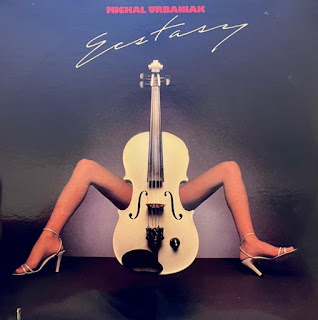
40. MICHAL URBANIAK Ecstasy (1978)
Recorded at Rosebud Studios, New York, in June of 1978.
Line-up / Musicians:
-
Michał Urbaniak* / Violin, Strings [Oberheim Synthesizer], Tenor Saxophone, Conductor
- Kenny Kirkland / Piano [Acoustic, Yamaha Baby Grand], Electric Piano [Fender Rhodes], Minimoog, Polymoog
- Zbigniew Namysłowski / Alto Saxophone
- Anthony Jackson / Bass Guitar
- Pee Wee Ford / Bass Guitar
- Bernard Pretty Purdie* / Drums
- Gary Mure / Drums
- James Crab Robinson / Guitar
- Crusher Bennett* / Percussion
- Arthur Jenkins / Percussion
- Ralph Macdonald / Percussion
- Othello / Steel Drums
Vocals [Lead]: Calvin Brown (A4, B1), Henry Jackson, James Crab Robinson*, Keith Keyboy Rose , Urszula Dudziak (A2, B2, B3, B4)
Vocals [Background]: Keith Keyboy Rose, Rickie Byars-Boger*
A1. "Body Rub" (4:42) group vocals over funk R&B music conjoins this song with music by funk R&B bands like The OHIO PLAYERS, PARLIAMENT, CAMEO, THE BROTHERS JOHNSON, SLY & THE FAMILY STONE,THE COMMODORES, The GAP BAND, KOOL & THE GANG, DAZZ BAND, GRAHAM CENTRAL STATION, EARTH WIND & FIRE, The ISLEY BROTHERS, and The AVERAGE WHITE BAND. (9/10)
A2. "Free" (4:45) I have to admit to being quite shocked that Michał didn't enlist his superhuman wife to attempt to cover the vocals of this iconic Deniece Williams song--on her own. The credits say she's there but I have to admit that I cannot distinguish her voice from those of the men around her. Still, it's a pretty good rendition: very funky and soulful in the same vein as the above funk R&B artists. (8.875/10)
A3. "Ecstasy" (3:02) this one sounds very much like EARTH, WIND & FIRE or The BROTHERS JOHNSON. (It may be a cover of one of their songs. It's definitely not a cover of The Ohio Players song of the same name.) It may be an original. Great song--with some awesome musicianship across the board (especially from the bass)--and some very creative and spirited electric violin play from Michał. Should've been a radio hit! (9.125/10)
A4. "Just A Funky Feeling" (5:22) stanky funk-blues that sounds like The O'Jays, War, Rufus, Kool & The Gang and many other Funk R&B bands. Great contributions from the percussionists, vocal team, bass player, and saxes. Another absolutely outstanding funk R&B song. You'd be hard-pressed to admit that the band leader and composer was a European white guy! (9.333/10)
B1. "Want's Ta Make You Feel Good" (5:41) this song definitely brings one deep into the fold of the KOOL & THE GANG/BROTHERS JOHNSON/EARTH, WIND & FIRE pocket of smooth, sexy/sultry Funk R&B. Again, I'm pinching myself: Michał Urbaniak! Who knew?! There's even some RICK JAMES in this one. If you love the funk of the late 1970s, you're gonna LOVE this! Awesome! You could not ask for better band and musicianship! (9.5/10)
B2. "A Day In The Park" (4:04) down to the beautiful Smooth Jazz that Michal also excels at--this one serving as a perfect vehicle for some of his wife Urszula's most beautiful vocals--this one worded! Ulla's work here reminds me very much of the work of Patricia Kaas and Deniece Williams--though not so much when she starts her bird like scatting in the third minute--but it's short-lived: she returns to worded singing, mirrored by the nice gentle male voice of either James Crab Robinson, Keith Keyboy Rose, or Rickie Byars-Boger. Lovely. (8.875/10)
B3. "French Kiss" (5:17) now settling into the Smooth Jazz territory pioneered by BOB JAMES and FREDDIE HUBBARD--only with Michał's sexy sax in the lead position. Nice! Nice slap bass play from Pee Wee Ford over Anthony Jackson's far-smoother mellow note play. The slightly-scattered ramped up "chorus" motifs detract a little from the flow and success of the song due to the instrumentalists' inability to stay synchronized with one another (unless it's intentional). It's just a little off-putting. (8.75/10)
B4. "Creation" (6:21) another smoother return to the Jazz-Rock Fusion foundations of Michał's past, here with some nice smooth funk bass and Fender Rhodes support from Anthony Jackson and Kenny Kirkland, respectively. Even Ulla seems at ease and fully on board with this one. (I'm suspecting that the heavier Funk R&B is neither in her interest or comfort zones.) Nice, steady, superior quality and caliber Jazz-Rock Fusion that is, perhaps, lacking a little energy or enthusiasm. (8.75/10)
Urszula's participation here is so minimal--and so muted--that it may have been an indication of A) her displeasure with the direction Michał was taking with their music, B) her dissatisfaction with their marriage, and/or C) her longing to go back to her homeland (Poland).
90.26 on the Fishscales = A-/five stars; a minor masterpiece of Jazz-Rock Fusion that contains five songs (our of eight) that represent some of the Seventies' highest quality Funk R&B--some of the greatest songs that you will ever hear (but probably haven't). A must hear album! Especially if you like Funk R&B!

41. JEREMY STEIG Firefly
Jeremy is here joining the CTI train, producing a modernized, pop-oriented display of Jazz-Pop with nice female vocals and expanded cast of contributors. The album was recorded in 1977 at Electric Lady Studios, New York City, on March 4 & 22 and April 11, 1977 and then released by CTI Records later in the year.
Line-up/Musicians:
- Jeremy Steig / flutes
- Gary King / bass
- Ray Mantilla / congas (A1 to B1, B4)
- Steve Gadd / drums (A1, A2, B2 to B4)
- Alan Schwartzberg / drums (A2)
- Eric Gale / guitar (A1 to B1, B4)
- John Scofield / guitar (B2, B3)
- Hiram Bullock / guitar [solo] (A1, B4)
- Richard Tee / keyboards (A1 to B1, B4)
- Sue Evans / percussion (A1 to B1, B4)
- Cliff Carter / synthesizer (A1 to B1, B4)
- Googie Coppola / vocals (A1 to B1)
Horns (A1 to B1, B4):
Trombones – Jerry Chamberlain, Sam Burtis, Tom Malone
Trombone [Bass] – Dave Taylor
Trumpets – Burt Collins, Joe Shepley, Jon Faddis, Lew Soloff
A1. "Firefly" (11:55) fine funky with lots of catchy melodic and song-twisting hooks courtesy of the sweet Minnie Ripperton-like voice of Googie Coppola and Jeremy's very spirited flute performance, there is much borrowed here from the pages of the Disco Funk-R&B that was driving all of the dance clubs (now called "Discos" in the US), the rhythm section is quite potent with Gary King, Ray Mantilla, Sue Evans, Steve Gadd, a horn section and two guitarists (Eric Gale and Hiram Bullock) and two keyboard players (Richard Tee and Cliff Carter) adding their funky injections of spice and encouragement from the wings. It would have been a fun song to dance to but it was nothing that could've generated a following much less frequent radio play--this despite Jeremy and Googie's very enjoyable performances. (22.125/25)
A2. "Living Inside Your Love" (5:28) taking a recent jazz-pop hit tune (an Earl Klugh-Dave Gruisin composition that first appeared on Earl Klugh's popular breakout album of the previous year, Living Inside Your Love) and bringing it into the fold of popular cover tunes certainly does a lot to increase the value and audience to a song. Despite the vocal track being imbedded into the weave of the music and dispersed among multiple voices, Googie Coppola's performance here is quite remarkable--like a blend between Minnie Ripperton, Patti Austin, Deniece Williams, Lani Groves, and even a little bit of Diana Ross. It's such a great song--such ear candy--that it'd be hard to ruin it even if you didn't have an amazing singer to bring it to light. (9.125/10)
B1. "Everything Is Coming To The Light" (2:58) another very pretty vocal performance from this artist that is totally new to me: Googie Coppola. Where did she come from--what's her story--and why haven't we heard more of her? The song, however, struggles to get into second or third gears (8.75/10)
B2. "Hop Scotch" (7:25) turn up the funk! This is Herbie Hancock or Billy Cobham territory! Gary King is going wild with his bass lines and Richard Tee is really holding it all together as Jeremy lays it all out there but I find myself drifting off with Ray Mantilla's easy and hypnotic conga play more often than anywhere else. John Scofield's wah-wah guitar sneaking up in the middle while Jeremy is wailing away is a cool effect, as are the deep thrums of Gary King's low-end bass chords. The specially credited piano performance (and solo) by Richie Bierbach is nothing specially--especially as the song seems to be crying out, in my opinion, for an electric keyboard. Finding out that this song is a composition of drummer-extraordinaire Joe Chambers makes me get why it sounds so much like something composed by Narada Michael Walden. (13.875/15)
B3. "Sweet Hour Of Prayer" (2:01) a Gospel spiritual played at the very lowest breathy levels on Jeremy's flute and volume as Richard Tee supports on a reverb-panning Fender Rhodes. (4.375/5)
B4. "Grasshopper" (5:17) some great cinematic Blaxploitation funk on this Jeremy Steig compostion with more amazing flute play from Jeremy BUT it's the amazing guitar-with-vocals solo by Hiram Bullock in the middle (with the awesome horn accents) that makes this song something really special! Hiram's vocal expressing during his solo even seems to inspire Jeremy to go even further in his own next solo! So cool! Great composition, arrangement, and rendering! (9.375/10)
Total Time: 35:31
90.167 on the Fishscales = A-/4.5 stars; a near-masterpiece of funky radio- and dance-friendly Jazz-Rock Fusion.
42. EDDIE HENDERSON Comin' Through
Recorded in Eddie's "backyard"--in San Francisco--at Wally Heider Studios sometime in 1977, the album is reputed to have had a July release from Capitol Records.
Line-up / Musicians:
- Eddie Henderson / trumpet (1, 2, 4-8), flugelhorn (3, 8), arrangements (4, 8)
With:
- Dianne Reeves / vocals (2, 5)
- Howard King / vocals (5)
- Lee Ritenour / guitar (1, 5)
- Al McKay / guitar (2, 6)
- Patrice Rushen / piano (2), electric piano (2, 5), clavinet (1, 2), Strings Ensemble (1, 5), Mini-Moog (6), bass (5), percussion (1, 2, 6), vocals (2, 5), arrangements (2, 6)
- George Cables / electric piano (3, 4, 7, 8), clavinet (4, 7), Mini-Moog & Strings Ensemble (7), arrangements (3, 7)
- Charles Mims Jr. / Mini-Moog (1), electric piano & clavinet (6)
- James "Mtume" Foreman / piano (1), percussion (3, 4), congas (4, 6, 7), vocals (2, 5), arranger (1, 5)
- Manny Boyd / sax (2,4,6), flute (7)
- Connie Henderson / flute (7)
- Julian Priester / trombone (2, 4-7)
- Paul Jackson / bass (1-7)
- Howard "Locksmith" King / drums (1-7)
- Skip Drinkwater / percussion (4-6), producer
- Philip Bailey / congas & bongos (1, 2)
1. "Say You Will" (4:28) so this is how it's going to be: Disco Jazz-Funk! There is the skillfully-played musicianship coupled with repetitive dance grooves with their instrumental riff "hooks" and engageable melodies. The main melody as presented by Eddie on his trumpet prepares us for Debbie Harry's awesome 1980 hit, "Rapture," while the mesmerizing bass 'n' drum line beneath feels as if it came straight out of The ISLEY BROTHERS' 1975 release,
The Heat Is On (like a slightly less bass-heavy "Fight the Power"). (8.875/10)
2. "Open Eyes" (3:53) slow it down to Bob James pace, Paul Jackson's funky note-sliding bass line is so cool! Active horn section, Patrice Rushen's clavinet, and choir sultry background vocals make for a great cocky-urban groove to fall into. Here the effect of the percussion ensemble is felt and Eddie really lets us hear his trumpet talents. Nice--though it is faded out to end it (indicating, of course, that the original jam went on for some time longer). (9/10)
3. "Morning Song" (5:38) discarding the Disco and R&B stylings for a song is a good thing. Here they are reaching back into the soulful early 70s with a Bob James/Steely Dan kind of spacious style. I like this very much as it reminds me much more of the true essence of some of those original pioneers of Jazz-Rock Fusion--the ones who were seeking to catch listeners with melody, comfort, and ease. Eddie's lead trumpet play is quite smooth and modest, rarely showing his skills, settling more for the engaging melodies of the classic soul singers of the 1960s. (8.875/10)
4. "Movin' On" (5:54) I'm wondering if the "dirty" production on George Cables' electric piano intro was intentional or not. No matter. After 30 seconds of solo electric piano, the band appears with a Disco-lite motif that predicts HERB ALPERT's 1980 hit, "Rise." George's clavinet play above Paul Jackson's centering bass line is great while the electric piano strays and spices things up beneath the steady beat provided by the Locksmith. The long reverbed trumpet notes are pretty cool even if they are mixed a little further back than I would have expected (or liked). With so many percussionists employed for this song I would have expected more noticeable action coming from that department, but no. My favorite part of the song (beside the clavinet and Fender Rhodes play) is Manny Boyd's excellent sax solo in the third and fourth minute. Again, like Herb Alpert in "Rise," Dr. Eddie stays the course pretty firmly with his long-sustained reverb note playing throughout. (9/10)
5. "Return to the Source" (4:32) a song that sounds like a slow-motion version of one of The Isley Brother's popular uptempo funk songs from their Heat Is On-Harvest For the World-Go for Your Guns period (1975-1977). Eddie's muted trumpet play is awesome, the pace a little discombobulating because it's slower than you would want or expect, but it does allow for plenty of chances to observe the talents of band members like the rhythm guitarists and vocal choir. Great rhythm guitar work from Lee Ritenour and some of the album's best trumpet playing by Eddie. (9/10)
6. "The Funk Surgeon" (4:59) fully committed to the Disco era: multiple rhythm guitars, slap and pluck bass, bass- and hi-hat-centered drums, EWF-like horn section, Patrice Rushen's novelty sound of duck-like Mini-Moog--it's all here for a dance-floor novelty song. Which is sad for the way in which Eddie's trumpet becomes so secondary (or tertiary) to the music--even going so far as getting buried within the mix instead of up front. (8.75/10)
7. "Beyond Forever" (4:38) one of the most interesting songs on the album--mostly due to its mid-song tempo increase and the remarkable instrumental performances that come with that. Not only are the performances of Paul Jackson, George Cables, and Locksmith off the charts impressive, the composition (by George Cables) displays a songwriter who is anything but complacent--someone who wants to continue to keep the exciting, exploratory nature of jazz alive within the music industry. Great song! (Too bad they faded it out again: I would love to hear what else they had to say!) (9.375/10)
8. "Connie" (3:05) an Eddie Henderson composition that finds the flugelhorn player expressing from a tradition that feels closest to that of Miles Davis and/or Freddie Hubbard. George Cables is Eddie's lone accompanist--on a sparkling Fender Rhodes. Very reflective and introspective. I love Eddie's emotional side. (9.25/10)
Total Time: 37:07
Though full of plenty of funk and creativity, this album definitely presents a full commitment to the sounds and styles that were dominating the world of radio- (and sales-) friendly pop music at the time.
90.16 on the Fishscales = A-/4.5 stars; a collection of masterful songs that perfectly reflect so much all that was going on in the dance, radio, and Jazz-Rock Fusion world at the time (mid-1977).
43. BILLY COBHAM A Funky Thide of Sings (1975)
The first of a series of albums that Billy Cobham uses (with the inspiration of Bulgarian classically-oriented pianist/composer Milcho Leviev) to expose his commitment to seriously sophisticated musical composition. The album was released by Atlantic Records in October of 1975.
Line-up / Musicians:
- Billy Cobham / percussion, synthesizer, arranger & co-producer
With:
- John Scofield / guitar
- Milcho Leviev / keyboards, arrangements (2, 8)
- Michael Brecker / saxophone (excluding song #3)
- Randy Brecker / trumpet (excl. 3), arrangements (5)
- Glenn Ferris / trombone (excl. 3)
- Larry Schneider / saxophone (1, 3)
- Walt Fowler / trumpet (1, 3)
- Tom Malone / trombone & piccolo (1, 3)
- Alex Blake / bass, arrangements (4)
- Rebop Kwaku Baah / congas (1, 3)
1. "Panhandler" (3:50) a funk song that demands a lot of its players--especially the horn section, but these professionals are at the absolute highest echelon in music's talent pool. The song is okay but more fascinating to listen to the horn section. (9/10)
2. "Sorcery" (2:26) another great groove, this one a little less funky, on which Billy once again places rigorous demands on his horn players. I think I'm catching on to Billy's focus on this album: to show off his skills as an arranger. (9.125/10)
3. "A Funky Thide Of Sings" (3:40) a steady bass line with rich percussion contributions that sounds a lot like a blend of the DAVE SANBORN and KOOL AND THE GANG approaches to funk is complemented by a slightly less star-studded horn section. Sax player Larry Schneider is asked to lead throughout a lot of it. (8.75/10)
4. "Thinking Of You" (4:12) exploring the smoother, Disco-er side of Jazz-Rock Fusion with a rotating crew of individuals stepping up to lead, including, synth player Milcho Leviev, trombonist Glenn Ferris, sax player Michael Brecker, trumpeter Randy Brecker, and guitarist John Scofield all getting a little time up front. (8.75/10)
5. "Some Skunk Funk" (5:07) a great song (attributed to trumpeter Randy Brecker), demanding tremendous skill to pull off, that once again lacks that special ingredient that makes one want to hum along: you want to dance, you want to study and marvel at the individual musicians, but there's nothing you'll be haunted by in the hours or days afterward. (9/10)
6. "Light At The End Of The Tunnel" (3:37) stealing the melodic rhythm track from Motown Temptation's "Can't Get Next to You" and then trying to make it different with interesting horn and lead guitar play over the top is like stealing a car and then spray painting it a different color. The solo voce drum play at the very end is the highlight for me. (8.875/10)
7. "A Funky Kind Of Thing" (9:24) solo drum play over the entire ten minutes! It always amazes me how Billy Cobham can create mood and funk with only himself and a drum set (and an engineering console). I can not think of many drummers who have this talent. (17.5/20)
8. "Moody Modes" (12:16) cymbals, electric piano, electric bass, and synths open up to create a nice dreamy "late night" motif--which is joined (bubbly slightly burst) at the 90-second mark by the horns. Piano takes over in the middle of the third minute. The pianist. Milcho Leviev is, you might recall, an incredibly talented pianist, composer, and band leader with quite a pedigree and c.v. back in Bulgaria before Don Ellis lured him across the pond to co-lead his orchestra from 1970-75. Though Ellis was quite the promoter, molder, and mentor to young and foreign talent, Don's relationship with Milcho was prompted by his tremendous respect and admiration for the Bulgarian music traditions and compositional (and piano) prowess he exuded.
Billy began associating with Milcho in 1971 with the artist appearing on Billy's albums Total Eclipse (1974), this one, and Shabazz, a live album which would appear later in the same year as this one. Overall this long song plays out more like a soundtrack or classically-tinged suite than anything resembling anything else on Side One of this album. A marvellous song, though still lacking in melodic hooks and definitely lacking in infectious grooves. This one is for the intellectual music lover. (23.5/25)
Total time 44:32
A collection of demanding, sophisticated songs that all take considerable skill to perform but which somehow lack that special something that makes for a catchy earworm--a song that you want to push "repeat" for. Again, it feels obvious to me that Billy's focus on this album was most surely the task of proving he could write and arrange uber-sophisticated songs and then get the right team of musicians that he could then motivate to top-notch performances.
90.0 on the Fishscales = A-/4.5 stars; even though this isn't a favorite album--does not contain enough whistle-and-dancd along songs for my tastes--it is an album I have to rate up for the astounding skill level of the musical collaborators.
44. LONNIE LISTON SMITH Love Is the Answer (1980)
Despite this being Lonnie's last album for the Columbia label (and the followup to a rather unispired A Song for the Children), something (or someone[s]) have definitely put some zip back into Lonnie's music.
Line-up / Musicians:
- Lonnie Liston Smith / Piano, Electric Piano
- Pee Wee Ford / Bass
- Lino Reyes / Drums
- Lawrence Killian / Congas, Bongos
- Abdul Wali / Guitar
- Asante / Percussion
- Dave Hubbard / Tenor Saxophone, Soprano Saxophone, Flute
With:
- James "Crabbe" Robinson / Vocals, Guitar (A3)
- WM "Doc"Powell / Guitar (B4)
And:
- Backing Vocals: Butch Jackson, Cassie Hawkins, Gloria Jones, Keith Rose , Marcella Allen
- Horns: Albert "Duke" Jones , Johnathan Lewis, Kevin Jasper, Koran Daniels, Louis P. Barbarin*
A1. "In The Park" (4:19) an uptempo Latin-percussion-led song with fretless bass and piano falling into place until Dave Hubbard's flute is brought in to amplify the main melody. Then Lonnie takes over with a nice melodic jazz piano solo. (Nice synth strings support coming from behind.) Light and delightfully peppy! (8.875/10)
A2. "Love Is The Answer" (4:47) this is not the Todd Rundgren/Utopia song that Hall & Oates made into a mega hit, this is Lonnie and James Robinson's doing. (8.875/10)
A3. "Speak About It" (5:56) a horn-infused jazz-funk-rock tune that almost sounds pre-hip hop with James' invested gospel/R&B vocal and the awesome smooth support of the team of background vocalists. Lonnie provides piano to add to and sometimes offset the rhythm section and Pee Wee Ford's slap bass play is off the charts! James also plays some guitar with Abdul Wali in the rhythm corps. And I love the near-militant the lyrics! So invigorating! Even when it goes EW&F and Disco in the end movements. This is a GREAT song: one of the best Lonnie and company have ever put out there. It should have been a major hit--at least on the Soul/R&B charts and stations. (9.75/10)
A4. "Bridge Through Time" (4:02) finger clicks, spacious rhythm guitar licks, and other electronic percussion sounds infuse this sparsely populated sonic field until Pee Wee's funky smooth bass and Lonnie's clean, reverb Fender Rhodes joins in, giving the song a very Earth Wind & Fire "Can't Hide Love" ("girl, I betcha!") feel. Soprano sax, Fender Rhodes, and synth strings provide a three-part harmony delivery of the main melody. Then in the final section Abdul steps up a bit to show us a little of his hidden talents. Nice! (8.875/10)
B1. "On The Real Side" (5:46) sophisticated, dynamic, and peppy, this is a kind of Jazz-Rock Fusion I'd like to hear more from Lonnie. And we've actually got Lonnie on an old organ for this one! (9.125/10)
B2. "The Enchantress" (4:57) on the soft/seductive side, Pee Wee Ford's funky slap bass and coupled with Abdul Wali's genius rhythm guitar interjections gives Lonnie's usual hypnotic beauty a fresh, more human dimension. (8.875/10)
B3. "Give Peace A Chance" (6:00) yet another attempt/offering of anthemic anti-war music calling for a social shift toward peace, love and kindness. Cool to hear Lonnie on organ some more as well as the use of horns and soulful b vox. (8.875/10)
B4. "Free And Easy" (3:10) a light, cheerful song that sounds as if BOB JAMES had lured JACO PASTORIUS into his studio for his input into a single song. Piano and smooth yet syncopated music. (8.75/10)
Abdul Wali is definitely the greatest guitar find I've heard on any Lonnie album up to this point. And Pee Wee Ford is definitely a great slap-funk bassist. Together with Lonnie's usual support crew they help make for the most lively, dynamic, and sophisticated jazz-funk Lonnie Liston Smith album I've heard up to this point in his discography. Reminds me of the music coming out of the Laws family. Well done, Guys!
Not at all your typical Lonnie Liston Smith fare! No indeed! The injection of zip and pep from slap-funk bassist Pee Wee Ford and amazing rhythm guitarist Abdul Wali as well as Lonnie's own experimentation with organ renders this collection of songs far more spirited, lively, and dynamic than anything he's ever produced up to this point in his discography. This may still be Smooth Jazz but it is the closest music to his jazz roots than anything the Cosmic Echoes or Marcus Miller collaborations ever revealed. I am blown away by the fresh new sound and wonderfully upbeat and zesty feeling I get from this album! This may have been Lonnie's last album with Columbia (whether he knew it or not) but he sure goes out with a bang! Mega kudos to whoever infused Lonnie with this new life! If it was just Pee Wee and Abdul, then I bow down to you two. I suspect there was something much more profound going on in Lonnie's life.
90.0 on the Fishscales = A-/five stars; a minor masterpiece of a collection of masterfully rendered and perfected Jazz-Rock Fusion and Jazz-Funk songs. This is one Lonnie Liston Smith album that you do not want to miss!
The Near-Masterpieces:
DONALD BYRD Caricatures (1976)
Donald and the Mizell Brothers pull together another high-powered all-star band around them including three full-time guitarists, three full-time keyboard masters, two full-time percussionists, a strings orchestra with conductor, and no less than six a-lister horn players. And they deliver! Caricatures was recorded between April and May 1976 in Hollywood, California, and then released by Blue Note Records in August.
Line-up / Musicians:
- Donald Byrd / trumpet, flugelhorn, vocals
- James Jameson / bass (A1)
- Harvey Mason / drums (A1)
- Scott Edwards / bass (A2 to B4)
- Alphonse Mouzon / drums (tracks: A2 to B4)
- Bernard Taylor / guitar
- David T. Walker / guitar
- John Rowin / guitar
- Jerry Peters / keyboards
- Patrice Rushen / keyboards
- Skip Scarborough / keyboards
- Mayuto Correa / percussion
- Stephanie Spruill / percussion
Horns – Ernie Watts, Fonce Mizell, Gary Bartz, George Bohanon, Oscar Brashear
- Wade Marcus / conductor [strings], arranged by [strings]
- Mildred Lane / vocals (A2, B1)
- Kay Haith / vocals (A3, B3)
Backing Vocals – Donald Byrd, Fonce Mizell, Larry Mizell, Theresa Mitchell, Vernessa Mitchell
A1. "Dance Band" (6:09) opens like a funky pop song with banked horn accents until Donald steps up to the microphone to sing. He's got quite the voice! One that reminds me of or Morris Day. The singing section is brief, only really an introduction, cuz what follows is a lot of solos: trumpet, saxophone, . "Who-up!" choral vocals arrive in the fourth minute with the alto sax, then drop off when the PARLIAMENTarian vocals and scatting return. Thereafter, the girls appear here and there while the male lead continues to jive and Donald injects his solo trumpet. Quite the party funk tune! High marks for musicianship and enthusiasm. (Not quite the Jazz-Rock Fusion direction I was hoping for.) (9/10)
A2. "Wild Life" (5:58) one of those classic Mizell Brothers compositions that is based on the repetition of a very simple one-measure highly-dictatorial rhythmic motif. Lead female singer (Mildred Lane) takes the fore as the horns and strings fill space in and around the repeating motif. Trumpet and tenor sax get the first two solos as the female-dominated background vocals continue to inject repeated phrasings of the title phrase. Flugelhorn gets the final solo as Mildred finishes the song. (9.125/10)
A3. "Caricatures" (5:08) another Mizell Brothers composition (this one actually being credited to Larry alone), this one using a variation of the bass 'n' drum rhythm track of Kool & The Gang's "Hollywood Swinging." Male-dominated vocals work their group-chant throughout the song with accents and incidentals coming from female background vocalists and a variety of horns, percussives, and percussive keyboards (clavinet, et al. Having three highly skilled keyboard players on board for every song sure does help enrich the sonicsphere!) Some smooth flugelhorn in the fifth minute before the men's final run-through of the main group vocal line. (8.875/10)
A4. "Science Funktion" (4:49) Mizell Brothers have a lot of ideas! They're feeling like the Jimmy Jam & Terry Lewis of the 1970s! This rich and fulfilling mostly-instrumental is a more spacious composition still using their brief one-measure motif to build a song around there are pre-CAMEO synths snaking around in front and back. I really like the way this inventive sonic field is constructed. Choppy trumpet up front is joined by male choir chant vocals for the final 90 seconds. Man bassist Scott Edwards can roll around on that bass! (9.125/10)
B1. "Dancing In The Street" (4:40) yes, it's a cover of the classic Martha & The Vandellas Motown song from Marvin Gaye, Jaye Hunter, and Stevenson. Mildred Lane is given the spotlight again but her performance/rendition is never intended to imitate the original, but instead kind offer a kind of Thelma Houston or Gloria Gaynor "R&B cover version" of it. I like it but it does feel a bit as if it's meant to back a sparkly 1970s dance routine on Soul Train. (8.75/10)
B2. "Return Of The King" (4:50) a Rodney Mizell composition, it sounds like a precursor to KajaGoogoo's monster hit (ten years later), "Too Shy" before taking a slight turn (or two) into a nice FREDDIE HUBBARD-like song. Male group vocals take up the repeat chant of the title in the third minute. (8.875/10)
B3. "Onward 'Til Morning" (3:45) a smoother tune that sounds like something Barry White might have composed for his Love Unlimited Orchestra. Awesome piano, rhythm guitar, clavinet, orchestral arrangements, and horn performances over and a part of the smooth rhythm section. Donald's own solo in the middle is definitely a highlight of this Larry Mizell-penned song. (9.3333/10)
B4. "Tell Me" (4:18) the only Donald Byrd composition on the album, it sounds quite similar to the two-chord, one measure motifs so common to those of the Mizell Brothers. Donald enters, speaking the lyrics of his daily-nightly search-walks for his loved one for more than a minute while the horns and rhythm instruments play around him, then around the 90-second mark he reaches back to sing his request for his baby's answer to where she's been, what's on her mind, is she all right. Interesting diary entry type song over great music). (8.875/10)
Total Time: 39:58
As far as the funk goes, the Mizell Brothers are among the best there was! As far as the music goes, there are some very fine and tightly-coordinated performances from a group of top notch, highly-refined musicians--a lot of it channeled through filters and processes that were quite popular at that time in the Motown, Philly, Jersey/NYC, and D.C. music scenes.
89.95 on the Fishscales = B+/4.5 stars; a near-masterpiece of very high quality Funked-up Jazz-Rock Fusion--a lot of it with R&B vocals as were popular in the American Black music scene at the time. This is an sadly unheard and underappreciated contribution to that niche of music--some of the finest you might ever hear!
AZYMUTH Azimüth (1975)
The debut full-length LP of studio recordings from one of Smooth Jazz' stalwart masters. It was released by Som Livre in May of 1975.
Line-up / Musicians:- José Alexandre Malheiros / bass [Rickenbacker, Vox & Eco], guitars [acoustic & electric], shaker, vocals
- José Roberto Bertrami / bells, clavinet, electric piano [Fender Rhodes], organ [Hammond M.102], piano, synthesizer [Arp 2600, Moog Satellite, Arp Strings], vocals
- Ivan C. Miguel Conti (Mamão) / drums [Rogers & Ludwig], shaker, timbales, timpani
- Ariovaldo Contesini / bongos, congas, cuica, shaker, surdo, tamborim, vocals
- João Américo (Paraná) / percussion, vocals, acoustic guitar (A1)
With:
- Marcio Lott / vocals (A1, B2, B4)
A1. "Linha Do Horizonte" (4:25) Written-By –
Paraná*,
Paulo Sérgio Valle this feels like a smoother, watered down version of PREMIATA FORNERIA MARCONI's "Il Banchetto" from their 1972 masterpiece,
Per un amico. Points deducted for being such a blatant steal. (8.667/10)
A2. "Melô Dos Dois Bicudos" (3:07) opens sounding like an early Kool & The Gang, Earth, Wind & Fire, or Ohio Players song that is stuck on repeat. Weird--almost landing in the territory of a novelty song. (8.75/10)
A3. "Brazil" (4:03) a group composition that must been somewhat meaningful to the band since they chose to name it after their home country (though the question of their perspective and/or meaning comes into discussion when one notices that they used the English/European spelling of the country name instead of their own native Portuguese spelling). Nice laid back sitting on the beach music. (8.875/10)
A4. "Faça De Conta" (4:32) Written by José Roberto Bertrami, this excellent Smooth Jazz-Funk could quite easily have been found on one of Bob James' earliest four albums in the mid-Seventies. Great bass, clavinet, Fender Rhodes, percussion, and use of vocals. And it makes you wanna dance! Definitely a top three song for me. (9.25/10)
A5. "Caça A Raposa" (4:32) a group composition that plays out like something from one of Bob James late 70s Smooth Funk-Lite Jazz albums. Nice keyboard work and bass play with some cool gimicks and grooves. (8.875/10)
B1. "Estrada Dos Deuses" (3:40) is this an effort to emulate Kool & The Gang's "Summer Madness" or perhaps at least to take advantage of the now-famous synth portamento sound. (8.875/10)
B2. "Esperando Minha Vez" (3:03) a composition offered by José Alexandre Malheiros and his wife Thereza that sounds like something by Michael Franks in the vocal sections, something by Carlos Antônio Jobim in the acoustic guitar-dominated sections, and then like Ramsey in the jazzy-electric keyboard parts. Cute. (8.875/10)
B3. "Montreal City" (3:22) nice Smooth Jazz from José Roberto Bertrami that reminds me of MICHAEL FRANKS. (9/10)
B4. "Manhã" (3:46) a beautiful little innocuous Smooth Jazz charmer with great hypnotic earworm melodies and rhythms from the percussionists, keys, and b vox melodies. Written by José Bertrami and Américo-Paraná, I have to say that Smooth Jazz does not get much better than this (unless your name is David Axelrod, Alain Mion, Lonnie Liston Smith, or Earl Klugh). (9.5/10)
B5. "Periscópio" (7:35) funk for the sake of funk--reminds me of Donald Byrd's earliest forays into the realm (1972's "Little Rasti") as well as, of course, some of the work of Jimmy "Hammond" Smith. Nice organ, bass, drums, rhythm guitar work as well as percussion. (13.75/15)
Total time: 42:05
The most consistently impressive aspects of the musicianship on this album are the percussionists, keyboards of José Roberto Bertrami and funky bass play of José Alexandre Malheiros. Definitely an impressive display of lightly-funky high-quality Smooth Jazz.
89.92 on the Fishscales = B+/4.5 stars; a near-masterpiece of refreshing new Smooth Jazz with some excellent musicianship delivering an easy Funk-Lite disposition.
(The SAN FRANCISCO) GIANTS Giants (1977)
An all-star band of veritable who's who in the early Latin/jazz-ified R&B/funk scene that was, apparently, the brain child of Santana percussionist Mike Carabello and Sly & The Family Stone founder and drummer Greg Errico; the "band" was originally called "Attitude." The material for the album that would become Giants was recorded for Mike Carabello's Far Out Productions over the course of several years, starting in 1971, using studios in San Francisco (Columbia Studios and Wally Heider Studio) and Los Angelis (Mike's Far Our Studio) but never released until 1977/78 (not 1979).
Lineup / Musicians:
- Greg Errico (Sly & The Family Stone) / drums, synthesizer, producer
- Mike Carabello (Santana) / organ (B2), congas
- Doug Rauch (The Voices of East Harlem, The Loading Zone, Gábor Szabó, Santana, Lenny White) / bass
- Doug Rodrigues (The Voices of East Harlem, Santana, Betty Davis, Mandrill, Lenny White / guitar
- Wendy Haas (Santana, Azteca) / piano, vocals (B3)
With:
- Carlos Santana (Santana) / guitar (B2, B3)
- Neal Schon (Santana, Journey) / guitar
- Lee Oskar (War) / harmonica (A3, A4)
- Greg Rollie (Santana) / organ
- Robert "Bobby" Vega (Lee Oskar) / bass [fuzz] (A3, A4)
- Chepito Areas (Santana) / percussion (A3, A4, B1)
- Rico Reyes (Santana, Azteca) / percussion (A3, A4, B1)
- Herbie Hancock (Miles Davis, solo) / piano (B1)
- Mike Garcia / vibraphone (B2)
- Victor Pantoia (Chico Hamilton, Willie Bobo, Gábor Szabó, HERBIE MANN, Herbie Hancock, Azteca, Betty Davis) / congas
- Bianca Thornton-Oden (Lee Oskar, Van Morrison) / vocals
- Coke Escovedo (Azteca) / vocals
- Gene Washington / vocals
- Jody Moreing (Sincerely, San Jose) / vocals
- Linda Tillery (The Cultural Heritage Choir, The Loading Zone, solo) / vocals
A1. "Attitude" (3:25) pure R&B funk from the very first note, the song uses a female-dominated choir to present the "attitude" chorus between which various voices (male and female) take turns belting out their lyric. Great vocal arrangement as well as improvisations. This is not quite Disco, more like EW&F/UNDISPUTED TRUTH proto-Disco. (9/10)
A2. "They Change It" (3:29) opens with an excellent funk groove not unlike some of SLY & THE FAMILY STONE's earlier songs. It's no surprise, then, that a full choir joins in to "recite" or chant the lyrics in a "Thank You For Lettin' Me Be Myself" fashion. The bass is so funky! And the drumming, percussion, and support guitars are right on board! An amazing funk song that is diminished a bit by its kind-of-corny lyrics and vocal arrangement. (9.25/10)
Kilimanjaro suite :
A3. "The Village" (4:30) a WAR-like palette that is dominated by the free-wheelin' percussion play beneath treated harmonica/whistling and organ. Very cool! Would be so fun to see performed live. There are, however, a few glitch-like issues with timing/synchrony. (8.875/10)
A4. "The Summit" (4:38) the percussionists lay back from soloing and settle into a nice groove that allows Lee Oskar to take the lead on his saxophone-sounding harmonica. I love this kind of African drum-centric music. (9/10)
B1. "Pancho Villa" (5:11) organ and timbales open this one before congas and other percussionists, bass. electric piano, and trumpet join in. It is my understanding that it's pretty much the SANTANA lineup performing percussives and organ (Greg Rollie) I'm going to assume that it's Herbie Hancock on the keys (though it doesn't sound like his style of play so it could be Wendy Haas), but I'm wondering who the (uncredited) trumpet player is (Eddie Henderson?) as well as the violinist. My understanding is that this might be conga player Mike Carabello's composition. Too much simplicity as if a bare bones track established expressly to support soloists. Problem is, it's not recorded very well from the soloists' point of view and the solos aren't that noteworthy. (8.5/10)
B2. "Fried Neckbones and Home Fries" (6:32) a cover of a song written and performed by percussionist Victor Pantoja's long-time collaborator and friend, Willie Bobo, here rendered as an instrumental. It has a completely SANTANA-esque Latin/Caribbean sound and feel--especially with Carlos, the man himself's guitar solo (later taken over by Neal Schon) as well as some rather wild organ soloing from conga player Mike Carabello in the opening minute. Mike Garcia's vibraphone solo in the fourth minute is a bit simple yet harmonically interesting. Apparently this song was recorded in 1971 for Mike Carabello's solo project called "Attitude" but never found its release until Greg Errico could put things together for a full album six years later. Rated up for its excellent sound and solos; down for its simplistic, repetitive four-chord foundation. (8.875/10)
B3. "In Your Heart" (5:40) opening with a "Long Train Runnin'" sound and feel the driving, funky groove is soon joined by a choir of female-dominated voices singing in some quite lovely melodies and vocal arrangements. I can so easily get lost in wonderful weaves of rhythm instruments and percussion work like this. Apparently, a Doug Rauch and Wendy Haas jam that features Neal Schon on a spectacular display of lead guitar and, of course, Greg Errico on drums and Mike Carabello on congas. Very cool, kind of cinematic song! (9.3333/10)
Total time: 33:25
According to interviews with Errico and Carabello, the album took so long to find a label willing to release the material (most of which had been recorded in 1971) due to the predominant "party first, business later" attitude of the musicians at the time of the recording sessions. This would also explain the jam-like foundational structure of many of the songs as well as the "early" Santana sound prevalent throughout the album. All I know is that I'll take any chance I can get to hear anything the Santana crew were doing up to and during the Caravanserai era. I also love the song creators' unique visions for use of choir vocals throughout the album. Very cool!
89.73 on the Fishscales = B+/4.5 stars rated down for brevity; an awesome display of Caravanserai-like jazz-funk jamming from a veritable Latin funk-rock all-star band. Highly recommended!
JOE FARRELL Penny Arcade (1974)
Recorded at Van Gelder Studios, October, 1973, and then release by Creed Taylor's CTI Records early in 1974. With this album we see Joe's Chicago and Hispanic roots coming to the surface more (as so much repressed cultural aspects were coming to the surface in the early 1970s): Joe is moving away from the more traditional jazz perspectives that he nurtured with the likes of Elvin Jones, Buster Williams, Chick Corea, Jack DeJohnette, and Herbie Hancock, and the even the more youthful, rock-oriented perspective offered by Stanley Clarke on his previous album, Moon Germs. Bring on the inner city funk and Latin influences!
Line-up / Musicians:
- Joe Farrell / tenor sax, soprano sax, flute, piccolo flute
- Herbie Hancock / piano
- Herb Bushler / bass
- Steve Gadd / drums
- Don Alias / congas
- Joe Beck / guitar
A2. "Too High" (13:15) opens like a great cover of Stevie Wonder's classic from his monster hit album from the same year, Innervisions. Knowing how much I already loved this song (as well as Stevie and his Innervisions album) I knew it would be difficult to not like this song, but the overall sound feels slightly hollow or dull, though the work of the rhythm section is exquisite--with Joe Beck, Herb Bushler, and Herbie Hancock really livening it up with their respective roles; it's the rather lackadaisical drumming and "weak" sound of the soprano sax that renders it weak over all. A tenor sax might have served to give a little more meat to the fine bones. Also, Joe should've unleashed Herbier earlier than he does as the dude showed in the opening minute and a half that he was primed and ready! A little more volume on Joe Beck's guitar would also have helped--and even more flange and volume on Herb's excellent bass. And if Don Alias is present I wouldn't know it! Or maybe Joe should've doubled up/banked his horn as one of many--a horn section! Anyway, the song falls far short of my Stevie Wonder-High expectations--and this song just invites a Jazz-Rock Fusion rendition! Too bad. (26.25/30)
B1. "Hurricane Jane" (4:25) the rest of the album's songs are all Joe Farrell originals. This one has Steve Gadd fired up and really taking off, and it sports Joe playing multiple horns as a horn section as well as several cool tangents in which the band gets very engaged in some complex and syncopated whole-band recitations. Most of all, it's just so to finally hear the great Steve Gadd fully fired up! 90-seconds into the song the band falls into line for a vamp that supports individual solos. The first to solo is Joe Farrell on his tenor sax--but it's mixed far back into the soundscape--behind the drums, Rhodes, and rhythm guitar! Joe Beck's performance is awesome: whether he's playing some wah-wah rhythm or some jazzy/R&B lead, just spot on awesome. (9.125/10)
B2. "Cloud Cream" (6:15) setting up a sumptuous warm breezy Latin island evening motif, we finally get to hear some of the inputs of the great Don Alias as every body else kind of starts off quiet and rather subdued--as if afraid to be notice above the waves of the palm trees and the smells of the piña coladas (you know: the lime and the coconut). Flute and keyboard duet the same melody line at first but then at 1:45 the band stalls for a salsa-like Chick Corea Hispanic break in order to bridge into the next section of solos: Joe's piccolo. Herbie's piano accompaniment beneath is almost as interesting (and loud) but then we come into another salsa-refresh to bridge us to Herbie's solo. It's nice: laid back Herbie sticking with the vibe of the song instead of elevating it or hijacking it, yet definitely bringing it back into the hard bop jazz of the 60s. Nice! And, surprise, he gets to take us into the final recapitulation of the main theme with Joe's piccolo. (9/10)
B3. "Geo Blue" (7:30) a very pleasant sound palette that sounds very 1960s "classic" lounge jazz: pretty, engaging, not too complex (though still quite subtly sophisticated--more in the soloists' melody lines instead of the pace and/or departure from "standard" and "Western familiar" pentatonic or major and minor key melody lines. Interestingly, this song could very easily have landed on one of Steely Dan's mid-1970s albums and I wouldn't have blinked--sounding very much like "Doctor Wu." Faultless if old-fashioned (and conjuring up a lot of nostalgia--for those "good old days," you know). This the kind of musical style in which I think the sax (not the soprano) and perhaps Joe Farrell sounds most fitting. (13.75/15)
Total Time 35:30
89.667 on the Fishscales = B+/4.5 stars; a near-masterpiece of Jazz-Rock Fusion that shows an artist experimenting with a number of possible directions to take his music, including standard jazz, Latin Jazz, Pop, R&B, and Funk. Wait till the end of the year: with his next album, Upon This Rock, you get to hear the direction he chooses!
THE CRUSADERS Southern Comfort (1974)
A double album that achieved number one status on the Billboard Jazz Music charts (and #3 on the Soul charts) Southern Comfort was recorded at Wally Heider Studios in Los Angeles and released by the ABC subsidiary, Blue Thumb Records, in October.
Line-up / Musicians:
- Wayne Henderson / trombones, bass
- Wilton Felder / saxophone, bass
- Joe Sample / keyboards
- Nesbert "Stix" Hooper / drums
- Larry Carlton / guitars
A1. "Stomp And Buck Dance" (5:51) great, solid funky Jazz-Rock with several layers of attractive hooks and a rock-drivin' groove that keeps the listener fully-engaged. No wonder this was a moderately successful "hit" single on the charts. (9.125/10)
A2. "Greasy Spoon" (3:14) opening with a Southern blues piano (and bass) motif and voice-tube-enhanced guitar New Orleans-style soloing--like a cross between Joe Walsh and Leon Russell. In the second minute Wilton Felder's television sax gets the next spotlight, then it's back to Larry for his voice-modified guitar to finish--with a bunch of clapping and enthusiastic voice commendations to close it out. (8.75/10)
A3. "Get On The Soul Ship (It's Sailing)" (3:22) another gentle/laid back groove that feels Southern fried which sets up for Wilton's tenor sax to lead the way into the promised land with a song-long solo that makes me feel as if I'm back in the 1970s watching one of the popular "down-home" television sit-coms of the day. This is barely tolerable to me. (8.5/10)
A4. "Super-Stuff" (2:42) a not-so-super song. After a day with Tom Scott and the L.A. Express yesterday I can honestly say that this stuff is so much more sedate and milk-toast simplistic that I'm finding myself rather bored--and the sad thing is I know how talented these guys are (or is it really just Joe and Larry--not Stix, Wilton, or Wayne?) (8.5/10)
B1. "Double Bubble" (2:44) yet another song that feels as if it has created a variation on a borrowed riff or motif from another band or hit and then watered it down for consumption for simple-minded Southern rubes. (I am, of course, playing on a hyper-generalized stereotype.) (8.5/10)
B2. "The Well's Gone Dry" (4:46) another simplistic funk tune that seems aimed to please the masses in the Country-Western USA. The riffing and soloing are, I have to admit, a notch above the other stuff Side A had to offer. It's solid but nothing really new or refreshing. (8.6667/10)
B3. "Southern Comfort" (2:07) soulful blues is what I hear--like the stuff G.E. Smith used to play with/for Hall & Oates as well as at the end of the episodes of Saturday Night Live while he was music director there (1985-1995). (4.25/5)
B4. "Time Bomb" (6:40) now here's a fairly decent step up into the more Billy Preston kind of funk--thanks to Joe's liberal use of the clavinet and some more highly-syncopated intricacies from the rhythm corps. Not great, but far better than the level of sophistication (and energy) of the previous six songs! Another nice feature of this one is that the energy level and instrumental sophistication levels keep gradually rising throughout with the end being the highest of all. (9/10)
C1. "When There's Love Around" (5:28) gentle electric piano and electric guitar are accompanied by bass guitar flourishes and soft cymbal play and rim shots. Horns join in in the second minute as Joe's right hand becomes a little more active, eventually receding for Wilton's sax and Larry's Frippian sustained guitar notes stepping forward to lead the way into a more developed and fulfilling level. I like the subtle sophistication of this one--especially the further it goes on. The talents that are Joe Sample and Larry Carlton are rising to the top. (9/10)
C2. "Lilies Of The Nile" (9:35) This was my favorite song from the album back in the 1970s when I owned it (my first Crusaders album purchase before Street Life came out--borne of an attraction to Larry and Joe's work with other musicians like Steely Dan and Tom Scott). I remember being so infatuated with Wayne's trombone that I went on both a Wilton Felder and trombone hunt for a few months. As a matter of fact, this song stayed on my favorite "Smooth Jazz" mix tapes for the next decade! I also love Joe's "dirty" electric piano play. (18.5/20)
D1. "Whispering Pines" (9:00) another extended excursion which feels like more fully- and intentionally-developed (which is so nice to hear. No wonder I thought that this was just a single disc album when I went to review it: I must've grown so attached to the material on Sides 3 & 4 that I simply forgot about the existence of Sides 1 & 2. Nice to see and hear more nice high-caliber performances from all five of the musicians. (18/20)
D2. "A Ballad For Joe (Louis)" (7:29) a very pleasant and easy listening tune with some great hooks (no pun intended) and even some boxing ring audio footage inserted between sections. I really love the sound applied to Larry's guitar, as well as Joe's rich, long electric piano chords and Wilton and Wayne's mini horn section riffs and accents. (13.75/15)
Total Time: 64:04
I think the band is showing too much reliance on leaders Wilton Felder and Stix Hooper (and, to a lesser degree, Wayne) for starter ideas and structural guidelines/suggestions: Wilton's bass lines seem to be the initial "hooks" that the rest of the band builds over much like Tom Scott's opening sax earworms served his L.A. Express band to build around--which is fine except for the fact that sometimes the band just doesn't respond as if they're inspired and then the song just limps along like some under-developed template for a pop soul song.
89.64 on the Fishscales = B+/4.5 stars; a near-masterpiece despite a stretch of six songs that almost make it seem as if the guys had lost all inspiration and work ethic.

MICHAL URBANIAK Body English (1976)
Undaunted at being dropped by Columbia Records, Michał moved across the street to Arista (who were into a big support mode for the new and popular Jazz-Rock Fusion/Jazz-Funk style of music--having concurrently made quite an investment in Austrian Hermann Szobel). Body English was the result of their first recording sessions (at Dick Charles Recording studio by Gene Paul and Les Paul, Jr.), being released on May 19, 1976.
Line-up / Musicians:
- Michał Urbaniak / Violin, violin synthetizers, lyricon, farfisa organ, polymoog
- Urszula Dudziak / Vocal, percussion, synthesizer
- Harold Ivory Williams (MFSB, Miles Davis) / Keyboards
- Basil Farrington / Bass
- Joe Caro / Guitar
- Steve Jordan / Drums
- Bernard Kafka / Voice
- Earl Crusher Bennet / Congas
1. "New York Polka" (5:52) sounding less like a polka than a country-bluegrass jamboree or, with it's brief intro, something out of England's mediæval prog scene, this funk band lineup is solid, tight, as is the composition, with perhaps a little less effects used on Michał's violin. New drummer Steve Jordan holds his own and Harold Ivory Williams shines quite brightly--is highly creative--on his keys. Joe Caro impresses as well, crossing that bridge between jazz-rock and blues-rock with apparent ease. I guess it's really the "Robin Hood"-feeling reset bridge that's doing the most to keep steering me toward this country-bluegrass label; the rest is just pretty standard funk. (8.875/10)
2. "Afterglow" (1:38) a pretty interlude that somehow manages to sound very much like a full orchestra without the addition of a single extra to the basic lineup. Impressive! I guess with three band members playing the keys anything is possible! (4.5/5)
3. "Zad" (6:50) cool clavinet, bass, and other synthesized deep bass play gives this stop-and-go song a cool early-Disco feel and sound. Clearly Michał is hearing all the funky R&B that's reaching the radio stations and dance floors. Lyricon and Ula's smooth voice are quite often delivering the lead melodies on this one--except in the chorus and bridges. Though he is no Anthony Jackson, the solo by Basil Farrington in the fourth minute is pretty decent. (He's enjoying experimenting with Larry Graham's thumb hits and finger pluck-snaps). Ula's presence is felt more in the instrumental department as her vocalizations seem to be limited to solo-like appearances (5:00) or the afore-mentioned main melody deliveries. Steve Jordan really hits a Steve Gadd stride in that section beneath Ula's scat solo. Harold Williams' keys are so lush and filling that you practically don't notice they are there (but would sorely missed if they weren't--quite similar to Greg Phillanganes' work on Earl Klugh's Heartstring album from the same year.) An excellent song to keep you warm in the winter. (13.75/15)
4. "Sevenish" (6:43) a solid Jean-Luc Ponty-like slightly-medieval or bluegrass-infused opening turns into something more attuned with Joe Zawinul's WEATHER. REPORT--despite the military drumming and frequent reminders in the sound palette of Jean-Luc Ponty (coming not just from Michał's synthesized violin). Composed, performed, recorded and mixed really well. This one begs the question: Which came first: Jean-Luc Ponty's slide over into the lush side of synthizer-heavy jazz-funk or Michał Urbaniak's? Using this song as a determiner the chronology looks pretty similar. (9/10)
5. "Body English" (6:03) "Turn Me Loose" synth note and funky wah-effected bass play open this one before drums, congas, percussion, guitar, and other keyboards join in. The initial solo melody-carriers are, in fact, one-note percussive synthesizers. With its jazzified Disco foundations we have something on the novelty range like a combination of the instrumental radio hit, "Popcorn" with an Average White Band song and some Herbie Hancock pleasure candy, and yet it still has that solid core of perfectly-aligned funk masters in the rhythm section. I happen to like it quite a bit! It's very cute, melodic (borrrowing a bit from Diana Ross' version of "Ain't No Mountain High Enough"), and memorable. (8.875/10)
6. "Quintone" (2:33) synthesized violin, chorused bass chords, flange-wah-wahed rhythm guitar, and multiple keys present a very pensive melody and chord progression before settling into something soft and gentle in the second minute--with a heart-wrenching pop ballad melody. Simple but oh-so pretty! (9/10)
7. "Lyricon" (6:58) another richly-textured BOB JAMES-like melodic Smooth Jazz adventure on which Michał displays some of his saxophone skill (doubled up with his violins) with his Lyricon (an electrified saxophone-like wind instrument that had been pioneered by L.A. session god and solo artists Tom Scott back in 1974). In Michał's hands, here, the Lyricon sounds like a synthesized flute. Nice Moog ("polymoog"?) solo in the fourth minute (Michał's?) I also hear a little Smooth-era Weather Report in the palette of this song. (8.875/10)
8. "Satin Lady" (5:49) It has become obvious by this point in the album that Arista had exerted quite some control on Michał's musical direction; Smooth Jazz and Steely Dan-like "Yacht Rock" were becoming all the rage and I'm sure the big record company wanted to see sales from their investments. At the same time this is a fine song, with some great violin playing, nice lead and support contributions from Ula (and male vocalist Bernard Kafka) over a very engaging easy listening BOB JAMES-like groove played to perfection by the band. It's just that Ula's presence leaves me longing for more as I know how talented she is and how integral she had been to all of Michałs previous albums. Plus, she'd just put out her second solo album (also on Arista)--and it is great! (I wonder if they were signed as a team or if Ula was given her own album as a promise to Michał--or even as a bargaining point--or as a test drive for this new band.) (9/10)
9. "Zomar Land" (1:11) an excellent little bass and Ula show that packs so much into its brief time; it's like a mix of funk and the Carnatic Indian tradition of konnakol vocal percussion syllable singing. Cool! (4.75/5)
Total time: 43:37
I find little or no depreciation in the quality or skills on display in these compositions. Michał had worked with most of these musicians before and seems to really click with all of them. They aren't the "name" players that he had on the last two Columbia releases (including Steve Gadd, Anthony Jackson, John Abercrombie, and Larry Coryell) but these guys are all very, very good. Well-respected music reviewer Adam Baruch (blogpage "The Soundtrack of My Life" and "Jazzis" on rateyourmuisc.com) carries the opinion that Michal's best output ended with the end of his association with Columbia Records. This album is allowing me to realize that this is simply not true: this is a very good album! The weakness for me is in the bass: it's still amazing and perfectly funky and well-deserved in its leadership role within each song on the album, but after Michał's last album on which Anthony Jackson gives one of the most astonishingly innovative displays of future bass potentialities, poor Basil Farrington just can't compare. (No one could.)
89.56 on the Fishscales = B+/4.5 stars; another very high quality and amazingly-consistent collection of jazz-funk songs here displaying Michał's willingness to experiment with the new Disco and Easy Listening sides to Jazz-Funk and Jazz-Rock Fusion. A near-masterpiece of music however you spell it out. Highly recommended.
Other Excellent Jazz-Funk Albums:
CURT CRESS CLAN CCC (1975)
One of the great drummers of the European scene in the 1970s: what Jaki Liebezeit was to the unfailing metronome Curt Cress was to bringing syncopation to the funk. The only "Clan" album to have ever reached daylight, it would take Curt another eight years to try his hand at leadership again.
Line-up / Musicians:
- Curt Cress / drums, percussion
- Dave King / bass
- Ack Van Rooyen / flugelhorn
- Volker Kriegel / guitar
- Kristian Schultze / keyboards
1. "Cyclone" (3:54) It takes a weird, slow-starting 90-seconds for this one to establish itself but we get it: this is a drummer's album. Nice band cohesion on this PASSPORT-like tune--with a fair amount of complexity and sophistication--and a lot more funk--than I was expecting! Kudos for Volker Kriegel for being able to adapt to and keep up with Curt's drumming (and his ideas). (8.75/10)
2. "From the Back" (4:30) the first of several very mathematically-organized funk songs comes across as a great exercise in individual discipline and whole-band cohesion. (8.875/10)
3. "Fields" (3:46) another tough song for musicians to perform smoothly despite its smooth and melodic guise: this is a tough song for individual musicians to toe the line to (as I hear mistakes from both Dave King and Volker Kriegel happening beneath Ack Van Rooyen's flugelhorn solo). Curt does manage to offer something with some beauty and serenity despite demanding so much of his musicians. (Maybe they all are having a blast playing these "études"?) (9.375/10)
4. "Shuffle On Out" (5:53) built around a blues bass line that Curt jazzifies with some key changes and subtle tempo shifts, giving Volker Kriegel two tracks to provide the lead over the top can be dangerous since he can fly, dance, and take it away, all without you suspecting that you've been hijacked. Interesting keyboard "takeover" in the fourth minute after Kristian's clavinet solo: he re-introduces the bass line before Dave King! Not my favorite song (or style/sound palette) but great work from Curt and the band to just be able to hold it together! (8.75/10)
5. "Delphine" (3:27) mathematical jazz-funk fusion. This is what one might expect from a drummer. And yet there are concerted efforts to present WEATHER REPORT-like melodies. One of the things I notice on this song was the nice combination of drums and percussion given by Curt. (8.875/10)
6. "'451271'" (3:35) another very mathematical arrangement that sounds as if the OHIO PLAYERS were getting into exploring complex time signatures and composed this song as a practice/learning tool. It's actually a pretty cool puzzle Curt has given his players. (8.875/10)
7. "No Answer" (3:46) slowed way down, exploring space in a Soul/R&B kind of way--like something KOOL & THE GANG or BOB JAMES might have done. Once again, when looked at from the perspective of getting good at solving mathematical problems, this one really works! Plus the added discipline needed to perform this flawlessly would be intense! (8.875/10)
8. "Movin' Right Along" (2:45) a funk jam the band must have been grooving to is here salvaged with a long fade in. Interesting construct with its rotating themes being injected by the various instruments while Dave King and Curt keep their heads down and focused. (8.875/10)
9. "Funk Off" (4:59) less funk and more WAR "Low Rider"-like rhythm and simple melody-making than I expected from that title! Interesting end to a very interesting album! (8.75/10)
Total Time 36:35
I have to admit that the music on
CCC is far funkier than I would have ever expected from European white boys! There is a goodly amount of funk and syncopation but an odd lack of sophistication, a lack of "full" development on many of the songs. It's almost as if Curt contrived most of these rhythmically-challenging songs as a kind of test to his hired guns--as if confronting them with the task of successfully pulling off "competent" performances without embarrassing themselves. This makes me wonder how much tension the musicians felt during these studio practice and recording sessions; I can imagine a lot!
89.44 on the Fishscales = B+/4.5 stars; a strong display of whole band commitment to some challenging ideas and compositions--a near-masterpiece of funky Jazz-Rock Fusion. For the most part, I think they come through fairly shining. What might suffer a bit is the feeling of a lack of complete or "full" development on many of the song/études.
DONALD BYRD Black Byrd (1973)
Donald's first album giving the reigns of both production and composition to NASA aerospace engineer Larry Mizell. (Larry has writing credit on all seven of the album's songs. Donald has none.) Larry and his 11-month-younger brother, Fonce, were both D.C. born graduates of Howard University: Larry in engineering, Fonce in music. The brothers had only moved out to California early in 1972, with the aim of starting their own record production company (Sky High Productions). Black Byrd was recorded on April 3rd and 4th at The Sound Factory in Hollywood, California though one other date was required (Nov. 24) before the album could be mastered (perhaps for the re-recording or overdubs to he album's title song: to give it that "Papa Was a Rolling Stone" sound and feel). It was released by the Blue Note label in February of 1973.
Line-up/Musicians:
- Donald Byrd / trumpet, flugelhorn, electric trumpet, vocals
- Allen Curtis Barnes / flute, oboe, saxophone
- Roger Glenn / saxophone, flute
- Fonce Mizell / trumpet, vocals
- Larry Mizell / vocals, composer, producer
- Dean Parks / guitar (A1, B1)
- Wilton Felder / bass (A1, B1)
- Bobbye Hall Porter / percussion (A1, B1)
- David T. Walker / guitar (A2, A3, B2, B3, B4)
- Chuck Rainey / bass (A2, A3, B2, B3, B4)
- Stephanie Spruill / percussion (A2, A3, B2, B3, B4)
- Kevin Toney / piano
- Freddie Perren / piano, synthesizer, vocals
- Joe Sample / piano, electric piano
- Harvey Mason / drums
- Keith Killgo / drums
- Perk Jacobs / percussion
- Barney Perry / guitar
A1. "Flight Time" (8:30) a remnant from the previous album's recording sessions?--or perhaps something generated by the momentum established by those sessions. The music is more sedate, engineered more for the exposition of singular musicians, one at a time, at the front, with the rest of the band serving more in support roles, not garnering much attention. Even the solos from the lead instruments (trumpet and flute) are more linear and focused, less conversant, than the music on the rest of the album (and on successive albums)--until, that is, the fifth minute when everybody seems to have been given the green light to go, explore, show off (at least for a minute). It's nice but it also helps me to be appreciative of the busy and nuanced weaves of the band's future songs. The busy free for all has some of the same joi de vivre of Hugh Masakela's "Grazin' in the Grass." (17.5/20)
A2. "Black Byrd" (8:00) ominous funk from bass and synth with percussion and Fender Rhodes accents open this one before flutes and wah-wah-ed "Shaft"-like rhythm guitar joins in. Small male choir joins in near the beginning of the second minute talking about "walking along playing our song" while a muted horn and horn-like rhythm guitar squawk and converse between and behind the vocal passages. Truly revolutionary (as far as my experience goes--though there are reminisces here of the instrumental music rendered by The Temptations for their version of "Papa Was a Rolling Stone"--which was released in September! (13.75/15)
A3. "Love's So Far Away" (6:00) high quality, smooth-yet-rollicking and grooving funk-jazz with an awesome bass line (and style) that will be emulated by Les Nemes on one of my all-time favorite albums, HAIRCUT 100's Pelican West. (9.125/10)
B1. "Mr. Thomas" (5:15) nice full, complex, but not-too-busy, example of melodic jazz-funk. (8.875/10)
B2. "Sky High" (5:59) a song titled after Larry & Fonce's new music production company! Smooth melody lines over straightforward jazz-pop with some pretty adventurous bass walking from Chuck Rainey. This is definitely upbeat and happy music--and everybody contributing seems on board with this. Male choir enters in the second half with its background delivery of the usual hokey lyrics. Besides Chuck's awesome bass play, there are great performances here from all of the trumpeters and flutists as well as the rhythm guitarist, drummer, and keyboard players. (8.875/10)
B3. "Slop Jar Blues" (6:00) a nice, easy-going, Cosby Kids-like groove over which the winds and lead trumpeter and flutist have a great dialogue. I wonder if the solo voce "Slop Jar" lead vocalist is Donald, Fonce, or Freddie Perren. Another great engineered and mixed weave of instruments with Chuck Rainey's bass, the lead flute and trumpet, and the percussionists getting especially prominent treatment. (8.75/10)
B4. "Where Are We Going?" (4:40) the two-chord piano opening that proves to be the foundation for the rest of the song inspires (and supports) another great bass performance from Chuck Rainey while flutes, trumpets, and pianos play around within the mix. At 1:37 another singular male vocal performance starts that makes me wonder who it is. Motown-style b vox soon follow. Curiously, that's when Donald's trumpet really starts to fly around: in and between the vocals and recitations of the main melody from the flutes. There is a Classics IV/Atlanta Rhythm Section "Stormy" feel to the chords and melodies of the foundational progression. All in all it's a nice Smooth jazzed-up Soul/R&B song, despite its obvious references to other Motown classics (including Marvin Gaye's What's Going On?) (9.125/10)
Total Time: 43:17
By far the most melodic and pop-oriented music and album that Donald Byrd had released up to this time, I find it odd that an album so overwhelmingly dominated by one man and his production company's hired guns gets credited to the non-composing band leader instead of the principal generator of the finished product but such was the way of the music industry back in 1972/3. The shifts in both style and sound quality from Donald's previous release are so pronounced that one almost wants to ask if this is perhaps a different artist altogether--especially with respect to the list of musicians contributing to this album as compared to those on Ethiopian Knights: Wilton Felder, Joe Sample, and David T. Walker are present on Black Byrd, but, to what capacity as there are a whole host of other musicians present here filling in the same roles that the Jazz Crusaders were filling?
89.41 on the Fishscales = B+/4.5 stars; a near-masterpiece of wonderfully-rendered blend of Smooth Jazz and Funk-Jazz.
THE CRUSADERS Free as the Wind
What a lineup! This is
not The Jazz Crusaders--it may not even be The Crusaders now that Wayne Henderson has moved on: What Tom Scott's L.A. Express has done is expanded their lineup to include several more of L.A.'s very, very
top in-demand studio musicians for a project that may have turned out their best music . . . ever! Recorded at Hollywood Sound Recorders, Hollywood, December 1976 and then
released by Blue Thumb Records on May 25, 1977. Despite the fact that
Free as the Wind topped the Jazz charts for a few weeks I still consider it one of their tragically under-valued albums.
Line-up / Musicians:
- Wilton Felder / saxophone
- "Stix" Hooper / drums, percussion
- Joe Sample / keyboards
- Larry Carlton / guitars
- Dean Parks / guitars
- Robert Popwell / bass
- Ralph MacDonald / percussion
- Roland Bautista / guitars (B1, B3)
- Arthur Adams / guitar (B4)
- Paulinho Da Costa / percussion (B1)
A1. "Free As The Wind" (6:17) seeming to take a lesson from the excellent fully-orchestrated music that fellow L.A. artist David Axelrod had been putting out consistently since 1968, Joe Sample gets the full studio involved in this song credited to him: here embedding their funk-lite within some excellent horn and orchestra arrangements. Quite the upbeat, melodic, and enjoyable jam. A great cruisin'-down-the-highway tune. A top three song. (9.25/10)
A2. "I Felt The Love" (5:10) this Stix Hooper contribution carries with it the funk and attitude that Donald Fagen and Walter Becker were able to so ably capture on their Aja album. Wilton Felder does a great job leading the way over the first two minutes. In the third minute there is a slight shift toward Bob James-dom as we move into Joe Sample's extended solo: not only his keyboard sound but the funk-lite support that exudes from the band (the bass, clavinet, and guitars), the horns, the orchestra. Then it seems as if the whole neighborhood gets involved to take us home. Great song! Probably my favorite song on the album. (9.333/10)
A3. "The Way We Was" (5:24) this Robert Popwell composition feels as if it's paving the way for the world to get used to the music of both Rickie Lee Jones and Bob James Touchdown and Taxi/Angela phenomenon. A bluesier feel and foundational palette than the previous songs due to the swampy organ and guitar performances as well as the Black party/celebratory background voices throughout (which makes me think I'm listening to an episode of Sanford and Son, Chico and the Man, or Starsky and Hutch. The music is good, the musicianship excellent, but it's not really in my realm of preferences. (8.875/10)
A4. "Nite Crawler" (4:45) a Larry Carlton composition that is just too bare-boned and simple: it reminds me more of something from either a David Sanborn or Kenny G album. Larry's countrified guitar sounds and Joe Sample's Bob James electric piano sound fitted over "Stix" Hooper and Robert Popwell's mundane, white toast rhythm track just turn me off--make me think I'm listening to elevator music. This lineup is just too talented to let shlock like this make the final cut. (8.667/10)
B1. "Feel It" (4:15) some very catchy melodies over some Pete Townsend-meets-Ronnie Laws'-"Always There" rhythm guitar work from Dean Parks and Roland Bautista (who, coincidentally, was the actual guitarist on Ronnie Laws' "Always There"), respectively, as well as the group chant-vocals and dual sax-and-sitar-like-guitar leadership sounds too much like "Always There," even when it hits the second Bob James-like motif, but then you really feel the "Always There" feel from 1:40 on as Wilton belts out those long loud notes and the band gathers beneath in such a perfectly-supportive chord progression (both motifs). I love the clarity of instrumental definition on this whole-group composition and some of the fresh ideas being brought to the table by Joe and percussionist-extraordinaire Paulinho Da Costa. Despite the near-carbon-copy of Ronnie Laws I still love this song! (9/10)
B2. "Sweet N' Sour" (8:57) back to the full-studio format with the orchestral lines being much more active and, at times, almost independent (before going "Shaft" finale in the third minute). Joe's electric piano sounds so frail and delicate throughout his solo--which makes me wonder how and why he chose that particular group of settings on his keyboard. An electric guitar solo takes over the fifth minute as the band quiets down to let (Larry?) get started, but after about 30 seconds they're done: the rest of the band comes back in, building up to full force ("Shaft" pulses)--which seems to be the signal for the turnover to the next soloist (this time Wilton Felder). The next round brings on some scattered instruments before a horn section of saxophones picks up the baton--around which the rest of the band rallies and builds the usual wall of sound before yielding to another electric guitar solo that becomes enmeshed within a (couple of) sax solo(s). Pretty cool if theatric/cinematic sounding song. (17.5/20)
B3. "River Rat" (2:29) back to another to another schmaltzy-if-funky David Sanborn-sounding tune for Wilton's final contribution to the album, leading to saxophone as the lead instrument over an ensemble of funk players who seem to be each trying to out-funk the others. Interesting. (4.333/5)
B4. "It Happens Everyday" (5:40) opening with Joe Sample on piano (playing a solo piece that is remarkably similar to my all-time favorite song of his, "Midnight and Mist" from his 1979 solo album, Carmel). The band adds some delightfully-delicate magic to Joe's composition--nuanced inputs coming from every single one of Joe's collaborators, even percussion and strings! But it's all Joe's show: leading the way start to finish with his piano play. Beautiful and so well rendered! (9/10)
Total Time: 42:54
I really love the sophisticated, highly-layered funk tunes of this album. Unfortunately, it's burdened by some cringe-worthy stuff as well.
89.36 on the Fishscales = B+/four stars; an excellent album of lightly-funky Smooth Jazz--some of it of the highest quality, some of it pure schmaltz.
LONNIE LISTON SMITH & The Cosmic Echoes Expansions
Recorded on November 25 & 26 of 1974 by Bob Thiele for Flying Dutchman Records, Lonnie & The Echoes' third album together, Expansions, was released early in 1975.
Line-up / Musicians:
- Lonnie Liston Smith / Piano, Electric Piano, Keyboards [Electronic Keyboard Textures]
- Cecil McBee / Bass
- Leopoldo / Bongos, Percussion
- Michael Carvin / Clavinet
- Lawrence Killian / Congas, Percussion
- Art Gore / Drums
- Michael Carvin / Percussion
- Donald Smith / Flute, Vocals, Vocal Textures
- Dave Hubbard / Saxophones [Tenor, Soprano], Flute [Alto]
A1. "Expansions" (6:04) an awesome funk-cruisin' groove over which Lonnie's wah-wah-ed Fender Rhodes bounces and Donald Smith's smooth voice and expressive flute slashes and thrashes. It feels right that the Cosmic Echoes now have a full-time clavinet player on board (Michal Carvin). Cecil Bee is his usual awesome self while J-R-F's best percussion team hold it close and a little unusually tight. (9.125/10)
A2. "Desert Nights" (6:45) Lonnie switches to piano while the rhythm crew establish a slow-groovin' motif to quell us into nighttime submission while flute, sax, piano, and drums take turns spewing forth their subdued solos, flourishes, and fills. Lonnie's piano pounding feels a little unsuited to the desert vibe being bouyed by the others but then, who knew he'd have had a history with Don Pullen? (8.875/10)
A3. "Summer Days" (5:53) a happy-go-lucky two key samba sounding like something from a Herb Alpert or Sergio Mendes song. Here we find Lonnie once again reverting to the acoustic piano as his main voice. (8.75/10)
B1. "Voodoo Woman" (4:13) a very engaging song that is built over a more insistent beat (due to the prominence of the clavinet). Flutes, hand percussives, and Lonnie's flanged Fender Rhodes make this rather two dimensional song rise above the Easy Listening fare of artists like the more-pop-oriented Bob James, The Crusaders, Grover Washington, Jr., and Hubert Laws but don't quite take it into the arena of the jazz-funk greats like War, Mandrill, Osibisa, Kool & The Gang, Earth, Wind & Fire, the Ohio Players, or The Isley Brothers. (8.875/10)
B2. "Peace" (4:13) a gentle song with Donald Smith back in the vocal driver's seat--very much a vocal-centric song that sounds as if it is built over a variation of Leon Russell's "This Masquerade" chord and melody lines. Very pleasant and jazzy but nothing earth-shattering or ground-breaking. (8.75/10)
B3. "Shadows" (6:20) another gentle melody line around which is constructed a weave of bass, flanged drums, congas and other hand percussives, and rich electric piano and synth strings textures. Dave Hubbard plays a gentle sax over the top before Lonnie takes over with his delay-echoed Fender Rhodes. (He must have really been trying hard to figure out how to use this echo effect. It's really hard to do--and Lonnie by no means crushes it.) The overall music is actually good but diminished by (8.875/10)
B4. "My Love" (5:40) how can one not like this beautiful song! Donald Smith sings a flawless vocal over a great musical tapestry of support. This is a song I would love to see live--to dance with my beautiful wife to. Lonnie's piano playing is absolutely perfect for this, and the two-key motif so lovely and romantic--with the usual awesome work of the rhythm & percussion team beneath. (9.25/10)
Total time: 39:08
The Cosmic Echoes continue on their funk-imbued quest to promote the manifestation and realization of higher states of consciousness.
89.29 on the Fishscales = B+/4.5 stars; a near-masterpiece of early Easy Listening / Adult Contemporary / Smooth Jazz.
PASSPORT Igauçu
With this album, the band's seventh, the employ of Brasilian and African musicians the band moves more closely toward the realm of pop-oriented Adult Contemporary Smooth Jazz. Thankfully, they choose to retain a very firm footing in some nasty funky-town. Recorded (Probably at Dieter Dierks' home studio in Stommeln) in 1976, all sources seem to point to an early 1977 release date.
Line-up / Musicians:
- Curt Cress / drums, berimbau
- Klaus Doldinger / soprano & tenor saxes, organ, Moog, flute
- Elmer Louis / percussion
- Roy Louis / electric guitar
- Wolfgang Schmid / bass
Guest musicians:
- Mats Björklund / guitar (8)
- Wilson Das Neves / atapaques, pandeiro (4)
- Roberto Bastos Pinheiro / surdo (4)
- Noel Manuel Pinto / cuica (3-4)
- Clélio Ribeiro / berimbau (4)
- Marcello Salazar / percussion (4)
- Pedro Santos / percussion, whistles (3-4)
1. "Bahia do sol" (5:53) celebratory noises from some kind of street music festival opens this before guitar and organ arise to take over the auditory spectrum. Piano and tenor sax enter to present the chord base and lead melody. It's very David Sanborn-like. In the third minute the bluesy piano is left with Wolfgang Schmid's bass to support a twangy electric guitar solo from Roy Louis. The Burt Bacharach-Aurthur-like sax theme returns in the fourth minute and takes us into the funked up fifth and sixth as organ and piano jam it up from beneath in a kind of New Orleans style. (I think of Dr. John). Nice tune whose solid performances supercede my aversion for this kind of music. (8.875/10)
2. "Aguamarinha" (4:10) another DAVID SANBORN-like opening led by Klaus' tenor sax turns way better when Klaus stops playing the sax. A wonderfully funky groove lies beneath those schlocky sax lines--which the band take marvellous advantage of in the ensuing two minutes as they support a wonderful muted/wah-wah-ed guitar solo from Roy Louis. At the three-minute mark Klaus's sax returns to take over. I must admit that the time through the main theme is much more pleasurable now that the passions of all the other musicians have been unleashed. (9/10)
3. "Bird of paradise" (5:36) bird noises (parrots?) traipse along in the left channel throughout this slower, gentler, more pastoral BOB JAMES-ish tune. The band is tight, the funk coming from Wolfgang and drummer Curt Cress is real, but then the bottom nearly drops out as a long organ-supported passage supports a pretty cool, spacious, and impressionistic soprano sax solo from the bandleader. Bass, drums, electric piano, and percussion instruments return in equally quirky, impressionistic displays as the music slowly coalesces back into something resembling the opening theme. Very pleasant, with nice melodic hooks to carry with you once the song is over. I like it way more than I thought I was going to. Probably one of my top three songs from the album. (9.125/10)
4. "Sambukada" (4:30) an African village jam: all sorts of percussion and wind instruments open this before the jazz band join in with bass, drums, sax, and electric piano--this latter which is the instrument of choice for Klaus' first solo despite the saxes being the lead instrument for the exposition of the main theme. In the second half of the third minute a treated nasal-sax takes steps into the spotlight for the next solo. Then there is a return to full interplay of the African instrumentation peppered with Curt's drumming and a synth solo from Klaus. Happy and joyful. (8.75/10)
5. "Iguaçu" (8:42) opening with more African instruments, only scaled down quite a bit from the huge lineup of the previous song, the rock-jazz palette and themes are introduced almost immediately over the top of the bird/animal-like chattering horn/whistle/squeeze box that plays beneath it all in the same left channel as the parrot/bird in the album's third song. A Weather Report "Birdland"-like quiet passage takes over in the third and fourth minutes, allowing the percussives and incidentals coming from Kurt's keyboards (especially his clavinet) to shine through quite clearly along with some nice upper-octave rhythm guitar play from Roy. A return to full force sound occupies the fifth minute before there is a return to the quiet "Birdland" motif in the sixth through the seventh. Again the band slowly rebuilds its full palette into full-force fast-paced jazz-rock fusion while Klaus plays a soprano sax. I really like the rhythm work of this guitarist! (17.75/20)
6. "Praia lame" (2:58) more Weather Report-like palette that turns into some more DAVE SANBORN-like funk music before Klaus launches on a BOB JAMES-like Fender Rhodes solo over his masterful funkster support crew. These guys are so good! This little thing is one of my top three songs! (9.125/10)
7. "Heavy weight" (4:30) a heavily-funked-up piece that, unfortunately, moves along in territory that is a little too montonous and one-dimensional for my liking. (8.75/10)
8. "Guna Guna" (4:28) moving into the Funk/R&B territory of so many American bands--like DAZZ, Kool & The Gang, The Brothers Johnson, and The Isley Brothers--Klaus even tops it off with some of that reverbed multi-tracked (or chorused) DAVE SANBORN sax spouting off from the backdrop. Luckily these guys are really good--and there is some awesome soloing from guest guitarist, the young Mats Björklund, to entertain us. The jam is cut short by a long, slow fadeout (which means that in the studio it went on for much longer). It's good but this is not the direction I wanted to see the Jazz-Rock Fusion movement travel. (8.875/10)
Total Time: 40:47
Here we have eight songs performed at such a high level, by great musicians who, you can feel, are fully on board with Klaus' musical vision. However, what diminishes the end product for me is the sway and attraction Klaus is feeling from the draw of more popular, commercially-successful forms and styles of music: like the Bob James/David Sanborn jazz-lite and funk-R&B. I mean, I don't begrudge him: everybody is feeling it: even Miles and Burt Bacharach, Herb Alpert and The Isleys, The (Jazz) Crusaders and Herbie Hancock! There is comfort born of commercial and financial success! I'm just sad to be recounting, historically, the demise of the exciting peak years of discovery and experimentation that bread and defined Jazz-Rock Fusion.
89.167 on the Fishscales = B+/four stars; an excellent album of funky Jazz-Rock Fusion.
ALPHONSE MOUZON Mind Transplant
Alphonse's breakthrough funk album that is often cited as his best work. What a coup to get not one, not two, but three amazing guitarists both reaching the prime of their careers in Tommy Bolin and Lee Ritenour and Jay Graydon! The album was recorded April 4-10, 1974, at Wally Heider Studios in Los Angeles with Skip Drinkwater in the production seat, it was then released in March 1975 on Blue Note.
Line-up / Musicians:
- Alphonse Mouzon / drums, ARP 2600 synth, Fender Rhodes (6), Farfisa organ, vocals, arranger & co-producer
With:
- Jay Graydon / guitar, ARP 2600 programming
- Tommy Bolin / guitar (solos 3,7,8)
- Lee Ritenour / guitar (solos 4-6)
- Jerry Peters / Fender Rhodes, Hammond B3 organ
- Henry Davis / bass
1. "Mind Transplant" (4:05) hard drivin' rock with a lot of funk reveals a side of Alphonse that I do not know! Impressive but issuing no memorable riffs, melodies, or solos to make it memorable. (8.75/10)
2. "Snow Bound" (3:05) another impressive rock-oriented album that kind of goes nowhere. (8.75/10)
3. "Carbon Dioxide" (4:38) great drumming beneath those rock guitar riffs from the very opening. When the musicians settle into a flowing groove at 0:45 Tommy Bolin gets to lead into the melody, but then there is a dramatic tempo shift around 1:30 that leads into a very-JEAN-LUC PONTY-sounding high-speed chase passage in which Tommy flies around the fretboard with the more-than-adequate support of second guitarist Jay Graydon. Jerry Peters's Hammond B3 gets the second solo but it's oddly mixed behind everyone else. (8.875/10)
4. "Ascorbic Acid" (3:26) impressive drum opening that leads into a song structure in which Alphonse's snare hits feel off-center, making for a kind of odd distraction throughout. On this song Lee Ritenour gets front billing while Jerry Peters plays some pretty awesome Fender Rhodes beneath. I really admire the incredible tightness of all of the musicians' performances. (8.875/10)
5. "Happiness Is Loving You" (4:09) a bit slower and more melody-oriented, it's another excellent twin-guitar exhibition--though Lee gets the credit as the guy with all the solos. Not a great song but it does have catchy melodies and some pretty great nuanced double-guitar work between Jay and Lee. (9/10)
6. "Some of the Things People Do" (3:40) vocal screams at the beginning let one know that we're in for a Afro-funk song that sounds very much like the recent music coming from EARTH WIND & FIRE (without the horns) or KOOL AND THE GANG and/or THE OHIO PLAYERS. Alphonse's singing voice is okay--he's got plenty of confidence and swag--it's just not a great pop song. (8.75/10)
7. "Golden Rainbows" (6:56) a spacey, cinematic song in the vein of the stuff JEFF BECK, THE ISLEY BROTHERS or NARADA MICHAEL WALDEN will be doing. Nice. (13.5/15)
8. "Nitroglycerin" (3:03) as the title indicates, this one is pretty explosive: more from Alphonse and bassist Henry Davis as much as from the twin guitarists and Jerry Peters. Sounds a lot like Jeff Beck's "Freeway Jam." (9.25/10)
Total Time: 33:06
An album that is most impressive for the dominance of its hard-rockin' lines and sounds to me more like the music that would be coming out of bands like RUFUS, The OHIO PLAYERS, and The BROTHERS JOHNSON.
89.12 on the Fishscales = B+/4.5 stars; a near-masterpiece of hard-drivin' Jazz-Rock Fusion.
LONNIE LISTON SMITH Exotic Mysteries (1978)
Lonnie's second album since discarding his Cosmic Echoes (save for brother Donald) and his second for Columbia Records. Now 19-years old, full band member Marcus Miller gets to show off his talents as a bass player, arranger, and composer! Lonnie's conversion to a pop orientation, here both Disco, pop R&B and Smooth Jazz, is complete though there are still some very jazzy elements, threads, and arrangements within the songs--even among such smooth classics as "Quiet Moments." Marcus' two compositions, "Space Princess" and "Night Flower" both earned a lot of play: the former as a dance favorite at discotheques, the latter as another late night Adult Contemporary radio favorite. The album possesses excellent sound engineering and very engaging, mature, and skillful performances, especially in the richly-textured smooth jazz songs. Though hardcore jazz purists will detest this music, there can be no denying that Lonnie and company are master crafters of very engaging, eminently enjoyable music.
Lineup / Musicians:
- Lonnie Liston Smith / Piano, Electric Piano, Producer
- Marcus Miller / Bass
- Steve Thornton / Congas, Percussion
- Lino Reyes / Drums
- Ronald D. Miller / Guitars
With:
- Donald Smith / Vocals (A1), Flute (A4, B2, B4)
- David Hubbard / Flute (A4), Soprano Saxophone (B2, B4)
- Butch Campbell / Rhythm guitar (B1)
- Aurell Ray / 12-string guitar (B1)
A1. "Space Princess" (7:00) an awesome and very solid Disco dance tune with great fullness, flow, and vocals by both lead singer Donald Smith (Lonnie's brother) and the typical mix of Disco b vox. The "Copacabana" percussion palette in the instrumental fifth and sixth minutes is a bit distracting, but the vocal passages are quite winning. I can see why this would have been quite popular in the discotheques. (13.5/15)
A2. "Quiet Moments" (3:54) a stellar smooth jazz instrumental with a very simple but killer four-note piano melody and lush strings accompaniment (accomplished with one of Lonnie's keyboards?) Reminds me a lot of my father's smooth Ronnie Aldrich albums. Beautiful! (9.25/10)
A3. "Magical Journey" (4:58) more soulful funk/R&B smooth jazz that sounds very much like a cover of a pop song in the way Bob James or one of his stable of musicians might arrange. Solid, high quality; always nice to here Lonnie on the acoustic piano, but nothing ground-breaking here (other than some of Marcus Miller's bass licks and Lonnie's clavinet play). (8.875/10)
A4. "Exotic Mysteries" (5:00) rich lushness that sounds like it could be coming from one of Hubert Laws' lush funky albums of the same period (Flame). Between Marcus' bass play and Lonnie's Fender Rhodes, this song could really win, but there's just something "extra" missing. Not even the late-arriving flutes can elevate it (though they do in fact make it sound even more like something off of Hubert Laws' Flame). (8.875/10)
B1. "Singing for Love" (5:29) more smooth, easy listening jazz-funk with the always-welcome touch of brother Donald's vocals. However, neither the lyrics or melodies here are very good. In fact, it's almost like a repeat of the previous song: great palette and chemistry between the musicians but something intangible missing from the overall pastiche. It's almost like the band is struggling to find inspiring lyrics--forcing it when their "mind-expanding" slices of cosmic bliss from the Cosmic Echoes period were so successful (and, seemingly, effortless). Too bad cuz I do so love this sound palette. (8.75/10)
B2. "Mystical Dreamer (A Tribute to Miles Davis)" (6:00) lush keyboards supported by thin rhythm instrument presence opens this one before the band settles into a smooth jazz-funk motif with lots of subtleties coming from each and every one of the instrumentalists--as well as some cutting edge electronic piano effects--over which airy flutes soar peacefully. Lonnie's richly chorused and reverberated Fender Rhodes takes the lead in the third and fourth minutes. This would work if only the two-chord motif beneath would change, shift, or do something more interesting. (8.875/10)
B3. "Twilight" (1:28) (4.375/5)
B4. "Night Flower" (6:07) almost the same palette, feel, and sound as all of the Side Two songs! What happened to variation, Lonnie!? (8.75/10)
As a contributor to the "Classic" Jazz-Rock Fusion lexicon of the 70s, this is an excellent evidence of the skill and serious music-making attitude involved in the transition to Smooth Jazz though it also demonstrates a fairly complete and unapologetic commitment to said sub-genre of Jazz. It is without a doubt beautiful and still-sophisticated music!
89.0625 on the Fishscales = B/four stars; a lovely sound to have as background music behind your evening activities but nothing really remarkable beyond the opening two songs. Of course the real treat here is listening to the development of bass player Marcus Miller. What a talent!
BOBBI HUMPHREY Blacks and Blues (1974)
Recorded at the Sound Factory in Los Angeles on June 7 & 8 of 1973 and then released by Blue Note in January of 1974, flutist Bobbi Humphrey comes with the support of the Donald Byrd Blackbird school of music and publishing--specifically the Mizell brothers.
Line-up / Musicians:
- Bobbi Humphrey / flutes, vocals
- Chuck Rainey / bass
- Ron Brown / bass
- Harvey Mason / drums
- Fonce Mizell / clavinet, trumpet
- Jerry Peters / electric piano
- David T. Walker / guitar
- John Rowin / guitar
- Stephanie Spruill / percussion
- King Errison / congas
- Fred Perren / synthesizer
A1. "Chicago, Damn" (6:44) excellent funk from heavily-treated bass, electric piano (and synthesizer?), Latin percussion, wah-wah-ed rhythm guitar, and flawless drumming. Fred Perren comes in with a trumpet-like synthesizer sound between verses. (9.25/10)
A2. "Harlem River Drive" (7:24) great J-R F song with a Donald-Byrd-typical male choral singing of the song's title. Great work from the rhythm section but especially the rhythm guitar and piano, but Bobbi's piercing flute melody making is the star of this show. (13.5/15)
A3. "Just A Love Child" (8:21) nice funky music with Bobbi singing in a Minnie Ripperton-little girl-like voice. (17.5/20)
B1. "Blacks And Blues" (4:30) another (familiar) funky R&B groove that supports flutey synth and Bobbi's flute while Chuck or Ron move freely, effortlessly around the fretboard. Group vocals join Bobbi's melody in the second verse (or chorus) while Jerry Peters pounds his way all over that piano. (9.125/10)
B2. "Jasper Country Man" (5:16) really more of a conversation among the rhythm section: Harvey, Chuck, and Jerry. (8.75/10)
B3. "Baby's Gone" (8:47) slow and moody with Bobbi setting a melody up that sounds like the opening notes to Deneice Williams' opening lines from "Free," but then it thickens and grow sophisticated while Bobbi's flute and voice work their way into the lead of the song. (17.5/20)
Total Time: 40:01
Excellent arrangements of very melodic smooth funk-jazz music; eminently listenable.
88.97 on the Fishscales = B/four stars; an excellent addition to any Jazz-Rock Fusion lover's album collection--especially if you like the funkier side of things but delivered in a late-Seventies melodic way.
To make this album a bunch of Australian studio/sessions musicians were lured into breaking in a new recording studio just outside of Melbourne--Crystal Clear Studio. The "band" recorded and produced the material that would become this album in 1975 and then released it (themselves!) early in 1976.
Line-up / Musicians:
- Ted White / saxophone, flute
- Peter Jones / keyboards, piano
- Graham Morgan / percussion, drums
- Bob Arrowsmith / bass
- Charlie Gould / guitar
1. "Journey In Threes" (6:30) drums, funked up bass, clavinet, saxophone, and guitar open this one with a GENTLE GIANT-like circus romp, then there is a long spacious pause before the band kicks back in at 1:20, this time in a very tightly arranged nearly-Reggae weave with tenor sax in the lead and guitar doing accent strums and notes. The bass is now more straightforward (the previous sound I called a "funked up bass" may have been, in fact, the left hand on the clavinet). Clavinet gets the second solo spot but the sax comes back for the third--this time with a little more vim and vinegar. Very interesting! And danceable in a DON ELLIS way. I don't know why I like the clavinet so well! (9/10)
2. "Scope" (5:05) BRUFORD-like syncopated complex opening weave turns into a little smoother jazz at the 30-second mark with bass and drums weaving a tightly Then, at 1:45 the band stops at the stop sign, looks both ways, then takes a left turn down one of the Fender Rhodes as keyboardist Peter Jones starts flying over his plastic keys. Another stop at another stop sign at the 3:15 mark results in another change of direction--this one more straightforward as the car cruises out onto the Nevada desert where we watch it fade away into the distance. Very interesting, complex jazz-rock fusion--all of the motifs sewn together here are quite complicated. Impressive! (9/10)
3. "Duke" (3:50) a duet of moody sax and supportive lounge Fender Rhodes gives this opening a late night French Film Noire or Femme Fatale feel. Nice performance if a bit stereotypic. The guys must have been in a mood. (8.75/10)
4. "Scrichell Cat" (6:30) more music that feels like something from an old black and white film--until the three-chord rock bridges. Sax is again offered the lead role while bass, drums, Fender Rhodes, and wah-rhythm guitar provide support and accents. Oddly simplistic compared to the mind-bogglingly complex music of the opening two songs. Charlie Gould's electric guitar finally gets a solo around the four-minute mark--it's nice! He's got a very nice tone and very flowing, technically sound run capabilities. When he pairs up with the sax in the sixth minute it works remarkably well and then they parts ways to return to the rock motif for an extended period over (beneath) which the searing ROBERT FRIPP-like guitar play continues to the very end. (8.875/10)
5. "Keith's Mood" (7:34) The angular, sometimes discordant Robert Fripp guitar sound and style starts off right from the opening note of this one while drums, bass, and saxophone play Coltrane or Ornette Coleman to the Robert. Around the two-minute mark the band takes a divergent path to explore a trash-filled alley that empties out next to the church onto main street in the form of a blues-based R&B passage. Sounds like The Isley Brothers, past (the Sixties) and future (Harvest for the World, Go For Your Guns. etc.) An extended drum solo fills the sixth minute and more sounding quite traditional jazz except for the use of a large floor tom. At the end of the eighth minute the rest of the band returns, playing some grroup scales before suddenly stopping. Interesting and impressive but not very engaging (or danceable). (13/15)
6. "The Long One" (6:32) this one sounds like early Herbie Hancock as he explored the landscapes and sonic possibilities of early funk and R&B-infused jazz-rock. Sax is the lead melody-maker but the funky bass and Fender Rhodes play a huge role in the song's overall feel. Very cool in the early-1970s meaning of the word. Fender Rhodes takes the next solo in the fourth minute while the bass, guitar, and drums do a great job of maintaining the funky base. The nuances of each instrumentalist's contributions to this song are really quite something to behold--and even study! Not my favorite song or song style but definitely praiseworthy for these incredibly mature performances. (9/10)
7. "Turkish Defunked" (7:41) Waht?! a straight-time beat?! (Wait 20 seconds.) Oh! They were just messing with me! Back to some funk with some Eastern European/Middle Eastern sounds coming from the sax(es). When the opening mood and sound palette have been established, the sax drops out for an extended Fender Rhodes solo that sounds quite a bit like Ray Manzarek. Sax resumes the lead as Ray continues to add sass and bluesy funk around the sides. Cool song that has its feet more in jazz than R&B-rock but goes back to the Turkish theme enough to confuse us. In the sixth we finally get the return of the burning sound of Charlie (Glenn's nephew) Gould's fuzzy electric guitar, but then the band switches gears, gets more staccato rhythm-brained before finally returning to the main theme for the finale (while Charlie continues his nonstop Fripp runs from behind). High quality performances of a diversified composition.(13.5/15)
Total Time 43:42
Through this album, I can see how the AVERAGE WHITE BAND inspired the world.
88.91 on the Fishscales = B+/four stars; an excellent addition to any Jazz-Rock Fusion lover and an album that I think any and every prog lover can and would appreciate.
CASIOPEA Casiopea
The debut album from this excellent Third Wave Jazz-Rock Fusion band from Japan. The album was released by the Japanese Alfa label on May 25, 1979.
Line-up / Musicians:
- Issei Noro / Yamaha SG2000 electric guitar, acoustic guitar, vocals (7)
- Minoru Mukaiya / Fender Rhodes piano, acoustic piano, synthesizers, Yamaha Electone electronic organ, vibraphone
- Tetsuo Sakurai / Fender Jazz Bass bass guitar
- Takashi Sasaki / drums
With:
- Randy Brecker / trumpet (1, 8)
- Michael Brecker / tenor saxophone (1-2, 8)
- David Sanborn / alto saxophone (1, 8)
- Masatoshi Maeda / strings
1. "Time Limit" (3:07) man! what a bass player! Tetsuo Sakurai can play! Not a big fan of the David Sanborn horn section though. Still, it's good enough to earn its place as one of my top three favorites on the album. (9/10)
2. "Tears of the Star" (4:32) sexy, sultry Smooth Jazz. On this song it's the acoustic guitarist, Issei Noro, that gets to shine (though Tetsuo also gets to wow us some more). The synth chord sound and progressions in the second half are so saccharine, leading into a whole melodramatic passage for the finish. Would have been great on General Hospital to go along with the Luke and Laura melodrama going on at the time. (8.875/10)
3. "Space Road" (5:14) opens as an exercise in a certain chord progression by the bass and electric piano before the drummer (Takashi Saski) takes off in another direction at a whole different speed--leading the electric guitarist with him before convincing the bassist to follow as well. Very interesting! Ends up feeling and sounding more like something from Jean-Luc Ponty's dynamic lineup of the same time period. Excellent stuff! Defintely my favorite song on the album. (9.5/10)
4. "Midnight Rendezvous" (5:20) expressing the usual high standard of musicianship, it's just that the music doesn't really excite or bring me in. (8.75/10)
5. "Far Away" (3:55) more akin to something by The Crusaders, Bob JAMES, or even Barry White's LOVE UNLIMITED ORCHESTRA. It's very pretty but approaching golf theme or even elevator music. I do love the Joe SAMPLE-like piano work. (8.6666667/10)
6. "Swallow" (4:24) another song that sounds like one of the USA's West Coast jazz collaborations--like Tom Scott, Lee Ritenour, Dave Gruisin, or the like. Nice synth solo in the second minute, electric guitar in the third, and, of course, excellent (even astonishing) bass play. Got to give this one high marks despite its shlocky main melody and overall sound palette. A top three song. (9/10)
7. "Dream Hill" (5:39) EARTH WIND AND FIRE pop funk?! With even background vocals. Not what I was ever expecting! Guitar leads the melody parade before vocal choir joins in. (8.5/10)
8. "Black Joke" (4:17) jazz-funk that feels and sounds like 1980 with THE CRUSADERS, LARRY CARLTON/LEE RITENOUR, GEORGE BENSON, or DAVID SANBORN (which is more than a coincidence since David performs on this song). Beautiful and impressive but so dated. (8.75/10)
Total Time 36:28
This music is so pretty, so upbeat and happy, and so refined and virtuosic that it can only be Third Wave j-r fusion.
88.80 on the Fishscales = B/four stars; an excellent album of melodic and funky Third Wave Jazz-Rock Fusion from Japan. Highly recommended for any prog rock lover in order to experience the work of these skillful (and soulful) musicians!
ROY AYERS Ubiquity (1970)
Recorded in 1970 at A & R Studios and Mayfair Studios (tracks: A4, B3) and release by Polydor at the end of 1970 or the beginning of 1971.
Line-up / Musicians:
- Roy Ayers / Vibraphone, vocals
- Edwin Birdsong / organ, vocals
- John Williams / electric bass
- Alphonzo Mouzon / drums
- Jumma Santos / congas
- Harry Whitaker / electric piano
- Bill Henderson / electric piano (A4, B3)
- Richie Resnicoff / guitar
A1. "Pretty Brown Skin" (5:42) vocal chant-enhanced Jazz-Rock Fusion that sounds like Donald Byrd's and War's versions of J-R F while somebody plays an extraordinarily-distorted "dirty" keyboard over the top pretty much from start to finish, which, unfortunately, takes away from all of the sounds coming from beneath him (though not so much the bass and percussion instruments: more Roy's Vibraphone). (8.75/10)
A2. "Raindrops Keep Fallin' On My Head" (4:49) No way! I never expected this kind of elevator music to come from an ensemble like this! Despite the spicey congas, drums, and electric piano, Roy's single-note style on the vibes yields an introductory 90-seconds of note-for-note instrumental recounting of the pop song's main lyrical melody. Yuch! However, after that everybody expands their presence a little more as Roy goes to town on the Vibraphone. Yes! This is what I came for! But then after about a minute or two of this excellent Jazz-Fusion he reverts to the exact coverage of Burt Bacharach's melody. Too bad! (8.875/10)
A3. "I Can't Help Myself" (3:05) this is, surprisingly, not a cover of the famous Four Tops Motown hit--it's a Roy Ayers original. The organ is the main instrument supporting Roy's echo-effected vocal while John Williams' electric bass and the tambourine percussion support beneath. It's okay. Dated. (8.75/10)
A4. "Love" (4:25) a soulful R&B song that that was co-written by Roy and Edwin Birdsong makes a transition into more bluesy base for the second half as Roy spreads his Vibraphone melodies over the top of the rhythmic bass, drums, and electric piano accompaniment. One can sense the talented well that is Alphonzo Johnson the further we get into the song. (8.875/10)
B1. "The Fuzz" (4:10) fuzz is right: that organ is totally fuzzed up--BUT the timing between Roy and Edwin is rather remarkable--as if it were MIDI-ed (but, of course, it was not: MIDI technologies didn't appear in the music world until 1983)! Once Edwin is taken out of the mix it's a fairly straightforward, simple Jazz tune. (8.667/10)
B2. "Hummin' (in the Sun)" (3:45) a cover of the Gene McDaniels and Nat Adderley song is opened with a male & female choir singing the title phrase over a slow, spacious motif. The repeated appearances of the choir recur between solo voce verses sung by Edwin Birdsong. I like his soulful unassuming raspy voice. Nice, pretty tune! (8.875/10)
B3. "Can You Dig It?" (5:54) opening up with Alphonzo's quick tempoed driving drum line, it is soon joined by bass, wooden percussion, and a bouncy two-or three-chord electric piano sequence bouncing in the back left. Roy is the first soloist and main melody deliverer, inspiring John Williams to really pick up the pace to represent after the first minute. Scratchy-heavily-distorted electric guitar joins in during the second minute and proceeds to play in the right channel as if he's barely cognizant of the same universe occupied by his band mates. Interesting! At the 4:00 mark the lead is handed over to Bill Henderson's left-background electric piano for about a minute before John and Roy step up to take back the spotlight. Overall, I rather like this one. (9/10)
B4. "Painted Desert" (4:44) covering a Joe Zawinul composition is made quite easy sounding with the laid-back "Bumpin' on Sunset"-like pace and palette that the song opens with, but things get considerably more complicated despite the continued maintenance of the relatively slow pace as Roy, two electric pianos, drums, forward active bass, and hand percussion (congas) join in and seem to be negotiating the small, narrow, and endlessly-changing directions of the mediæval walled city in which they are driving. (Yes: another automobile driving metaphor! Can you tell I come from the former automobile capitol of the world?) The song actually feels the most comfortable, the most sophisticated, as well as the most interesting song on the album. (I don't miss those fuzzed-up instrument sounds!) (9/10)
Total Time: 36:34
88.49 on the Fishscales = B/four stars; a nice addition to any Jazz-Rock lover's music collection--especially if you like the experimental exploits of the early pioneers. This is not the sophisticated, virtuoso-extolling music of some of the other early and peak-era J-R Fusionists, but it is interesting for its display of the different interpretations older Jazz artists had of the Jazz-Rock Fusion movement.
GEORGE DUKE Feel (1974)
George's second solo studio album release of 1974 (on October 28), this one containing a few guests who were not present on Faces in Reflection. It was recorded by Baldhard Falk in Hollywood, California, for MPS (Musik Produktion Schwarzwald) Records earlier in 1974.
Line-up / Musicians:
- George Duke / keyboards, synth bass (1, 5, 9), vocals (2, 4, 10)
With:
- Flora Purim / vocals (8)
- Frank Zappa / guitar (2, 6)
- John Heard / bass, double bass
- Leon "Ndugu" Chancler / drums & percussion (3)
- Airto Moreira / percussion
1. "Funny Funk" (5:18) George experimenting with more new sounds. (8.75/10)
2. "Love" (6:06) a partly vocal song featuring Frank Zappa using Ernie Isley's guitar tone. (8.75/10)
3. "The Once Over" (4:39) a spacey, moody HERBIE HANCOCK-like start before a mood change occurs in the second minute prompting a reset into rhythm-oriented foundation. The return to reverberating Fender Rhodes chords at 2:20 is interesting, but it remains a percussionist's song until its RTF-like final second flourish. (8.875/10)
4. "Feel" (5:40) more vocals--this time with electric piano and synths backing them. At the end of the first minute the rhythm section joins in as George flies through a short but effective synth solo. Then we settle into a gentle, syrupy pop song that predicts the smooth R&B jazz pop music of GEORGE BENSON, NARADA MICHAEL WALDEN, and MICHAEL FRANKS. More extraordinary synth soloing over the Fender Rhodes-led rhythm track. Definitely a top three song despite its lack of jazz orientation. (9/10)
5. "Cora Joberge" (3:50) dynamic electric piano with delay effect eventually gets support from flourishes from synth and drums before funkified bass and steady cymbal play join in. Poor recording of "dirty" effected electric piano. There are parts of this that remind me of Terry Riley or somebody else in the pioneering phase of electronic keyboards. (8.75/10)
6. "Old Slipper" (5:41) funky jam with multiple keys filling the sonic field as well as serving as lead instruments. The multiple personalities of George Duke! Perfect syncopated support from Ndugu and John. Interesting but not very noteworthy. An unstable" synth note introduced around the three-minute mark signals the upcoming transition into a proggy and then Parliamentarian passage--the latter of which find Frank Zappa's very-distorted guitar jumping in and shredding away. (8.75/10)
7. "Tzina "(2:01) dreamy/spacey keyboard play from multiple keyboard instruments/tracks (including some strings emulator) results in a kind of cinematic interlude. (4.375/5)
8. "Yana Aminah" (4:33) Airto's wife, Flora Purim, graces this Latin song with her vocal tracks, singing in English. Too bad the lyrics weren't more poetic nor the layered vocal tracks more polished and better synchronized. Overall this sounds very much like a song Stevie Wonder would have written for his wife, Syreeta Wright. Still, it's a pretty decent song; George could very easily have had a career in writing/producing pop songs. (8.75/10)
9. "Rashid" (3:36) starts out as a KOOL & THE GANG or CAMEO kind of funk song, then turns a sharp left at 1:49 onto a speedway for a hyperspeed synth solo that plays out for the rest of the song. (8.66667/10)
10. "Statement" (1:15) another pretty little cinematic interlude sounding like something from Patrick Moraz's solo album, I. (4.5/5)
Total time 42:39
More of the same sound issues I had with George's previous album (from the same year). I have to say that there has been a slight improvement in performance contribution from both Ndugu and John Heard.
87.96 on the Fishscales = B/four stars; another excellent album to add to any Jazz-Rock Fusion lover's music collection. Not quite as good as his other 1974 release, Face in Reflection, but still worthy of listening to (and enjoying).


No comments:
Post a Comment